Why brake fluid testing matters before a drum, tote, or carton leaves the plant
Brake fluid testing is one of those quality steps that only gets attention when something goes wrong, yet it sits close to the center of vehicle safety and brand credibility. Brake fluid is not a decorative chemical. It has to perform consistently in sealed systems, resist contamination, and survive handling from raw material receipt through packaging and warehouse storage. If a batch drifts out of spec, the problem may not show up until a customer, distributor, or service bay notices poor performance. By then, the cost is already larger than the lab bill.
For manufacturers and sourcing teams, the real question is not whether to test, but where to place testing in the workflow and how much control is enough to protect shipment readiness. That is why a structured QC process matters. A lab-based inspection sequence that runs from raw material inspection to production control, packaging checks, warehouse storage checks, standards verification, and secure shipment gives teams a practical way to reduce surprises.

What a good quality-control flow looks like
In automotive fluid analysis, the strongest programs do not rely on a single final test. They use layered checks. Raw ingredients are screened before blending. In-process samples are pulled during production. Finished lots are checked again after packaging. Then warehouse samples are reviewed before dispatch. That sequence sounds simple, but it is exactly what prevents a small deviation from becoming a customer claim.
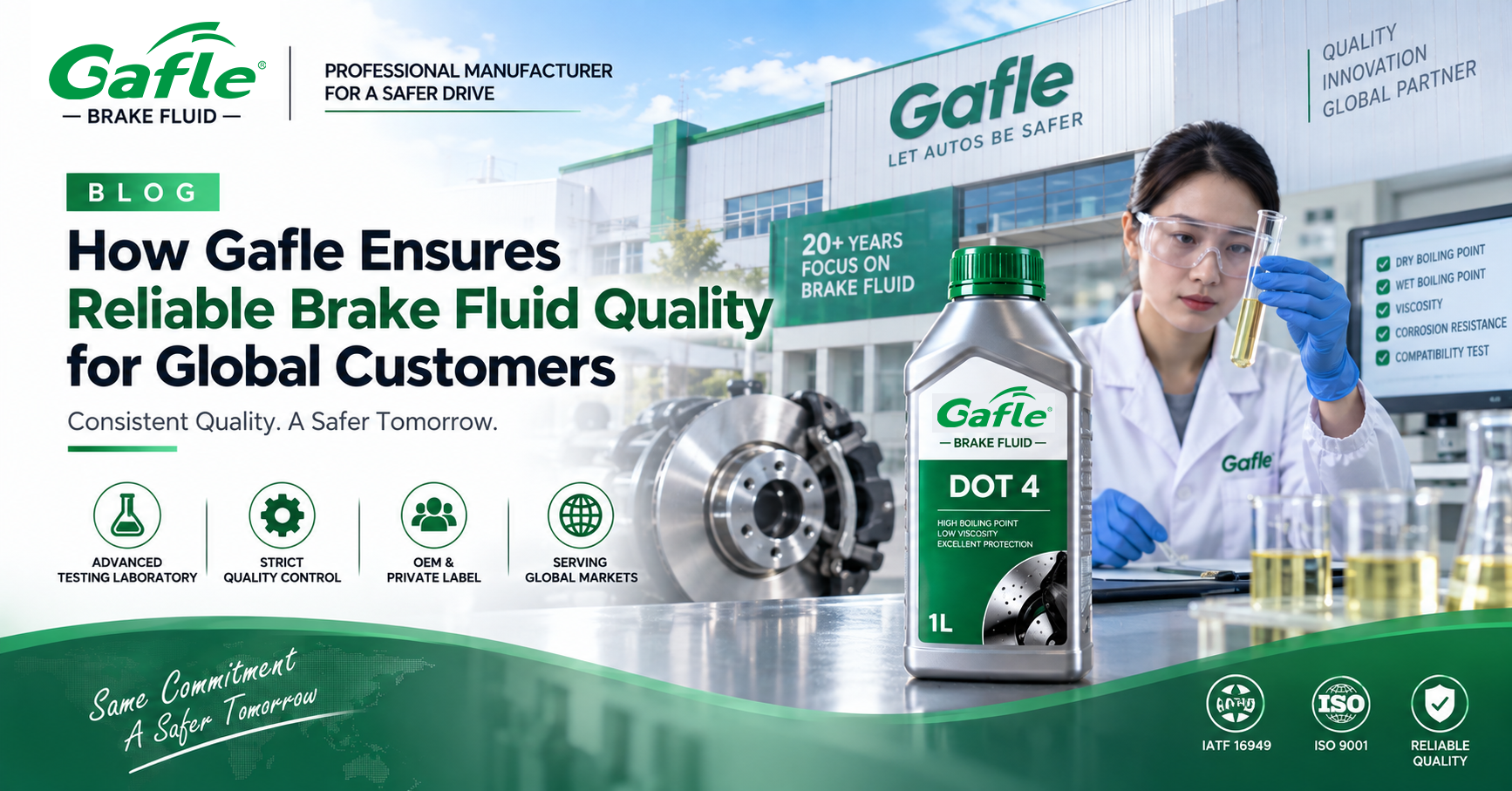
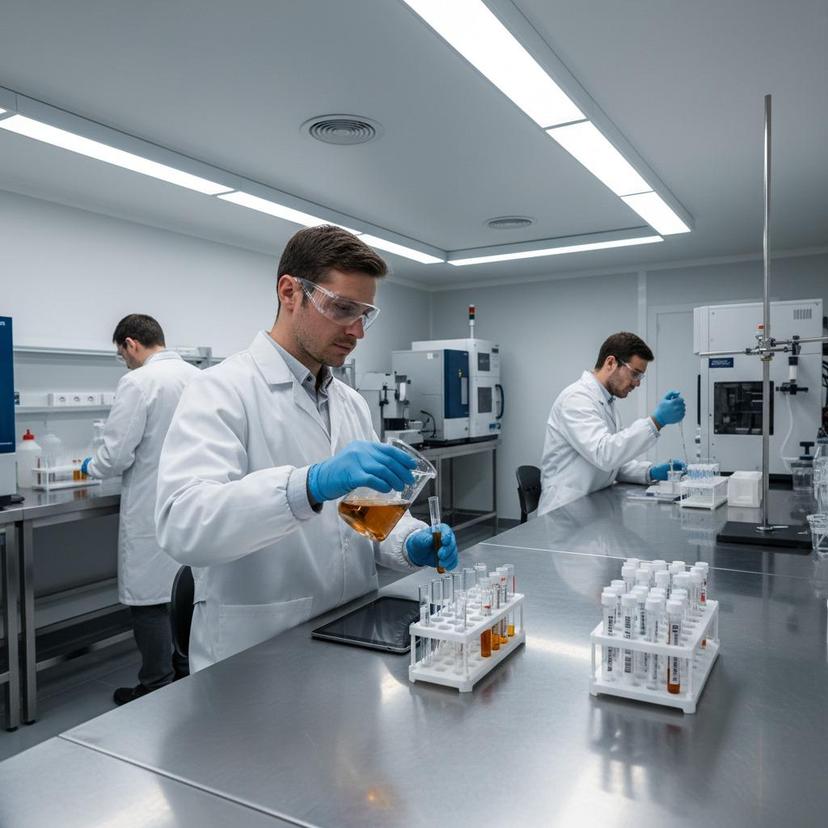
The visual language of the lab matters too. Clear and amber liquid samples in beakers, flasks, and test tubes may look routine, but they represent a serious checkpoint in manufacturing discipline. A clean laboratory bench, gloves, a lab coat, and organized sample racks are not cosmetic details; they are signs that contamination control is being taken seriously. In brake fluid quality control, that attention to handling can be as important as the equipment itself.
Where laboratory test equipment fits into the workflow
Laboratory test equipment is the backbone of repeatable brake fluid QC, but not every buyer needs the same setup. Some teams need a broad internal lab for incoming inspection and batch release. Others use a contract lab to supplement in-house screening. Either way, the purpose is the same: verify that the fluid meets the expected specification before it is packed, stored, or shipped.
For buyers, the important point is that lab work should support decision-making at several gates, not just one. That usually means the lab must be able to handle sample preparation, comparison against certified standards, and documentation that follows the lot through the factory. A process that stops at the production line but ignores storage conditions can miss a very ordinary problem, such as contamination during packaging or mix-up during warehousing. It happens more often than people like to admit.
Common checkpoints in a brake fluid QC program
Although exact test methods vary by product and standard, a practical brake fluid testing program usually covers incoming materials, blend verification, packaging inspection, storage checks, and pre-shipment release. Each checkpoint answers a different question. Is the raw material clean? Was the batch blended correctly? Did packaging introduce any issue? Has the product remained stable in storage? Is the lot ready for dispatch?
That sequence is especially useful for teams handling DOT brake fluid or other automotive fluid grades where consistency and traceability matter to downstream users. The specific chemistry may differ, but the quality logic does not change much: protect the formulation, protect the label, and protect the shipment.
Selection criteria buyers should care about
When sourcing brake fluid QC services or building an internal lab workflow, the first decision is scope. Do you need only final release testing, or do you need a full factory-to-shipment inspection chain? The second is documentation. Can the lab show how standards are verified, how samples are retained, and how results are linked to the batch? The third is handling discipline. Are samples collected and stored in a way that minimizes contamination and mix-up?
A practical warning: a fast turnaround is useful, but speed without sample integrity is a false economy. If containers are poorly labeled or storage conditions are loose, even a good result can lose value. Sourcing managers should ask how the lab controls identity, traceability, and release criteria. Product teams should ask whether the testing plan actually reflects how the fluid is manufactured and packed in the real world.
Typical mistakes that weaken brake fluid quality control
One common mistake is treating the finished warehouse sample as proof that the whole lot is fine. It is not. Another is relying on a single check at the end of the line and assuming earlier handling steps were automatically correct. A third is underestimating how much packaging and storage conditions influence final quality. Brake fluid may be a stable product in principle, but stability is not the same as immunity to poor handling.
Teams also sometimes over-specify the lab work without clarifying why each test exists. The result is expensive paperwork and little added control. A leaner, well-designed inspection flow is often better than a bloated one.
What engineers and buyers should ask before release
Before approving shipment, ask a few straightforward questions: Was the raw material inspected? Was the production batch checked against the certified standard? Were packaging and warehouse samples reviewed separately? Is there a clear record from factory to shipment? Those questions do not require flashy reports, only reliable discipline.
If your organization is comparing testing providers or reviewing an internal QC workflow, look for a process that covers the entire chain, not just one checkpoint. That is usually where the real risk sits.
FAQ
Is brake fluid testing only for finished goods?
No. A stronger program checks raw materials, in-process batches, packaging, storage, and release samples. Finished-goods testing alone can miss problems introduced earlier.
Does every facility need the same laboratory setup?
No. The right setup depends on production volume, product range, and whether you use an internal lab or outside support. The control points matter more than the brand of equipment.
What is the main goal of brake fluid quality control?
To verify consistency, reduce contamination risk, and confirm that the product is ready for shipment without hidden defects.
A practical next step
If your team is reviewing brake fluid testing procedures, start with the handoff points: raw material receipt, blending, packaging, warehousing, and shipment release. That is usually where problems accumulate. A well-run QC workflow does not just test fluid; it protects the lot history behind it. For manufacturers and QA teams, that is the difference between routine dispatch and preventable rework.