The latest news on Gafle.
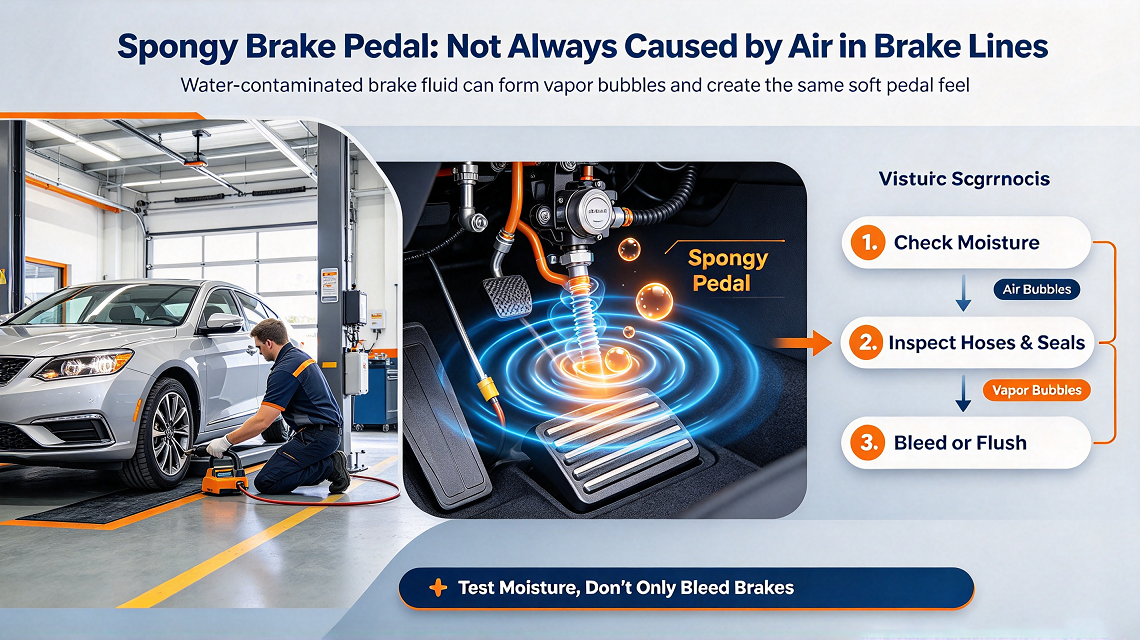
1. Why air in brake lines creates a spongy pedal 2. Water-saturated brake fluid creates vapor bubbles under heat 3. Other possible causes for a spongy brake pedal 4. Recommended step-by-step diagnostic workflow 5. Common mistakes technicians make in this diagnosis 6. Gafle brake fluid for reliable brake maintenance
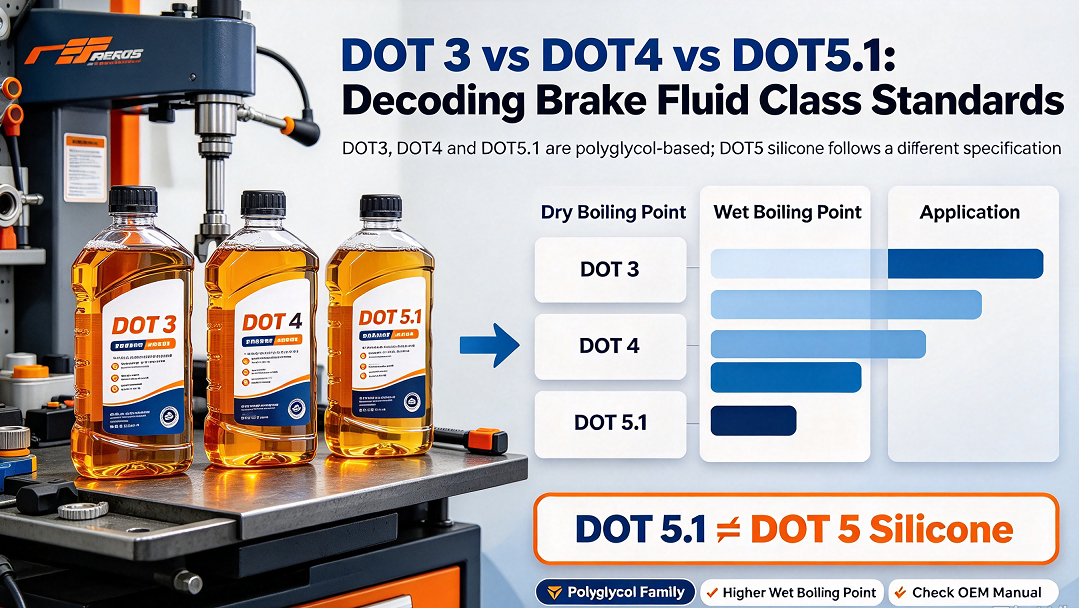
1. Brake fluid DOT grades are widely referenced in vehicle maintenance, yet many mechanics and parts buyers still mix up DOT3, DOT4, DOT5.1, and mistakenly confuse DOT5.1 with silicone DOT5 brake fluid. 2. Core performance comparison of DOT3, DOT4 and DOT5.1 3. Critical distinction: DOT5.1 ≠ DOT5 silicone brake fluid 4. How to select the right DOT grade for different vehicles 5. Gafle full range of DOT standard brake fluid
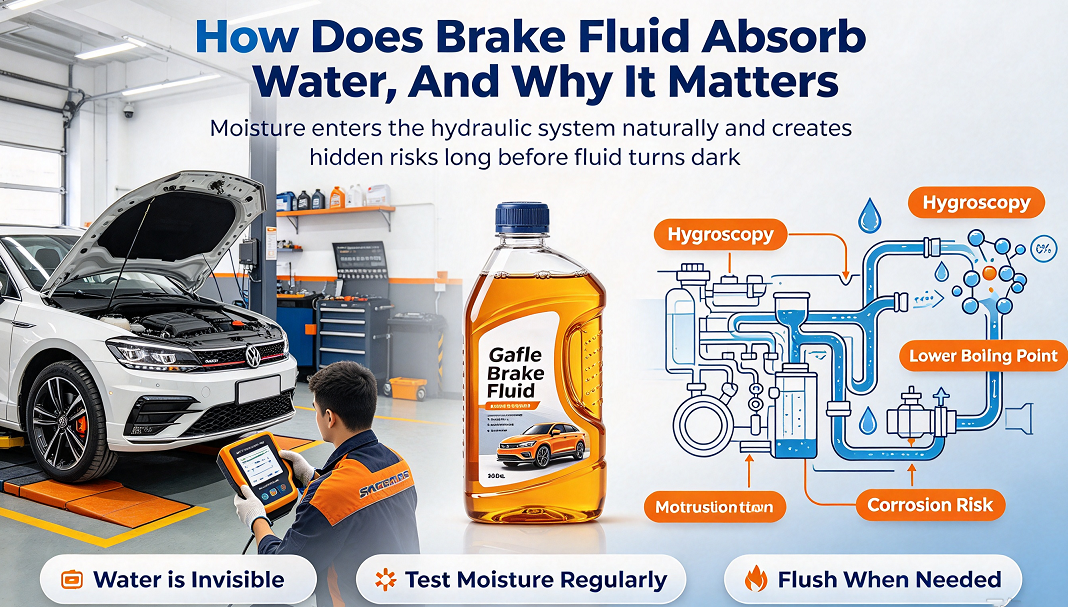
1. Most technicians know brake fluid can absorb water, but many do not fully understand the underlying hygroscopic mechanism and its hidden impact on brake safety. 2. How moisture enters and dissolves inside brake fluid 3. The biggest risk: water drastically lowers brake fluid boiling point 4. Secondary damage: moisture triggers corrosion inside brake hydraulic parts 5. How to monitor and prevent excessive water absorption 6. Gafle brake fluid stable formula and maintenance guidance
1. Why Choosing the Right Brake Fluid Manufacturer Matters 2. What Buyers Should Compare First 3. How to Judge a Manufacturer Beyond the Datasheet 4. Why Workshops and Distributors Need More Than Product Supply 5. Common Mistakes in Brake Fluid Sourcing 6. What a Strong Buyer-Supplier Relationship Looks Like 7. FAQ: Quick Buyer Questions 8. Next Step for Buyers
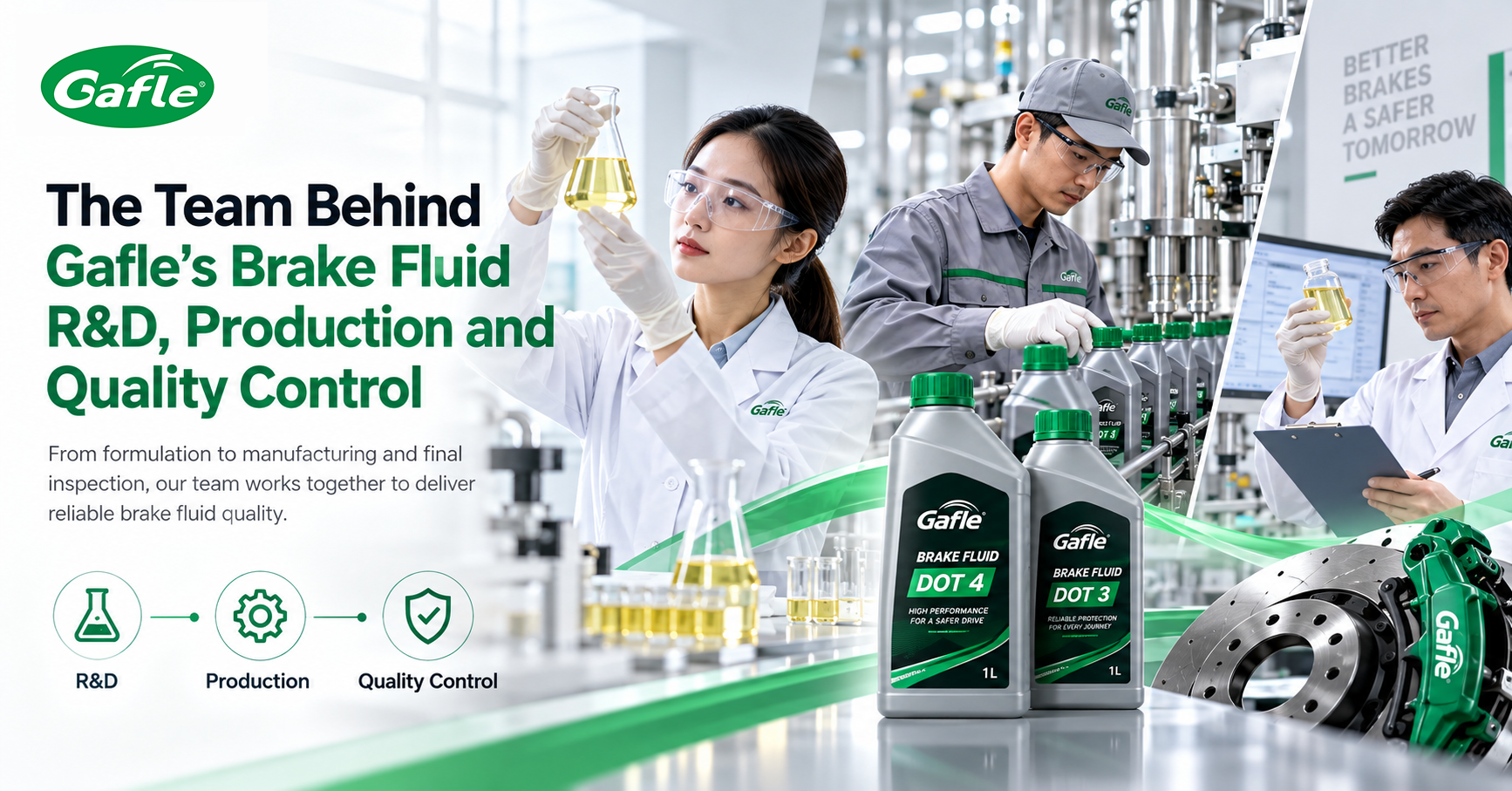
1. Brake Fluid R&D is not a back-room expense; it is the part of the business that decides whether a formulation will behave predictably in the field 2. What a capable development program should really cover 3. The role of testing, and why a brake fluid testing laboratory matters 4. Choosing between a standard supplier and a development-focused manufacturer 5. Common mistakes buyers make when evaluating brake fluid suppliers 6. What buyers should ask before moving forward 7. FAQ 8. A better next step for sourcing teams
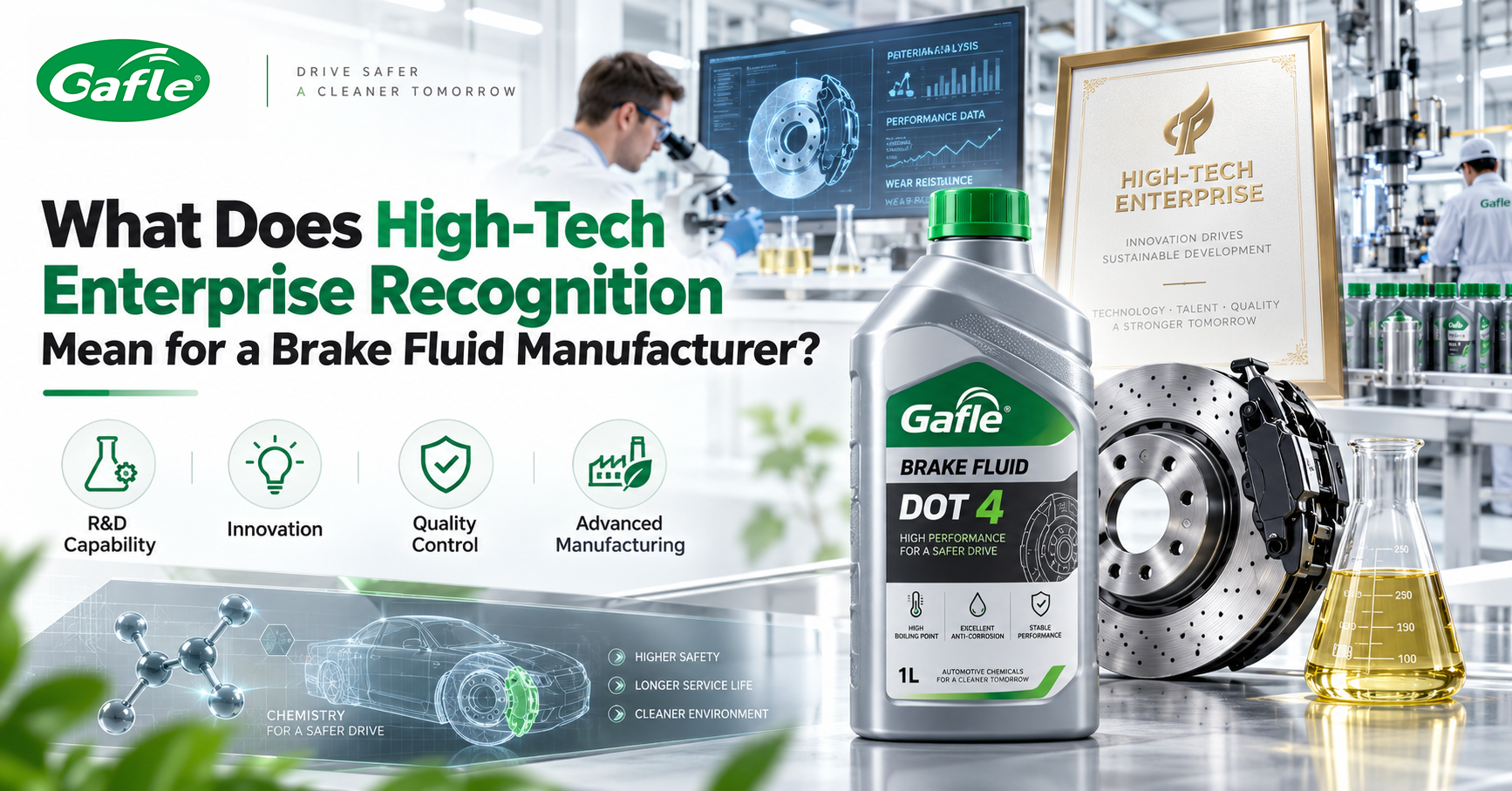
1. Why “high-tech enterprise” matters when you are choosing a brake fluid partner 2. What buyers should expect from a serious brake fluid supplier 3. Brake Fluid R&D is where the real difference starts 4. Why the testing laboratory deserves more attention than it gets 5. Brake fluid quality control is not a final step; it is the system 6. How to compare suppliers without getting lost in brochures 7. Common mistakes buyers still make 8. A practical buyer’s takeaway 9. What to do next
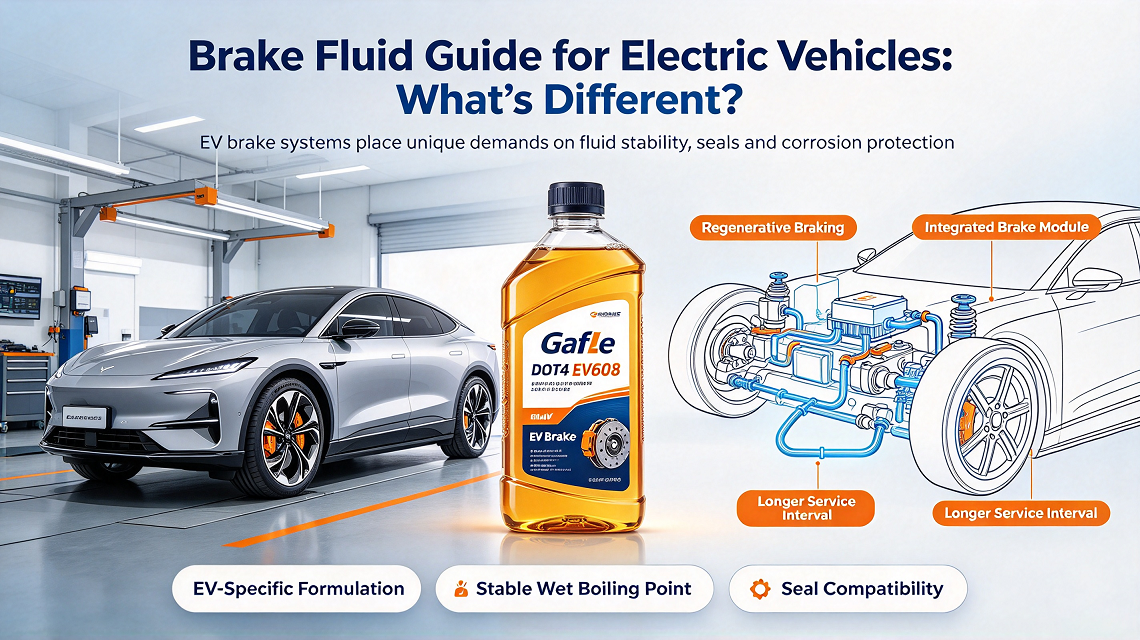
1. Electric vehicles place unique demands on brake fluid, and traditional brake fluid formulated for gasoline cars may not deliver the same long-term reliability. 2. Regenerative braking alters the working cycle of the hydraulic brake system. 3. EV brake systems use upgraded sealing materials to match longer service intervals. 4. EV integrated brake modules demand consistent hydraulic fluid performance. 5. Best practices for EV brake fluid maintenance 6. Gafle DOT4 EV608 is engineered for electric vehicle brake systems.
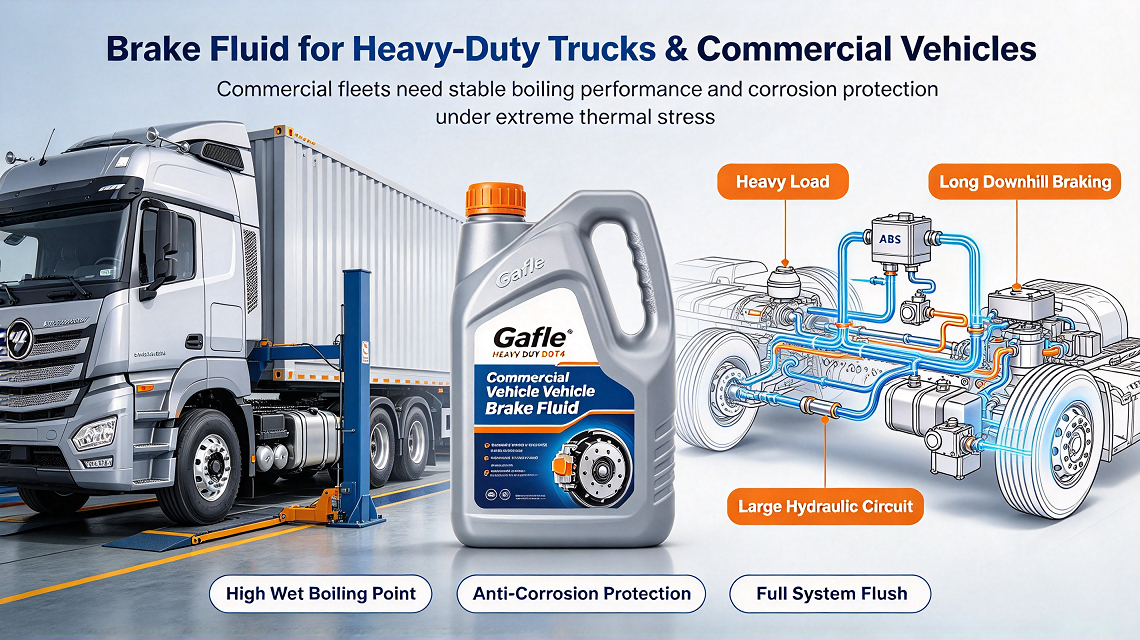
1. Heavy-duty trucks, semi-trailers and commercial vehicles operate under extreme load and thermal stress. Ordinary passenger car brake fluid often cannot meet the rigorous demands of commercial fleet use. 2. Sustained high heat from heavy loads and downhill braking is the biggest challenge for truck brake fluid. 3. Commercial brake systems have larger circuits and more metal components that require anti-corrosion protection. 4. Fleet maintenance considerations for commercial brake fluid 5. Gafle heavy-duty brake fluid is built for commercial vehicle applications.
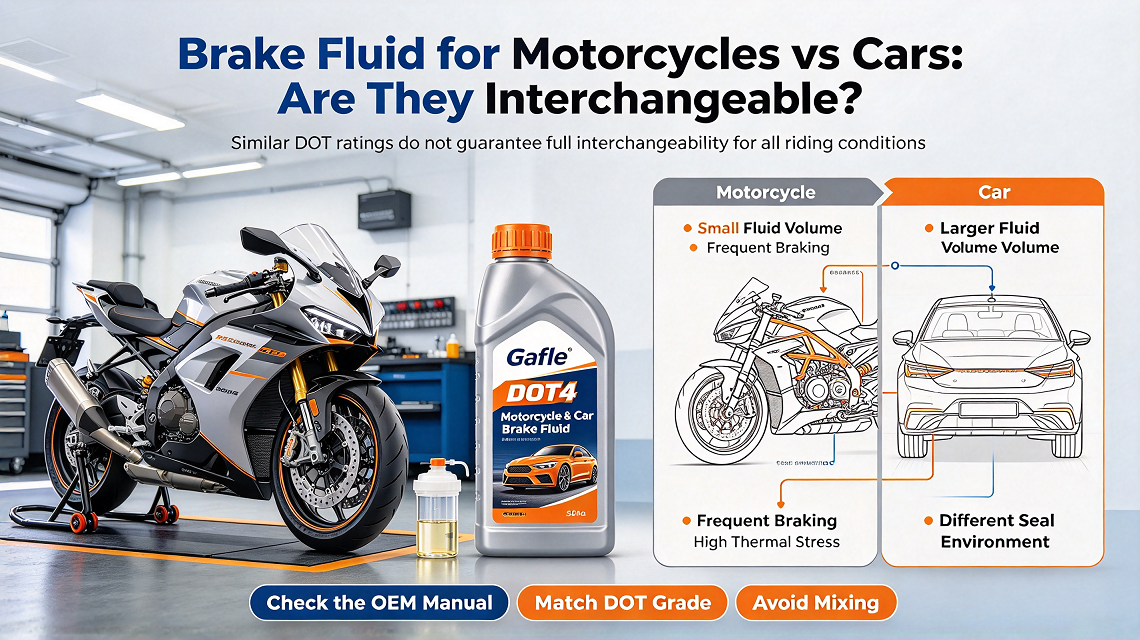
1. At first glance, motorcycle brake fluid and passenger car brake fluid appear identical. However, their operating environments differ dramatically, and swapping them blindly can create safety risks. 2. Motorcycle brakes face far more frequent, rapid brake actuation with much smaller fluid volumes. 3. Motorcycle brake seal and hose materials have unique requirements. 4. When can you use automotive brake fluid on a motorcycle? 5. Key tips for selecting motorcycle brake fluid 6. Gafle supplies reliable brake fluid for both automotive and motorcycle applications.
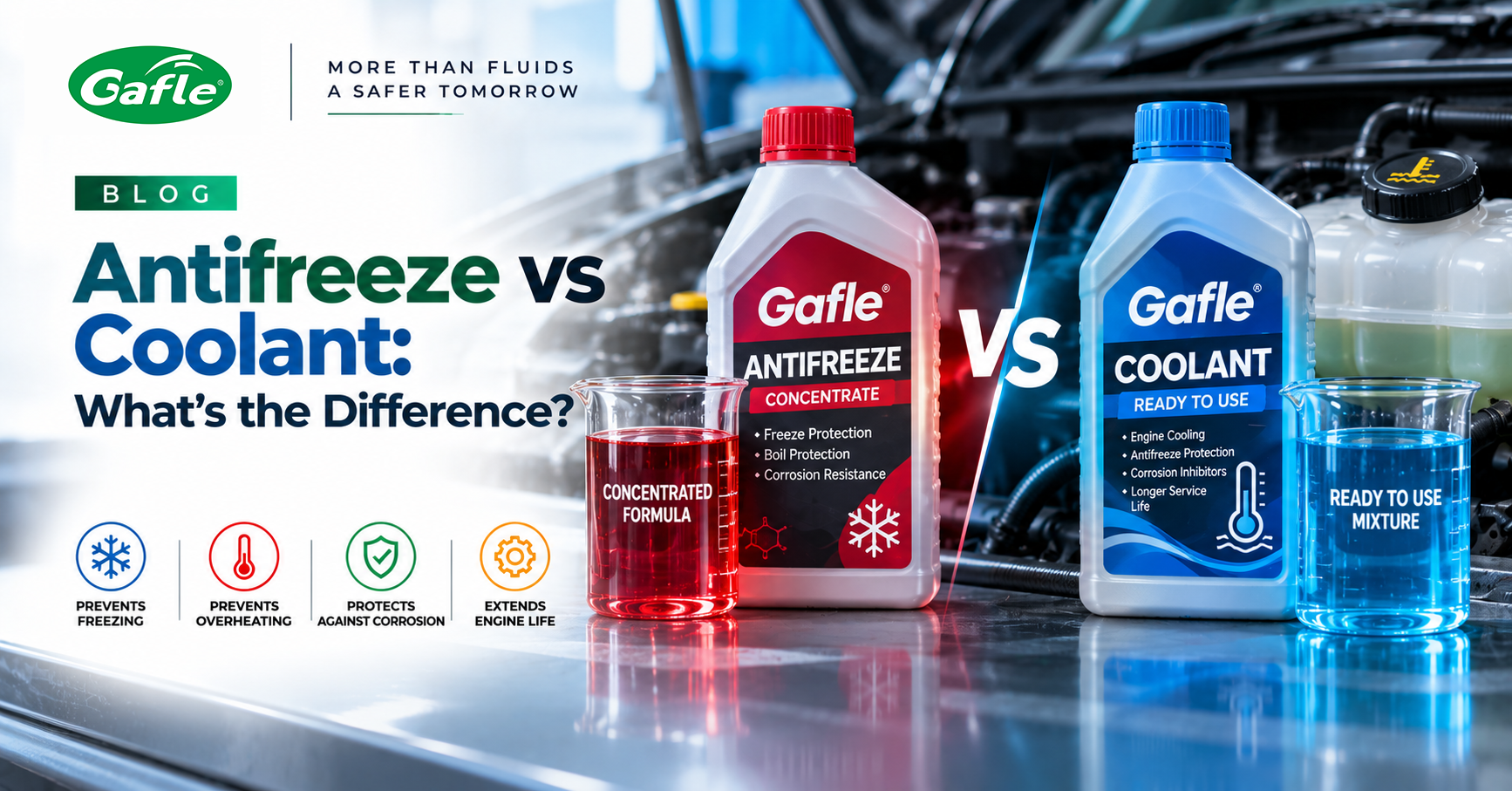
1. Antifreeze vs Coolant: What’s the Difference? 2. The short answer buyers actually need 3. What each fluid is meant to do 4. Why the terminology matters in sourcing 5. Common buyer mistakes 6. How to choose the right product 7. FAQ buyers ask before placing an order 8. What to do next
Home
Product
Contact
Inquiry