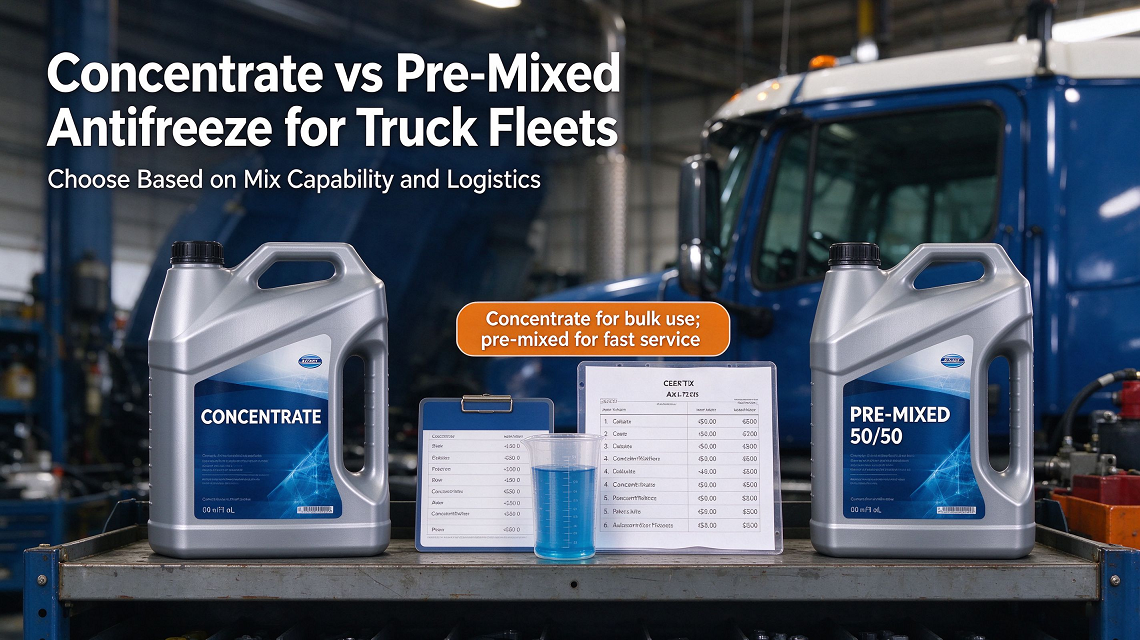
Logistics vs. Chemistry: The Real Dilemma on the Shop Floor
Every maintenance bay and purchasing desk eventually confronts the operational trade-off: what is the true operational difference between concentrate and pre-mixed antifreeze when scaled across hundreds of heavy-duty assets? At first glance, procurement officers see concentrated glycol as an obvious logistical win—why pay to transport water across regional freight corridors? Yet, fleet maintenance directors often argue the opposite, citing ruined water pumps and clogged radiator tubes caused by improper shop-floor mixing. Choosing between neat chemical concentrate and a ready-to-use thermal fluid is rarely just an upfront price-per-gallon calculation; it is a question of quality control, labor capacity, and local water chemistry.
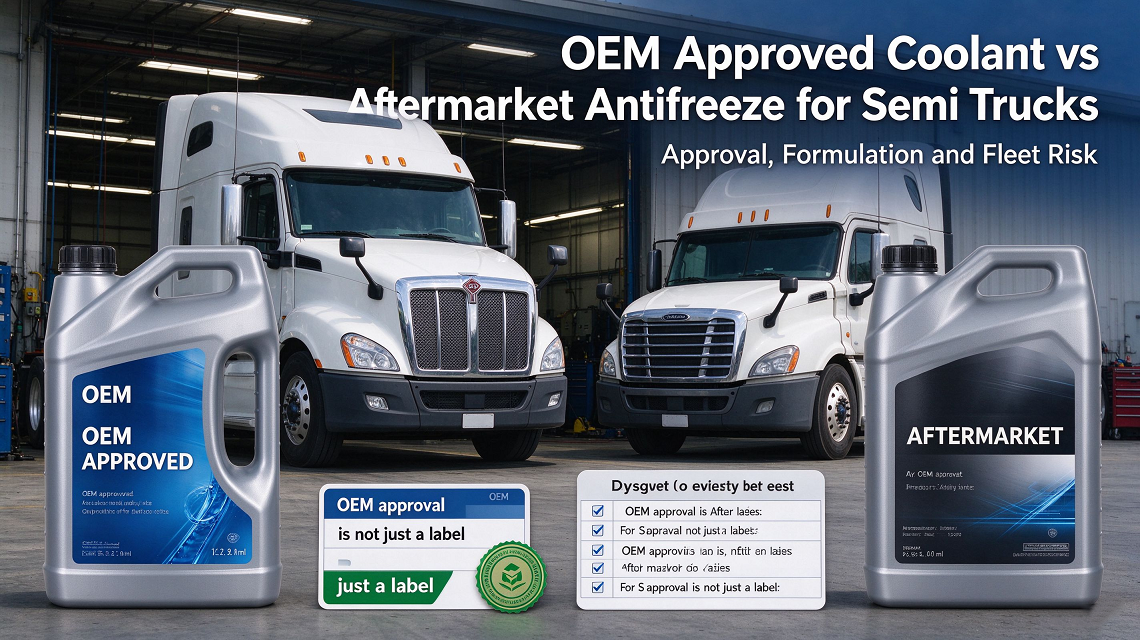
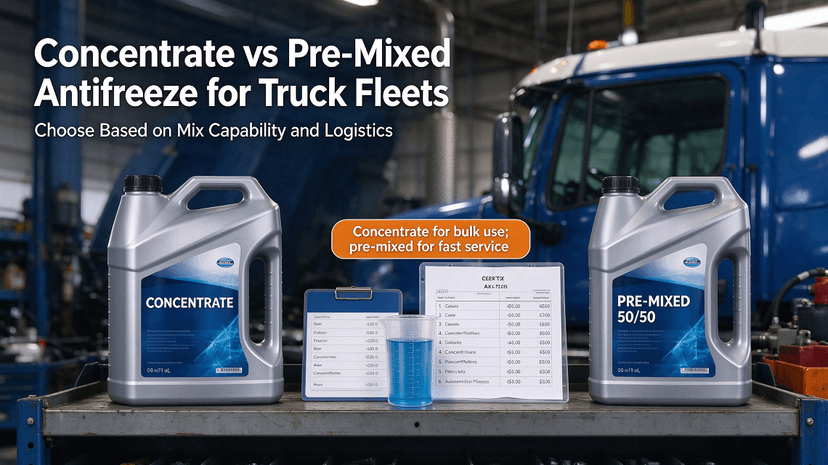
Concentrate typically contains roughly 93% to 95% ethylene or propylene glycol blended with concentrated corrosion inhibitors and water-stabilizing agents, leaving the final 50/50 or 60/40 volumetric dilution to shop technicians. In contrast, a premix coolant arrives factory-blended with laboratory-grade deionized water, formulated to precise ASTM D6210 or D3306 standards right off the loading dock. Buying truck fleet concentrate cuts freight tonnage almost in half and conserves warehouse pallet rack space. For a central facility running high-volume preventative maintenance with automated metered fluid dispensaries, blending on-site produces undeniable cost savings.
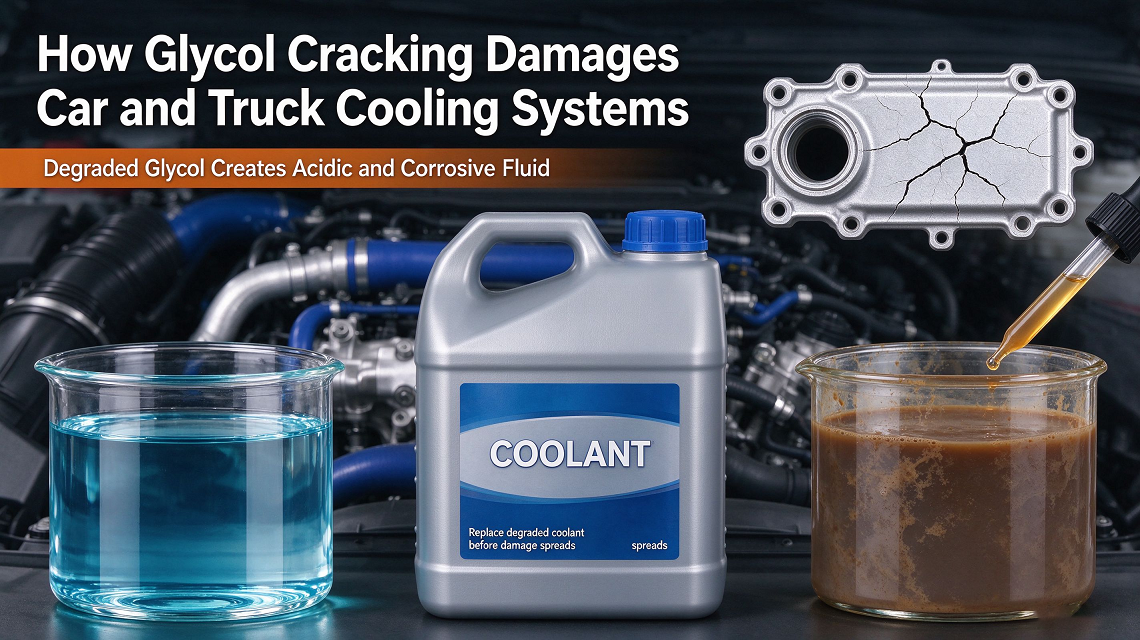
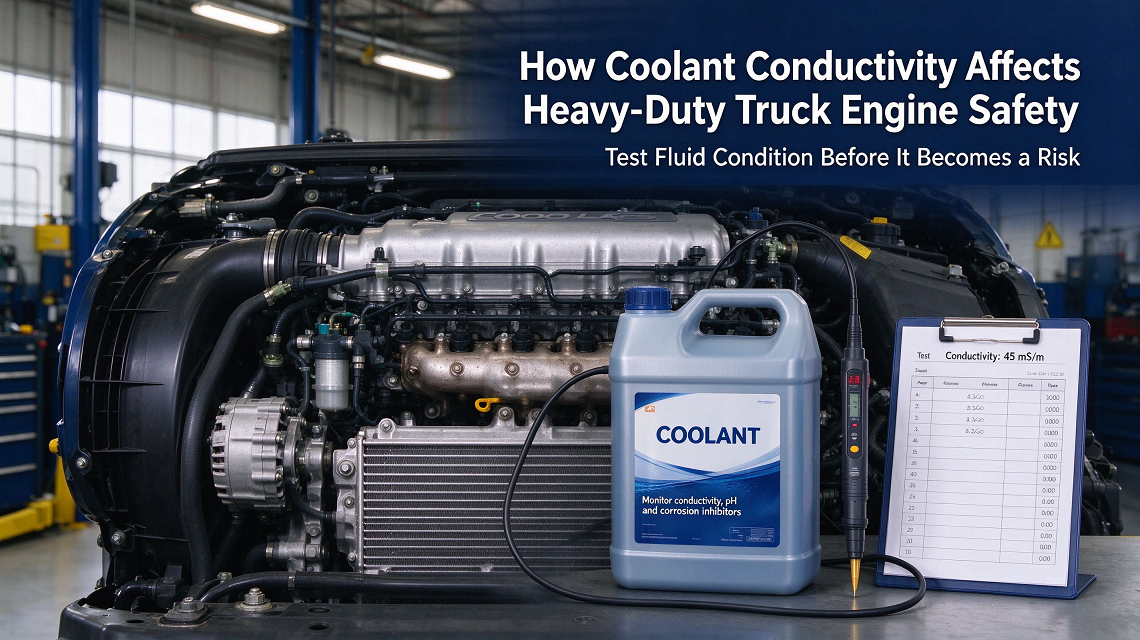
However, the vulnerability of manual mixing lies in the diluent. When technicians dilute bulk barrels with municipal tap water or well water, they introduce calcium, magnesium, chlorides, and sulfates directly into heavy-duty heat exchangers. Hard minerals quickly react with phosphate and silicate inhibitor packages, causing dropout and abrasive scale that degrades wet-sleeve cylinder liner protection within a few thousand operational hours. Unless your maintenance facility maintains an in-line reverse osmosis or deionizing filtration loop with verified electrical conductivity testing below 25 µS/cm, manual dilution introduces unquantified risk.
This technical variable explains why many corporate operations transition toward bulk pre-mixed antifreeze factory supply. Factory blending eliminates batch-to-batch variation, protects against accidental over-concentration (which actually raises the freeze point above -10°F if pure glycol exceeds 70%), and frees up mechanical labor for billable repairs rather than fluid chemistry tasks.
Evaluating Total Cost of Ownership Beyond Freight Bills
When modeling annual procurement costs, sourcing departments must weigh direct freight expenses against indirect shop labor and downstream overhaul rates. Concentrated shipments yield significant savings when freight lanes cross thousands of miles. A 55-gallon drum of 95% glycol yields two 55-gallon drums of 50/50 fluid after water addition, halving the inbound shipping weight. But if shop staff spend twenty minutes per equipment unit sourcing, measuring, and testing mixture ratios with an optical refractometer, those freight savings evaporate into maintenance payroll.
Furthermore, over-dilution remains a persistent field defect. Diluting beyond a 40/60 glycol-to-water ratio drops reserve alkalinity and cavitation defense, leaving diesel engine cylinder liners susceptible to pitting from microscopic vapor bubble collapse. Conversely, running neat glycol without adequate water reduces heat transfer capacity by nearly 15%, leading to elevated cylinder head temperatures under severe load.
Operational Fit: Match Formulation to Fleet Infrastructure
Determining the right procurement strategy hinges on your maintenance infrastructure:
- High-Turnover Central Depots: Facilities with automated proportioners and dedicated demineralized water circuits maximize return on truck fleet concentrate by lowering freight overhead without sacrificing fluid uniformity.
- Decentralized Job Sites and Field Service: Mobile maintenance rigs and regional branch shops benefit from a dedicated premix coolant, where technicians lack bench testing equipment and need immediate top-off capability.
- Factory Fill and High-Hour Industrial Plants: Sourcing through bulk pre-mixed antifreeze factory supply offers ISO-certified fluid stability, mitigating long-term warranty exposure on new equipment assemblies.
Frequently Asked Questions
Can concentrate be added directly to top off a low reservoir?
Never pour neat glycol straight into a surge tank. Glycol is dense and does not mix readily inside a cold reservoir without aggressive circulation. Technicians should always replenish with fluid matched to the system's target freeze and boil protection ratings.
What water specifications are acceptable if mixing on-site?
Standard municipal water should be avoided. Engineering standards require deionized or distilled water with total hardness under 170 ppm (10 grains/gal), chloride below 40 ppm, and sulfate under 100 ppm to avoid neutralizing corrosion inhibitors.
Recommended Sourcing Next Steps
Before issuing your next fluid tender, audit your maintenance bays. If your team cannot verify routine deionized water testing and optical refractometer calibration at every location, moving to pre-blended solutions will likely yield a lower total operating cost despite higher baseline freight.
Welcome to contact GAFLE for more information & cooperation!
peter
ZHEJIANG GAFLE AUTO CHEMICL CO.,LTD
Tel:86-579-8222 1665
Fax:86-579-8246 4690
Cel/Wechart:86-13335993986
E-mail:peter@gafle.net
Web:www.gafle.net