The latest news on Gafle.
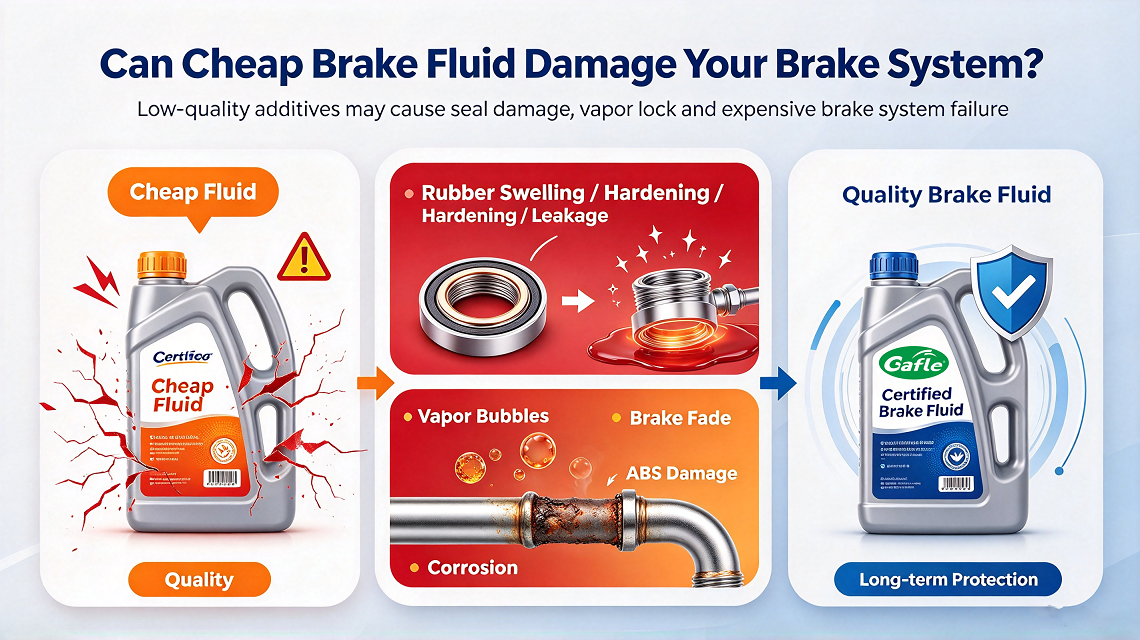
1. Low-priced brake fluid may save a small amount of money at purchase time, but it can destroy your whole brake system and bring huge safety risks. 2. Poor additives in cheap brake fluid lead to rubber seal swelling, hardening and leakage. 3. Cheap brake fluid fails under high temperature and easily vaporizes during heavy braking. 4. Low-quality brake fluid lacks anti-corrosion protection for metal brake lines and ABS parts. 5. How to choose reliable brake fluid for your business or vehicle? 6. Gafle is a professional brake fluid manufacturer, with stable quality for global B2B buyers.
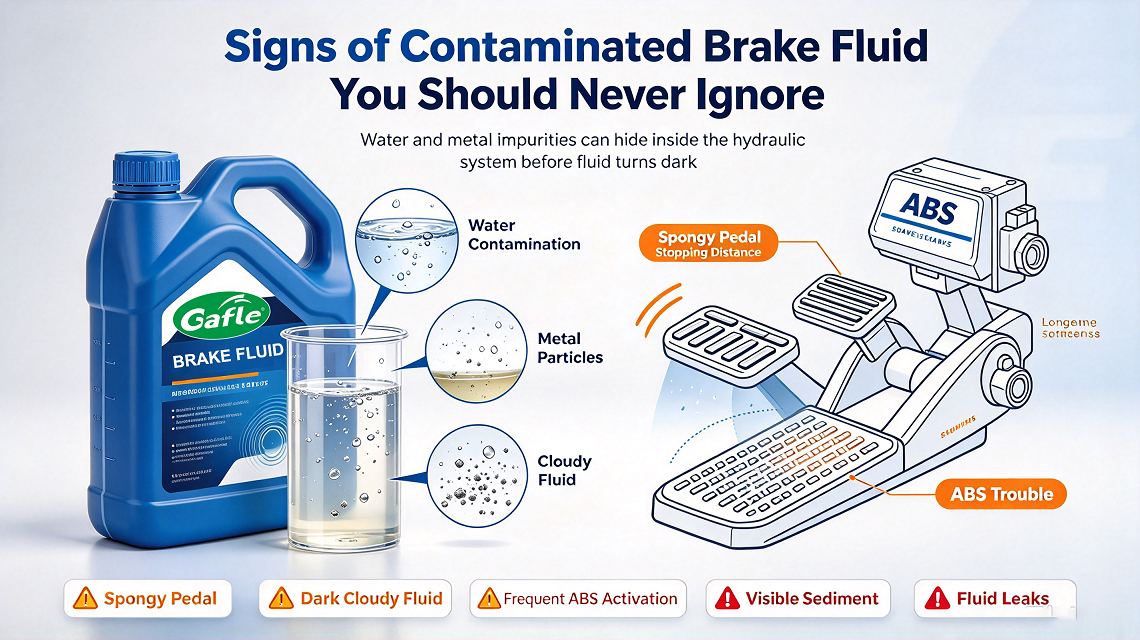
1. Brake fluid contamination is not only judged by dark fluid color. Water and tiny metal particles are invisible threats inside your brake hydraulic system. 2. Water contamination lowers boiling point and causes brake fade during continuous braking. 3. Metal particle contamination scratches precision brake parts and blocks ABS valves. 4. These warning signs tell you your brake fluid is contaminated: 5. The right way to check and replace contaminated brake fluid 6. Gafle brake fluid maintains stable anti-corrosion and anti-hygroscopic performance.
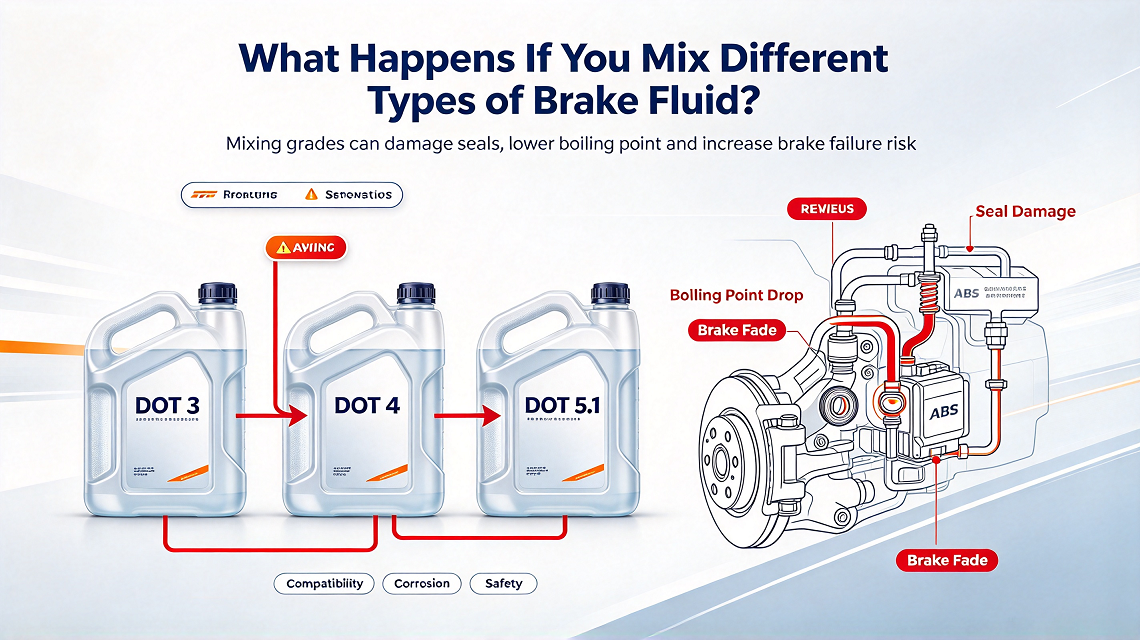
1. Mixing different brake fluid grades is a common mistake that can lead to dangerous brake system failure. 2. Different brake fluid formulations will react and degrade the fluid performance rapidly. 3. Mismatched brake fluid mixtures corrode rubber seals, hoses and pistons over time. 4. Always follow brake fluid compatibility rules before refilling or flushing. 5. Gafle brake fluid offers stable formulation and clear compatibility instructions for mechanics and distributors.
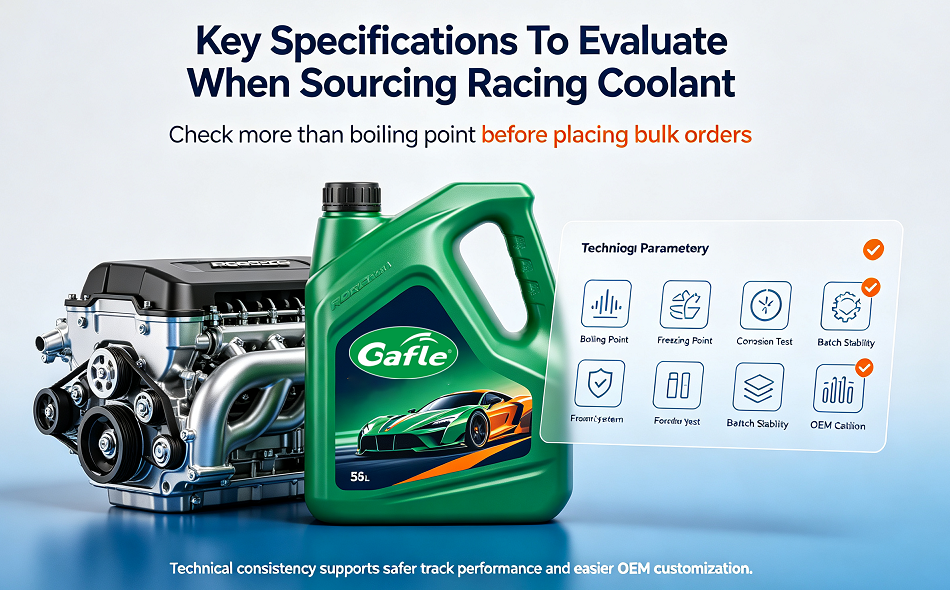
1. What buyers really mean when they ask for key specifications for sourcing racing coolant 2. The specification set that deserves attention first 3. Why batch stability matters in bulk sourcing 4. How to compare suppliers without getting lost in datasheets 5. Common buyer mistakes that cause avoidable problems 6. Practical sourcing advice for engineering and procurement teams 7. FAQ: quick answers buyers usually need 8. A sensible next step
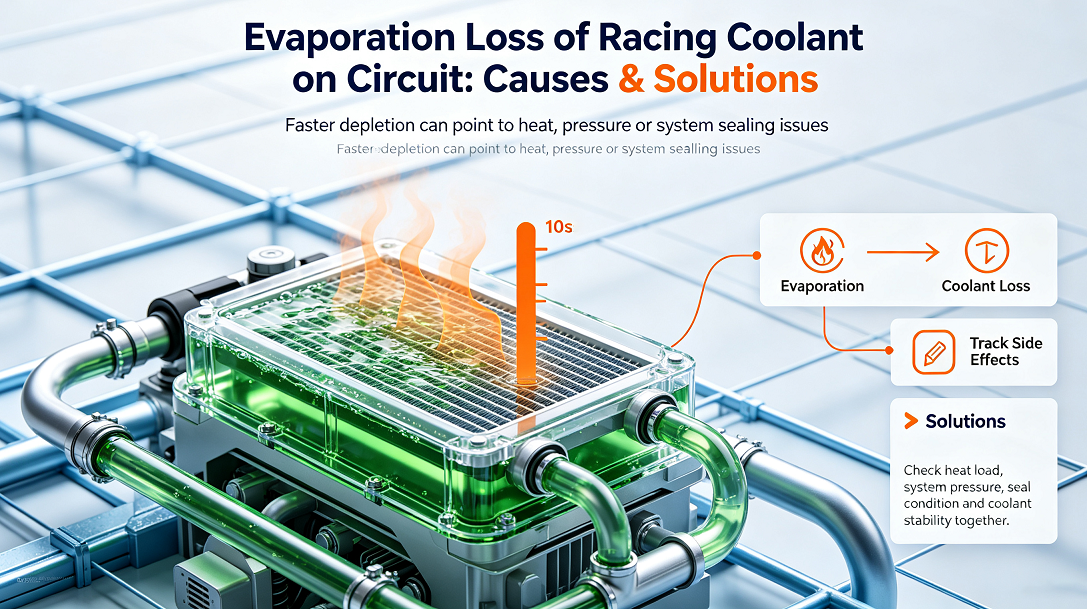
1. Why racing coolant evaporation becomes a real problem on track 2. What usually drives coolant loss in motorsport conditions 3. Quick reference: where the fluid is going 4. Motorsport coolant selection and system setup 5. Practical checks before changing parts 6. Solutions for high evaporation that actually hold up on track 7. Common mistakes engineers and buyers make 8. FAQ: short answers for track-side decisions 9. What to do next
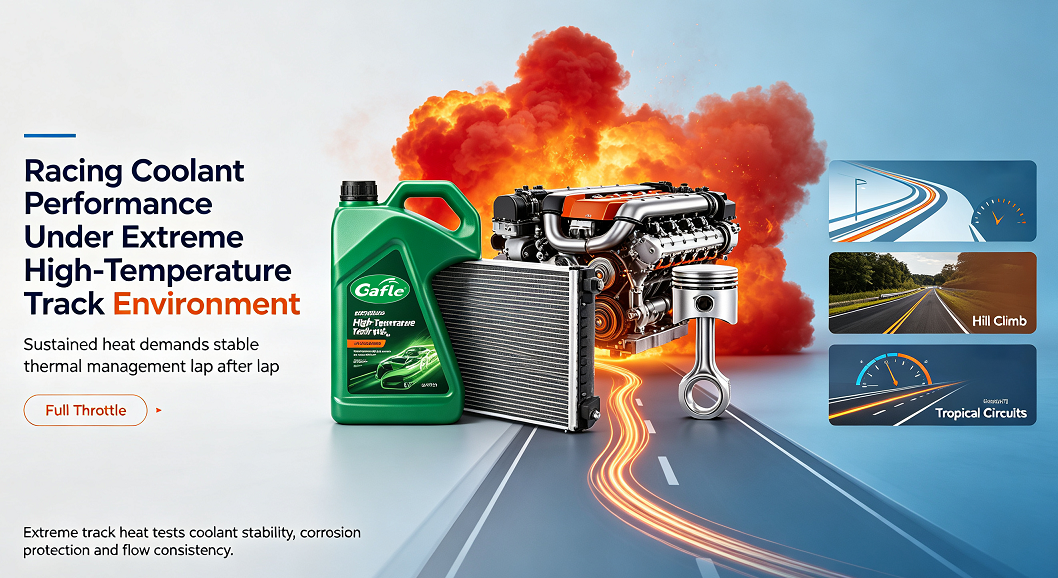
1. Why racing coolant performance matters when temperatures climb 2. What high heat does to a cooling system 3. What to look for in a high-temp racing coolant 4. Common mistakes teams make 5. Buyer advice for track and motorsport use 6. Practical takeaway 7. FAQ
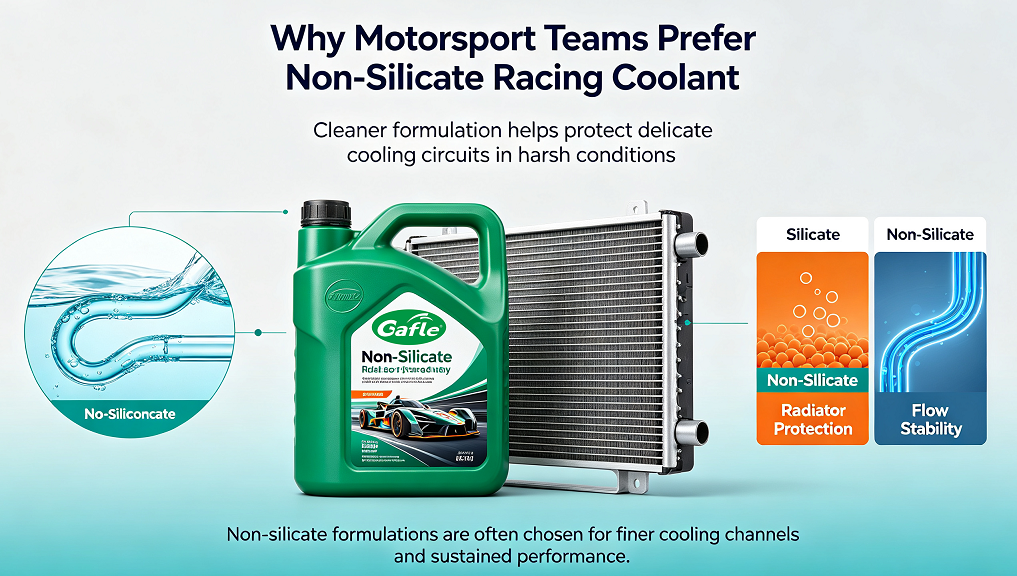
1. Why race teams use non-silicate racing coolant 2. What makes racing coolant different from standard coolant 3. The practical concern: deposits and restricted flow 4. Why teams choose non-silicate formulations 5. What buyers should check before specifying coolant 6. Common mistakes teams still make 7. Quick buyer takeaway 8. FAQ 9. Next step for teams and buyers
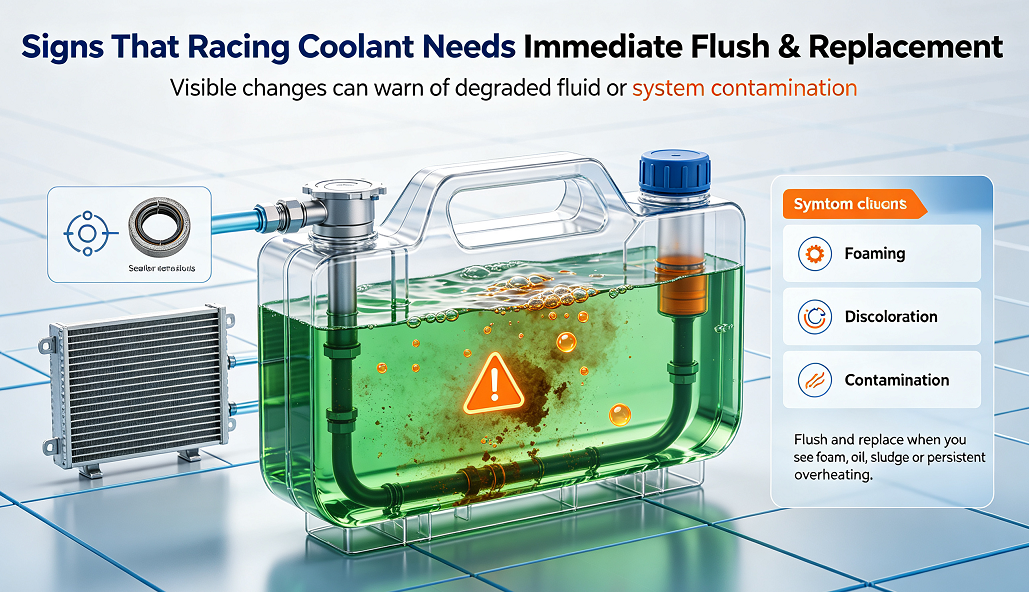
1. Why racing coolant deserves closer attention than street coolant 2. Quick reference: what usually tells you the coolant is past its best 3. Common contamination and failure symptoms to watch for 4. Why coolant degrades faster in motorsport 5. When immediate replacement is the safer call 6. Practical buyer advice for teams and owners 7. A short diagnostic habit that pays off 8. What to do next
Home
Product
Contact
Inquiry