DOT 3 brake fluid and the choice that actually matters in the workshop
People often start by asking whether DOT 3 brake fluid is “good enough,” but that question is usually too narrow. What matters in practice is whether the fluid matches the vehicle’s hydraulic brake system, the operating temperature, and the service pattern the vehicle sees day after day. A passenger car that lives in traffic and a fleet vehicle that sees repeated hard stops do not ask the same thing of its brake fluid, even if the bottle on the shelf looks simple.
For engineers, sourcing managers, and service teams, the real decision is not just brand or price. It is compatibility, boiling resistance, moisture behavior over time, and whether the product can support consistent pedal feel when heat builds up. That is why DOT classifications still matter, even though many buyers use “brake fluid” as if it were one generic item.
Quick takeaway: how the DOT ratings differ
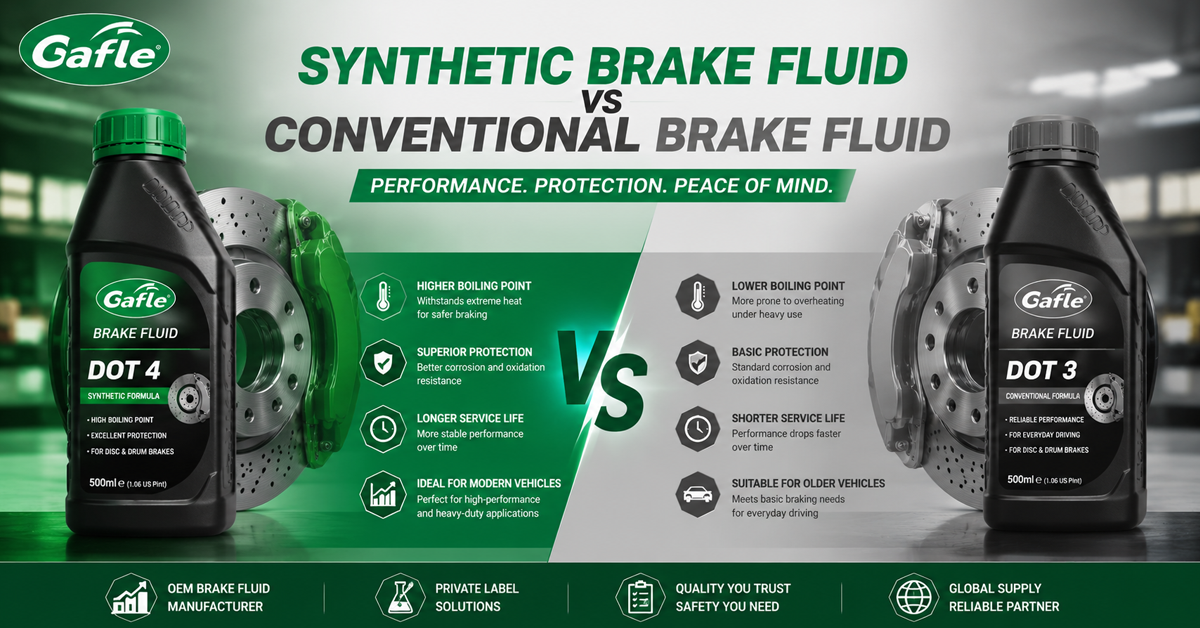
DOT 3, DOT 4 brake fluid, and DOT 5.1 brake fluid all serve the same basic hydraulic function, but they are not interchangeable in a casual sense. The label tells you a lot about how the fluid is expected to behave under heat and stress. In broad terms, DOT 4 brake fluid is generally chosen where a higher boiling point is useful, while DOT 5.1 brake fluid is often discussed in higher-demand braking applications. DOT 3 remains common in many older or more standard vehicle systems that specify it.
There is also a practical caution here: the right choice is determined by the vehicle specification, not by assuming a “better” fluid will always be a safe upgrade. That shortcut causes more trouble than it solves, especially in mixed fleets and repair shops that work across several model years.
What brake fluid is doing inside the system
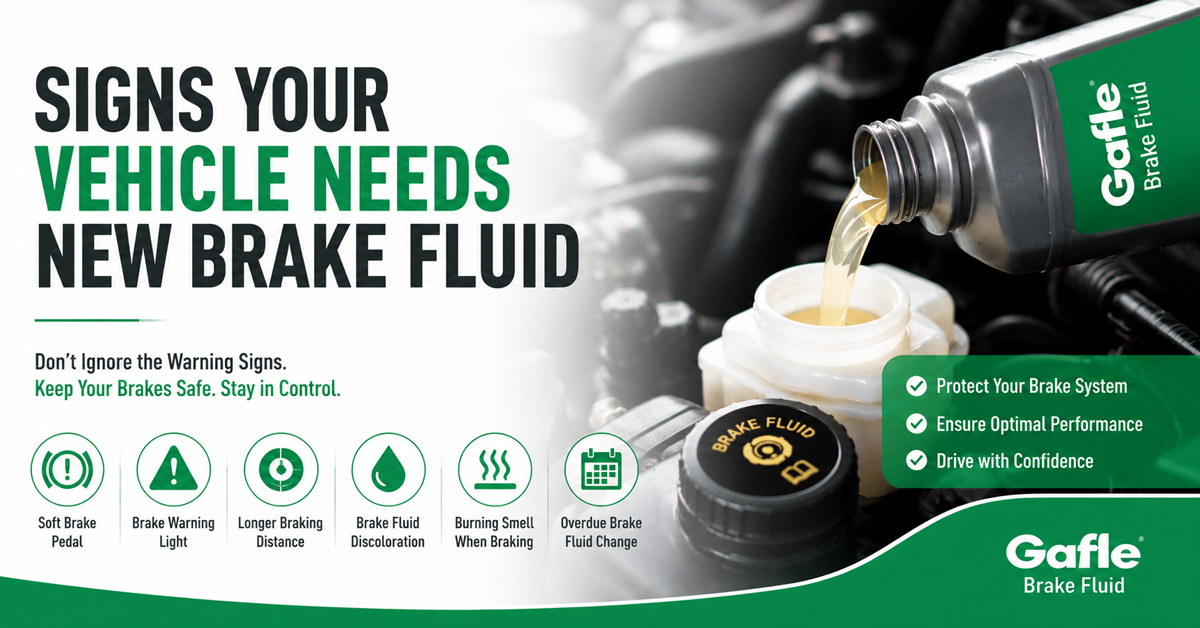
Brake fluid transfers force from the pedal to the calipers or wheel cylinders through a sealed hydraulic circuit. Because the system relies on incompressible fluid, even a small change in fluid condition can affect pedal feel and braking response. Heat is the enemy. So is moisture absorbed over time, which is why service intervals matter even when the fluid still looks clean.
That is also why terms like synthetic brake fluid and performance brake fluid get used so often in purchasing discussions. The labels are not always precise marketing categories, but they usually point buyers toward fluids intended to cope better with temperature and repeated operation than a basic fill fluid would.
How DOT 4 fits into the picture
The product information supplied here points to a DOT 4 brake fluid with a visible emphasis on high boiling point and consistent performance in all conditions. The packaging shown is a small 30 mL bottle labeled GAFLE, with a clear amber liquid and a compact retail-style format. That kind of presentation suggests a product aimed at topping up or service use rather than bulk workshop transfer, although the exact channel is not confirmed.
From a buyer’s standpoint, DOT 4 is often the middle ground that makes sense when a vehicle calls for more thermal margin than DOT 3 can reasonably offer. In everyday service work, that can matter more than it does on paper. Stop-and-go urban driving, downhill loads, trailer towing, and repeated braking all push fluid temperature upward. If the system is not matched correctly, the driver may notice fade or a longer pedal before anyone notices the root cause.
Why not simply move to a higher-spec fluid?
Because higher spec does not automatically mean suitable. Some systems are engineered around a particular fluid behavior, seal package, or service interval. Using DOT 4 brake fluid where DOT 3 is specified may be acceptable in some cases, but not as a reflex. DOT 5.1 brake fluid may bring additional performance headroom, yet the vehicle still needs to call for it or at least tolerate it. The safest answer is always the service manual, then the fluid label, then the supplier’s technical data.
Selection criteria buyers should actually use
For sourcing and maintenance teams, a useful selection checklist is less about branding and more about the following practical points:
Specification match to the vehicle or equipment
Service environment: normal commuting, heavy load, performance driving, or workshop repair
Packaging size and dispensing convenience
Consistency of supply and labeling clarity
Storage handling, especially if containers are opened and closed frequently
That last point is easy to overlook. Brake fluid is hygroscopic, so once a container is opened, handling discipline matters. A neat label will not save a poorly stored product.
Common buyer mistakes
The most common mistake is treating all brake fluids as functionally the same. The second is assuming a “performance” label is enough evidence of suitability. A third mistake, especially in busy shops, is mixing partial containers from different specifications because the fluid color looks similar. Color is not a specification.
Another problem is purchasing by container alone. A 30 mL bottle may be suitable for top-up or small service tasks, but it is not automatically the right format for a workshop that handles repeated brake bleeding or fleet maintenance. Small packaging can reduce waste for retail use, yet it may create handling inefficiency in higher-volume environments.
Practical advice for engineers and sourcing teams
When comparing DOT 3 brake fluid against DOT 4 brake fluid and DOT 5.1 brake fluid, ask three questions: what does the equipment require, what temperatures are realistic in service, and how will the fluid be stored and dispensed? Those answers usually narrow the field quickly.
If you are evaluating a product like the GAFLE DOT4 bottle described above, the useful details are the ones you can verify: the DOT rating, the stated high-boiling-point positioning, the bottle volume, and the intended automotive use. Everything else should be checked against the supplier’s technical sheet before the product enters a maintenance standard or procurement list.
FAQ
Is DOT 4 brake fluid always better than DOT 3?
Not always. It may offer a higher thermal margin, but the vehicle specification still comes first.
Can DOT 5.1 brake fluid replace DOT 3?
Sometimes in compatible systems, but that should be confirmed by the OEM or technical documentation rather than assumed.
Is synthetic brake fluid the same as DOT 4?
Not necessarily. “Synthetic” is a broad descriptor, while DOT 4 is a performance/specification category.
Next step for buyers
Before approving a brake fluid purchase, confirm the required DOT level, check the service environment, and make sure the packaging format fits the job. If you are sourcing for retail, workshop, or maintenance use, ask for the technical data behind the label rather than relying on front-panel claims alone. That habit prevents most brake fluid mistakes before they reach the bay.