What buyers actually need from a Gafle Brake Fluid Factory
When sourcing brake fluid, most engineers and purchasing teams are not looking for a glossy brand story. They want consistency, compatibility, and a supplier that can ship the same chemistry again and again without turning every reorder into a new project. That is the real value proposition behind a Gafle Brake Fluid Factory: not just making fluid, but making it in a way that supports OEM programs, private label launches, and export sales without constant surprises.
Brake fluid is one of those small components that can create large problems. If the formulation, moisture behavior, packaging, or labeling is off, the result is not just a nuisance in the warehouse. It can affect braking performance, service intervals, and customer confidence. For buyers, the decision is less about “which bottle looks best” and more about which supplier can protect the product in transit, match market requirements, and maintain repeatability at scale.
Why brake fluid sourcing is more complicated than it looks
Brake fluid sits at the intersection of chemical handling, automotive requirements, and export logistics. It has to perform in demanding temperature and pressure conditions, but it also has to survive storage, filling, sealing, and long-distance shipping. That means the factory’s role extends well beyond blending.
A capable Brake Fluid Manufacturer usually has to manage raw material consistency, batch control, container compatibility, and clean filling practices. If a buyer is considering OEM Brake Fluid or Private Label Brake Fluid, the packaging and labeling side becomes almost as important as the chemistry. A label error in one market can delay an entire shipment. A cap or bottle mismatch can create leakage concerns. Small details matter more than they first appear.
Quick reference: what to compare in a supplier
For most sourcing teams, the most useful comparison is not marketing language. It is practical capability.
A strong Global Brake Fluid Supplier should be able to support:
- Stable production for repeat orders
- Flexible packaging for different channels
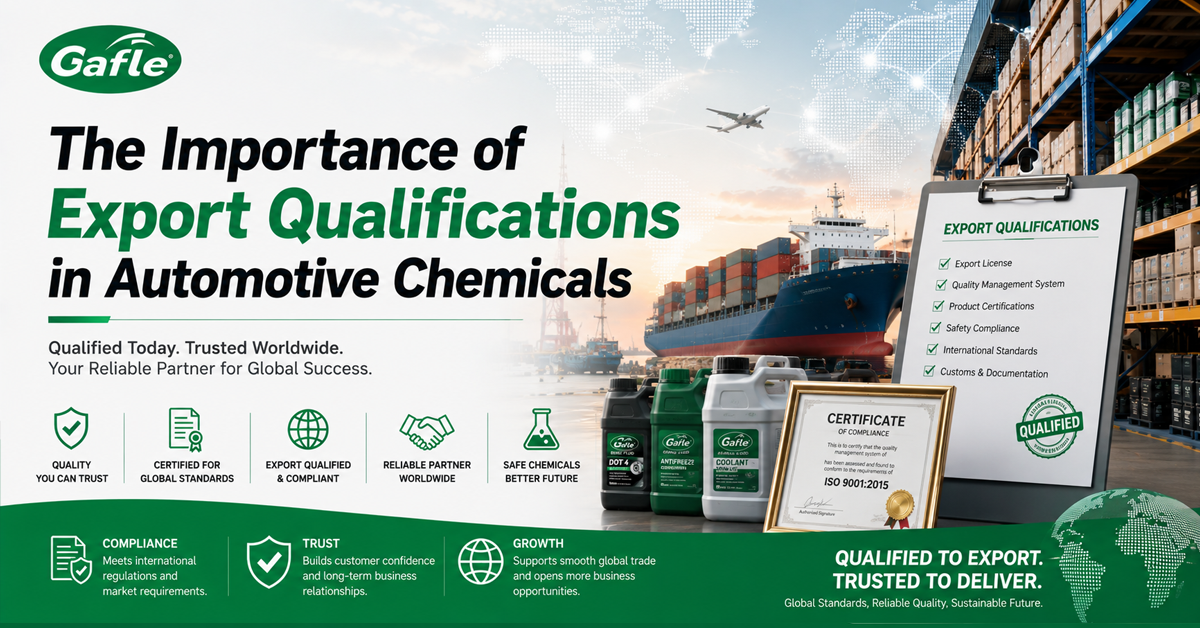
- Export-ready documentation and shipping support
- Private label formatting for regional brands
- Clear communication on product variants and application scope
If the supplier also functions as an Automotive Lubricants Exporter, buyers often benefit from broader logistics experience. That can matter when consolidating shipments or planning multi-market distribution. Still, broader export experience does not replace category-specific discipline. Brake fluid is not the place to assume “close enough.”
OEM, private label, or standard supply?
OEM Brake Fluid
OEM programs usually demand tighter coordination. The buyer may need product consistency across batches, custom packaging, or branding that aligns with a vehicle or aftermarket line. The factory must be able to follow that brief without introducing unnecessary variation.
Private Label Brake Fluid
Private label work is often where many factories either prove their maturity or expose their limits. Good execution means more than printing a customer logo. It means dependable filling, correct carton labeling, and packaging that looks professional on a distributor shelf.
Standard export supply
In standard distribution, the buying logic is simpler but not easier. Buyers still need dependable documentation, secure packing, and a supplier who understands destination-market expectations. A lower-priced offer is not useful if the shipment arrives with avoidable issues.
What a buyer should ask before placing an order
A practical sourcing conversation should cover more than price and minimum order quantity. Buyers should ask how the factory handles batch traceability, packaging protection, and product change control. If the supplier offers several grades or packaging options, request clear written separation between them. Ambiguity here becomes a warehouse problem later.
It is also wise to ask how the factory supports label approval, carton configuration, and export paperwork. These are not glamorous questions, but they save time. Teams that skip them often discover the hard way that the product itself was only half the job.
For companies searching for a Gafle Brake Fluid Factory, the most useful sign is operational discipline. A supplier that answers questions directly and documents the basics usually causes fewer downstream headaches than one that relies on broad promises.
Common mistakes buyers make
One frequent mistake is assuming all brake fluid sourcing follows the same template. It does not. Different channels may require different packaging styles, branding rules, or commercial documentation. Another common error is focusing only on unit cost while ignoring shipment protection and shelf presentation. Cheap packaging can become expensive very quickly if it damages product perception or creates leakage concerns.
Buyers also sometimes under-specify the job. If you need Private Label Brake Fluid, say so early. If you need export packing for multiple destinations, say that too. Clear instructions at the quote stage are easier than corrections after production starts.
Practical next step for sourcing teams
If you are evaluating a Gafle Brake Fluid Factory, start with a short technical and commercial checklist: product type, packaging format, branding needs, destination market, and expected order rhythm. That gives the supplier a workable brief and gives you a cleaner comparison across quotes.
The best brake fluid supplier is rarely the one with the loudest pitch. It is the one that can manufacture consistently, package carefully, and support the boring but critical details that keep automotive programs moving. For engineers and sourcing managers, that is usually where the real value sits.