
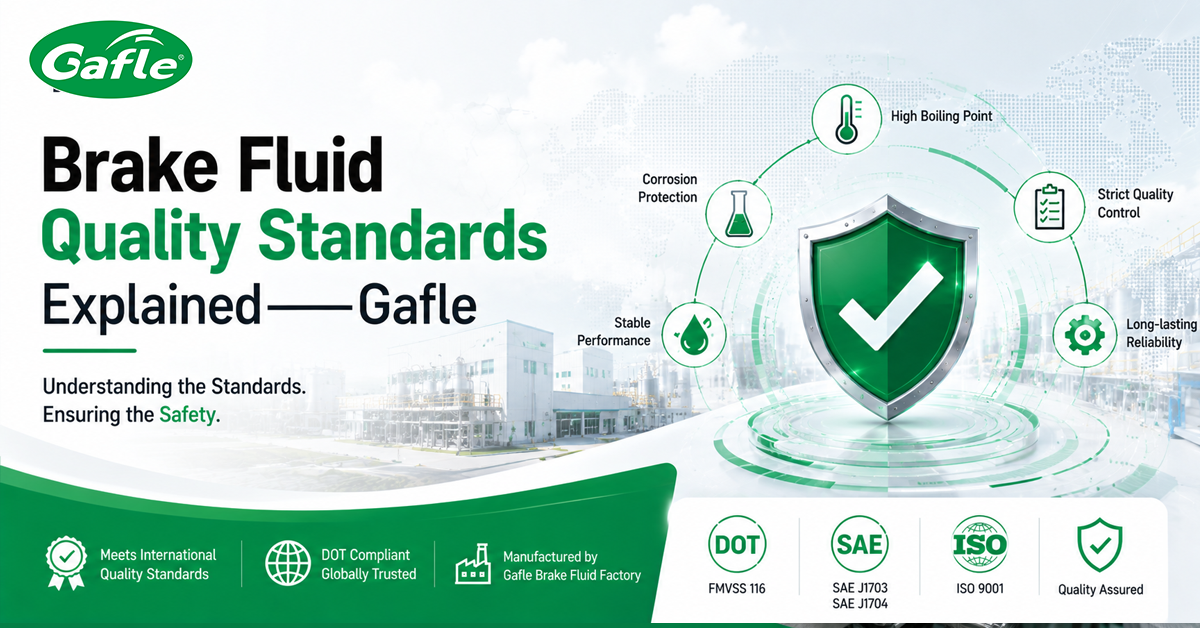
Brake Fluid Quality Standards Explained — Gafle
In the automotive industry, brake fluid quality directly affects braking performance, vehicle safety, and long-term brake system reliability. For distributors, importers, and automotive brands, understanding international brake fluid standards is essential when choosing a reliable supplier.
At Gafle Brake Fluid Factory, we believe that stable quality begins with strict manufacturing standards, professional testing systems, and continuous quality control management.
Why Brake Fluid Quality Standards Matter
Professional brake fluid quality standards help ensure that brake fluid products can perform safely under different driving conditions, including:
- High braking temperatures
- Heavy traffic conditions
- Long-distance driving
- Humid and extreme climates
Without strict standards, brake fluid may experience unstable boiling points, reduced braking efficiency, or damage to brake system components.
For global automotive markets, product consistency and safety are critical factors for customer trust.
Understanding DOT Brake Fluid Standards
One of the most important international specifications is the DOT brake fluid standards system. DOT standards define key technical performance requirements for brake fluids.
Common DOT classifications include:
DOT 3 Brake Fluid
- Suitable for standard driving conditions
- Good daily braking performance
- Common in passenger vehicles
DOT 4 Brake Fluid
- Higher boiling point performance
- Better resistance to high-temperature braking
- Widely used in modern vehicles
DOT 5.1 Brake Fluid
- Advanced high-performance brake fluid
- Excellent low-temperature flow performance
- Suitable for demanding driving conditions
At Gafle Factory, our products are manufactured according to recognized international technical standards.
Importance of Brake Fluid Quality Control
Professional brake fluid quality control is essential for maintaining stable product performance across every production batch.
At Gafle Brake Fluid Factory, quality control procedures include:
- Raw material inspection
- Formula consistency management
- Production process monitoring
- Final product verification
- Packaging inspection before shipment
Strict quality control helps reduce contamination risks and ensures reliable braking performance.
Professional Brake Fluid Testing Standards
Modern brake fluid testing standards require manufacturers to conduct multiple laboratory inspections before products enter the market.
At Gafle Factory, laboratory testing includes:
- Dry boiling point testing
- Wet boiling point testing
- Viscosity testing
- Moisture content inspection
- Corrosion resistance analysis
- Appearance and purity inspection
These testing procedures help verify product safety, consistency, and long-term stability.
OEM Brake Fluid Manufacturer for Global Markets
As a professional OEM brake fluid manufacturer, Gafle supports distributors and automotive brands worldwide with customized production solutions.
Our OEM services include:
- Private label brake fluid production
- Custom packaging design
- Export-ready packaging solutions
- Stable production capacity
- Professional technical support
These solutions help customers develop competitive automotive brands while ensuring reliable product quality.
Building a High Quality Brake Fluid Factory
A professional high quality brake fluid factory requires more than production equipment. It also depends on strict management systems, advanced technology, and continuous investment in manufacturing improvement.
At Gafle Factory, we focus on:
- Automatic production lines
- Dust-free manufacturing environments
- Advanced laboratory systems
- Stable production consistency
- International quality management standards
These investments help us provide dependable brake fluid products for global customers.
Understanding Brake Fluid Certification Standards
Professional brake fluid certification standards help verify whether products meet required international technical specifications.
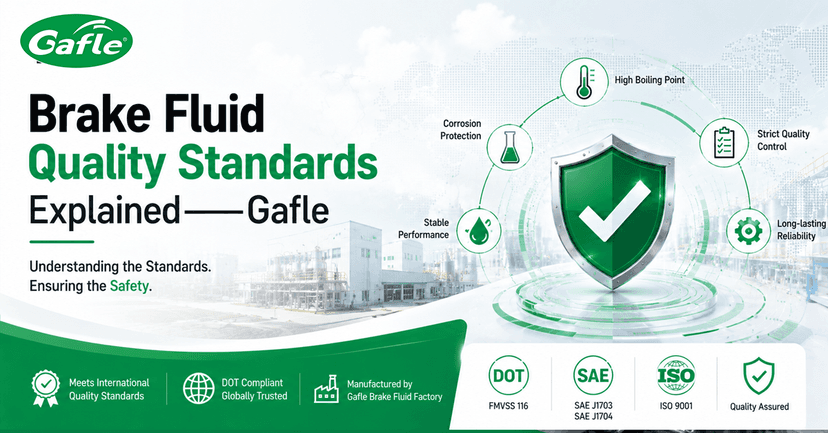
Gafle products follow recognized standards including:
- FMVSS 116
- SAE J1703 / J1704
- DOT performance standards
- International quality management systems
These certifications help customers build confidence in product reliability and safety.
Why Choose Gafle Brake Fluid Factory
At Gafle Brake Fluid Factory, we believe quality is the foundation of long-term customer trust.
Our advantages include:
- Stable product quality
- Strict laboratory testing
- Professional OEM services
- Export experience for global markets
- Continuous manufacturing improvement
We remain committed to providing reliable brake fluid solutions for customers worldwide.
Conclusion
Understanding brake fluid quality standards is essential for ensuring vehicle safety and reliable braking performance. Through strict manufacturing standards, professional laboratory testing, and stable quality management systems, Gafle continues delivering dependable brake fluid products for global automotive markets.