Global auto chemical distributors, repair chain buyers and private-label OEM brand owners face huge risks if they overlook core technical indicators when purchasing brake fluid in full-container bulk. Substandard brake fluid with unqualified boiling point, excess water or unstable viscosity will trigger mass customer complaints, port inspection rejection and even traffic safety liabilities. This article sorts out all non-negotiable key technical indicators you must verify before confirming large-volume brake fluid orders.
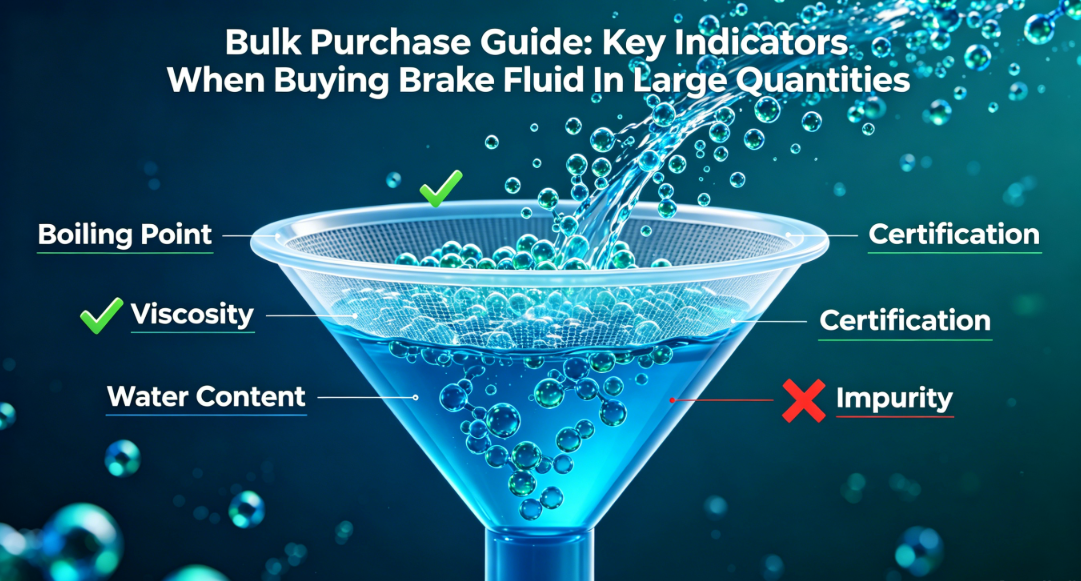
1. Dry & Wet Equilibrium Reflux Boiling Points (Most Critical Safety Index)
Boiling point is the top priority inspection item for all brake fluid bulk purchases, directly determining anti-vapor lock performance during continuous downhill or heavy braking.
- Standard threshold reference
- DOT3: Dry boiling point ≥205℃, Wet boiling point ≥140℃
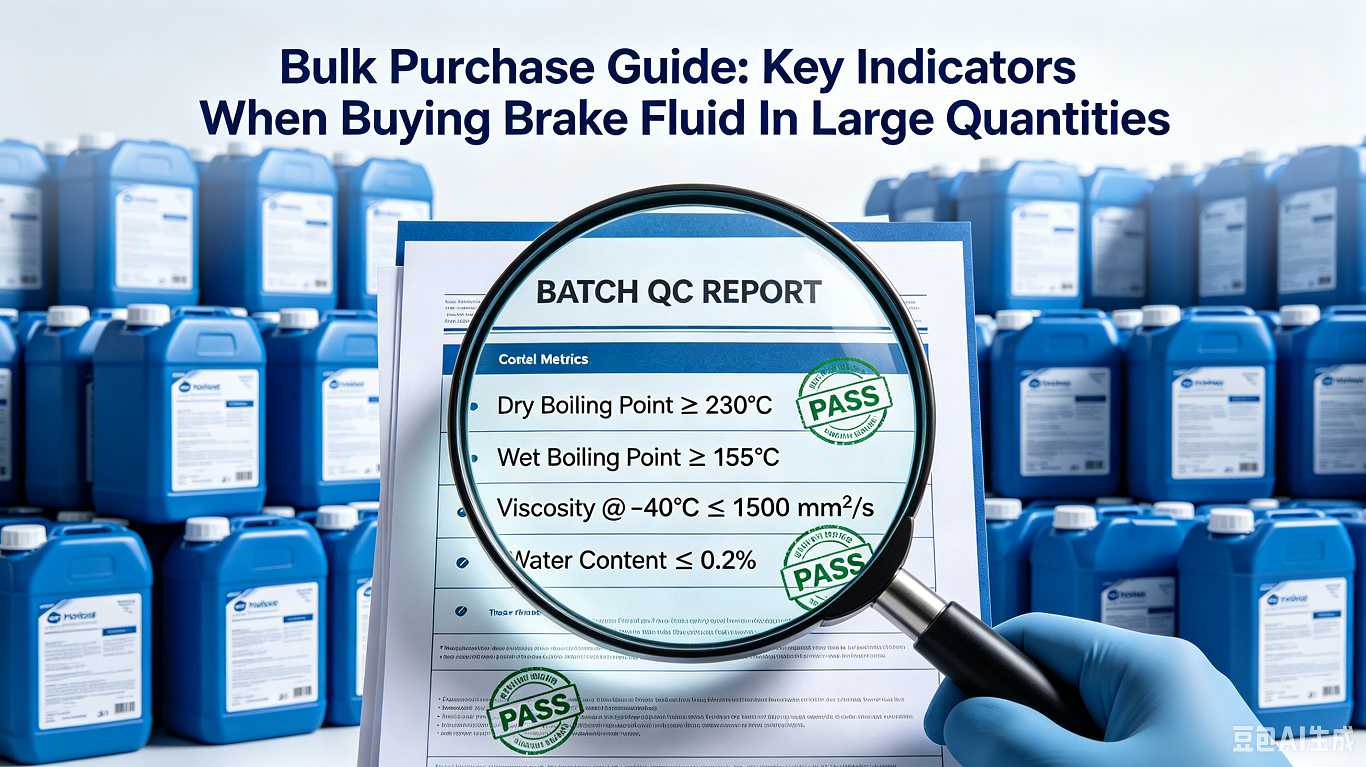
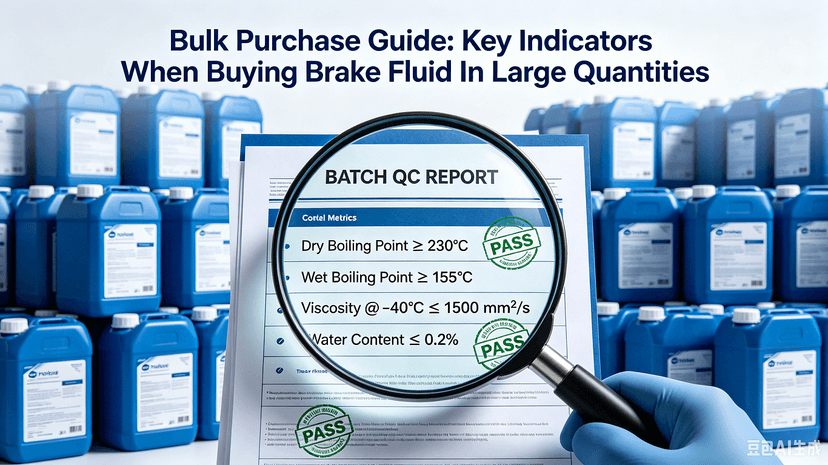
- DOT4: Dry boiling point ≥230℃, Wet boiling point ≥155℃
- DOT5.1: Dry boiling point ≥260℃, Wet boiling point ≥180℃
- Bulk purchase risk warning
Many low-cost small factories cut costs by reducing high-boiling additives, resulting in wet boiling points far below standard limits. After absorbing moisture during ocean transit, such products will easily generate air bubbles inside brake pipelines, leading to soft brake pedals and sudden braking failure.
- Verification method
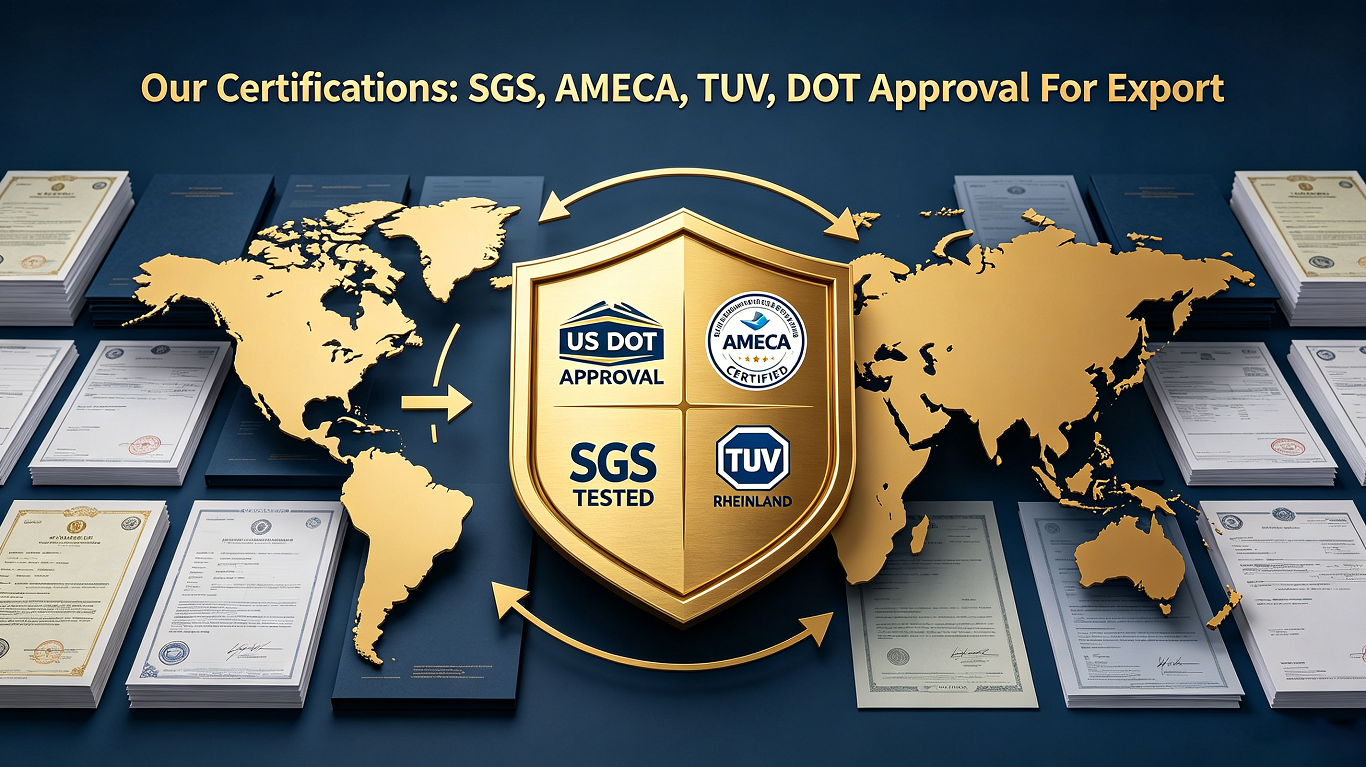
Request official laboratory batch test reports for each production lot; third-party SGS or AMECA boiling point test certificates are recommended for cross-border import customs clearance.
2. Kinematic Viscosity At -40℃ & 100℃
Viscosity controls brake fluid flow speed under extreme temperature environments, essential for clients in cold northern markets (Russia, Canada, Northern Europe) and high-temperature tropical regions.
- Standard limits
- -40℃ low-temperature viscosity: DOT3/DOT4 ≤1500 mm²/s; DOT5.1 ≤900 mm²/s
- 100℃ high-temperature viscosity: All grades ≥1.5 mm²/s
- Hidden risks of unqualified viscosity
Excessively high -40℃ viscosity makes brake fluid thicken severely in freezing winters, delaying hydraulic transmission and extending stopping distance. Too low high-temperature viscosity causes insufficient lubrication of pump internal components, accelerating seal wear.
- Bulk purchasing suggestion
If your target market covers frigid zones, prioritize DOT5.1 formulas with low-temperature viscosity below 900 mm²/s, and ask suppliers to provide low-temperature viscosity test records for every batch.
3. Finished Product Water Content
Glycol brake fluid is highly hygroscopic, and raw material moisture or unclosed production workshops will push water content over the safety threshold.
- Factory control standard
Formal qualified manufacturers strictly control finished brake fluid water content ≤0.2%, while GB12988 national standard requires raw material water content below 0.05%.
- Hazards of excessive water content
Moisture drastically reduces wet boiling point, causes internal metal corrosion of calipers and master cylinders, and shortens the service life of vehicle brake systems by more than half.
- Inspection standard
Karl Fischer titration is the authoritative testing method. Require suppliers to attach water content test data on batch QC reports to avoid receiving moisture-contaminated cargo after long sea shipping.
4. Corrosion & Compatibility Indicators
For long-term wholesale business, metal corrosion resistance and rubber seal compatibility determine end-user after-sales rates.
- Metal corrosion test
Qualified brake fluid must not cause rust or pitting on steel, cast iron, aluminum and copper test pieces under high-temperature cycle simulation. Inferior products without sufficient anti-rust additives will corrode vehicle brake pipelines within 6–12 months of use.
- Rubber swelling compatibility
The fluid cannot make nitrile rubber brake seals expand, shrink or crack. Bad compatibility leads to persistent brake fluid leakage for car owners, bringing massive refund claims to distributors.
5. Certification & Formula Consistency Indicators
Beyond physical and chemical data, you need to confirm supplier qualification indicators before large orders:
- Valid international certifications: DOT approval, SGS full-item test report, AMECA certification, MSDS non-hazardous ocean transport document
- Batch formula stability: All boiling point, viscosity and water content data should fluctuate within tiny fixed ranges across production batches; large numerical deviations indicate unstable blending technology.
- Raw material source verification: Suppliers should adopt high-purity imported glycol ether base fluid instead of recycled waste solvent to guarantee long-term parameter consistency.
6. Final Bulk Purchase Inspection Checklist
- Obtain full batch lab test reports covering boiling point, viscosity and water content
- Confirm valid international certification documents for customs clearance
- Request pre-shipment sample testing to recheck all core indicators by third-party labs
- Add quality compensation clauses in contracts for batches failing standard parameters
Closing Summary
Large-quantity brake fluid procurement cannot rely solely on low unit prices. Checking the above core technical indicators comprehensively eliminates over 95% of import and after-sales risks. Cooperate with manufacturers with complete independent laboratory testing systems and dual GB12988 & DOT compliance to secure stable, safe supply for your global aftermarket business.