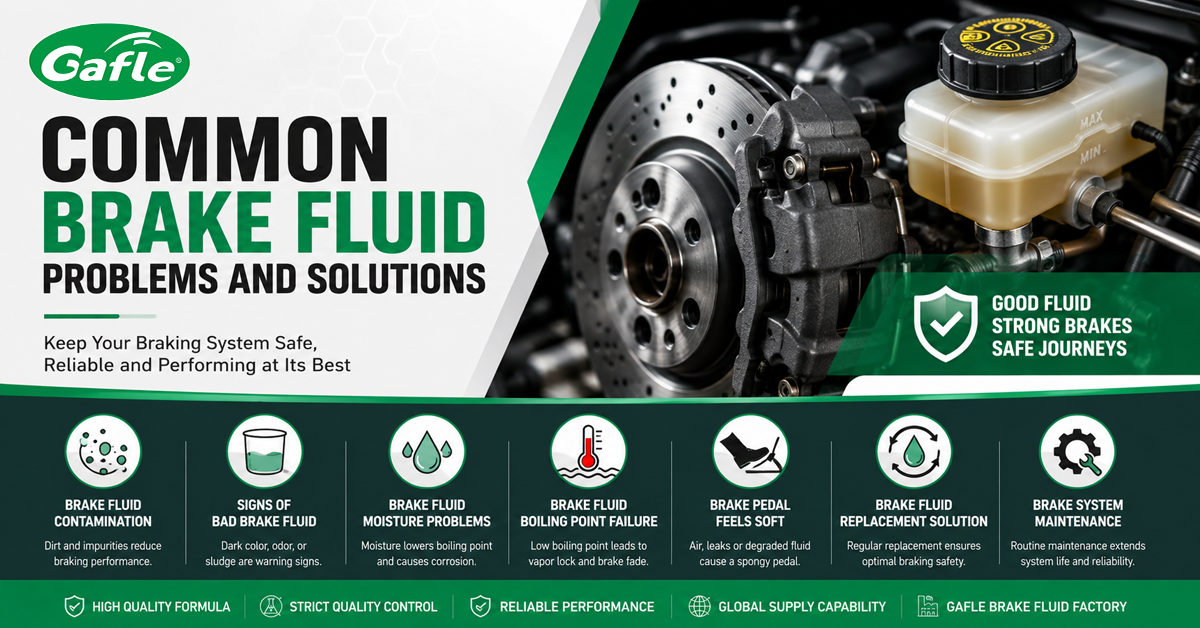
Common Brake Fluid Problems and Solutions
Brake fluid is one of the most important components in a vehicle’s braking system. It transfers hydraulic pressure and helps maintain safe and stable braking performance under different driving conditions. However, over time, brake fluid may develop various problems that can affect braking efficiency and vehicle safety.
Understanding common brake fluid problems and their solutions can help drivers and automotive distributors maintain better brake system performance and reduce maintenance risks.
At Gafle Brake Fluid Factory, we focus on providing reliable brake fluid solutions for global automotive markets.
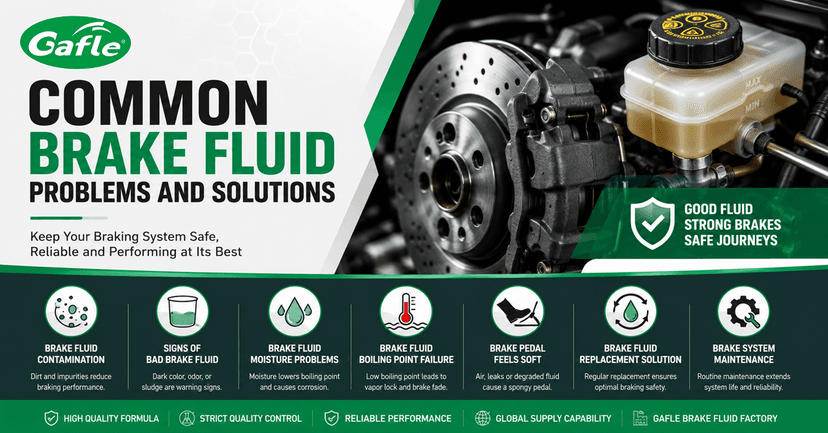
Brake Fluid Contamination
One of the most common issues is brake fluid contamination. Brake fluid can become contaminated by moisture, dirt, metal particles, or degraded internal brake system materials.
Contaminated brake fluid may cause:
- Reduced braking efficiency
- Internal corrosion
- Damage to brake components
- Unstable hydraulic pressure
- Shortened brake system lifespan
Solution:
Regular brake fluid inspection and replacement can help prevent contamination problems. Using high-quality brake fluid and maintaining a sealed braking system also helps reduce contamination risks.
Signs of Bad Brake Fluid
Recognizing the signs of bad brake fluid is important for maintaining driving safety.
Common warning signs include:
Dark Fluid Color
Fresh brake fluid is usually clear or light yellow. Old fluid may turn dark brown or black due to contamination and oxidation.
Soft Brake Pedal
Brake response may become weak or spongy when brake fluid performance declines.
Longer Stopping Distance
Poor fluid quality may reduce braking efficiency during emergency braking situations.
Burning Smell During Braking
Overheated or degraded brake fluid may produce unusual smells during heavy braking.
Solution:
Drivers should regularly inspect brake fluid condition and replace degraded fluid according to vehicle maintenance schedules.
Brake Fluid Moisture Problems
Brake fluid moisture problems are one of the biggest causes of brake system performance loss.
Brake fluid naturally absorbs moisture from the air over time. Excess moisture can:
- Lower the boiling point
- Increase corrosion risks
- Reduce braking stability
- Cause brake fade during high-temperature braking
This issue is especially common in humid and coastal regions.
Solution:
Using brake fluid with strong moisture resistance and replacing fluid regularly helps maintain stable braking performance.
Brake Fluid Boiling Point Failure
Brake fluid boiling point failure occurs when brake fluid overheats under high-temperature braking conditions.
This may happen during:
- Mountain driving
- Heavy traffic conditions
- Commercial transportation
- Performance driving
When brake fluid boils, vapor bubbles may form inside the hydraulic system, reducing braking effectiveness.
Solution:
Using high-quality brake fluid with stable boiling point performance can help reduce overheating risks. DOT 4 and DOT 5.1 brake fluids are commonly used for demanding driving conditions.
Brake Pedal Feels Soft
A common complaint among drivers is that the brake pedal feels soft or less responsive.
Possible causes include:
- Moisture contamination
- Air inside brake lines
- Degraded brake fluid
- Brake system leakage
A soft brake pedal may reduce braking confidence and increase stopping distance.
Solution:
Brake fluid replacement, brake bleeding procedures, and professional brake system inspection can help restore stable hydraulic pressure.
Brake Fluid Replacement Solution
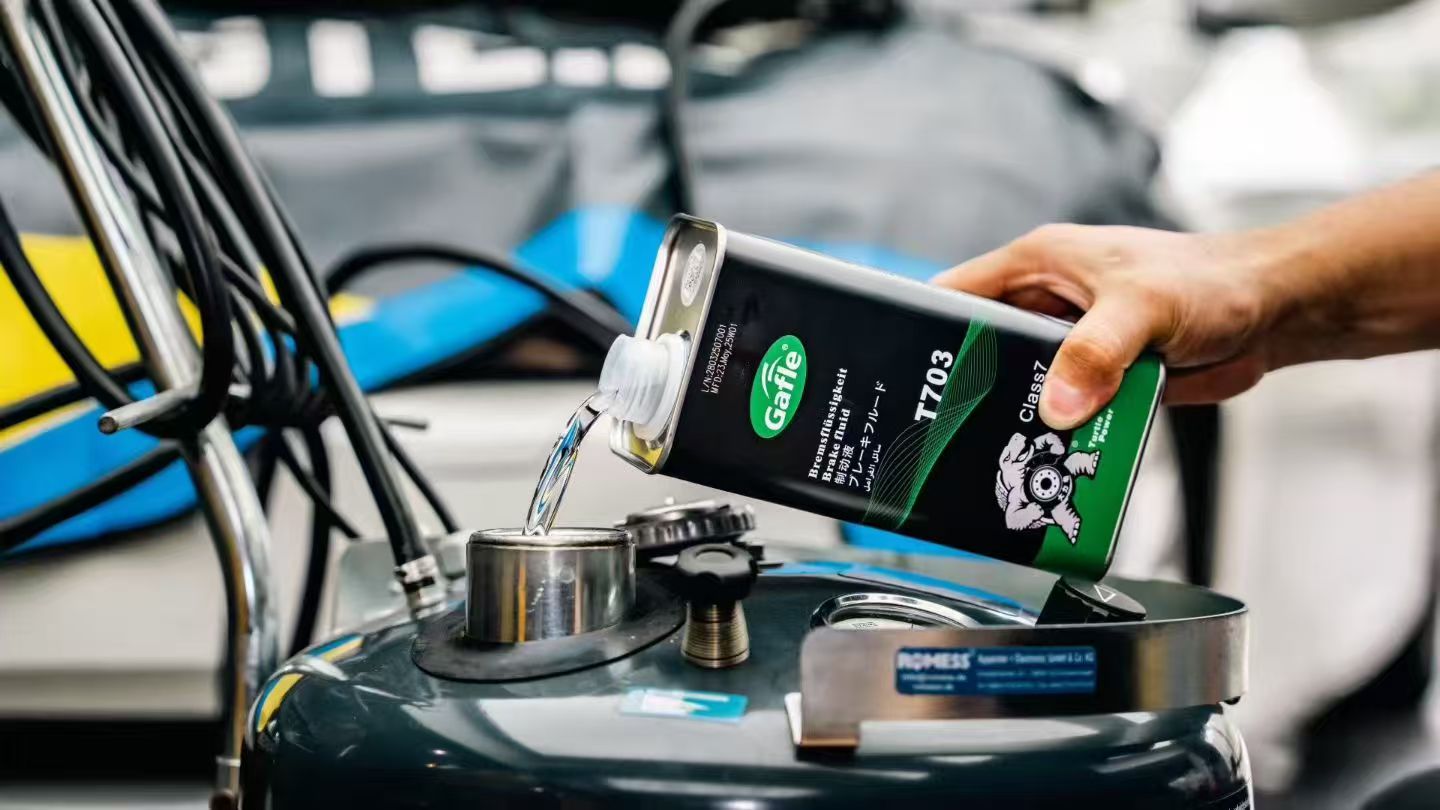
A professional brake fluid replacement solution is one of the most effective ways to maintain brake system reliability.
Most vehicle manufacturers recommend replacing brake fluid every:
- 2 years
- Or according to maintenance schedules
Regular replacement helps:
- Maintain braking performance
- Reduce corrosion risks
- Improve hydraulic stability
- Protect brake system components
Importance of Brake System Maintenance
Regular brake system maintenance is essential for long-term vehicle safety.
Professional maintenance should include:
- Brake fluid inspection
- Moisture content testing
- Brake line inspection
- Brake component checks
- Fluid replacement procedures
Routine maintenance helps reduce repair costs and improve driving safety.
Gafle Brake Fluid Factory: Reliable Brake Fluid Solutions
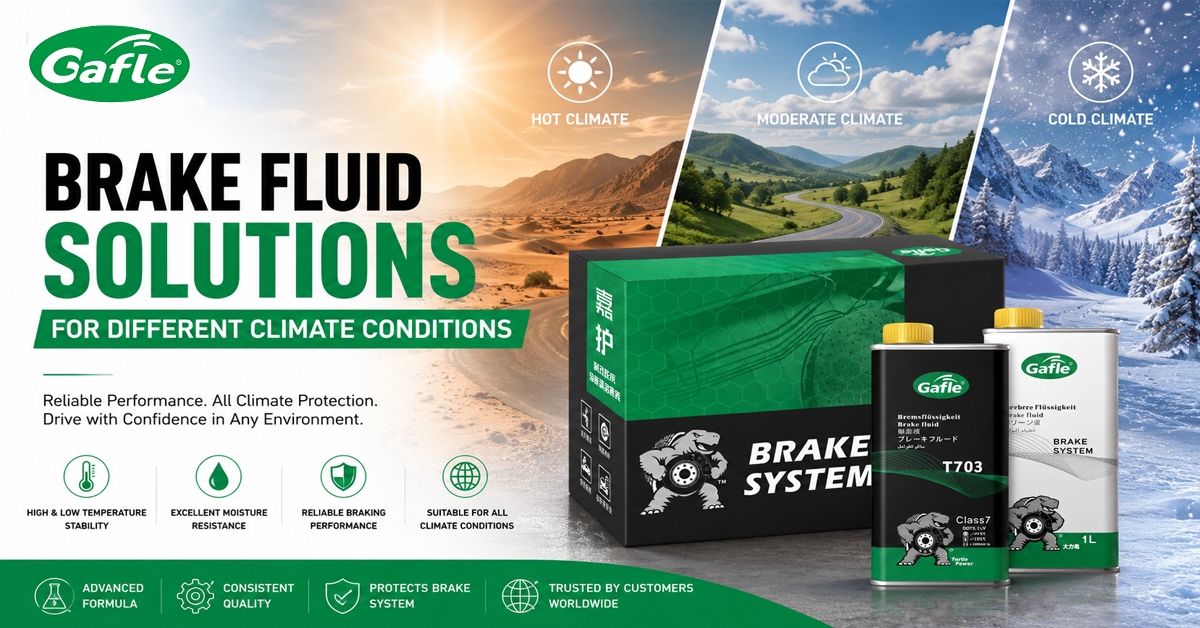
At Gafle Brake Fluid Factory, we focus on producing high-quality brake fluid products for different driving environments and climate conditions.
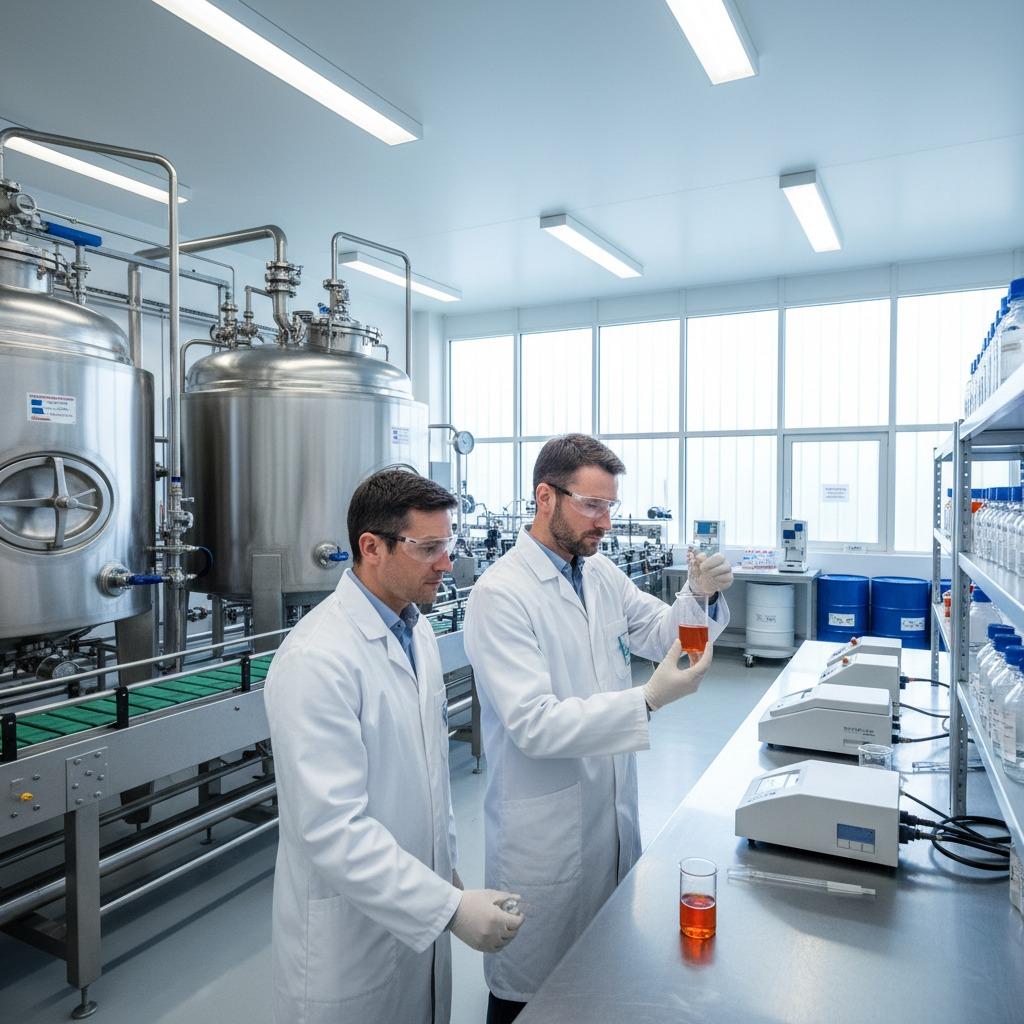
Our products undergo strict laboratory testing for:
- Boiling point performance
- Moisture resistance
- Corrosion protection
- Viscosity stability
- Product consistency
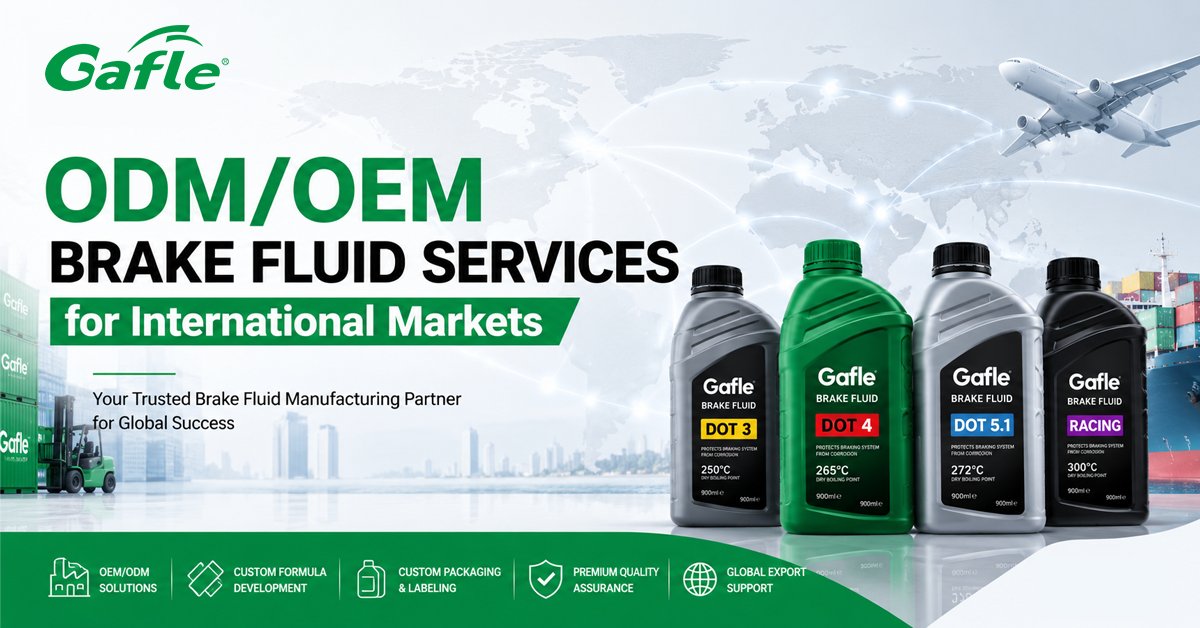
Our product range includes:
- DOT 3 brake fluid
- DOT 4 brake fluid
- DOT 5.1 brake fluid
Conclusion
Brake fluid problems can significantly affect braking performance and vehicle safety if ignored. Understanding common issues such as contamination, moisture absorption, boiling point failure, and soft brake pedals can help drivers maintain safer and more reliable brake systems.
At Gafle Brake Fluid Factory, we remain committed to providing stable, high-quality brake fluid solutions that help customers maintain safer driving performance worldwide.