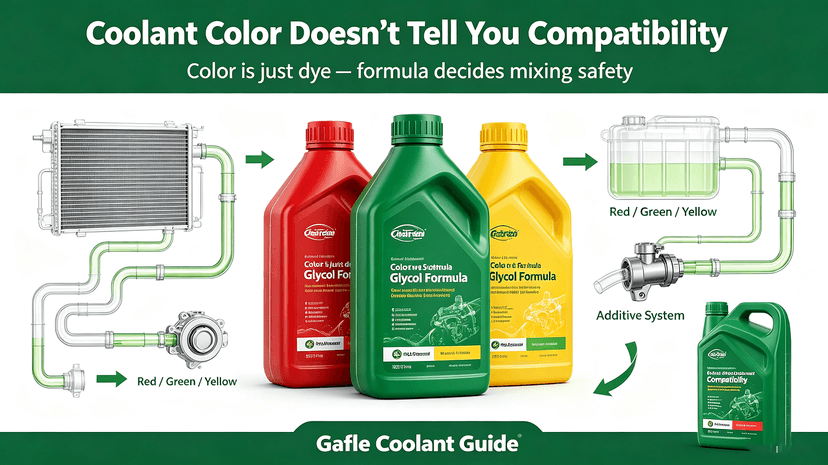
Coolant Color Doesn’t Tell You Compatibility
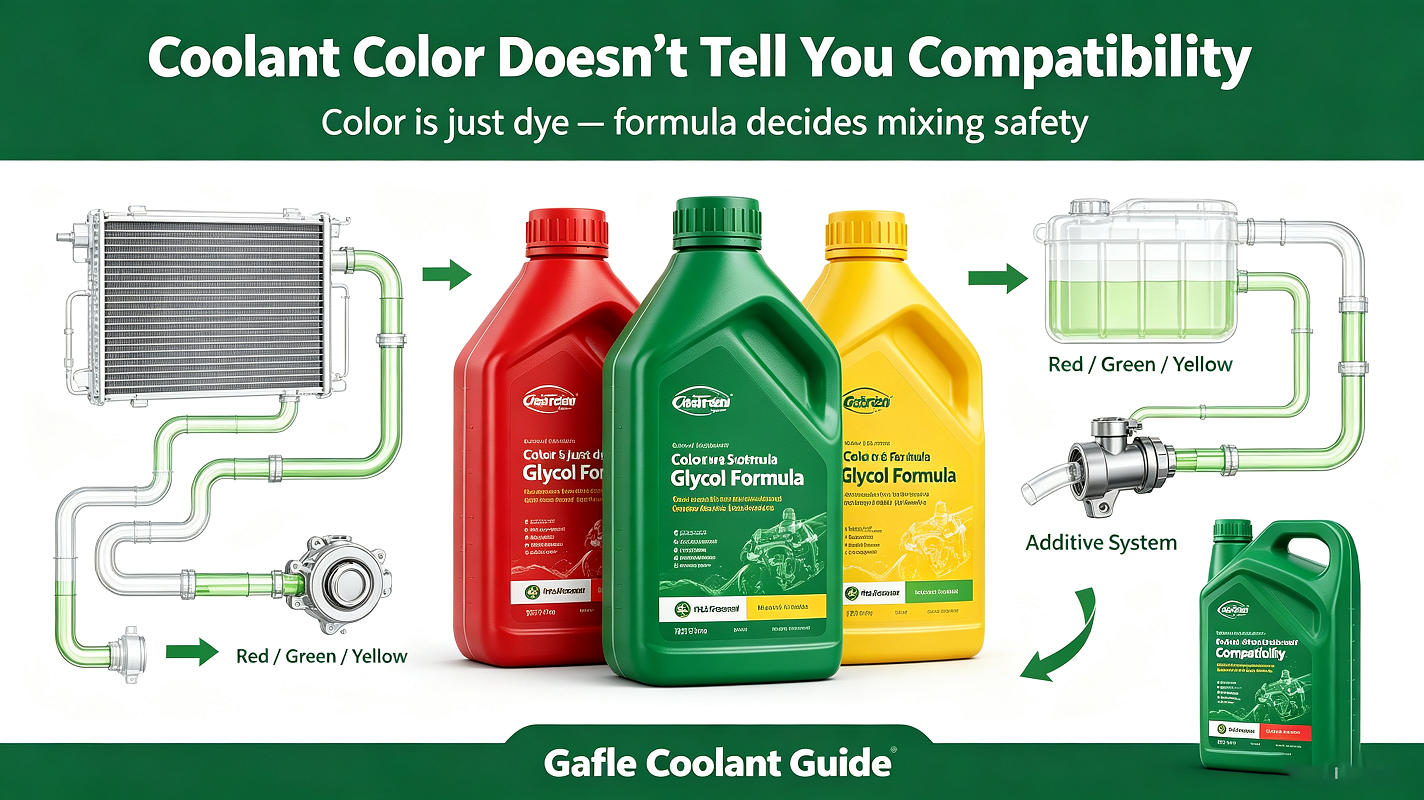
Most car owners follow a simple rule they picked up from repair shops: “Never mix red coolant with green coolant.” This widespread belief is only half true, and it confuses thousands of drivers every year. The bright hues in coolant are nothing more than harmless colored dye added for easy visual inspection. The real factor that determines whether two coolants can safely blend is their chemical formula and additive system—not the color. This article breaks down how coolant coloring works, the hidden damage from mismatched mixes, and how to pick compatible fluid for your vehicle.
1. What Creates Coolant’s Red, Green, Blue or Yellow Shades
Manufacturers add small amounts of food-safe dye to clear glycol coolant purely for visibility. The dye lets you quickly spot leaks under your car and check fluid levels in the transparent overflow tank.
- Red coolant might be traditional IAT or long-life OAT formula
- Green coolant could be standard ethylene glycol or eco-friendly propylene glycol
Two bottles of green coolant from different brands may have completely incompatible additive packages, while a red and yellow coolant from the same production line can mix safely. Color has zero impact on freezing point, boiling point or anti-corrosion protection.
2. The Real Risk: Mixing Mismatched Additive Systems
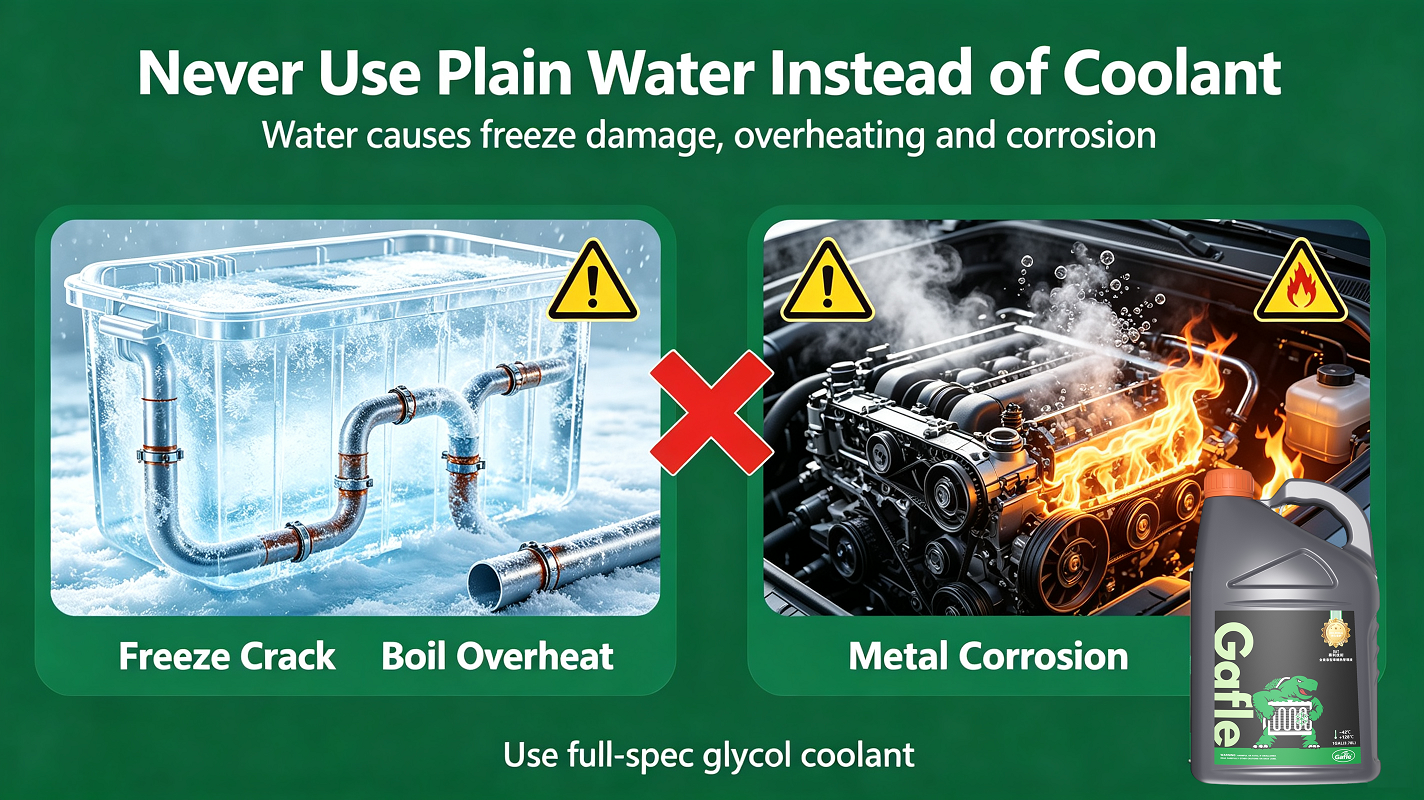
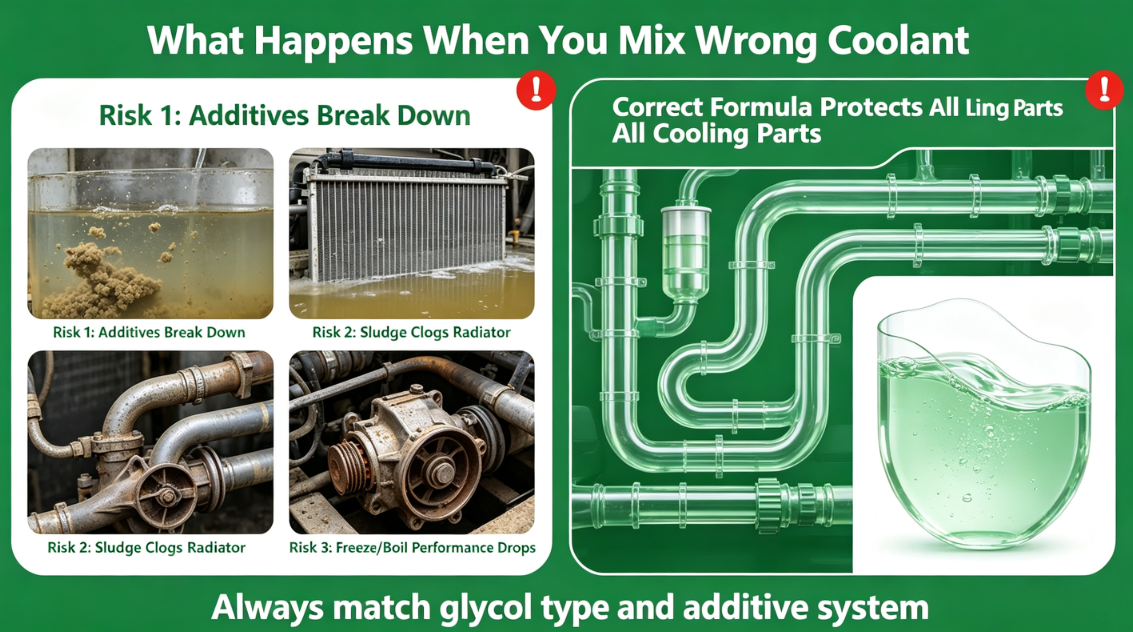
Coolant’s protective power comes from its anti-rust, anti-foam additives, not its color. When you blend two coolants with conflicting additive chemistries, three critical failures happen:
- Protective additives neutralize each other
The anti-corrosion agents break down instantly, leaving aluminum radiators, iron engine blocks and water pumps exposed to rust and scale buildup.
- Thick sludge clogs narrow cooling pipes
Clashing chemicals create sticky sediment that blocks radiator tubes. Clogged lines slow heat transfer and cause sudden engine overheating during summer driving.
- Boiling & freezing performance drops sharply
Mixed fluid loses its stable boiling and freezing thresholds, raising risks of steam lock in hot weather and cracked radiators in cold winters.
This damage happens slowly over weeks, so drivers rarely notice until they face expensive cooling system repairs.
3. Simple Rules To Match Coolant Correctly
Forget judging compatibility by color—use these easy checks instead:
- Check your vehicle owner’s manual for the required coolant type (IAT, OAT, HOAT, ethylene or propylene glycol).
- Match the formula label on the coolant bottle, not its color.
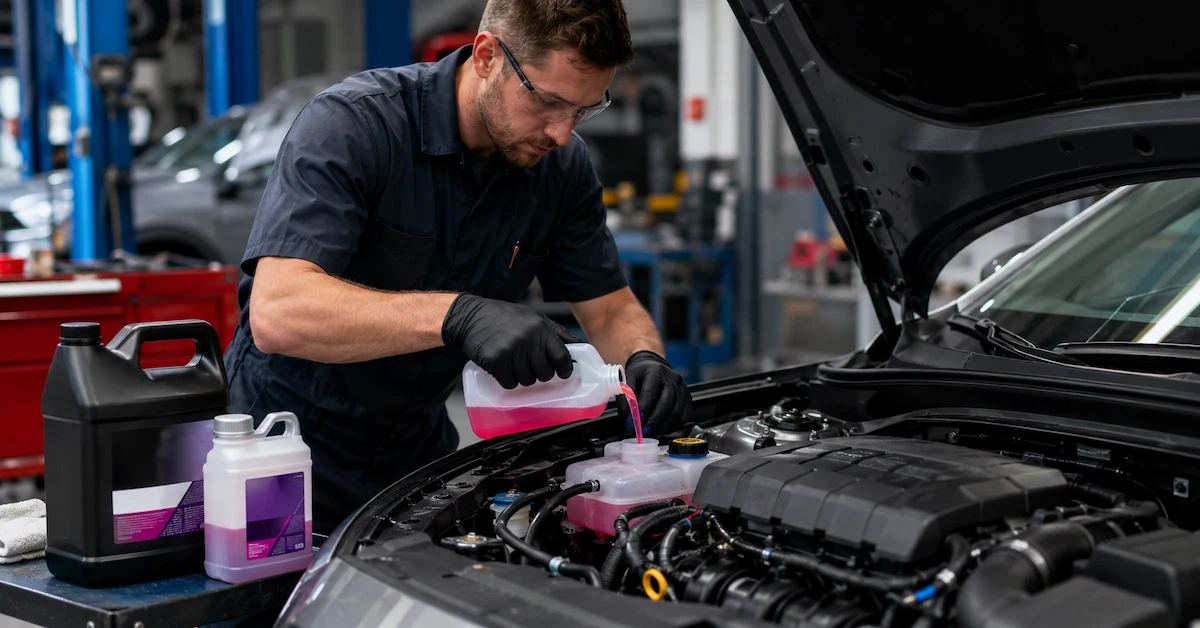
- If you do not know the existing fluid inside your engine, perform a full cooling system flush before adding new coolant. Partial topping-up with an unknown formula will create chemical conflict over time.
4. Quick Emergency Tip
If you need to add fluid mid-trip and cannot find the matching coolant, use only small amounts of distilled water as a temporary fix. Head to a garage for a full flush as soon as possible; do not top up with random colored coolant.
Final Takeaway
Coolant color is just a visual marker, not a compatibility guide. Judging fluid safety by red, green or yellow shades leads to costly cooling system clogging and corrosion. Always match coolant based on its core glycol formula and additive system to keep your engine protected year-round.
Welcome to contact GAFLE for more information & cooperation!
peter
ZHEJIANG GAFLE AUTO CHEMICL CO.,LTD
Tel:86-579-8222 1665
Fax:86-579-8246 4690
Cel/Wechart:86-13335993986
E-mail:peter@gafle.net
Web:www.gafle.net
peter
ZHEJIANG GAFLE AUTO CHEMICL CO.,LTD
Tel:86-579-8222 1665
Fax:86-579-8246 4690
Cel/Wechart:86-13335993986
E-mail:peter@gafle.net
Web:www.gafle.net