
Coolant Maintenance For Hot Tropical & Desert Climates
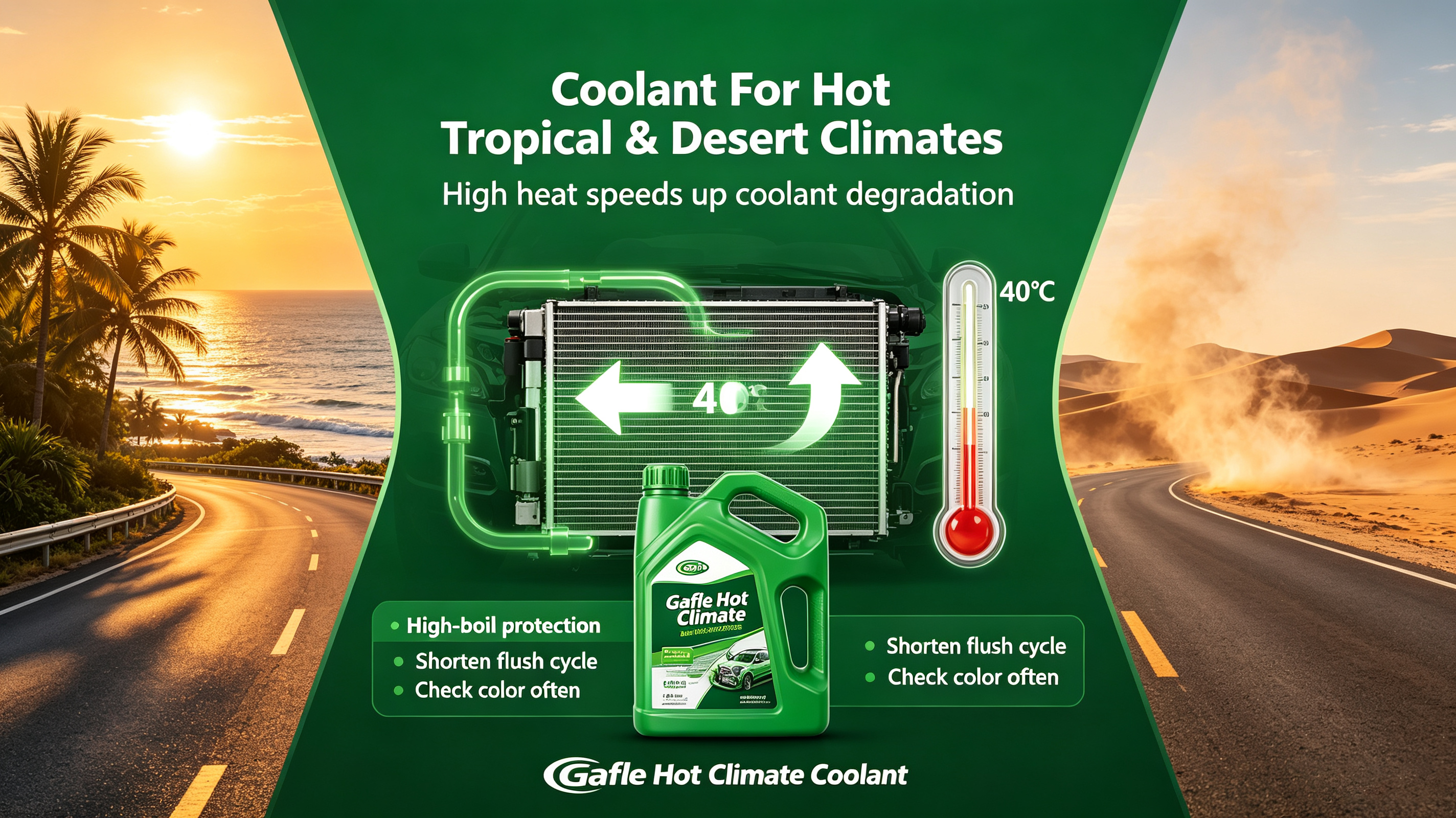
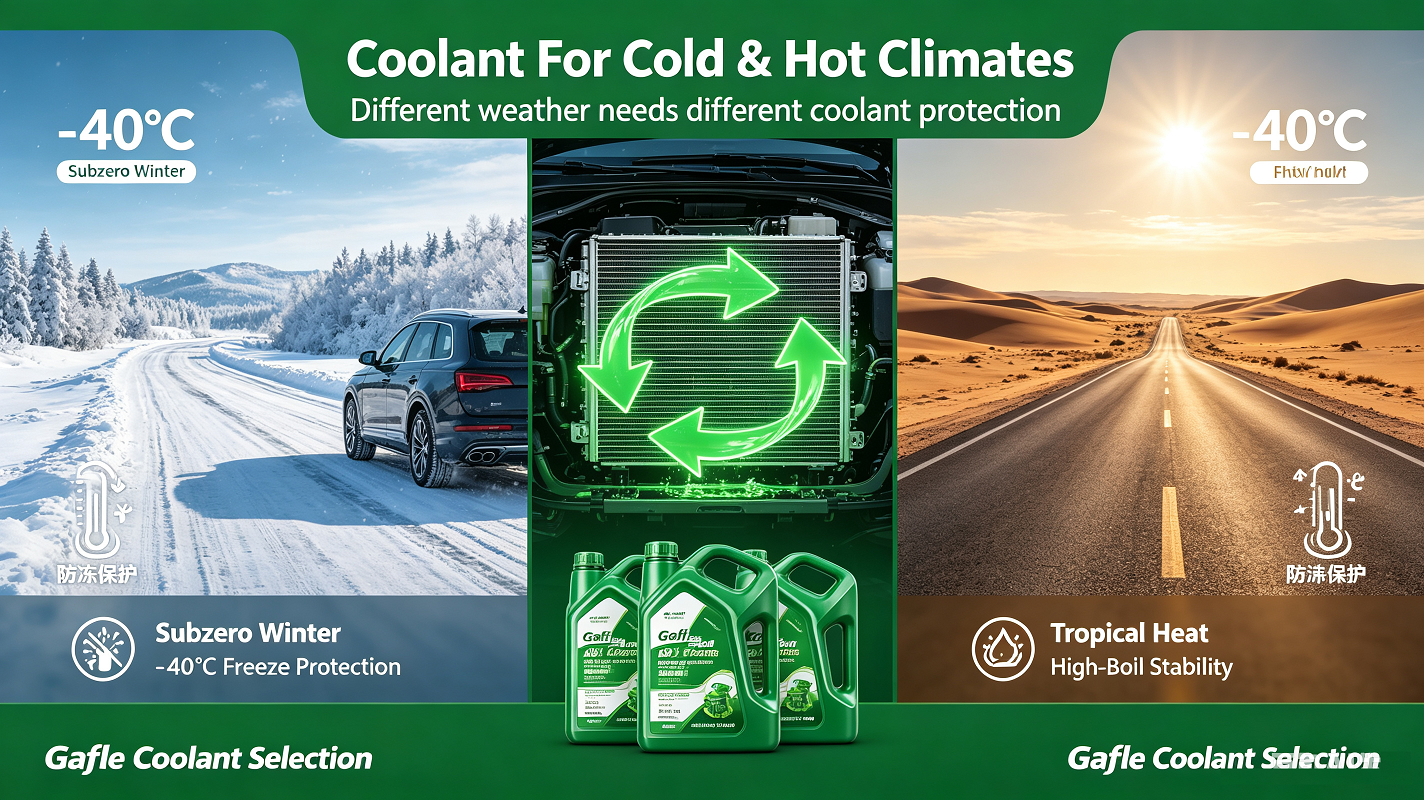
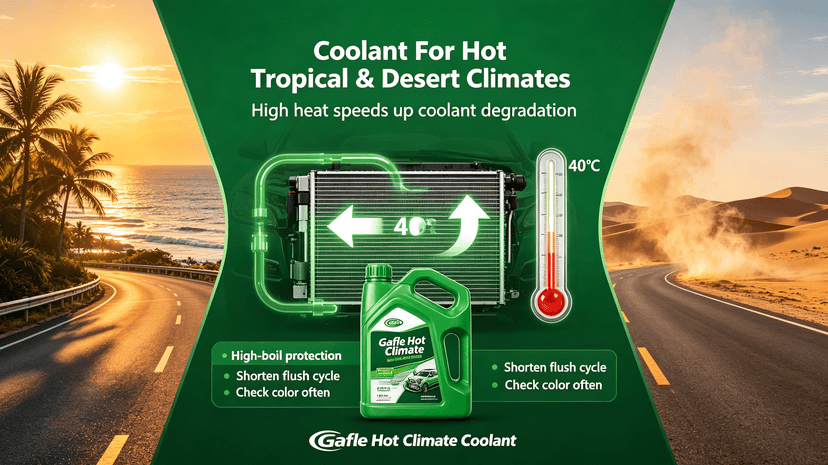
Drivers in tropical coastal areas and arid desert regions deal with constant high ambient temperatures above 35°C all year. Sustained heat accelerates two irreversible coolant failures: rapid additive breakdown and boiling point decline. Degraded fluid causes engine overheating during stop-start city traffic and long uphill highway trips. This guide covers tailored coolant selection and shortened maintenance cycles exclusively for hot climate vehicles.
1. How High Heat Ruins Coolant Fast
Standard coolant relies on anti-corrosion and anti-boil additives to protect the cooling system. Continuous extreme heat burns these stabilizing chemicals away quickly:
- In mild temperate zones, coolant additives last 2–5 years
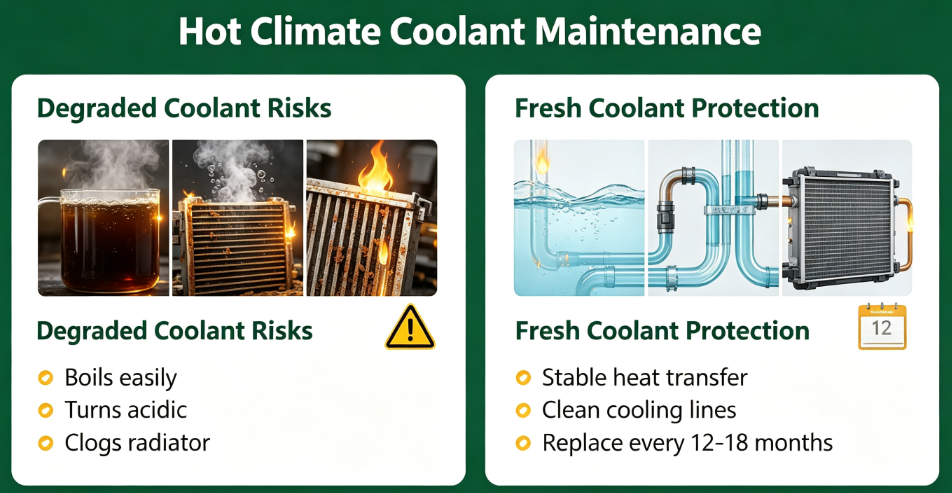
- In tropical or desert heat, additives fully deplete within only 12–18 months
Once additives vanish, coolant turns acidic and eats away aluminum radiators, water pump seals and metal engine channels. Degraded fluid also boils at much lower temperatures, forming compressible steam bubbles that block heat transfer and trigger sudden overheating.
2. Best Coolant Type For Constant Hot Weather
Opt for long-life OAT or HOAT high-boiling coolant for tropical and desert use:
- These formulas hold stable thermal resistance far longer than traditional IAT coolant under persistent high heat
- Extra anti-oxidation additives slow acidification even during non-stop summer driving
- High wet boiling point prevents steam lock during loaded mountain climbs and highway congestion
Avoid cheap basic coolant blends; their weak additive packages degrade within a single hot season.
3. Hot Climate Coolant Maintenance Rules
- Shorten full flush intervals
Instead of the standard 2–5 year replacement cycle, drain and refill your cooling system every 12–18 months in hot regions.
- Pre-trip coolant inspection before long drives
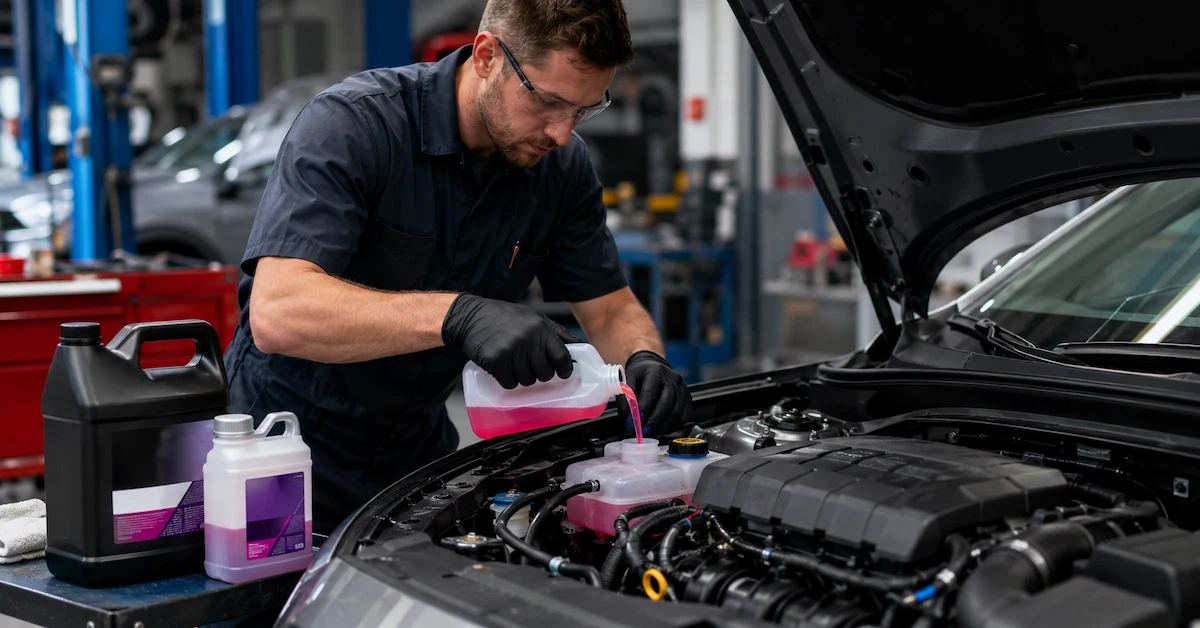
Check fluid transparency and tank level ahead of summer road trips. Dark, murky brown coolant signals severe degradation and requires immediate replacement.
- Reduce direct sun exposure when parking
Park in covered garages whenever possible to cut down engine bay heat buildup, slowing coolant chemical aging.
Final Takeaway
Hot tropical and desert weather drastically speeds up coolant degradation. Standard maintenance cycles do not apply here. Use high-boiling long-life coolant and schedule more frequent full flushes to prevent engine overheating, radiator corrosion and expensive cooling system repairs.
Welcome to contact GAFLE for more information & cooperation!
peter
ZHEJIANG GAFLE AUTO CHEMICL CO.,LTD
Tel:86-579-8222 1665
Fax:86-579-8246 4690
Cel/Wechart:86-13335993986
E-mail:peter@gafle.net
Web:www.gafle.net
peter
ZHEJIANG GAFLE AUTO CHEMICL CO.,LTD
Tel:86-579-8222 1665
Fax:86-579-8246 4690
Cel/Wechart:86-13335993986
E-mail:peter@gafle.net
Web:www.gafle.net