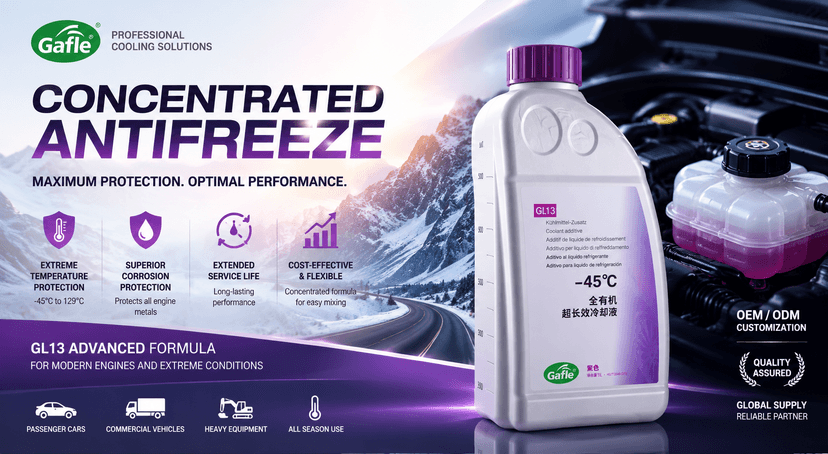
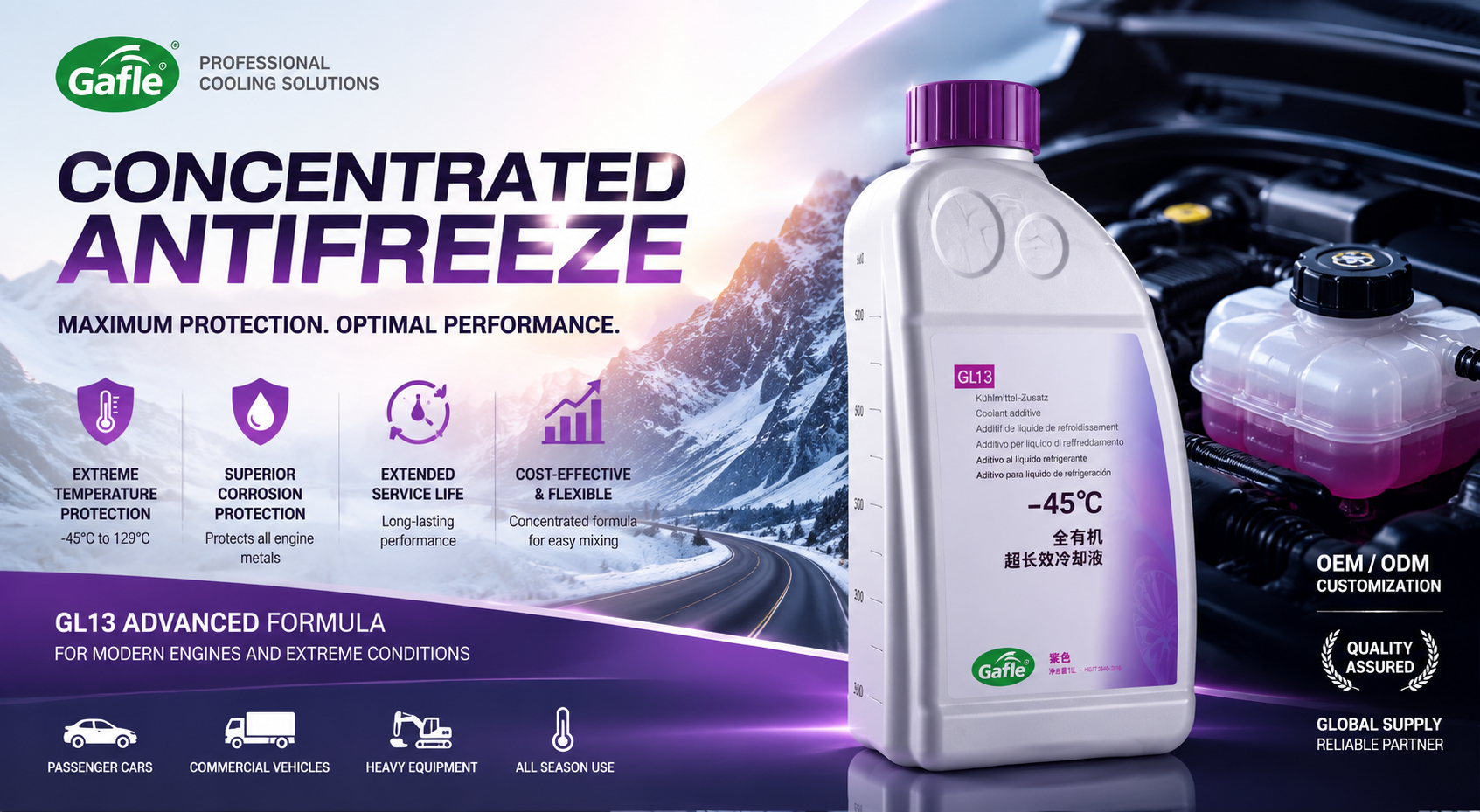
For many distributors and OEM buyers, using pre-mixed coolant can create unnecessary limitations. Fixed dilution ratios, higher transportation costs, and storage inefficiencies often reduce overall competitiveness. Concentrated antifreeze solves these issues by offering flexibility, efficiency, and better performance control. Just like long life brake fluid ensures stable braking performance, concentrated antifreeze is designed to optimize cooling systems under various operating conditions.
For buyers looking for reliable supply and customization, working with a professional manufacturer like GAFLE ensures consistent quality and OEM support.
The Real Pain Point: Cost, Flexibility, and Storage Challenges
Traditional coolant solutions present several challenges.
High Transportation Cost
- Pre-mixed coolant contains a high percentage of water
- Increases shipping volume and cost
Limited Flexibility
- Fixed formulation limits adjustment for different climates
Storage Inefficiency
- Requires more space
- Shorter shelf life in some conditions
These issues directly impact distributors, wholesalers, and bulk buyers.
How Concentrated Antifreeze Works
Concentrated antifreeze allows users to control dilution ratios based on application needs.
Custom Dilution
- Mix with water based on temperature requirements
- Flexible for different markets
Thermal Performance
- Maintains high boiling and low freezing points after dilution
Corrosion Protection
- Additives protect engine components over time
This flexibility makes it a preferred choice for global markets. You can explore suitable products on the product page.
Concentrated Antifreeze vs Pre-Mixed Coolant
| Factor | Pre-Mixed Coolant | Concentrated Antifreeze |
|---|---|---|
| Transport Cost | High | Lower |
| Flexibility | Fixed | Adjustable |
| Storage Efficiency | Lower | Higher |
| Performance Control | Limited | Customizable |
| Market Adaptability | Low | High |
This comparison shows why concentrated antifreeze is widely used in B2B supply chains.
How Long Life Brake Fluid and Concentrated Antifreeze Work Together
Vehicle systems depend on multiple fluids working in coordination.
System Balance
- Cooling system optimized by concentrated antifreeze
- Braking system stabilized by long life brake fluid
Reduced Operating Cost
- Lower logistics and maintenance expenses
Consistent Performance
- Stable operation in varying climates
Manufacturers with integrated production capabilities, as shown on the About Us page, can ensure consistent quality across all fluid categories.
Key Advantages for Distributors and OEM Buyers
Lower Logistics Cost
Concentrated antifreeze reduces shipping volume and cost.
Strong Market Demand
Suitable for both hot and cold climate regions.
OEM & Private Label Support
- Custom formulations
- Flexible packaging
- Branding solutions
Reliable Supply
Stable production ensures consistent quality. For bulk orders or OEM cooperation, you can directly contact the team.
Where Concentrated Antifreeze Performs Best
Export Markets
- Africa, Middle East, Southeast Asia
Commercial Fleets
- Trucks, buses, logistics vehicles
Industrial Applications
- Machinery cooling systems
Mixed Climate Regions
- Regions with varying temperature conditions
Selection Guidelines for Buyers
Dilution Ratio
- Flexible mixing options based on temperature
Performance Range
- Stable boiling and freezing points
Corrosion Protection
- Long-term system protection
Supplier Capability
- OEM support
- Export experience
- Consistent formulation
Frequently Asked Questions
Q1: What is the advantage of concentrated antifreeze over pre-mixed coolant?
A: It reduces transportation costs and allows flexible dilution for different environments.
Q2: Can concentrated antifreeze be used in all vehicles?
A: Yes, if diluted according to recommended specifications.
Q3: Does concentrated antifreeze improve performance?
A: It allows optimized cooling performance when mixed correctly.
Final Thoughts on Concentrated Antifreeze and Efficient Cooling Solutions
Concentrated antifreeze provides a flexible, cost-effective solution for modern cooling systems. By allowing customized dilution and reducing logistics costs, it offers clear advantages for distributors and OEM buyers. When combined with long life brake fluid, it forms a complete fluid system that enhances performance, reduces maintenance, and supports global market adaptability.
If you are looking for a reliable supplier, explore more at GAFLE or reach out via the contact page for customized solutions.