
How To Pick Coolant For Extreme Cold & Hot Climates
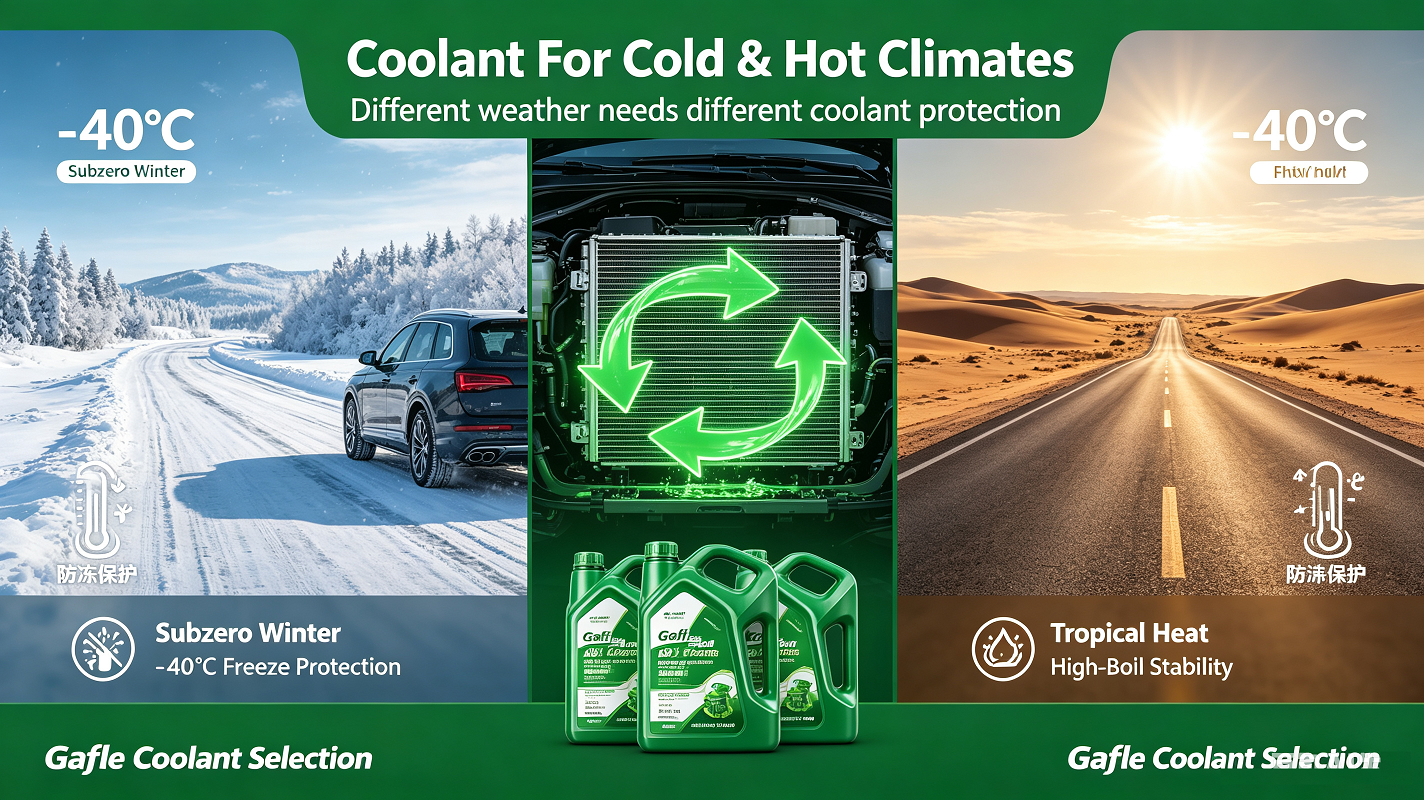
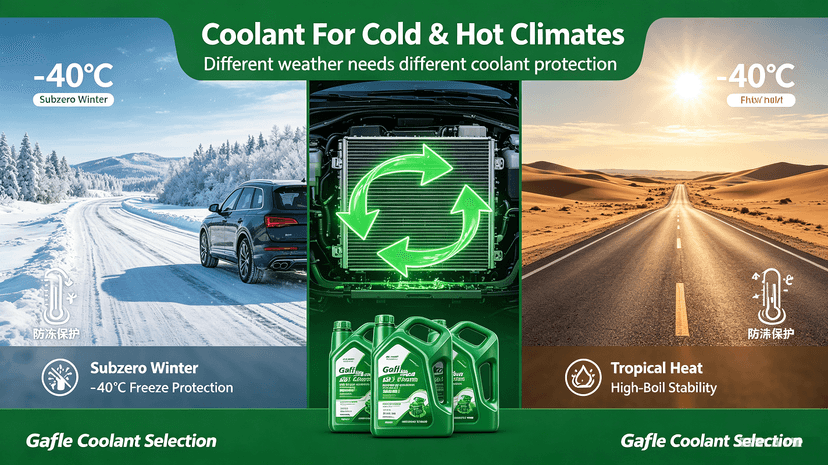
Standard all-season coolant works fine for mild, temperate regions, but vehicles operating in subzero northern winters or year-round tropical desert heat face unique cooling system threats. Freezing temperatures risk cracked radiators, while constant high heat speeds up coolant acidification and boiling failure. This guide splits clear coolant selection and maintenance rules for two opposite extreme climate types, helping drivers avoid seasonal engine damage.
Part 1: Coolant For Subzero Cold Northern Regions (Canada, Northern Europe, Cold Mountain Zones)
Temperatures dropping to -25°C or -40°C turn weak coolant into solid ice, and expanding ice splits engine blocks, plastic overflow tanks and thin radiator tubing. Here’s how to choose winter-ready coolant:
- Prioritize high-concentration ethylene glycol coolant
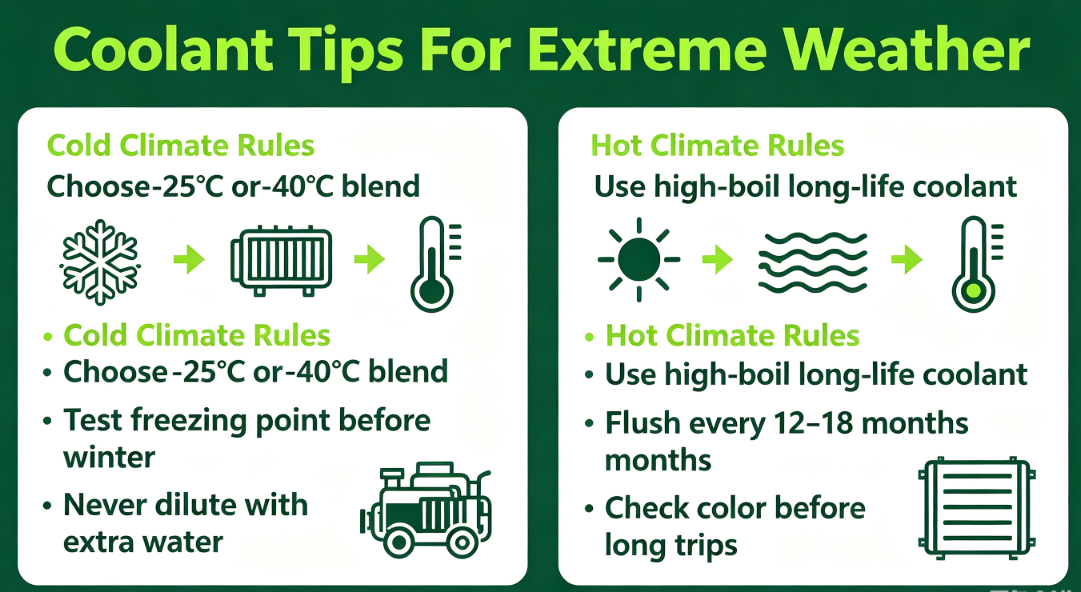
Pick blends formulated for -25°C or -40°C freezing protection. Higher glycol ratios stop liquid from solidifying even through long, frigid overnight parking.
- Choose long-life additive packages for cold start protection
Cold engine startup creates sharp temperature swings inside metal channels. Premium cold-climate coolant adds lubricants to shield water pumps and seals during icy morning ignition.
- Shorten inspection intervals before winter
Test coolant freezing point every autumn. If the freezing threshold rises above -20°C, schedule a full fluid flush before frost arrives.
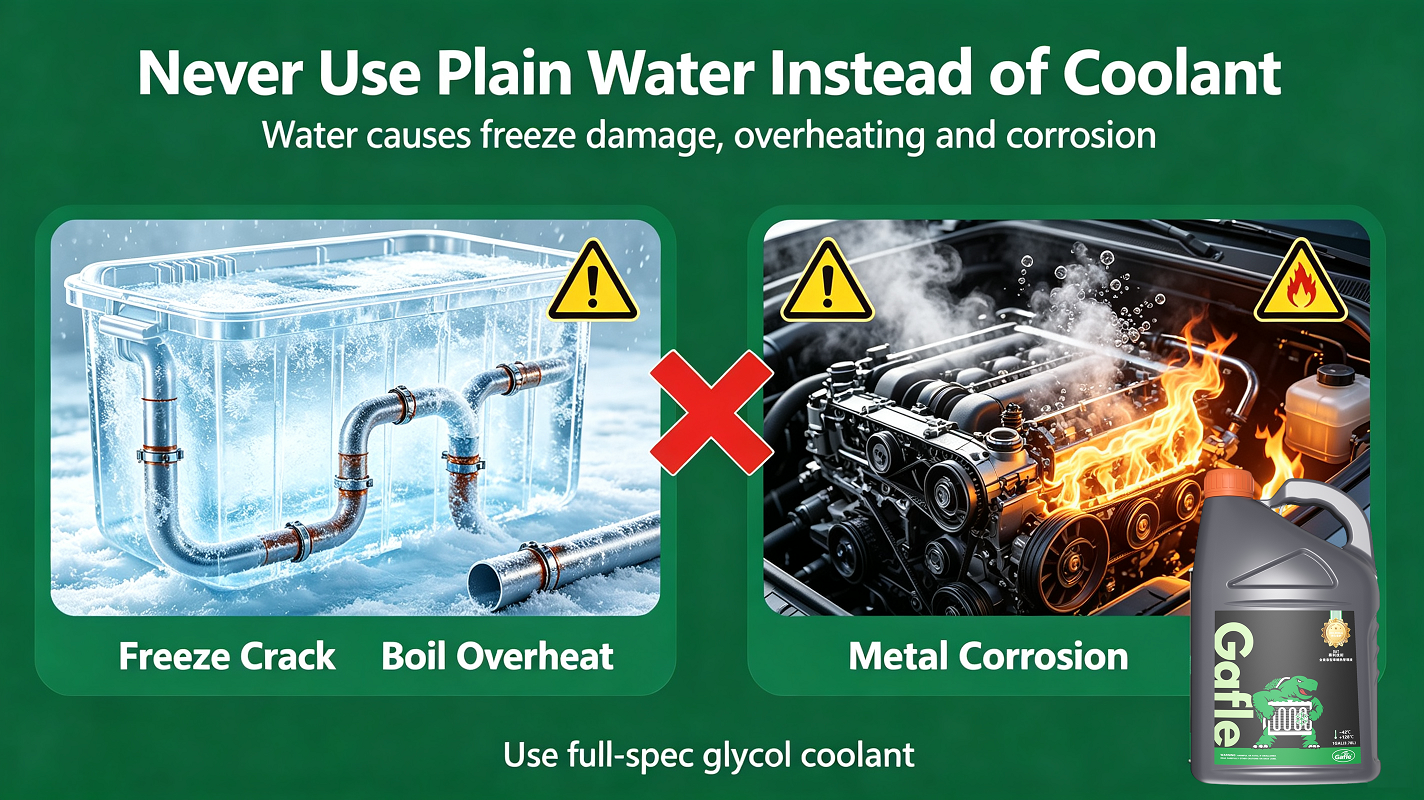
Common mistake: Drivers dilute concentrated coolant with extra water to save money, which wipes out its low-temperature protection and guarantees freeze damage in winter.
Part 2: Coolant Maintenance For Tropical & Desert Hot Climates
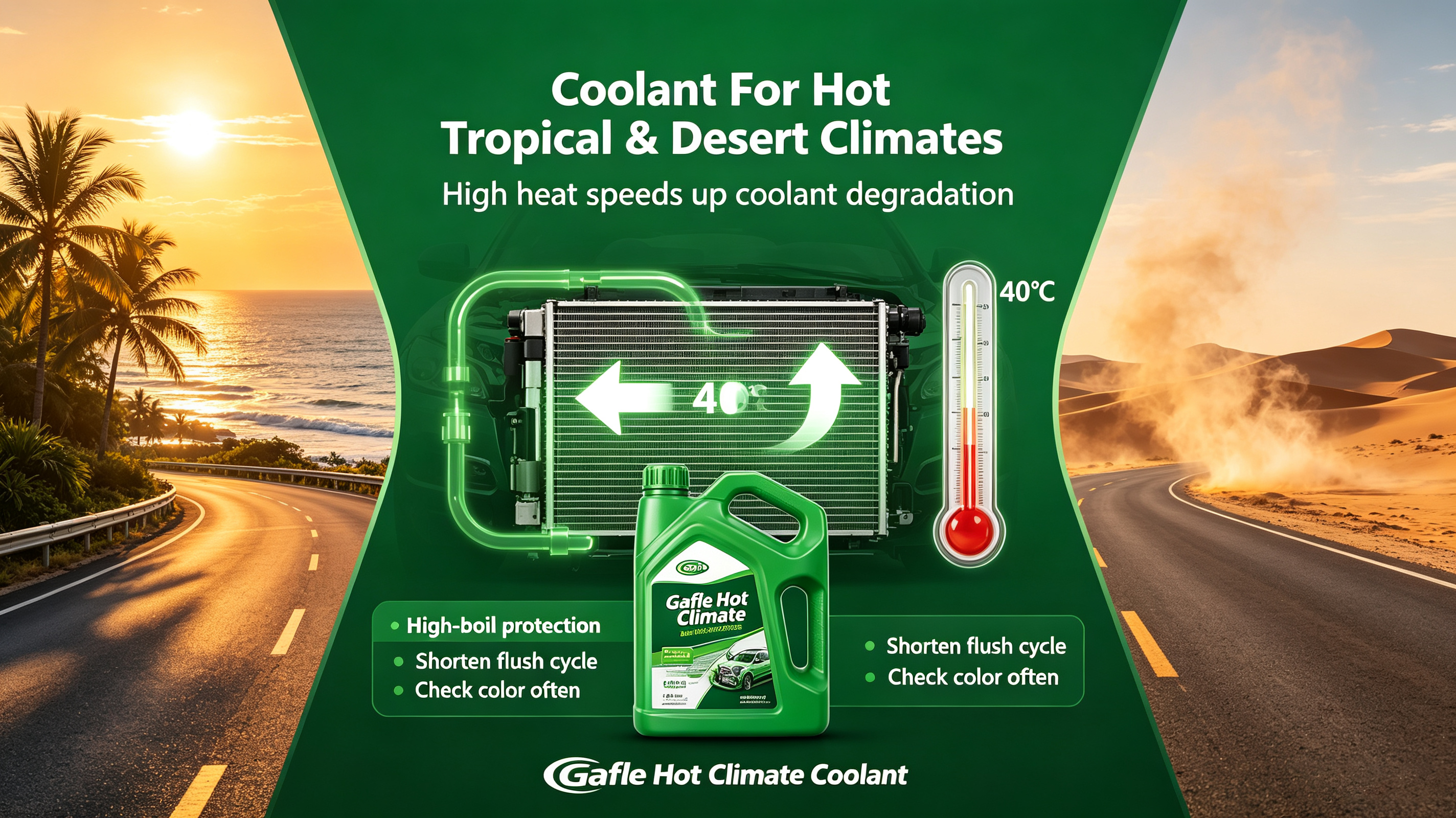
Constant 35°C+ ambient heat, stop-start city traffic and uphill desert driving push cooling systems to their thermal limit. High heat accelerates two irreversible coolant failures:
- Rapid additive breakdown
Heat burns away anti-corrosion and anti-boil stabilizers, turning coolant acidic within 12–18 months (half the service life for mild regions). Acidic fluid eats away aluminum radiators and water pump seals.
- Low boiling point leads to engine overheating
Degraded coolant boils easily under sustained load, creating steam bubbles that block heat flow and trigger sudden overheating on long road trips.
Hot Climate Cooling System Care Tips
- Select high-boiling long-life OAT/HOAT coolant
These formulas hold stable thermal performance far longer than standard IAT coolant under continuous high temperature.
- Cut replacement cycles short
Instead of the standard 2–5 year interval, flush and refill coolant every 12–18 months for tropical and desert vehicles.
- Avoid fully loaded summer highway trips without pre-checks
Test coolant clarity and boiling resistance before long-distance travel; murky, discolored fluid signals advanced degradation.
Final Takeaway
One-size-fits-all coolant cannot fully protect vehicles in extreme climates. Drivers in freezing northern zones need high-concentration low-freeze coolant, while tropical and desert owners must prioritize high-boiling long-life fluid with shortened maintenance cycles. Matching your coolant to local weather eliminates freeze cracks, summer overheating and expensive cooling system repairs.
Welcome to contact GAFLE for more information & cooperation!
peter
ZHEJIANG GAFLE AUTO CHEMICL CO.,LTD
Tel:86-579-8222 1665
Fax:86-579-8246 4690
Cel/Wechart:86-13335993986
E-mail:peter@gafle.net
Web:www.gafle.net
peter
ZHEJIANG GAFLE AUTO CHEMICL CO.,LTD
Tel:86-579-8222 1665
Fax:86-579-8246 4690
Cel/Wechart:86-13335993986
E-mail:peter@gafle.net
Web:www.gafle.net