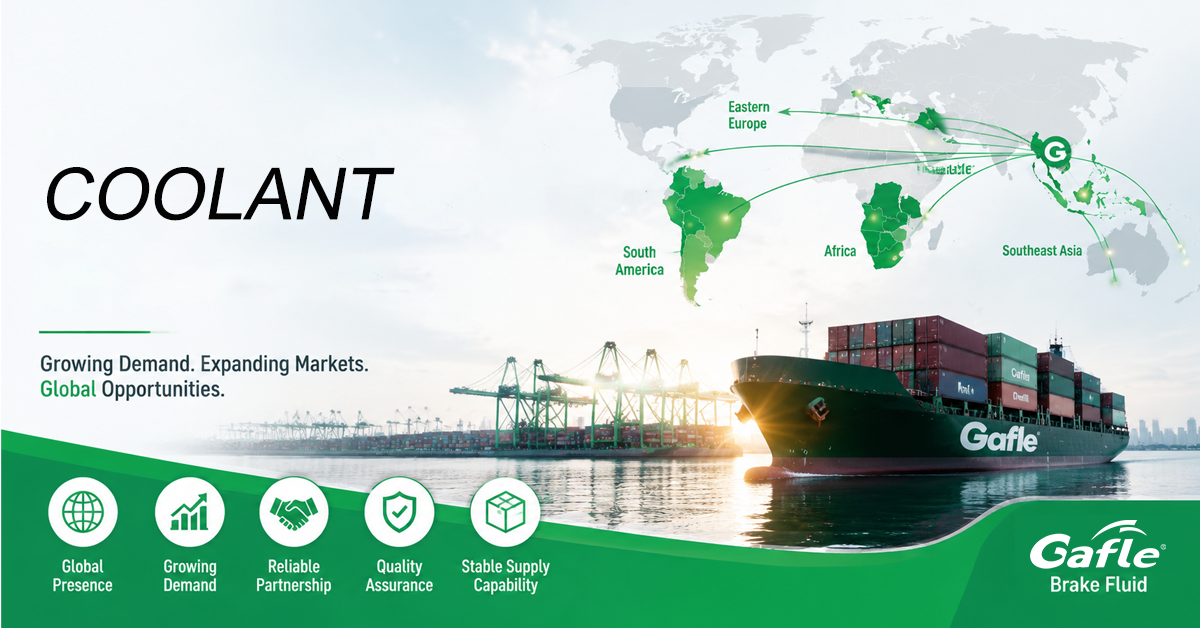
Many global auto importers, freight forwarders and parts distributors have consistent questions: Is ethylene glycol-based engine coolant marked as dangerous goods for ocean, road and cross-border transportation?
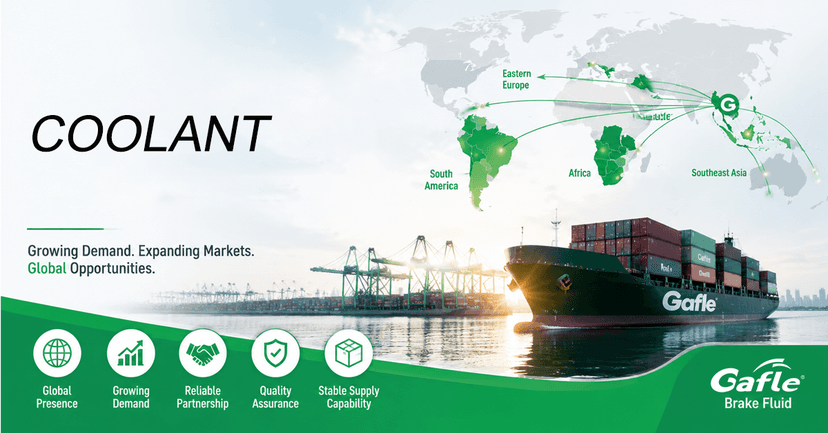
As Zhejiang GAFLE AUTO CHEMICAL CO.,LTD, a professional coolant manufacturer with over 20 years of worldwide export experience and a participant in drafting China’s national brake fluid industry standards, we deliver clear official hazard classification details, plus standardized loading, paperwork and packaging procedures we apply to thousands of coolant container shipments across 50+ countries. All our coolant products pass DOT, AMECA, TUV and SGS certification, with a perfect track record of zero customs detentions or cargo seizures during export.
1. Official UN Hazard Classification of GAFLE Ethylene Glycol Coolant
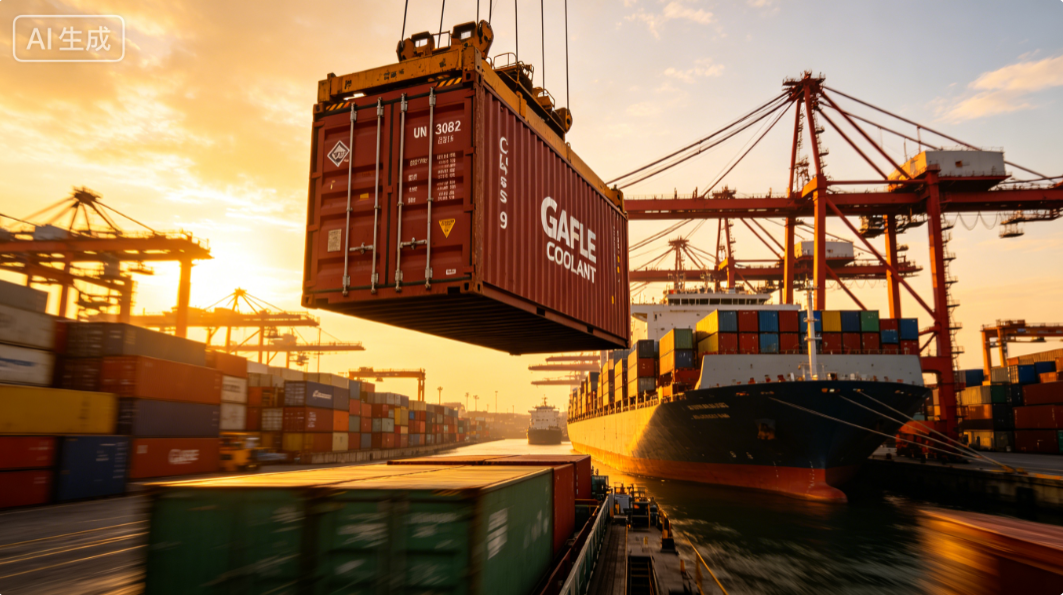
Our mainstream long-life ethylene glycol coolant falls under the UN shipping code UN 3082 Environmentally Hazardous Substance, Liquid, N.O.S.
- Hazard Category: Class 9 (Miscellaneous dangerous goods)
- Packing Group: III (Low overall hazard risk)
Coolant is not categorized as Class 3 flammable liquid, so it avoids the strict transport restrictions applied to highly flammable chemicals. Even so, full Class 9 dangerous goods documentation, labeling and packaging standards must be strictly followed for all shipments.
2. Mandatory Documents Required Before Coolant Shipment
Our export team prepares a full dangerous goods document package for every container to eliminate port delays, fines or holds:
- Material Safety Data Sheet (MSDS)
We provide dual English and Spanish MSDS versions, covering chemical composition, hazard statements, emergency first aid, spill response and international transport regulations — required by customs authorities in Latin America, Europe, Southeast Asia and Africa.
- Dangerous Goods Declaration (DGD)
Completed, stamped and formatted to meet major carrier standards (Maersk, MSC, ONE, etc.). The form clearly lists UN number, hazard class, packing group, net/gross weight and accurate cargo description.
- Official Certification & Batch Test Reports
Included files: DOT, AMECA, TUV, SGS certificates, national standard compliance documents and per-batch factory inspection records to verify stable chemical composition and controlled hazard levels.
- Commercial Invoice & Packing List
UN 3082 and Class 9 dangerous goods status are visibly printed on all trade paperwork for fast cross-border customs clearance.
3. IMDG & IATA Compliant Packaging Standards
All coolant packaging is processed inside China’s first dedicated dust-free clean workshop for automotive fluid filling, following global dangerous goods codes:
- Inner leak-proof packaging: 1L plastic bottles and 20L jerry cans fitted with sealed anti-leak screw caps and spill-resistant gaskets to prevent leakage during long-distance ocean vibration and temperature shifts.
- Reinforced outer export cartons: Thick corrugated boxes with edge protection. Finished pallets are tightly wrapped with stretch film and secured with cargo nets inside shipping containers.
- Standardized English hazard labeling: Every bottle, carton and full pallet displays official Class 9 environmental hazard diamond stickers, UN 3082 markings and “Environmentally Hazardous” warning text in English.
- Cargo compatibility rules: Coolant must never be loaded in the same container with strong acids, oxidizing agents or food-grade goods to prevent dangerous chemical reactions.
4. Container Loading & In-Transit Safety Precautions
Our logistics team follows fixed SOP for Class 9 coolant loading:
- Stack height limits: A maximum of 4–6 carton layers to prevent crushing, deformation and leakage of lower packages. Larger 20L jerry cans are always placed on pallet base layers.
- Dry container requirement: Refrigerated reefer containers are unnecessary for standard GAFLE coolant. We fully inspect empty containers prior to loading to remove sharp metal fragments, water residue or leftover chemical contaminants.
- Stable warehouse temperature storage: Coolant is stored at a constant 10°C–30°C before shipment to maintain consistent chemical performance and stability.
- Final seal inspection: Once loading is complete, staff double-check container door seals, record seal ID numbers and take archive photos for full end-to-end transit traceability.
5. How GAFLE Eliminates Your Coolant Dangerous Goods Shipping Risks
Decades of exporting hazardous automotive fluids have built a robust quality and risk control system unavailable at small blending workshops:
- Standard-setting technical expertise: As a participant in national automotive fluid standard drafting, our in-house R&D lab formulates coolant within safe UN 3082 hazard thresholds, avoiding overly toxic blends that raise transport surcharges and restrictions.
- Independent full-scale testing laboratory: Every production batch undergoes complete pre-shipment testing for aquatic toxicity, corrosiveness, flash point and thermal stability. Unqualified batches are never approved for export.
- Automated dust-free production lines: Sealed filling processes eliminate external impurities that could destabilize coolant chemistry during overseas transit.
- Professionally trained dangerous goods staff: Our logistics and production teams receive regular IMDG code training, fully familiar with rules for full FCL containers, LCL consolidation and cross-border truck freight.
- Proven clean shipment record: All coolant shipments to Peru, Chile, Southeast Asia, Europe and other markets pass customs inspection without detention, penalties or confiscation.
6. Fast Troubleshooting Guidance for Import Partners
- Customs hazard verification requests: We supply stamped original lab reports and authorized digital MSDS files within 24 hours.
- Small LCL consolidated orders: We coordinate closely with freight forwarders to safely allocate Class 9 DG space and minimize extra dangerous goods fees.
- OEM bulk vehicle factory supply: We apply custom customer brand labeling plus pre-printed official UN hazard marks on packaging to save local relabeling work for your facility.
Final Summary
Ethylene glycol engine coolant falls under UN 3082 Class 9 low-risk miscellaneous dangerous goods, not high-risk flammable liquid. Safe global shipment depends entirely on complete compliant documentation, certified leak-proof packaging, regulated container stacking and proper English hazard labeling.
As an experienced Chinese coolant manufacturing exporter, Zhejiang GAFLE handles all dangerous goods technical coordination and document preparation for your bulk coolant orders. Import distributors can focus fully on local sales without managing complex transport compliance pressure.
Contact our export sales team today to request sample MSDS files, full certification packages and FCL coolant quotation prices.
Welcome to contact us for future cooperation!
peter
ZHEJIANG GAFLE AUTO CHEMICL CO.,LTD
Tel:86-579-8222 1665
Fax:86-579-8246 4690
Cel/Wechart:86-13335993986
E-mail:peter@gafle.net
Web:www.gafle.net
peter
ZHEJIANG GAFLE AUTO CHEMICL CO.,LTD
Tel:86-579-8222 1665
Fax:86-579-8246 4690
Cel/Wechart:86-13335993986
E-mail:peter@gafle.net
Web:www.gafle.net