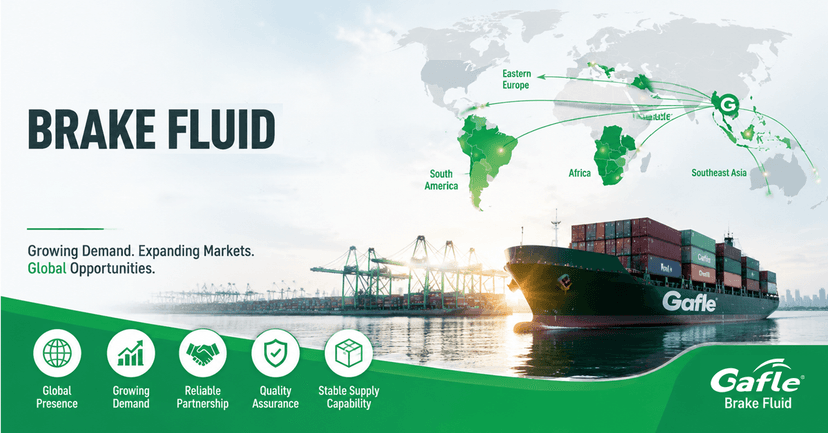
Many auto importers, logistics operators and distributors hold confusion: Is brake fluid treated as dangerous goods during sea, land and air transport? As Zhejiang GAFLE AUTO CHEMICAL CO.,LTD, a professional manufacturer focusing on brake fluid with over 20 years of global export experience and a participant in drafting China’s national brake fluid standards, we clarify hazard classifications step by step, and share standardized shipment procedures we follow for thousands of container shipments worldwide every year. Our brake fluid holds DOT, AMECA, TUV and SGS certifications, shipped safely to 50+ countries with zero customs detention incidents.
1. Official Hazard Classification of Brake Fluid
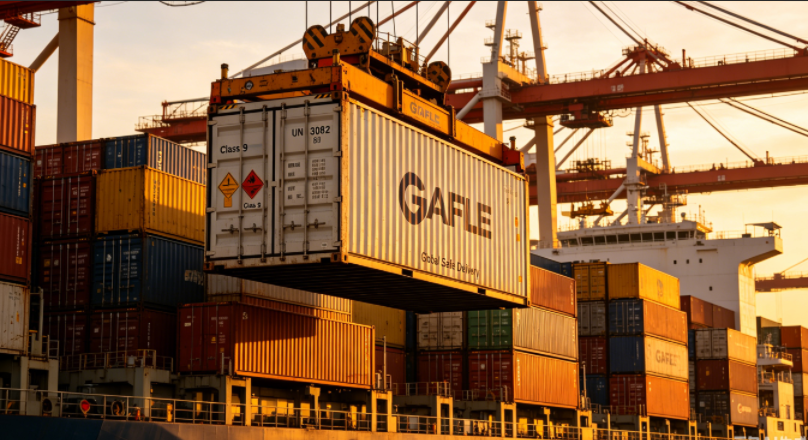
Conventional polyglycol-based DOT3 / DOT4 / DOT5.1 brake fluid (GAFLE’s core formula) falls under UN 3082 Environmentally Hazardous Substance, Liquid, N.O.S.
- Hazard Class: 9 (Miscellaneous dangerous goods)
- Packing Group: III (Low hazard risk level)
It is not flammable liquid (Class 3), so it avoids stricter Class 3 shipping restrictions, but Class 9 DG compliance paperwork and packaging standards still must be fully met.
Key note: Silicone-based DOT5 brake fluid has different UN coding; GAFLE mainly supplies standard polyglycol types for global OEM and aftermarket markets.
2. Mandatory Documentation Before Shipment (Critical for Customs & Carriers)
As a long-term export factory, we prepare a full DG document package for every container to prevent port hold-ups:
- MSDS (Material Safety Data Sheet)
Dual English & Spanish versions available, covering chemical composition, hazard statements, first-aid measures, spill handling and transport regulations—required by customs in Latin America, Europe, Southeast Asia and Africa.
- Dangerous Goods Declaration (DGD)
Filled and stamped per carrier (Maersk, ONE, MSC etc.) standards, stating UN number, hazard class, packing group, net/gross weight and cargo description.
- Factory Test & Certification Copies
DOT, AMECA, TUV, SGS certificates, national standard compliance reports, batch inspection records to prove formula stability and controlled hazard levels.
- Custom Commercial Invoice & Packing List
Clearly mark UN3082, Class 9 DG on all trade documents for cross-border clearance.
3. Packaging Standards for Safe DG Shipment
We implement strict packaging rules aligned with IATA & IMDG codes inside our domestic first clean filling workshop:
- Inner packaging: 1L plastic bottles with leak-proof screw caps, anti-spill gaskets to eliminate leakage risk during long ocean vibration.
- Outer packing: Corrugated export cartons with reinforced edges; pallets wrapped tightly with stretch film, secured with cargo nets inside containers.
- Hazard labeling: Every carton, bottle and outer pallet sticks standard Class 9 environmental hazard diamond labels, UN number marks and “Environment Hazardous” warning text in English.
- Compatibility control: Brake fluid cannot be loaded with strong acids, oxidizers or food-grade cargo to avoid chemical reaction risks.
4. Container Loading & Transit Precautions
Our logistics team follows fixed loading SOP for DG Class 9 brake fluid:
- Load stacking limit: Max 4–6 carton layers to prevent bottom package deformation and leakage.
- Dry container only: Reefer containers are unnecessary for GAFLE standard brake fluid; we inspect container floors for sharp nails, water stains or residual chemical residue before loading.
- Temperature control: No extreme high-temperature storage before shipment; our warehouse maintains 10–30°C constant temperature to stabilize liquid chemical properties.
- Sealing inspection: After full loading, we double-check all container door seals, record seal numbers and take photos for file retention, traceable for the whole ocean transit cycle.
5. Why GAFLE Minimizes Your DG Shipping Risks
With 20+ years exporting hazardous brake fluid, our factory builds a complete risk-control system unavailable to small blending workshops:
- Standard-setting technical background: As national brake fluid standard drafter, our R&D lab adjusts formula hazard levels within safe UN3082 limits, avoiding over-toxic compositions that raise transport costs.
- Independent full testing lab: Every batch tests for toxicity, aquatic hazard, flash point and corrosiveness before release; we never ship untested bulk goods.
- Clean automated production line: Dust-free filling prevents impurity mixing that could alter chemical stability mid-transit.
- Professional DG operation team: Our staff receives regular IMDG code training, familiar with carrier rules for full-container, LCL sea freight and truck overland cross-border transport.
- Zero detention track record: All past shipments to Peru, Chile, Southeast Asia, Europe passed customs inspection smoothly without fines or cargo seizure.
6. Quick Troubleshooting Tips for Importers
- If customs requests extra hazard verification: We can send original certified lab reports and authorized MSDS copies digitally within 24 hours.
- For LCL small shipments: We coordinate with freight forwarders to combine Class9 DG cargo properly to avoid extra DG surcharges.
- For OEM bulk factory supply: We can print client-brand packaging with pre-applied standard UN hazard labels to save your local labeling work.
Final Summary
Brake fluid belongs to UN3082 Class 9 miscellaneous dangerous goods (low risk, Packing Group III), not highly flammable dangerous liquid. Safe shipment relies on complete documents, certified leak-proof packaging, standardized loading and compliant labeling.
As a reliable Chinese manufacturer with mature DG export experience, Zhejiang GAFLE handles all technical and paperwork DG requirements for your bulk brake fluid orders, letting importers focus on local sales without transport compliance stress.
Contact our export team to get sample MSDS, full certification packs, and container shipping quotations for brake fluid today.
Welcome to contact us for future cooperation!
peter
ZHEJIANG GAFLE AUTO CHEMICL CO.,LTD
Tel:86-579-8222 1665
Fax:86-579-8246 4690
Cel/Wechart:86-13335993986
E-mail:peter@gafle.net
Web:www.gafle.net
peter
ZHEJIANG GAFLE AUTO CHEMICL CO.,LTD
Tel:86-579-8222 1665
Fax:86-579-8246 4690
Cel/Wechart:86-13335993986
E-mail:peter@gafle.net
Web:www.gafle.net