
Why new energy vehicle brake fluid replacement still matters
New energy vehicle brake fluid replacement is one of those maintenance jobs that can be easy to ignore because the car may feel as if it brakes just fine. That is a mistake. Whether the vehicle is battery electric or another new energy platform, the brake system still depends on clean, stable fluid to transmit force, protect internal parts, and keep pedal feel predictable. When the fluid absorbs moisture or degrades, the change is often subtle at first. The driver may notice a longer pedal travel, a softer feel, or inconsistent braking in stop-and-go traffic. By then, the service interval has already been missed.
For sourcing managers, service teams, and workshop planners, the decision is not only whether to replace brake fluid, but how to do it in a way that fits the vehicle architecture and avoids unnecessary comebacks. That is especially relevant for EV brake fluid maintenance, because regenerative braking can reduce the use of friction brakes while leaving the hydraulic system underused. Underused does not mean unused. In fact, lower pad wear can sometimes hide fluid aging for longer than expected.
What changes in a new energy vehicle brake system
The hydraulic brake circuit in a new energy car still relies on fluid pressure, seals, valves, and a reservoir. The difference is in how often those components are exercised and how the brake control logic blends regenerative and friction braking. In daily driving, the friction brakes may work less aggressively, which sounds beneficial until moisture absorption, corrosion, and seal aging start to build quietly inside the system.
That is why electric vehicle brake fluid maintenance deserves its own schedule rather than being copied blindly from a conventional gasoline platform. The fluid does not care whether propulsion comes from a battery or a fuel tank. It still absorbs water over time, and water in a brake circuit is bad news: it can lower boiling performance, accelerate internal corrosion, and make pedal response less consistent under load.
Quick reference: what a buyer or workshop should check
Before service
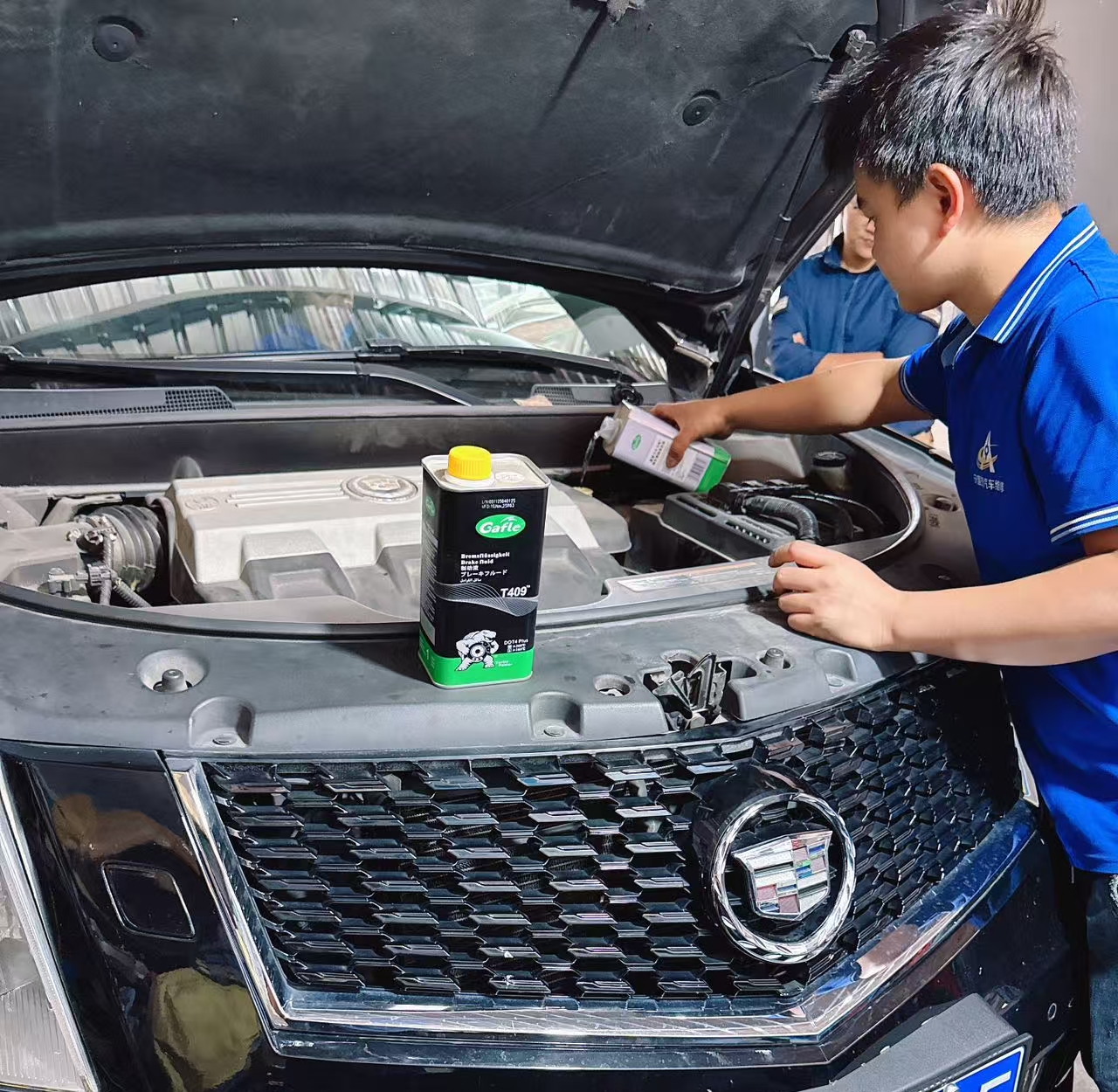
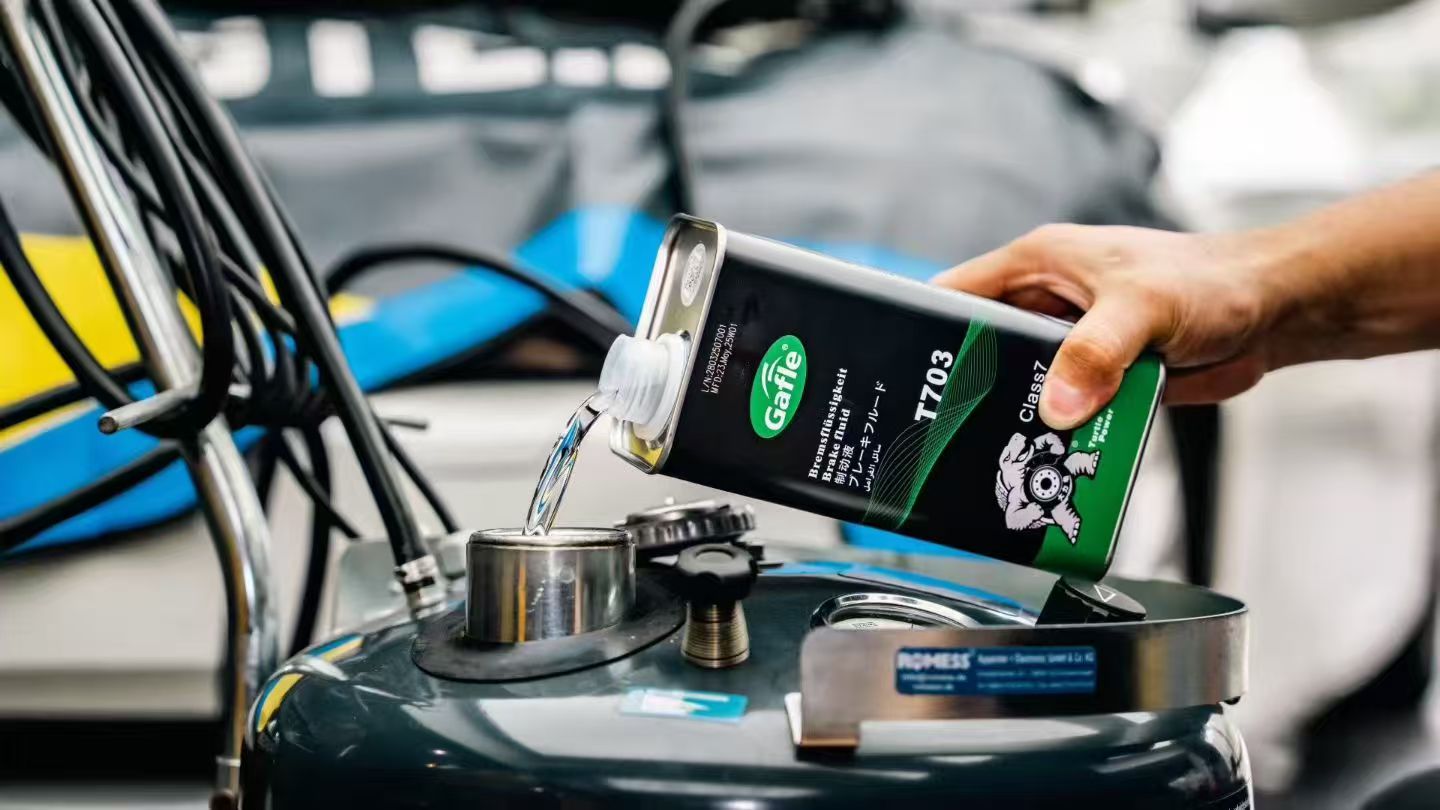
Confirm the correct brake fluid specification for the vehicle, then check the reservoir condition, hose routing, and whether the system requires a standard bleed or a diagnostic-guided service procedure. The image context here shows a workshop fluid handling setup with a metal can labeled brake fluid and a reservoir filling operation. That is a practical reminder that the service is as much about controlled handling as it is about the fluid itself.
During service
Use clean filling equipment, keep the reservoir opening protected, and avoid mixing unknown products. The supplied product context shows a rectangular metal can with a screw cap/spout and a clear-to-light-amber fluid poured into a brake-system container. That kind of packaging is typical of workshop use, where cleaner transfer matters more than retail presentation.
After service
Check pedal feel, inspect for leaks, and verify that any system warnings are cleared. A good flush should leave the pedal firmer and the maintenance record clearer. A rushed job may do the opposite.
Why the replacement interval matters more than the odometer
People often ask how to replace brake fluid in new energy vehicles and then want a mileage-based answer. Mileage helps, but time matters at least as much. Brake fluid ages from exposure to air and moisture, not just from use. A car that spends long periods parked can still develop fluid problems. In urban fleets, the opposite issue appears: frequent short trips and repeated heat cycling can age the fluid faster than the vehicle’s advertised range suggests.
There is also a practical warning for fleet and dealership buyers: do not assume that low brake-pad wear means the hydraulic system is healthy. On EVs, the brake fluid can deteriorate while the friction hardware looks almost new. That is exactly the kind of hidden maintenance cost that gets missed until the first service complaint arrives.
Common mistakes that cause trouble later
The first mistake is using an unverified product because the container looks familiar. The supplied image context identifies a brake fluid product marked T703 and Class 7, but the exact chemistry and DOT rating are not visible here, so specification matching must be done from the vehicle manual or approved service data, not from guesswork.
The second mistake is letting fluid sit open too long during service. Brake fluid can absorb moisture from the air surprisingly fast, which is inconvenient in a busy workshop and costly in a fleet environment.
The third mistake is assuming all new energy car brake fluid replacement routines are the same. Some vehicles may need diagnostic tools to position valves or manage electronic brake systems properly. Skipping that step may leave air in the circuit or create an odd pedal response that is hard to trace later.
Buyer advice for workshops, distributors, and service teams
If you are selecting supply for a maintenance program, look for three things: specification clarity, packaging suited for controlled dispensing, and consistency in workshop handling. A metal can with a proper spout, like the one shown in the service context, can be a sensible choice for professional use because it reduces messy transfer and supports cleaner dispensing. It is not glamorous, but workshops live or die on these small details.
For purchasing teams, the real question is not whether brake fluid is a commodity. It is whether the product fits the platform, the service procedure, and the operator’s routine. When those three align, EV brake fluid change becomes a predictable maintenance item instead of a source of avoidable callbacks.
Practical takeaway
New energy vehicle brake fluid replacement is not optional housekeeping. It is a safety-critical service that protects pedal feel, braking consistency, and internal component life. Because EVs may use friction brakes less often, the hydraulic fluid can age in plain sight. The safest approach is simple: verify the correct specification, use clean handling practices, and treat the service interval as time-sensitive rather than mileage-only. If your team is building a maintenance plan, start there and keep the procedure vehicle-specific.