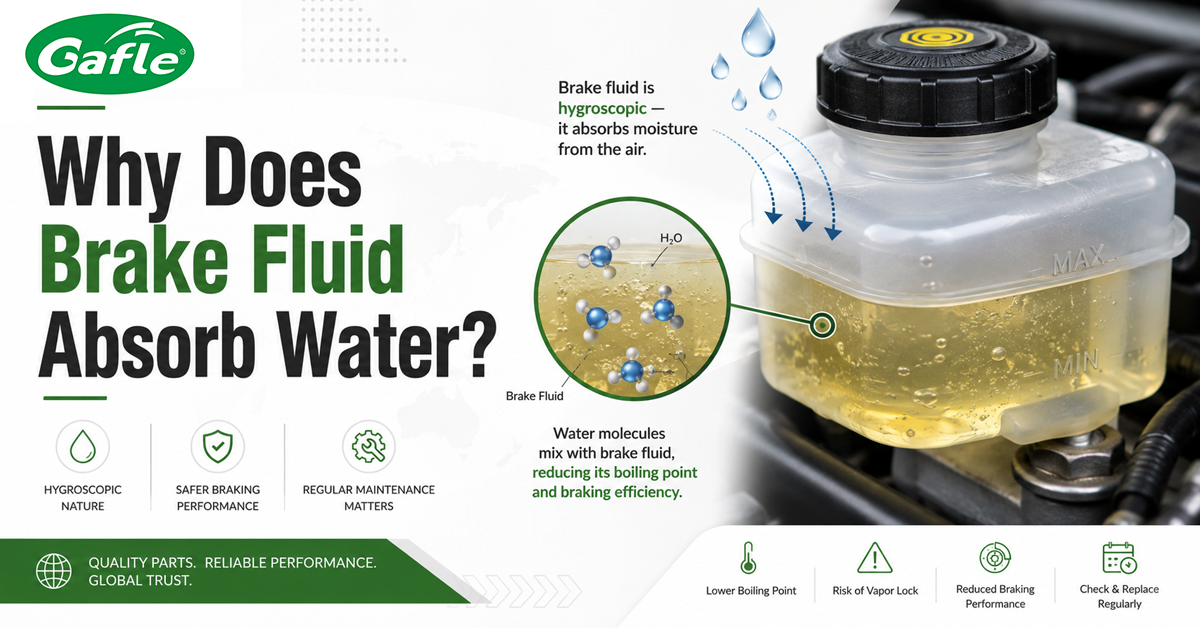
Why Does Brake Fluid Absorb Water?
Brake fluid is one of the most important fluids in a vehicle’s braking system. It transfers hydraulic pressure from the brake pedal to the brake calipers or wheel cylinders, helping the vehicle slow down and stop safely.
However, many vehicle owners and even some buyers ask the same question: Why does brake fluid absorb water? The answer is related to the chemical nature of most DOT brake fluids and the working environment of the braking system.
Understanding why brake fluid absorbs water is important for vehicle safety, brake fluid maintenance, and product quality control. For importers, distributors, and automotive brands, this knowledge also helps explain why choosing a professional Brake Fluid Manufacturer matters.
At Gafle Brake Fluid Factory, we focus on professional brake fluid manufacturing, laboratory testing, OEM service, and stable quality control for global customers.
What Is Brake Fluid?
Brake fluid is a hydraulic fluid used in vehicle braking systems. When the driver presses the brake pedal, brake fluid transfers pressure through the brake lines to activate the braking components.
A high-quality brake fluid should provide:
- Stable hydraulic pressure transfer
- High boiling point performance
- Good low-temperature flow
- Corrosion protection
- Rubber compatibility
- Chemical stability
- Long-term performance consistency
Common brake fluid types include DOT 3, DOT 4, and DOT 5.1. These products are widely used in passenger cars, motorcycles, commercial vehicles, and aftermarket maintenance.
Why Does Brake Fluid Absorb Water?
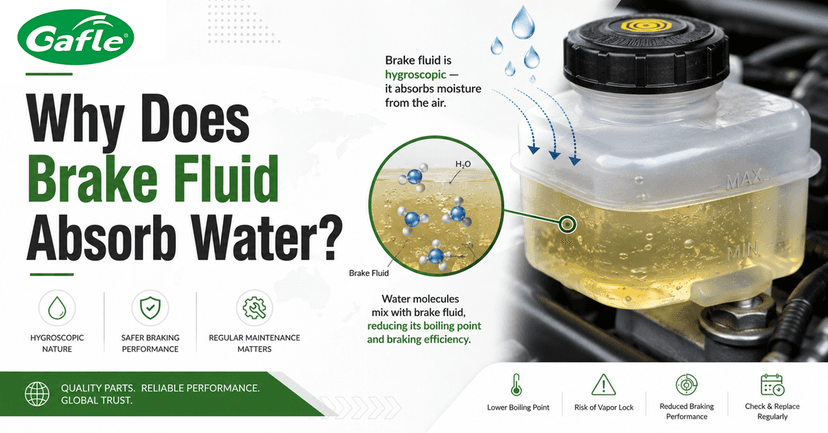
Most DOT 3, DOT 4, and DOT 5.1 brake fluids are glycol-based. Glycol-based brake fluid is hygroscopic, which means it naturally absorbs moisture from the air.
This is why brake fluid should always be stored in a sealed container and why opened bottles should not be kept for too long.
Brake fluid may absorb water because of:
- Air exposure during maintenance
- Moisture entering through the reservoir cap
- Microscopic moisture penetration through rubber hoses and seals
- Temperature changes inside the brake system
- Poorly sealed packaging
- Long-term storage after opening
Even though the braking system is designed to be sealed, it is not completely isolated from the environment. Over time, moisture can slowly enter the system.
What Is Hygroscopic Brake Fluid?
Hygroscopic brake fluid means brake fluid that can absorb water from the surrounding environment.
This characteristic may sound like a disadvantage, but it has a practical purpose. When moisture enters the braking system, hygroscopic brake fluid helps absorb and distribute the water throughout the fluid instead of allowing free water droplets to collect in one area.
If water collected in one place, it could cause localized corrosion or freeze in cold conditions. However, once water is absorbed into the brake fluid, it still reduces performance over time. That is why regular inspection and replacement are necessary.
How Does Water Enter Brake Fluid?
Water can enter brake fluid in several ways.
1. Through the Brake Fluid Reservoir
The brake fluid reservoir is not completely sealed from the outside environment. Moisture from the air may slowly enter through the cap or ventilation area.
2. During Maintenance
When technicians open the reservoir cap, replace brake fluid, or bleed the brakes, the fluid may be exposed to air. If tools or containers are not clean and dry, contamination risk increases.
3. Through Rubber Hoses and Seals
Brake hoses and seals may allow very small amounts of moisture to pass through over time.
4. From Opened Brake Fluid Bottles
Once a brake fluid bottle is opened, the fluid begins to absorb moisture from the air. This is why old opened bottles should be avoided, especially for professional maintenance.
5. From Poor Storage Conditions
High humidity, damaged packaging, loose caps, or improper warehouse storage can increase moisture exposure before the product is even used.
What Happens When Brake Fluid Absorbs Water?
When brake fluid absorbs water, its performance gradually changes.
The main effects include:
- Lower boiling point
- Higher vapor formation risk
- Increased corrosion risk
- Reduced braking performance under heat
- Shorter service life
- Possible brake pedal softness
- Greater maintenance risk
Water contamination does not always cause immediate failure, but it slowly reduces the safety margin of the braking system.
How Water Affects Brake Fluid Boiling Point
One of the most serious effects of brake fluid moisture is the reduction of brake fluid boiling point.
During braking, heat is generated by friction. This heat can transfer to the brake calipers, brake lines, and brake fluid.
If the brake fluid contains too much moisture, its boiling point becomes lower. Under high-temperature braking conditions, the fluid may begin to form vapor.
Vapor is compressible, unlike liquid. This may lead to:
- Soft brake pedal
- Delayed brake response
- Brake fade
- Longer stopping distance
- Reduced braking confidence
This is why both dry boiling point and wet boiling point are important indicators of brake fluid quality.
Dry Boiling Point vs Wet Boiling Point
Dry Boiling Point
Dry boiling point refers to the boiling temperature of fresh brake fluid before it absorbs significant moisture.
This value shows the initial high-temperature performance of the product.
Wet Boiling Point
Wet boiling point refers to the boiling temperature of brake fluid after moisture absorption.
This value is very important because brake fluid naturally absorbs water during service. A good brake fluid should maintain stable performance even after moisture exposure.
For hot climates, mountain roads, heavy traffic, towing, and commercial vehicles, wet boiling point performance is especially important.
Brake Fluid Moisture and Corrosion Risk
Water in brake fluid can also increase corrosion risk inside the braking system.
Brake system parts that may be affected include:
- Master cylinder
- Brake lines
- Calipers
- Wheel cylinders
- ABS hydraulic units
- Internal valves
- Metal fittings
Corrosion can damage components, reduce system reliability, and increase maintenance costs.
This is why brake fluid should not only be checked for level, but also for condition.
How to Test Brake Fluid Moisture
A brake fluid moisture test helps determine whether the fluid has absorbed too much water.
Common testing methods include:
Electronic Moisture Tester
This tool estimates the moisture content in brake fluid. It is commonly used in workshops for quick inspection.
Boiling Point Tester
This method checks the boiling performance of the brake fluid. It gives a more direct view of high-temperature safety.
Laboratory Testing
Professional brake fluid laboratories can test:
- Moisture content
- Dry boiling point
- Wet boiling point
- Low-temperature viscosity
- pH value
- Corrosion resistance
- Rubber compatibility
- Chemical stability
For a professional Brake Fluid Manufacturer, laboratory testing is essential for confirming product quality before shipment.
When Should Brake Fluid Be Replaced?
Brake fluid replacement may be needed when:
- Moisture content is too high
- Brake fluid becomes dark or cloudy
- Boiling point has dropped
- The brake pedal feels soft or spongy
- The vehicle manufacturer’s service interval has been reached
- Brake system repair has been performed
- The wrong brake fluid was added
- Contamination is suspected
Brake fluid should not be judged by color alone. Moisture testing and professional inspection are more reliable.
How to Reduce Brake Fluid Water Absorption
Although brake fluid naturally absorbs moisture, proper handling can reduce the risk.
Useful practices include:
- Keep brake fluid bottles tightly sealed
- Store brake fluid in a cool and dry place
- Avoid using old opened bottles
- Keep tools clean and dry during service
- Do not leave the reservoir cap open for long
- Use the correct DOT grade
- Replace brake fluid according to maintenance guidance
- Choose products from a reliable brake fluid factory
For distributors and workshops, correct storage and handling are important for maintaining product quality.
Why Brake Fluid Quality Matters for Importers
For importers and distributors, brake fluid quality directly affects market trust.
A high-quality brake fluid should provide:
- Stable dry boiling point
- Reliable wet boiling point
- Good moisture control
- Corrosion protection
- Rubber compatibility
- Chemical stability
- Clear appearance
- Consistent batch quality
Poor-quality brake fluid may lead to customer complaints, product returns, and damage to brand reputation.
That is why global customers should work with a professional Brake Fluid Manufacturer that understands quality control and laboratory testing.
How Gafle Controls Brake Fluid Quality
Gafle Brake Fluid Factory focuses on professional brake fluid manufacturing and quality control.
Our quality management process includes:
- Raw material inspection
- Formula control
- Production process monitoring
- Moisture control
- Laboratory testing
- Filling inspection
- Packaging sealing check
- Batch traceability
- Final inspection before shipment
By controlling each step, Gafle helps global customers receive stable and reliable brake fluid products.
Gafle Brake Fluid Factory: Supporting Global Customers
As a professional Brake Fluid Manufacturer, Gafle provides brake fluid products and OEM solutions for international markets.
Our products and services include:
- DOT 3 Brake Fluid
- DOT 4 Brake Fluid
- DOT 5.1 Brake Fluid
- OEM and ODM services
- Private label brake fluid
- Custom packaging support
- Brake fluid quality testing
- Laboratory testing
- Batch traceability
- Export documentation support
- Stable global supply
We support importers, distributors, automotive brands, repair-shop channels, and private-label customers worldwide.
OEM and Private Label Brake Fluid Solutions
For overseas customers, Gafle provides flexible OEM and private-label brake fluid solutions.
Our service may include:
- Product specification selection
- Custom bottle sizes
- Label and carton design
- Private brand packaging
- Sample confirmation
- Mass production
- Laboratory testing
- Quality documentation
- Export packaging support
For customers building their own brake fluid brands, reliable moisture control, boiling point performance, and stable product quality are key selling points.
Why Choose Gafle Brake Fluid Factory?
Choosing the right factory is important for long-term business success.
Gafle provides:
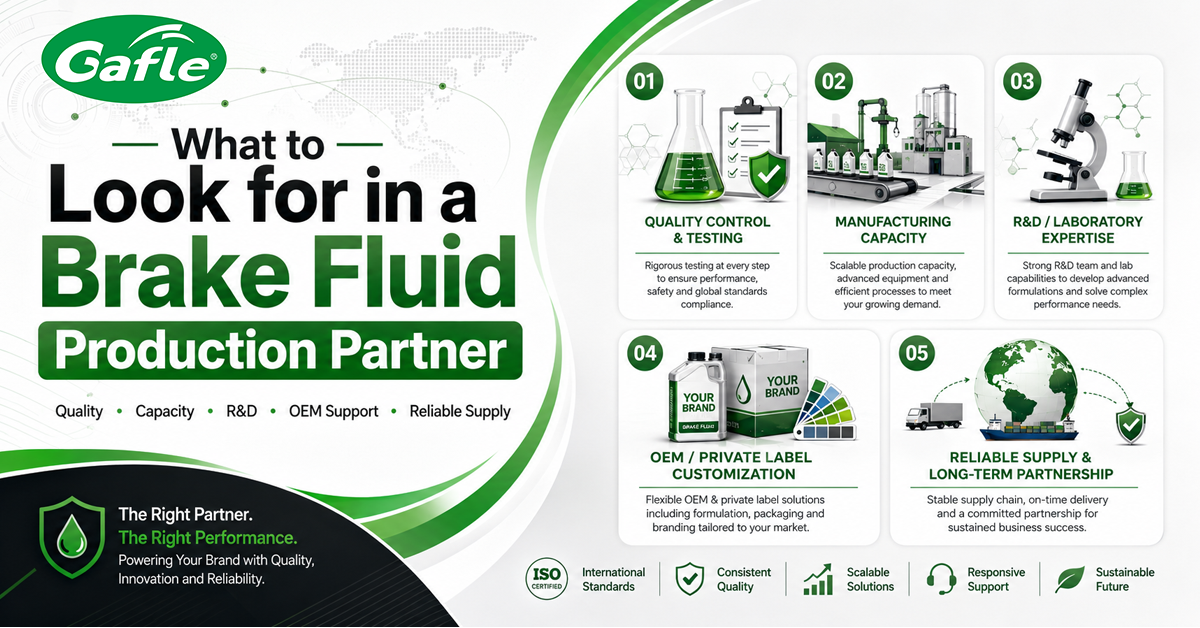
- Professional brake fluid manufacturing experience
- Strict quality control
- Laboratory testing capability
- DOT 3, DOT 4, and DOT 5.1 product options
- OEM and private label support
- Custom packaging service
- Export experience
- Long-term supply cooperation
Gafle is not only a brake fluid supplier. We are a manufacturing partner that helps customers build reliable automotive fluid brands.
Conclusion
So, why does brake fluid absorb water? Most DOT 3, DOT 4, and DOT 5.1 brake fluids are glycol-based and hygroscopic, meaning they naturally absorb moisture from the air.
This moisture absorption can lower the brake fluid boiling point, increase corrosion risk, and reduce braking performance over time. That is why regular inspection, proper storage, moisture testing, and timely replacement are important.
For importers and automotive brands, working with a professional Brake Fluid Manufacturer helps ensure stable product quality and lower market risk.
Gafle Brake Fluid Factory provides reliable brake fluid manufacturing, laboratory testing, OEM service, private-label support, and global supply solutions for customers worldwide.
Better brake fluid quality starts with better manufacturing control. Better control creates safer and more trusted products.