FMVSS 116 Brake Fluid: What Buyers and Engineers Need to Know Before Specifying It
Choosing FMVSS 116 brake fluid sounds straightforward until you start comparing supplier datasheets, DOT labels, and regional standards. For engineers and sourcing teams, the real issue is not just whether a fluid “meets the spec,” but whether it fits the vehicle platform, the brake system materials, and the market where the product will be sold. That is where mistakes get expensive, especially when a replacement fluid looks compatible on paper but behaves differently in service.
This article breaks the topic into a practical list of the points buyers usually need to check. If you are deciding between U.S.-market compliance, export requirements, or a private-label fluid program, the goal is to help you narrow the choice without relying on assumptions.
1. What FMVSS 116 actually covers
FMVSS 116 is the U.S. federal safety standard that defines requirements for brake fluids used in motor vehicle brake systems. In practice, it is the reference many people associate with DOT brake fluid categories such as DOT 3, DOT 4, and DOT 5.1. The standard focuses on performance characteristics that matter in the real world: boiling behavior, viscosity, chemical stability, and compatibility with brake system components.
That matters because brake fluid is not a commodity oil. It lives in a sealed hydraulic system, absorbs moisture in service for many formulations, and must keep working under heat and pressure. A fluid that is technically “similar” but not tested against the right standard can create trouble for both safety and warranty exposure.
2. The quick comparison buyers usually need
At a high level, most sourcing decisions come down to this: FMVSS 116 is the U.S. standard, while ISO 4925 brake fluid is the international reference more often used outside the United States. They are related, but not identical. The difference between FMVSS 116 and ISO 4925 is not just a matter of wording; the test methods, classification structure, and market expectations can differ.
For a buyer, that means a fluid can be suitable for one market and still need revalidation for another. Do not assume a DOT-marked product is automatically the best choice for every export program, fleet specification, or OEM supply chain.
3. The main brake fluid families you will encounter
DOT 3 and DOT 4
These are common glycol-ether-based fluids used across many passenger vehicles and light commercial applications. DOT 4 typically offers higher dry and wet boiling points than DOT 3, though exact values depend on formulation and compliance testing. The practical point is that higher thermal demand usually pushes buyers toward the better-performing category, but only if the system materials and service guidance align.
DOT 5.1
DOT 5.1 is also glycol-based, despite the numbering confusion that still trips up some purchasing teams. It is generally selected where higher temperature resistance is needed and where compatibility with existing glycol-based systems is required. It is not the same as silicone-based DOT 5, which should not be mixed with glycol fluids. That is a small labeling issue with large consequences.
Why the category matters
The category affects not only performance, but also warehouse control, refill instructions, and service documentation. Mixed inventories are a common source of errors, especially when one plant or region uses a different standard from another.
4. What to check on a datasheet before you buy
A buyer-friendly brake fluid datasheet should tell you more than just the standard name. Look for the claimed compliance standard, the fluid family, and the key performance figures used in qualification. Then verify that the supplier is describing the same product version you intend to source, not a near match.
Useful checks include the following:
- Claimed compliance to FMVSS 116 or ISO 4925, depending on market
- DOT classification, if applicable
- Base chemistry: glycol-based or silicone-based
- Compatibility notes for seals, hoses, and paint surfaces
- Packaging options and labeling language for your target market
- Storage guidance, since brake fluid is sensitive to contamination and moisture
This sounds basic, but it is where a lot of purchasing confusion starts. A clean-looking label is not a substitute for a complete technical file.
5. Common mistakes in sourcing brake fluid
One frequent mistake is treating all brake fluids with the same viscosity and boiling-point claims as interchangeable. They are not. Another is mixing standards in the same maintenance program because the liquids appear physically similar. In the field, that kind of shortcut can lead to service inconsistency or, worse, damage to rubber components and braking feel.
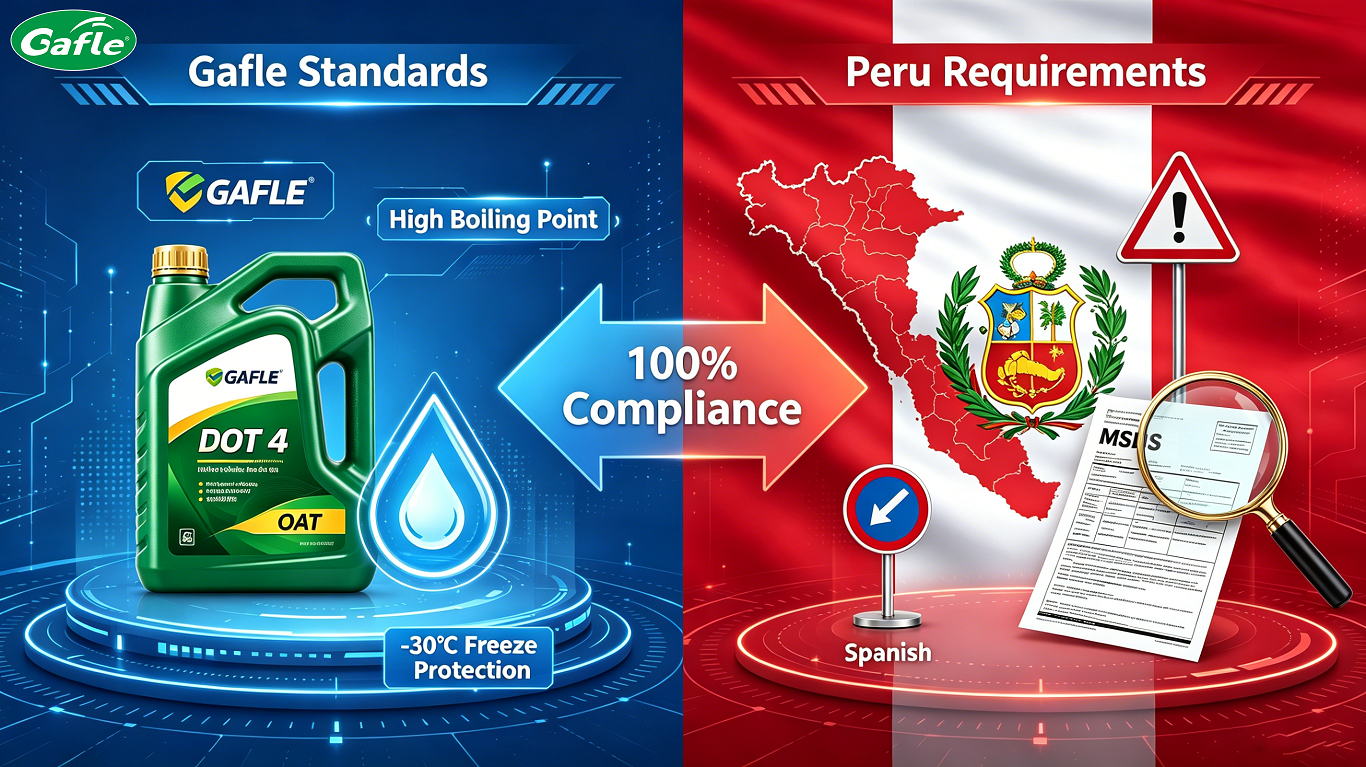
A second mistake is ignoring regional compliance. If a product is intended for export, the paperwork needs to match the destination market. That includes the standard reference, labeling, and any language needed by the customer’s technical team. It is a small administrative point until a shipment gets held up.
6. Practical buying advice for sourcing and engineering teams
If you are evaluating an FMVSS 116 brake fluid supplier, start with the application first. Passenger car, heavy-duty fleet, motorcycle, or aftermarket service each creates different expectations. Then decide whether the product needs to be U.S.-spec only or dual-specified for broader distribution.
Ask for the technical data that supports the claim, and make sure the purchase order language matches the intended specification. If your program spans multiple regions, it may be worth maintaining separate part numbers for FMVSS 116 and ISO 4925-aligned products rather than forcing one label to do too much.
7. FAQ: Short answers buyers ask most often
Can FMVSS 116 brake fluid be used anywhere?
Not automatically. It is designed around the U.S. standard, so you still need to confirm market and system compatibility.
Is ISO 4925 the same as FMVSS 116?
No. They overlap in purpose, but the difference between FMVSS 116 and ISO 4925 can affect qualification and market acceptance.
Can DOT 3, DOT 4, and DOT 5.1 be mixed?
Not as a casual practice. Even where some types are chemically related, mixing without a clear engineering decision is poor housekeeping.
8. The decision that matters most
For most buyers, the real question is not “Is this brake fluid good?” It is “Is this the right fluid for the standard, the vehicle platform, and the market I have to support?” That is a narrower question, and a better one. If you can answer it cleanly, the rest of the sourcing work becomes much easier.
If you are building a new specification or reviewing supplier options, use the standard reference as a starting point, not the finish line. Then verify the technical data, packaging, and regional fit before you lock in the order.
Welcome to contact us for future cooperation!
peter
ZHEJIANG GAFLE AUTO CHEMICL CO.,LTD
Tel:86-579-8222 1665
Fax:86-579-8246 4690
Cel/Wechart:86-13335993986
E-mail:peter@gafle.net
Web:www.gafle.net