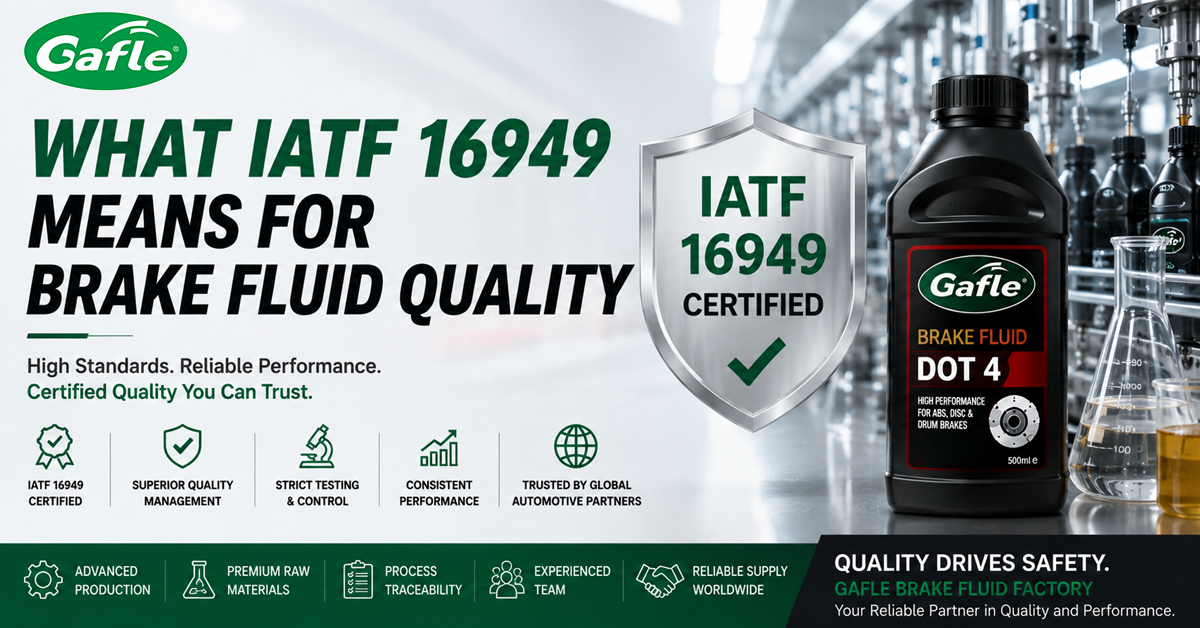
Why the certification behind brake fluid matters more than the brochure
When sourcing brake fluid for passenger cars, commercial vehicles, or aftermarket channels, buyers often start with viscosity, boiling point, packaging, or price. Those details matter, but they are only part of the story. An IATF 16949 Certified Brake Fluid Manufacturer brings a different kind of value: process control. In a safety-critical product, consistency is not a nice-to-have. It is the thing that keeps one production lot from drifting away from the next.
That is why procurement teams, engineering groups, and private-label brands tend to look beyond basic product claims and ask how the fluid is controlled from raw material receipt through blending, filling, sealing, and traceability. A supplier can offer a technically acceptable formulation and still create risk if the production system is loose. Brake fluid does not forgive loose systems.
What IATF 16949 really tells a buyer
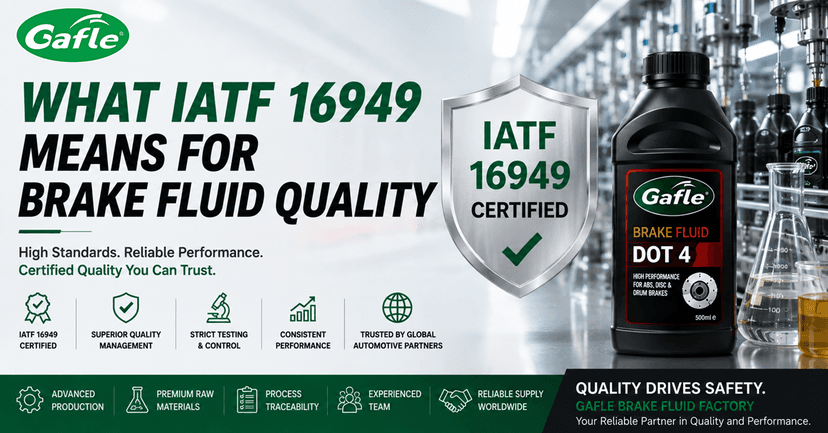
IATF 16949 is widely treated as the benchmark for automotive quality certification. In practical terms, it signals that a manufacturer has built disciplined routines around defect prevention, process stability, documentation, corrective action, and continual improvement. For a brake fluid buyer, that translates into fewer surprises and a cleaner path to supplier approval.
It does not replace product testing or your own incoming inspection. That would be too easy. But it does give sourcing teams a meaningful filter when comparing a brake fluid manufacturer with a trading company or a plant that lacks automotive-grade quality discipline. For OEM programs and export-oriented channels, that distinction often decides whether a supplier gets onto the shortlist at all.
Why brake fluid is a supply-chain problem, not just a chemical one
Brake fluid sits in an awkward place in the supply chain. It is a commodity in some respects, yet every buyer expects it to behave like a precision product. The material must remain stable in storage, compatible with the intended brake system, and consistent enough that the end customer never thinks about it again. That last part is the real goal.
For that reason, brake fluid quality management should include more than a finished-goods check. Buyers should want to know how the supplier handles batch control, sealing integrity, contamination prevention, and lot traceability. A good factory understands that a clean fill line and disciplined documentation are not administrative burdens; they are part of the product.
Quick buyer comparison: what to look for first
Certified automotive plant
Best for OEM Brake Fluid programs, private label, and buyers who need predictable repeatability. The main advantage is structured quality control and a better chance of stable supply.
General chemical blender
May offer competitive pricing, but the process discipline can be uneven. Suitable only if the buyer has strong technical oversight and can accept more hands-on validation.
Trading-focused source
Can help with market access, but usually adds another layer between the buyer and the actual plant. That can complicate root-cause analysis if a problem appears.
The practical questions sourcing teams should ask
If the goal is to find a Reliable Brake Fluid Supplier, the conversation should move quickly from marketing language to process detail. Ask how lots are identified and separated, how changeovers are managed, and what happens if a batch fails internal checks. Ask whether the plant can support consistent packaging formats and whether the line is designed for the product families you actually need.
For buyers developing an OEM spec or a branded aftermarket line, these questions matter because packaging, labeling accuracy, and fill control are often where small problems turn into expensive ones. A missed label detail or contamination event can cause a recall headache that far outweighs any savings from a cheaper source.
Where a focused factory model can help
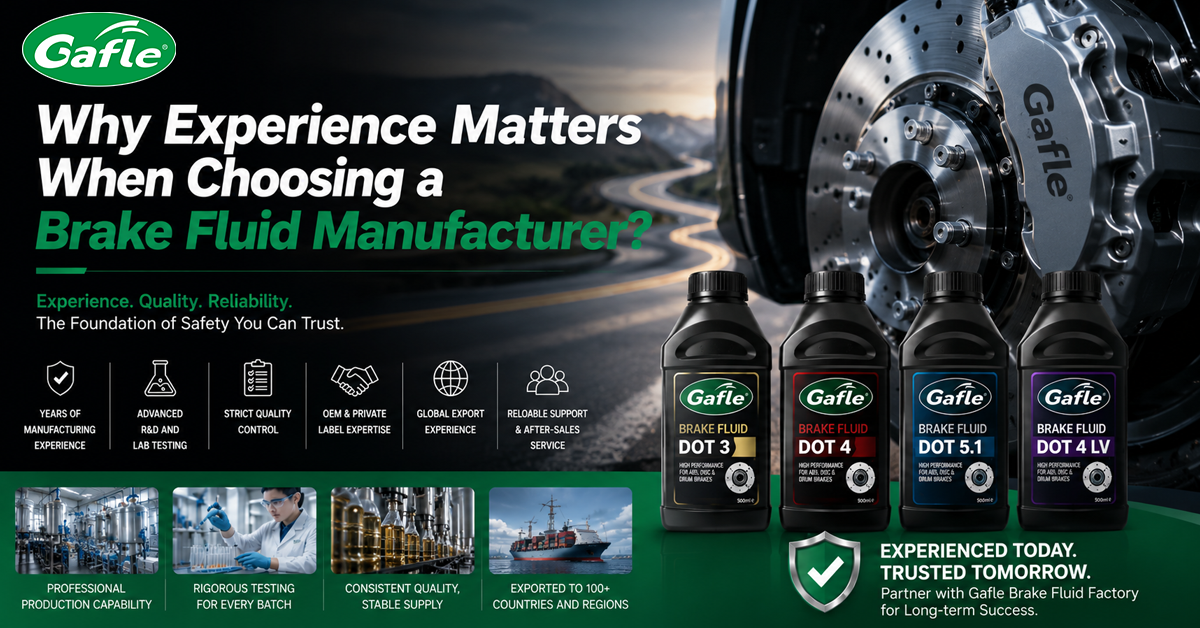
Some buyers specifically look for a dedicated brake fluid operation, sometimes referred to in the market as a specialized factory rather than a broad catalog supplier. If you see references such as Gafle Brake Fluid Factory in supplier conversations, the useful question is not the name itself. It is whether the plant has the systems, equipment, and quality discipline to back up the claim. Names are easy. Stable output is harder.
A focused plant may be better positioned to keep attention on one product family, which can improve consistency. That said, buyers should still verify capabilities instead of assuming specialization equals excellence. It often does, but not automatically.
Common mistakes when selecting a brake fluid partner
One frequent mistake is treating automotive quality certification as a branding badge rather than a working system. Another is overemphasizing price while ignoring documentation, traceability, or packaging controls. A third is skipping a sample review because the first quotation looked promising. Those shortcuts can create problems that do not show up until the order is already in transit.
Another practical caution: do not assume every supplier can support every application. Brake fluid requirements vary by market and vehicle platform, so the buyer should define the target use case clearly before asking for a proposal. That saves time and reduces the chance of comparing incompatible offers.
What a strong supplier relationship looks like
The best supplier relationships in this category are boring in the right way. The plant ships consistent product, documents what it ships, responds quickly when questions arise, and keeps the buyer informed about process changes. That is the behavior of a mature Brake Fluid Manufacturer, and it is exactly what engineers and sourcing managers need.
If your team is evaluating brake fluid for OEM programs, aftermarket distribution, or private-label expansion, start with the quality system and work outward. Product claims matter, but the factory behind them matters more.
Next step for buyers
Build your shortlist around suppliers that can explain their quality system clearly, show how they manage production stability, and support the level of documentation your program requires. If you are comparing options now, request product specifications, packaging details, and a process overview before you move to commercial terms. The right supplier should make that conversation easy.