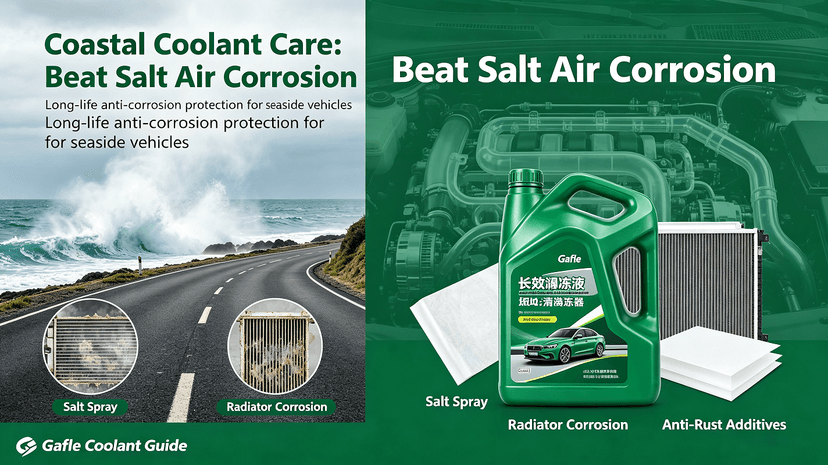
Coolant Anti-Corrosion Tips For Coastal Salty Air
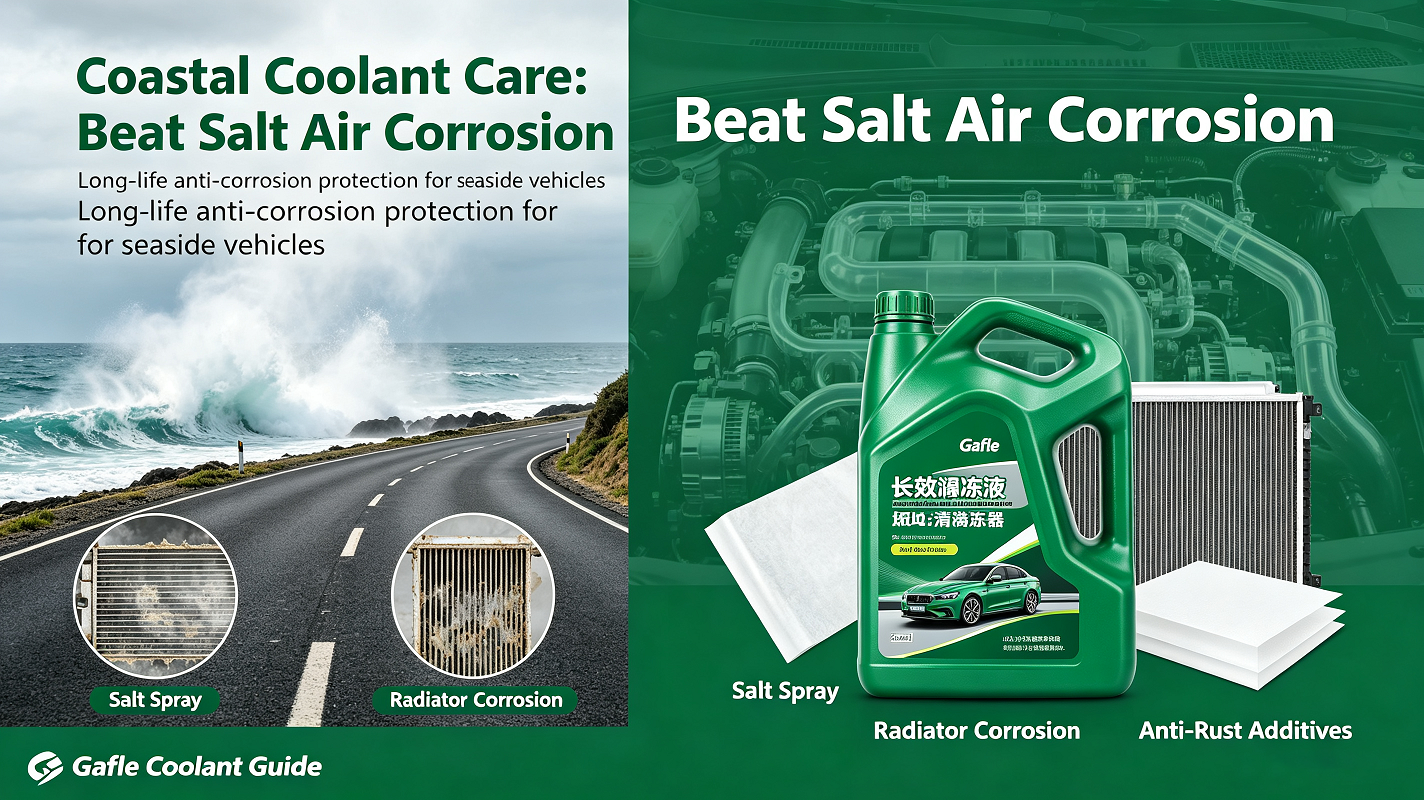
If you live near the ocean, your car’s cooling system faces a hidden enemy no inland driver needs to worry about: airborne salt mist. Every time you drive along coastal roads or park by the beach, tiny salt particles stick to your chassis, seep into cooling components, and speed up metal corrosion far faster than regular humidity. Standard all-season coolant struggles to stand up to this constant salt exposure, but premium long-life coolant with specialized anti-corrosion additives can shield your radiator and engine water channels. This guide breaks down how salt ruins cooling parts, how coolant blocks corrosion, and adjusted maintenance rules for seaside car owners.
1. How Coastal Salt Damages Your Cooling System
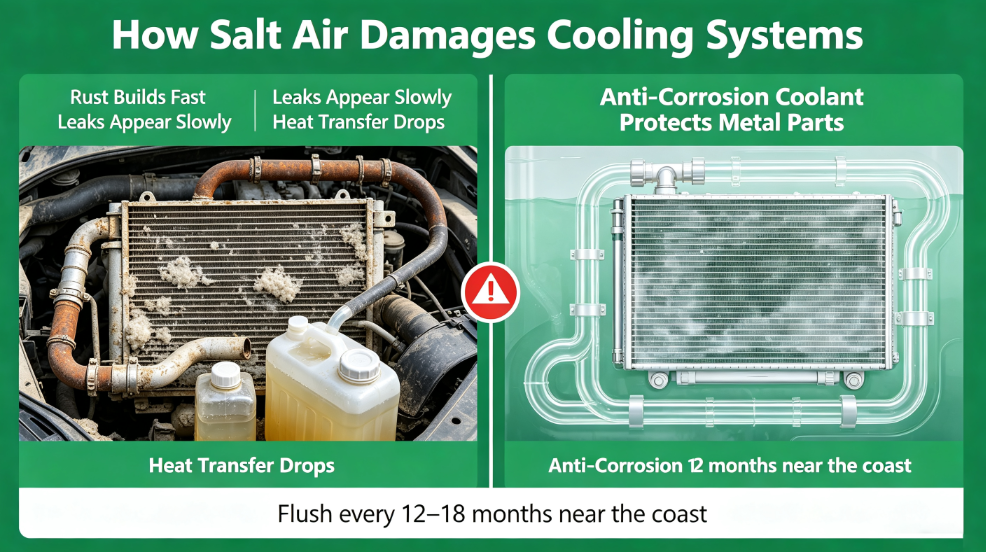
Sea salt is a powerful electrolyte that accelerates electrochemical rust on all aluminum, iron and copper cooling hardware:
- External salt deposits eat through radiator fins and metal pipe joints, creating tiny slow fluid leaks.
- Salt vapor penetrates loose reservoir caps and mixes inside coolant, breaking down anti-rust additives much quicker than dry inland air.
- Corrosion pits the thin aluminum engine water channels inside your block, causing permanent scaling that blocks heat transfer over time.
Many coastal drivers only notice damage once their radiator develops pinhole leaks or the engine starts overheating on hot days—repairs for corroded radiators and engine blocks cost hundreds of dollars.
2. How Long-Life Coolant Stops Salt-Induced Corrosion
High-performance OAT/HOAT coolant formulated for coastal regions contains balanced silicate and carboxylate anti-corrosion additives that solve salt’s destructive effect:
- A thin protective film coats every internal metal surface inside radiators, water pumps and engine passages, creating a barrier against salt and oxygen contact.
- The formula neutralizes acidic byproducts created when salt mixes with aged fluid, slowing coolant acidification.
- Long-life additive packages resist breakdown from constant salty moisture exposure, unlike cheap basic IAT coolant that loses anti-rust protection within 1 year near the ocean.
Regular ethylene glycol coolant without enhanced anti-corrosion boosters cannot provide enough protection for seaside driving.
3. Shortened Coolant Replacement Schedule For Coastal Vehicles
Mild inland areas follow a 2–5 year coolant flush cycle, but coastal salt exposure cuts the fluid’s effective service life nearly in half:
- Full cooling system flush & refill every 12–18 months for cars regularly driven near the sea.
- If you park outdoors on the coast year-round, inspect coolant clarity and water content every 6 months.
- After heavy coastal storms or long beach road trips, rinse your radiator exterior with fresh water to wash off surface salt buildup and reduce additive wear.
4. Quick Daily Protection Habits For Coastal Drivers
- Park under covered garages or carports to avoid direct sea fog and salt spray overnight.
- Check the coolant reservoir cap seal monthly; loose caps let more salt-laden air enter the fluid loop.
- Never top up with untested generic coolant—always use long-life anti-corrosion coolant matched to your vehicle’s specification.
Final Takeaway
Coastal salt air creates unique corrosion risks that standard coolant and standard maintenance cycles cannot handle. Switch to long-life coolant with robust anti-corrosion additives and shorten your fluid replacement interval to safeguard aluminum radiators and engine water channels, avoiding costly cooling system rust repairs down the line.
Welcome to contact GAFLE for more information & cooperation!
peter
ZHEJIANG GAFLE AUTO CHEMICL CO.,LTD
Tel:86-579-8222 1665
Fax:86-579-8246 4690
Cel/Wechart:86-13335993986
E-mail:peter@gafle.net
Web:www.gafle.net
peter
ZHEJIANG GAFLE AUTO CHEMICL CO.,LTD
Tel:86-579-8222 1665
Fax:86-579-8246 4690
Cel/Wechart:86-13335993986
E-mail:peter@gafle.net
Web:www.gafle.net