
How EV Coolant Preserves Battery Life Via Thermal Control
Lithium-ion electric vehicle batteries have a narrow safe operating temperature window. When packs overheat in summer or drop to freezing in winter, they degrade faster, lose driving range permanently, and risk premature failure. Unlike gasoline cars that only cool an engine, EVs rely on specialized thermal management coolant to hold battery temperatures steady through every season. This guide explains how EV coolant balances hot and cold conditions to slow battery aging and lock in full driving range long-term.
1. Two Big Battery Threats: Overheating & Frigid Temperatures
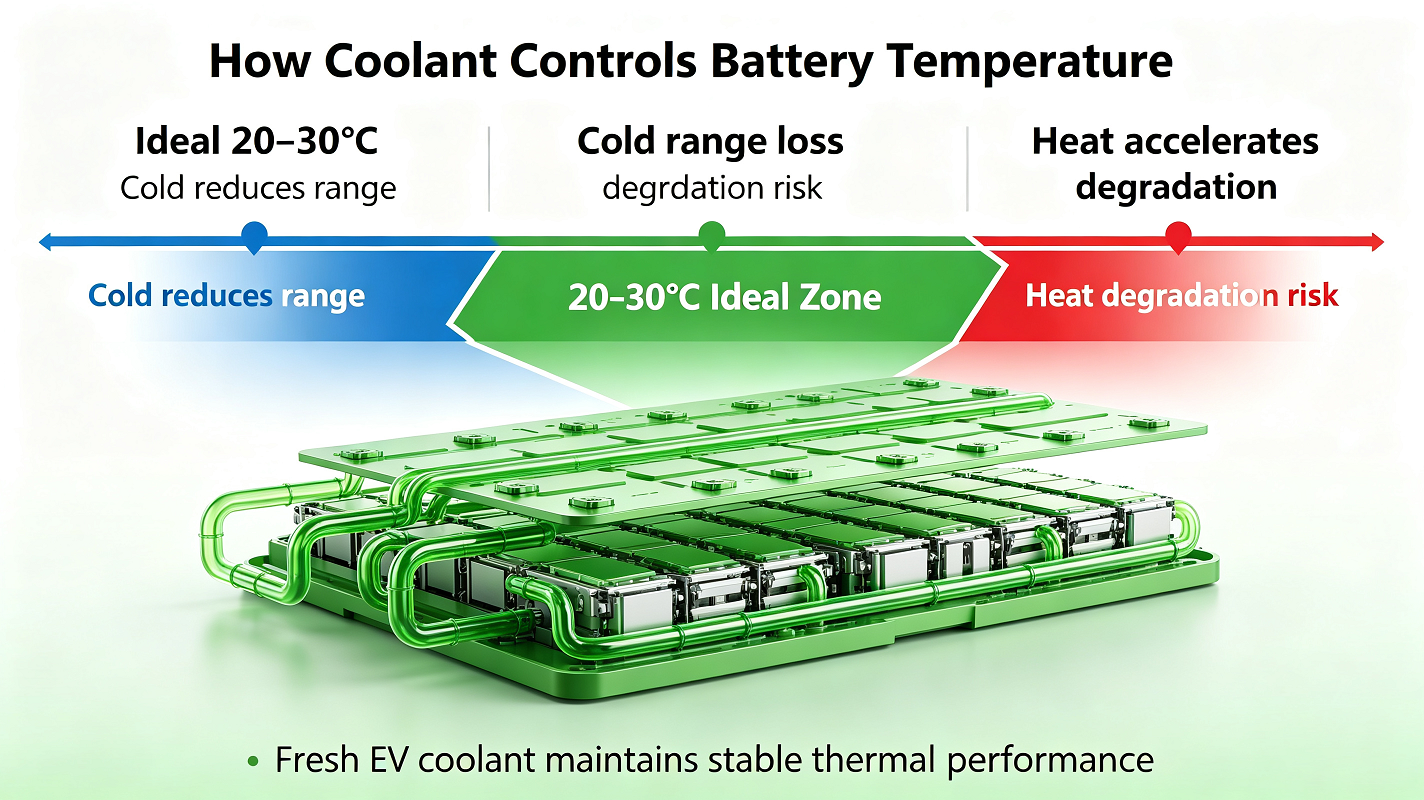
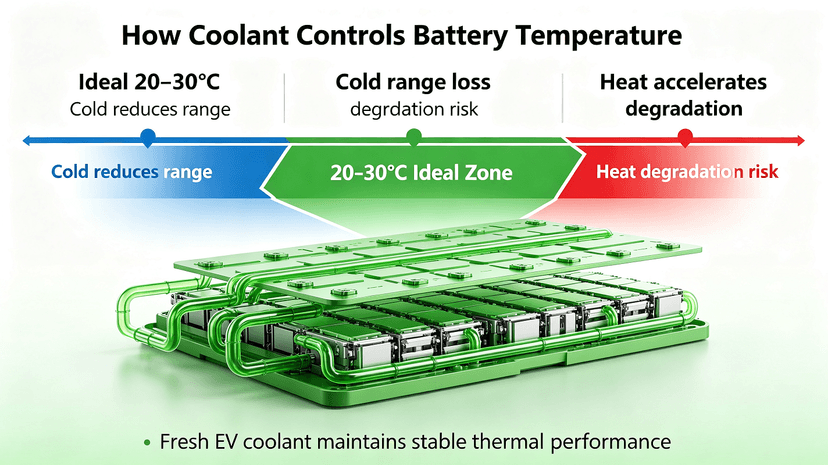
Lithium cells degrade rapidly outside the ideal 20°C–30°C operating range:
High-Temperature Damage (Summer / Fast Charging)
Heat accelerates chemical breakdown inside battery cells, eroding internal electrode materials. Over time this creates permanent capacity loss—your car’s maximum driving range shrinks with every hot fast-charging session without proper cooling. Severe unregulated overheating can also trigger thermal runaway safety risks.
Low-Temperature Damage (Winter Cold)
Cold slows lithium ion movement inside cells, instantly cutting usable range by 20–40%. Repeated deep cold cycling without thermal warming strains cell chemistry, speeding up long-term degradation and shortening total battery service life.
2. How EV Coolant Maintains Constant Safe Battery Temperature
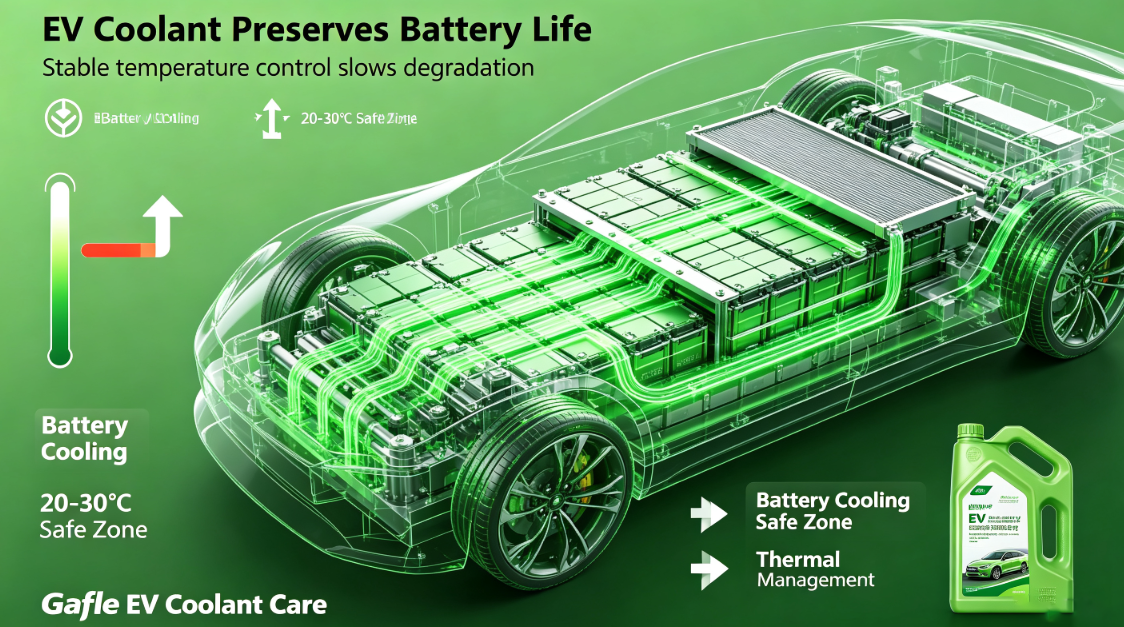
EV low-conductivity coolant circulates through channels molded into the battery pack’s cooling plate, performing two core stabilizing jobs:
- Heat absorption during fast charge & summer driving: The fluid pulls excess heat away from dense battery cells and transfers it to the front radiator for dissipation, capping peak pack temperatures.
- Heat retention & gentle warming in cold weather: Integrated heating circuits warm the coolant before it flows through the battery, bringing cells up to optimal operating temperature to restore full range and reduce cold-cycle wear.
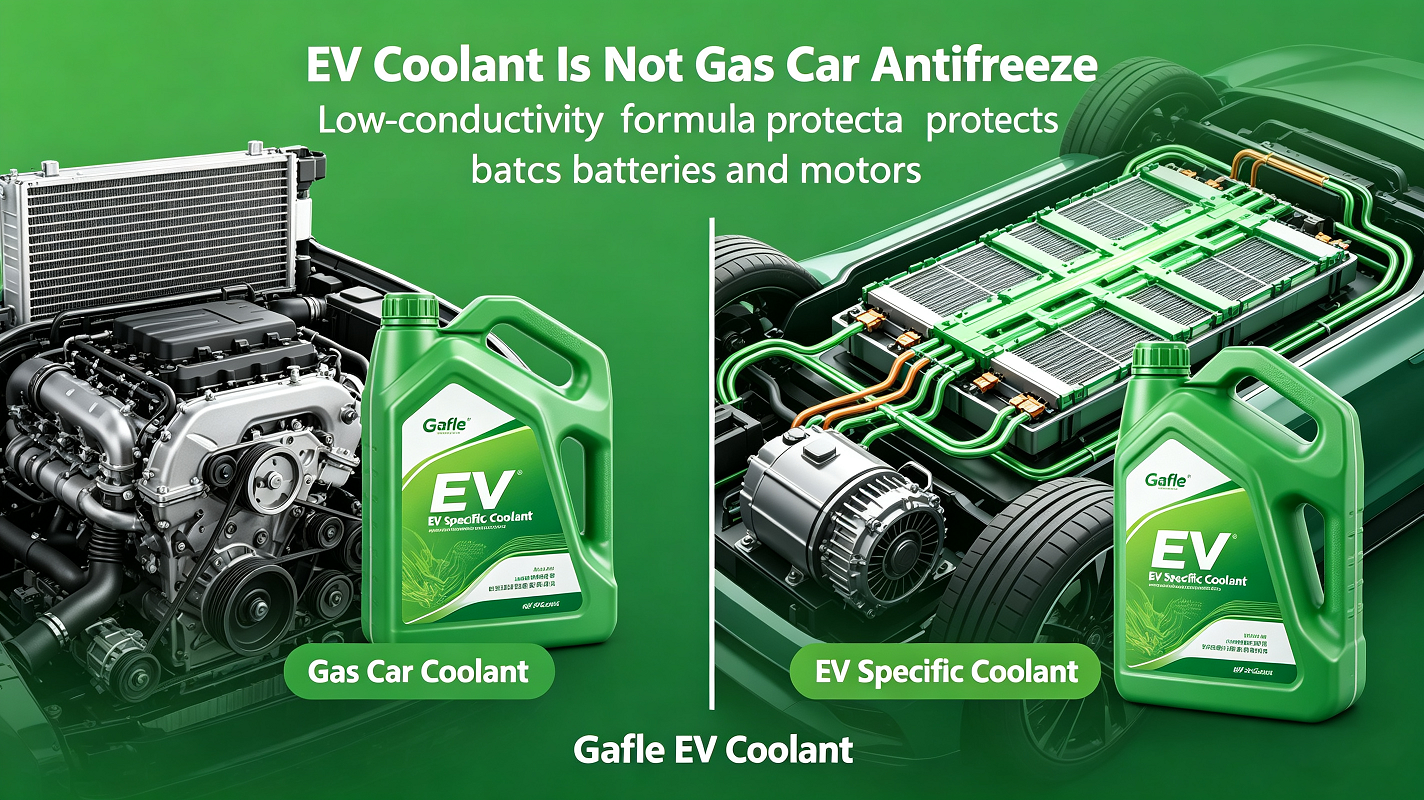
This continuous closed-loop temperature regulation is impossible without dedicated EV coolant; standard antifreeze lacks the balanced thermal viscosity required for precise battery thermal control.
3. Long-Term Financial Benefits Of Healthy EV Coolant
A well-maintained battery pack can last 8–10 years before noticeable capacity drop. Neglected degraded EV coolant accelerates decay, cutting usable battery life down to 4–6 years:
- Preserved full driving range eliminates costly early battery replacement or capacity restoration services.
- Stable thermal performance maintains consistent fast-charging speeds without vehicle power limitations triggered by overheated cells.
- Prevents uneven cell aging, a common issue that forces expensive full battery module replacements.
4. Simple EV Coolant Checks To Protect Your Battery
- Inspect the transparent EV coolant overflow tank monthly for proper fluid level between MIN/MAX marks.
- Schedule a full coolant flush at the OEM recommended interval to remove ion buildup that weakens thermal performance.
- Before long road trips in extreme summer or winter weather, confirm your coolant is fresh EV-grade low-conductivity fluid.
Final Takeaway
Specialized EV coolant is the backbone of lithium-ion battery thermal management, fighting both summer overheating and winter range loss. By stabilizing battery temperatures within the ideal safe window, quality EV coolant drastically slows cell degradation, preserves full driving range and extends the expensive battery pack’s total service life.
Welcome to contact GAFLE for more information & cooperation!
peter
ZHEJIANG GAFLE AUTO CHEMICL CO.,LTD
Tel:86-579-8222 1665
Fax:86-579-8246 4690
Cel/Wechart:86-13335993986
E-mail:peter@gafle.net
Web:www.gafle.net
peter
ZHEJIANG GAFLE AUTO CHEMICL CO.,LTD
Tel:86-579-8222 1665
Fax:86-579-8246 4690
Cel/Wechart:86-13335993986
E-mail:peter@gafle.net
Web:www.gafle.net