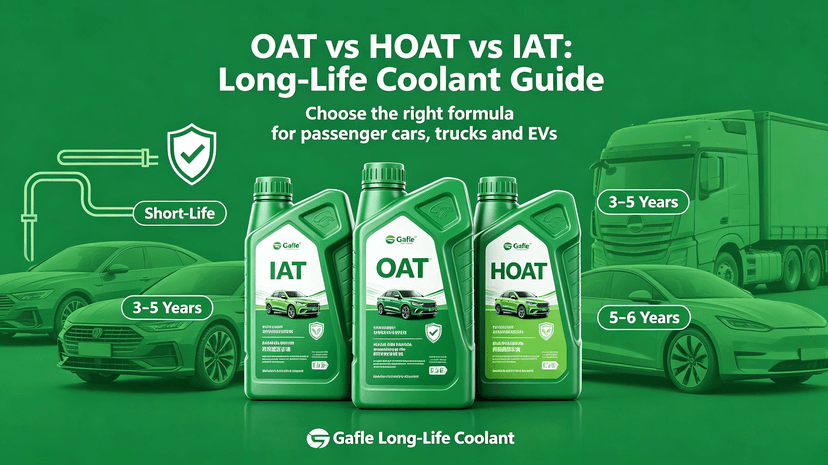
Long-Life OAT/HOAT Coolant: Cut Down Your Vehicle Maintenance Frequency
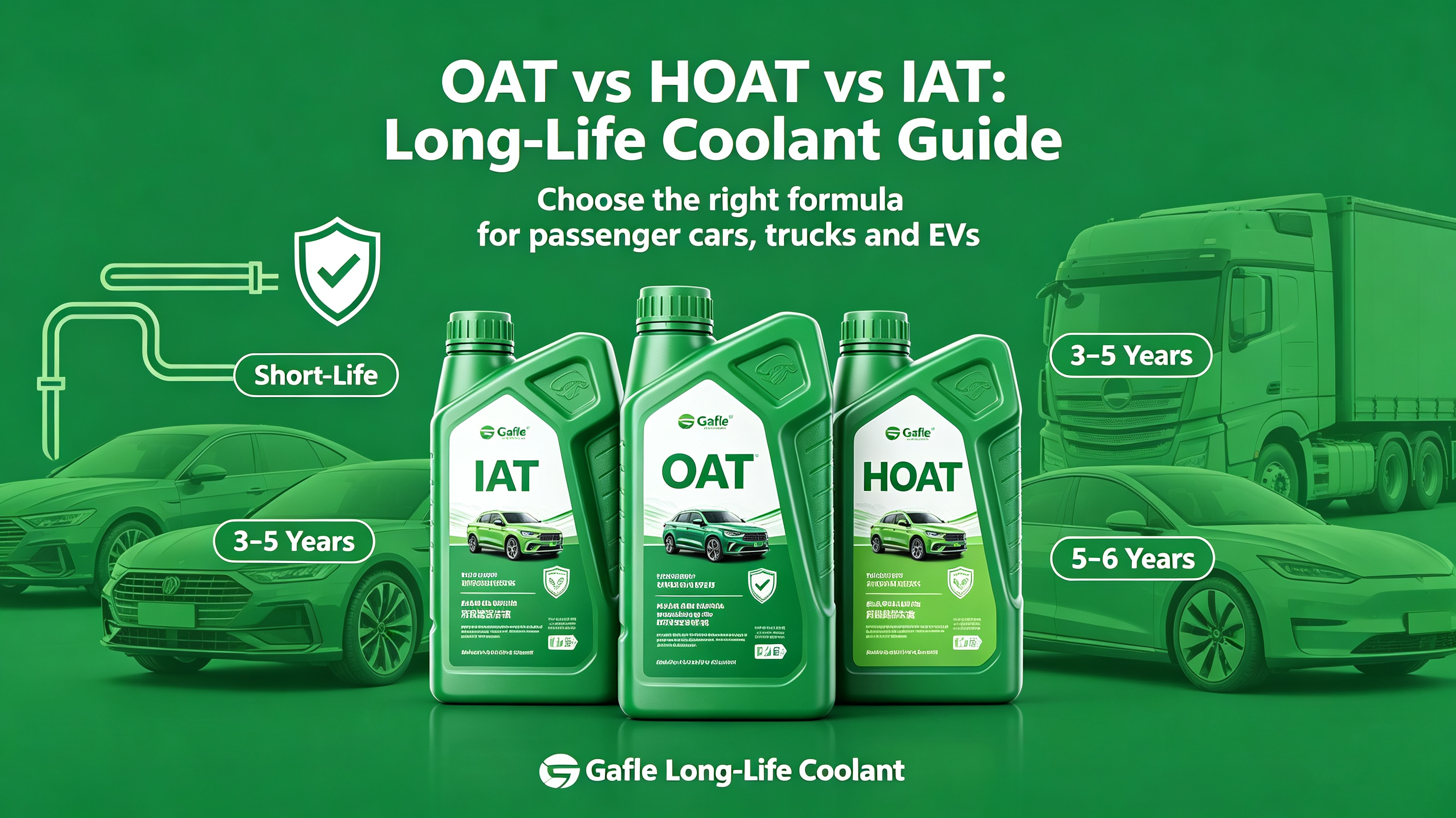
Car repair shops and fleet managers used to drain and refill coolant every single year, thanks to old-fashioned IAT coolant with short lifespans. Today’s advanced long-life OAT and hybrid HOAT coolant formulas deliver multi-year protection, slashing maintenance frequency for passenger vehicles, heavy commercial trucks and electric EVs alike. This guide clearly separates the three major coolant formula types, their service cycle gaps, and which long-life variant fits your vehicle.
1. Quick Breakdown Of Three Coolant Formulation Types
1) Conventional IAT Coolant (Traditional Short-Life)
- Core chemistry: Inorganic silicate-based additives
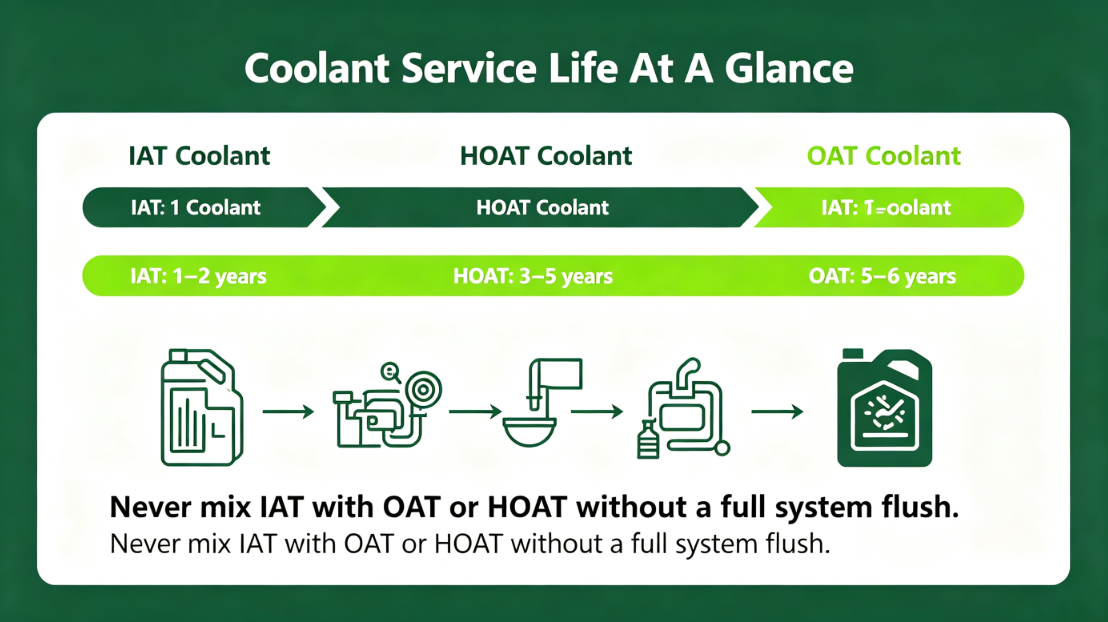
- Service life: Only 1–2 years or 24,000 miles
- Drawbacks: Silicate additives wear out quickly, require frequent flushing, not ideal for aluminum radiators or EV cooling circuits
- Best for: Older vintage gasoline vehicles only
2) OAT Organic Acid Technology (Full Long-Life)
- Core chemistry: Organic carboxylate anti-corrosion agents, zero silicates
- Service life: Up to 5 years / 150,000 miles for light passenger cars; 6 years for commercial fleets
- Advantages: Ultra-stable against heat and acidification, perfect for modern aluminum radiators and EV low-conductivity cooling systems
- Compatible with: Most late-model gas cars, electric vehicles, light trucks
3) HOAT Hybrid Organic Acid Technology (Balanced Long-Life)
- Core chemistry: Mixed silicate + organic acid blend
- Service life: 3–5 years / 100,000 miles
- Advantages: Combines silicate instant metal protection and long-term organic stability, great for heavy-duty trucks and SUVs
- Compatible with: Mixed fleets, diesel commercial vehicles, older aluminum engine builds
2. Long-Life Coolant Benefits For All Vehicle Categories
Passenger Private Cars
OAT coolant extends maintenance from annual flushes to once every 5 years, cutting down garage visits and routine service fees for daily commuter vehicles.
Commercial Heavy-Duty Trucks & Fleets
HOAT heavy-duty long-life coolant withstands constant high-load highway driving and repeated heat cycles, reducing downtime and fleet maintenance labor costs for business operators.
Electric EV Vehicles
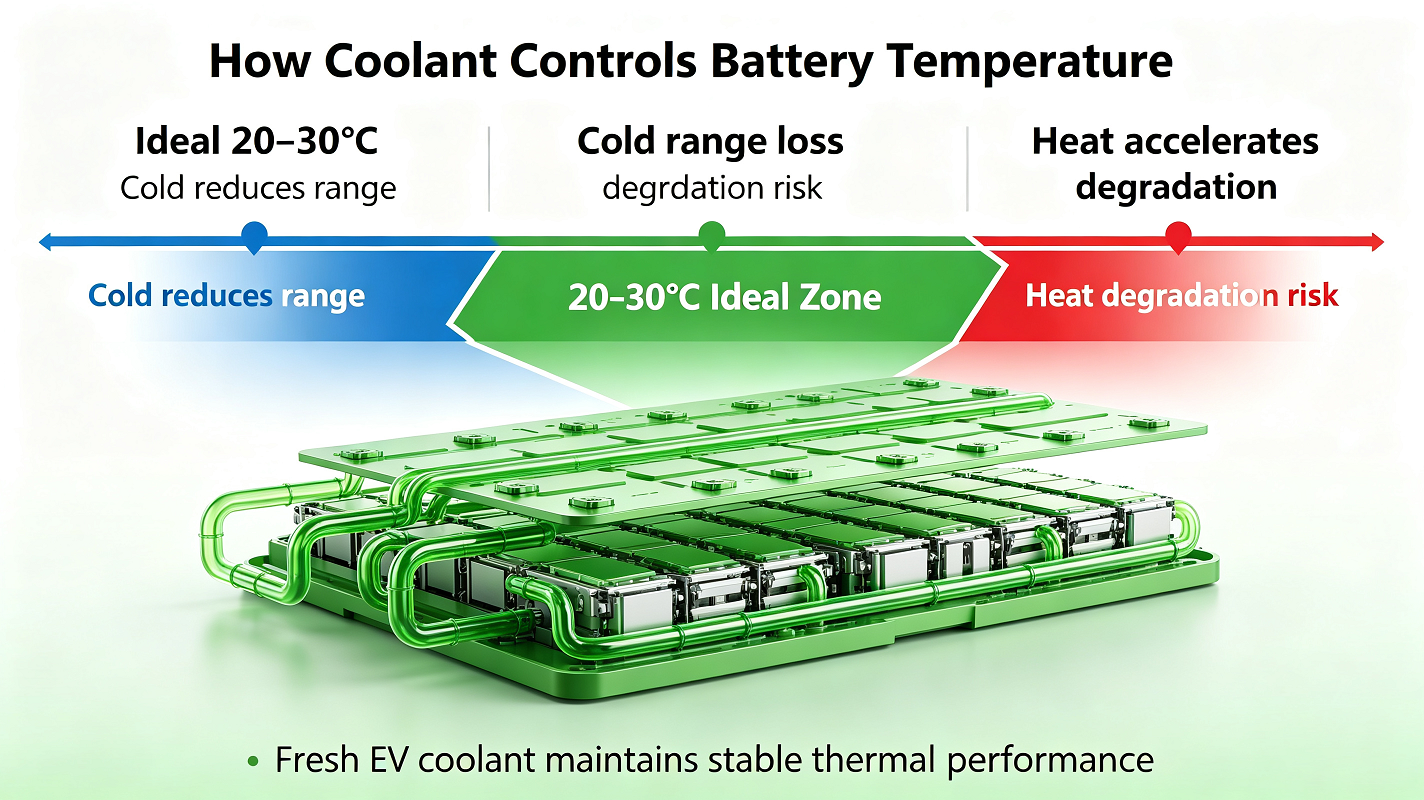
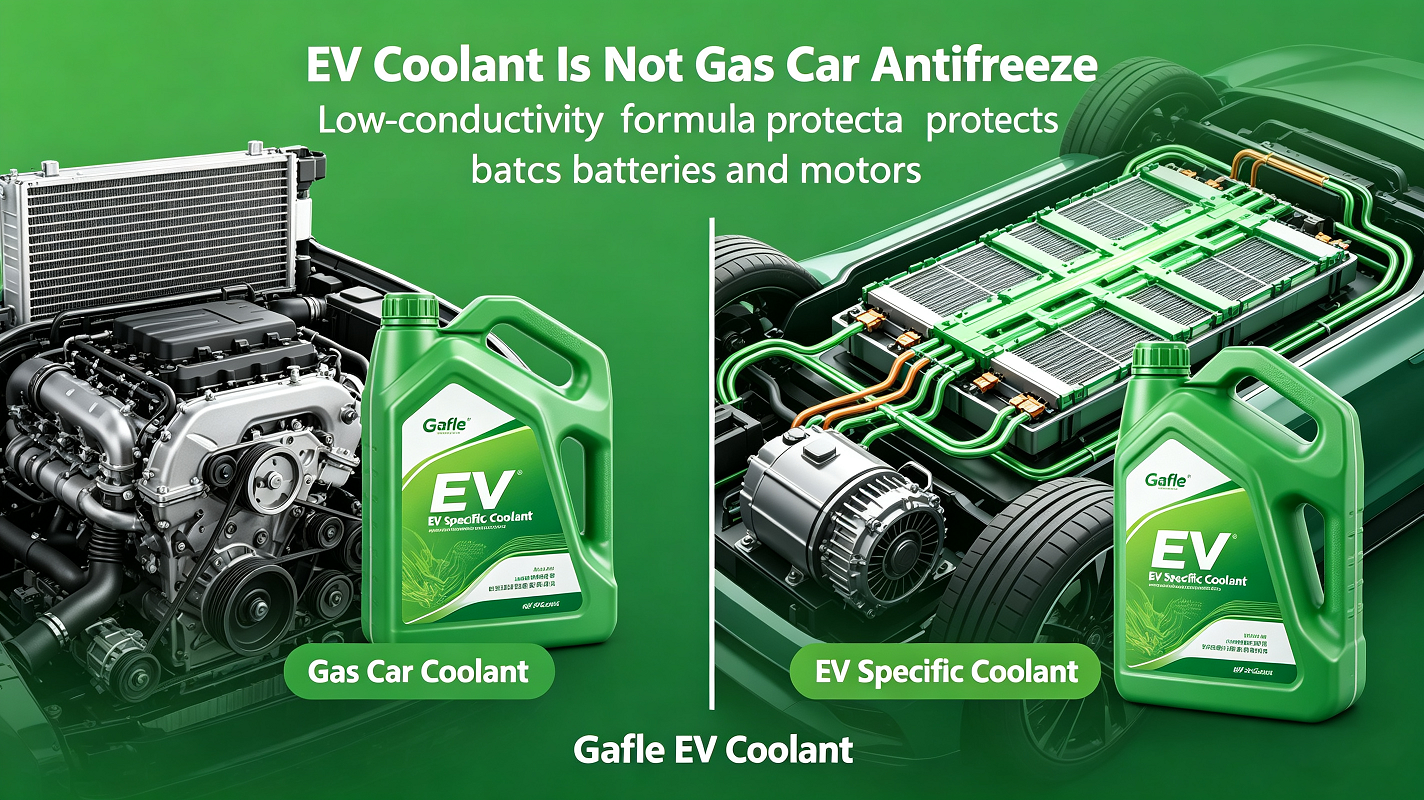
Specialized low-conductivity OAT EV coolant maintains stable insulation performance for battery and motor cooling loops over multi-year cycles, avoiding frequent fluid changes for high-voltage systems.
3. Key Rules When Switching To Long-Life Coolant
- Never mix old IAT coolant with OAT/HOAT formulas; conflicting additives create sludge and neutralize long-life protection.
- Complete a full system flush to remove all residual old fluid before refilling with long-life coolant.
- Follow manufacturer service labels: even long-life coolant requires inspection every 12 months to check fluid clarity and water content.
Final Takeaway
Upgrading to OAT or HOAT long-life coolant drastically cuts your vehicle maintenance frequency compared to outdated IAT antifreeze. Whether you own a personal sedan, commercial truck or electric EV, long-life formulas deliver multi-year anti-corrosion and thermal protection to lower total cooling system upkeep costs.
Welcome to contact GAFLE for more information & cooperation!
peter
ZHEJIANG GAFLE AUTO CHEMICL CO.,LTD
Tel:86-579-8222 1665
Fax:86-579-8246 4690
Cel/Wechart:86-13335993986
E-mail:peter@gafle.net
Web:www.gafle.net
peter
ZHEJIANG GAFLE AUTO CHEMICL CO.,LTD
Tel:86-579-8222 1665
Fax:86-579-8246 4690
Cel/Wechart:86-13335993986
E-mail:peter@gafle.net
Web:www.gafle.net