How Coolant Keeps Your Engine Safe All Year Round
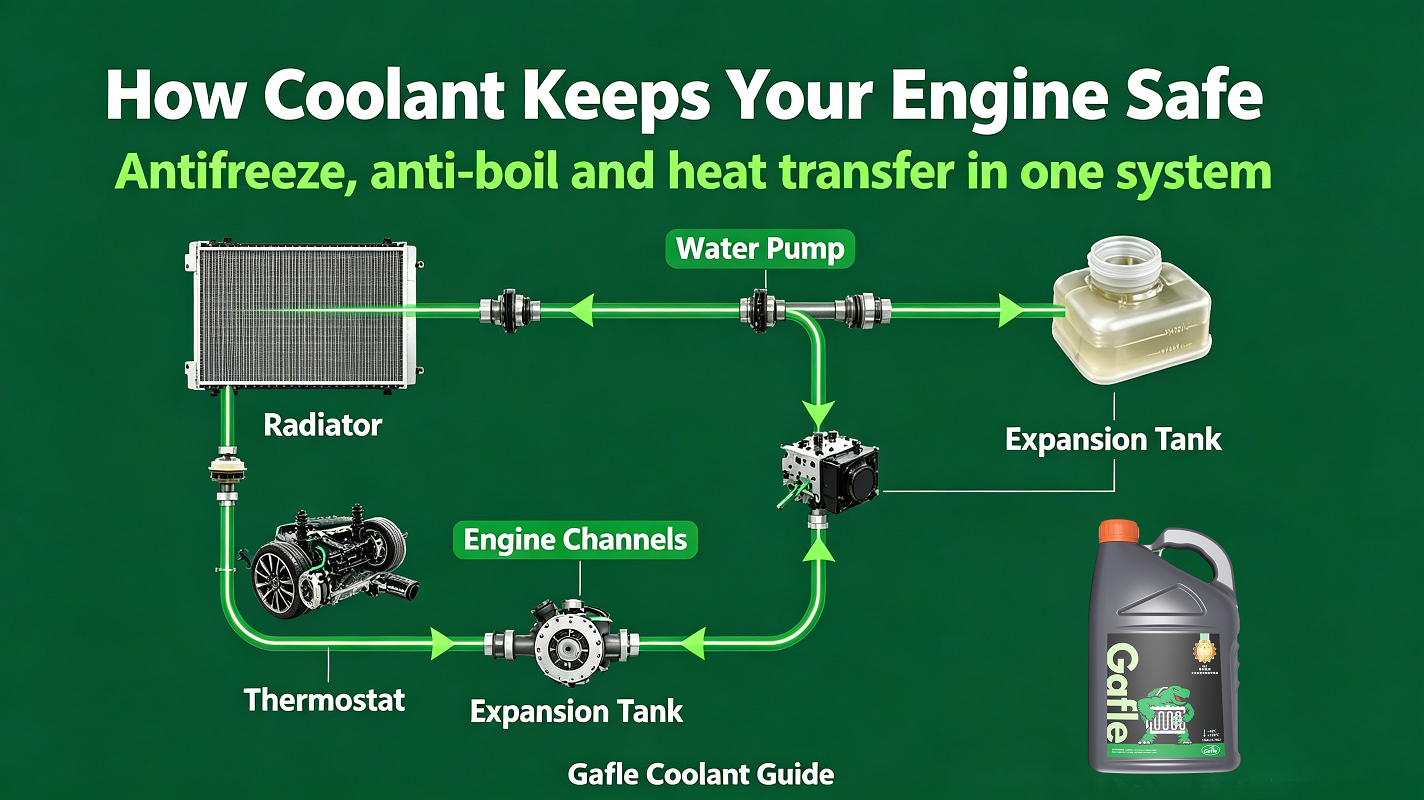
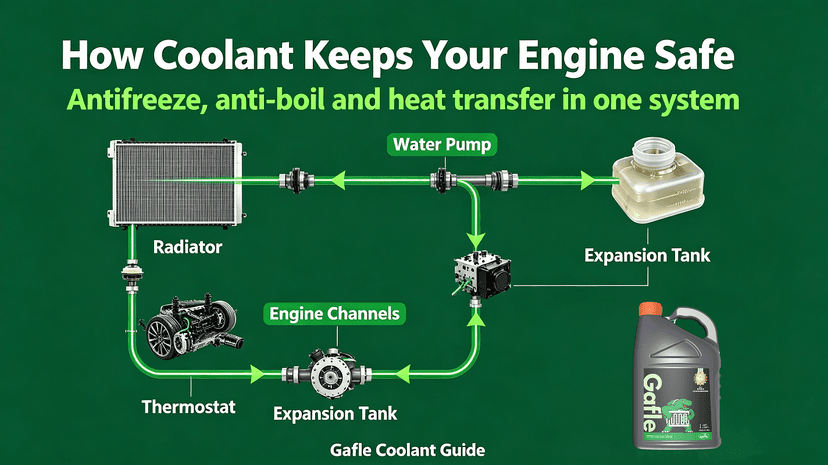
Most drivers know coolant prevents engine freezing in winter, but few realize it protects your vehicle through every season with three critical superpowers: anti-freezing, anti-boiling, and heat transfer. It flows through a closed loop of radiators, water pumps, engine channels and expansion tanks, acting as your engine’s built-in temperature regulator. This article breaks down the full cooling system workflow in simple language, plus the two main coolant formulas you’ll choose from.
1. The Complete Cooling System Loop, Simplified
Your engine creates massive heat every time you drive. Without coolant, metal parts would warp and seize within minutes. Here’s how the cycle works step by step:
- Coolant absorbs excess heat from hot engine cylinders as it flows through internal metal channels.
- The water pump pushes heated coolant toward the front radiator, where outdoor air cools the liquid down.
- Cooled fluid flows back into the engine to repeat the cycle, maintaining a steady safe operating temperature.
Every component in this loop relies on stable coolant to avoid damage, from the aluminum radiator to small plastic expansion reservoirs.
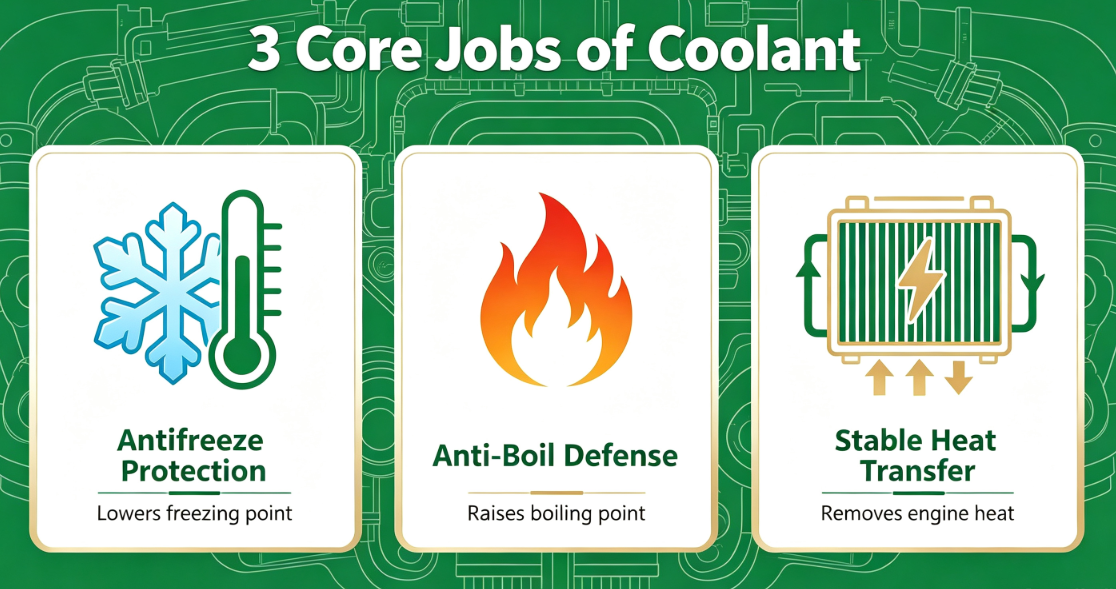
2. Three Unreplaceable Core Functions Of Coolant
① Anti-Freeze Protection
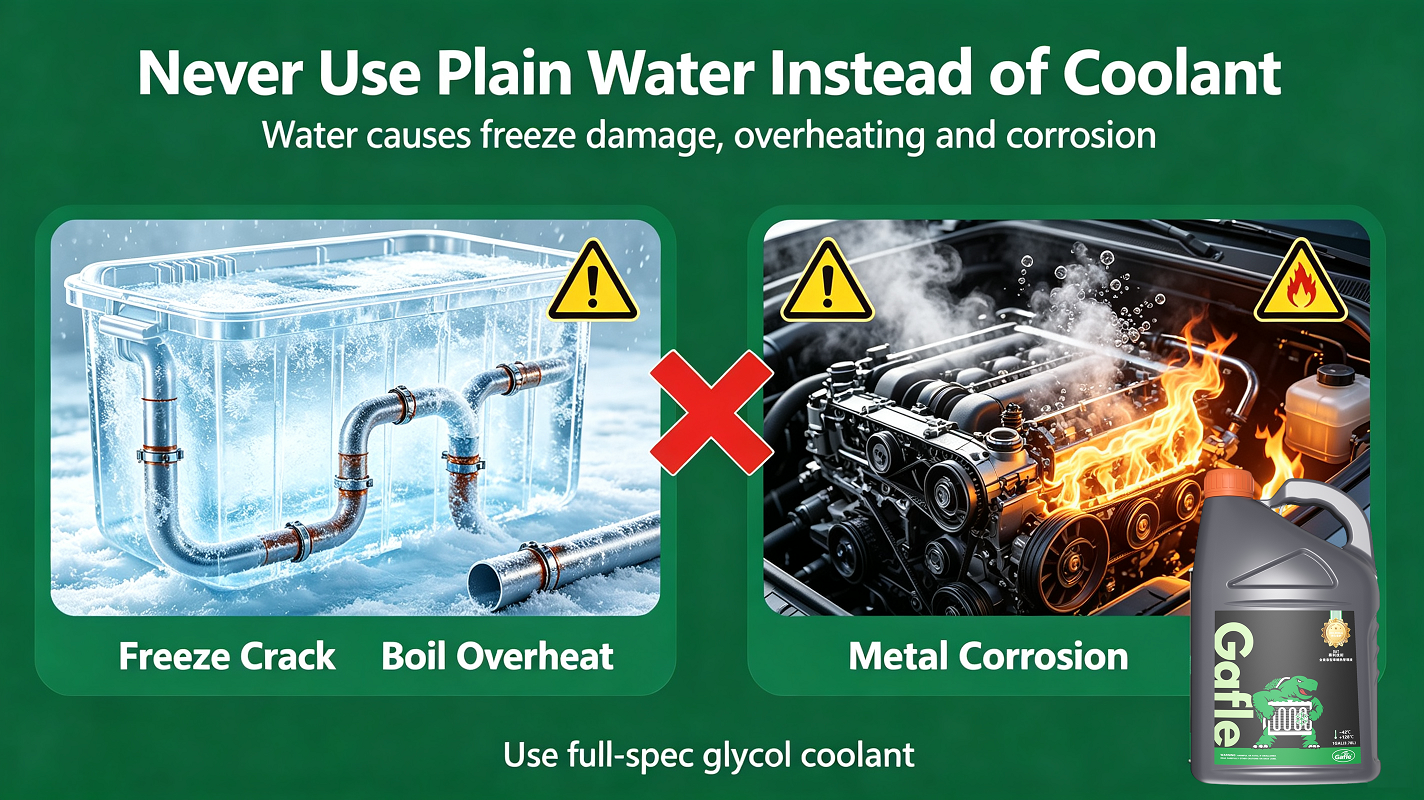
Pure water freezes at 0°C, and expanding ice will crack radiators, engine blocks and thin water pipes. Glycol-based coolant lowers the freezing point far below zero, even down to -40°C for heavy-duty winter blends.
② Anti-Boil High Temperature Defense
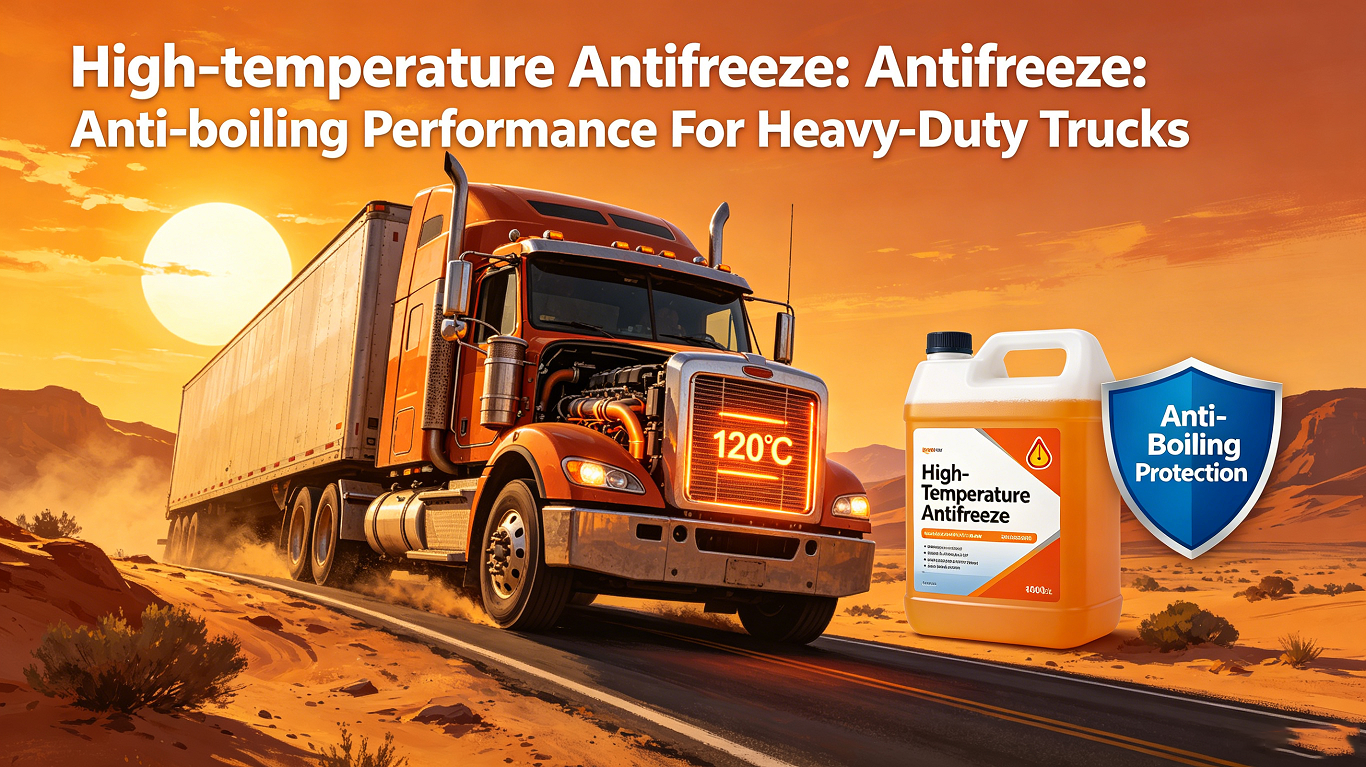
Water boils at 100°C, but running engines hit temperatures well above this threshold. Coolant raises the boiling point to 108°C or higher, stopping vapor bubbles that cut off heat flow and cause engine overheating.
③ Stable Heat Transfer
Coolant’s chemical makeup moves heat evenly across all engine parts, avoiding hot spots that warp cylinder heads and damage gaskets. It also carries mild lubricants to protect the moving water pump.
3. Two Main Coolant Formulas: Ethylene Glycol vs Propylene Glycol
Ethylene Glycol (Most Common For Passenger Cars)
- Pros: Excellent heat transfer, low cost, wide global availability, compatible with all standard gasoline & diesel engines.
- Note: Toxic if swallowed, so keep away from pets and children.
Propylene Glycol (Eco-Friendly Low-Toxic Option)
- Pros: Non-toxic, safe for RVs, campers and family vehicles with animals; gentle anti-corrosion additives for aluminum parts.
- Note: Slightly higher price, mostly used for light passenger vehicles and leisure transport.
You cannot mix these two formulas together. Cross-mixing breaks down protective additives, triggering corrosion and weak anti-freeze performance.
4. Quick Daily Check Tip
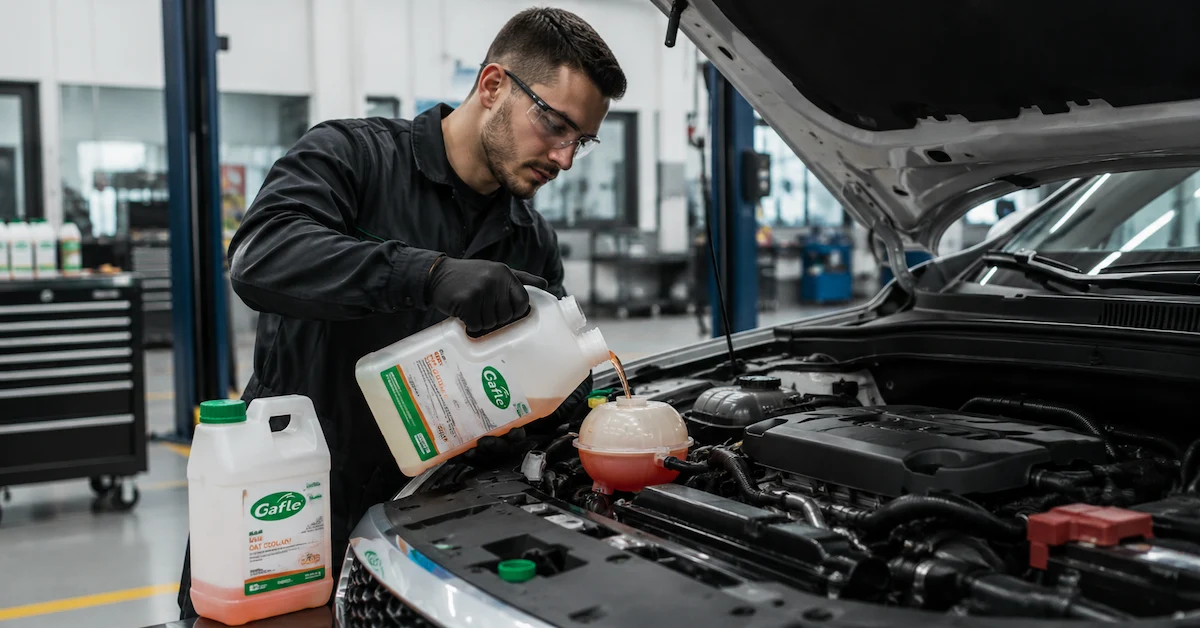
Pop your hood and inspect the transparent coolant expansion tank every month. Fluid should sit between the “MIN” and “MAX” marks. If the level drops rapidly, you may have a tiny leak in the cooling loop that needs quick repair.
Final Takeaway
Coolant is far more than just winter antifreeze—it controls your engine’s temperature 365 days a year. Understanding its closed-loop workflow and two core glycol types helps you pick the right fluid for your climate and vehicle, avoiding costly overheating or freeze damage down the road.
Welcome to contact GAFLE for more information & cooperation!
peter
ZHEJIANG GAFLE AUTO CHEMICL CO.,LTD
Tel:86-579-8222 1665
Fax:86-579-8246 4690
Cel/Wechart:86-13335993986
E-mail:peter@gafle.net
Web:www.gafle.net
peter
ZHEJIANG GAFLE AUTO CHEMICL CO.,LTD
Tel:86-579-8222 1665
Fax:86-579-8246 4690
Cel/Wechart:86-13335993986
E-mail:peter@gafle.net
Web:www.gafle.net