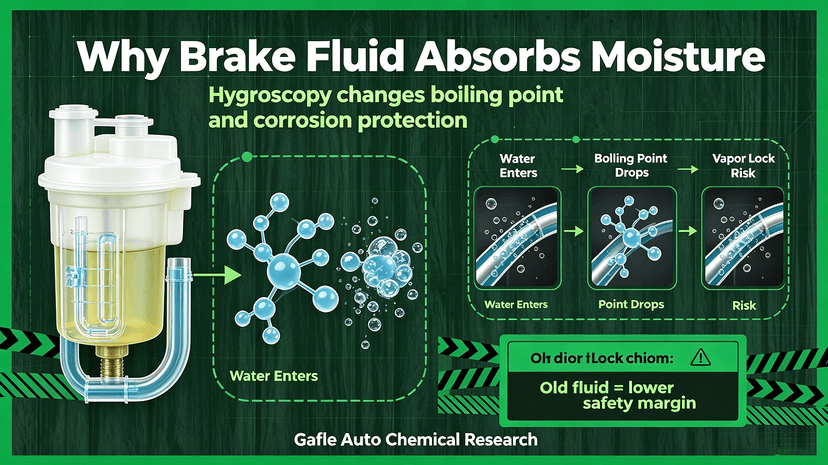
To understand why brake fluid expires even on parked cars, you first need to grasp the core chemical trait of all mainstream automotive brake fluid: hygroscopy. Every DOT3, DOT4, and DOT5.1 glycol brake fluid is hygroscopic, meaning it actively attracts and absorbs water vapor from surrounding air. This scientific characteristic is the root cause of soft brake pedals, overheating boiling, and long-term brake system corrosion. This article explains the full chemical process, measurable performance losses, and permanent mechanical damage caused by accumulated water contamination.
1. What Makes Glycol Brake Fluid Hygroscopic?
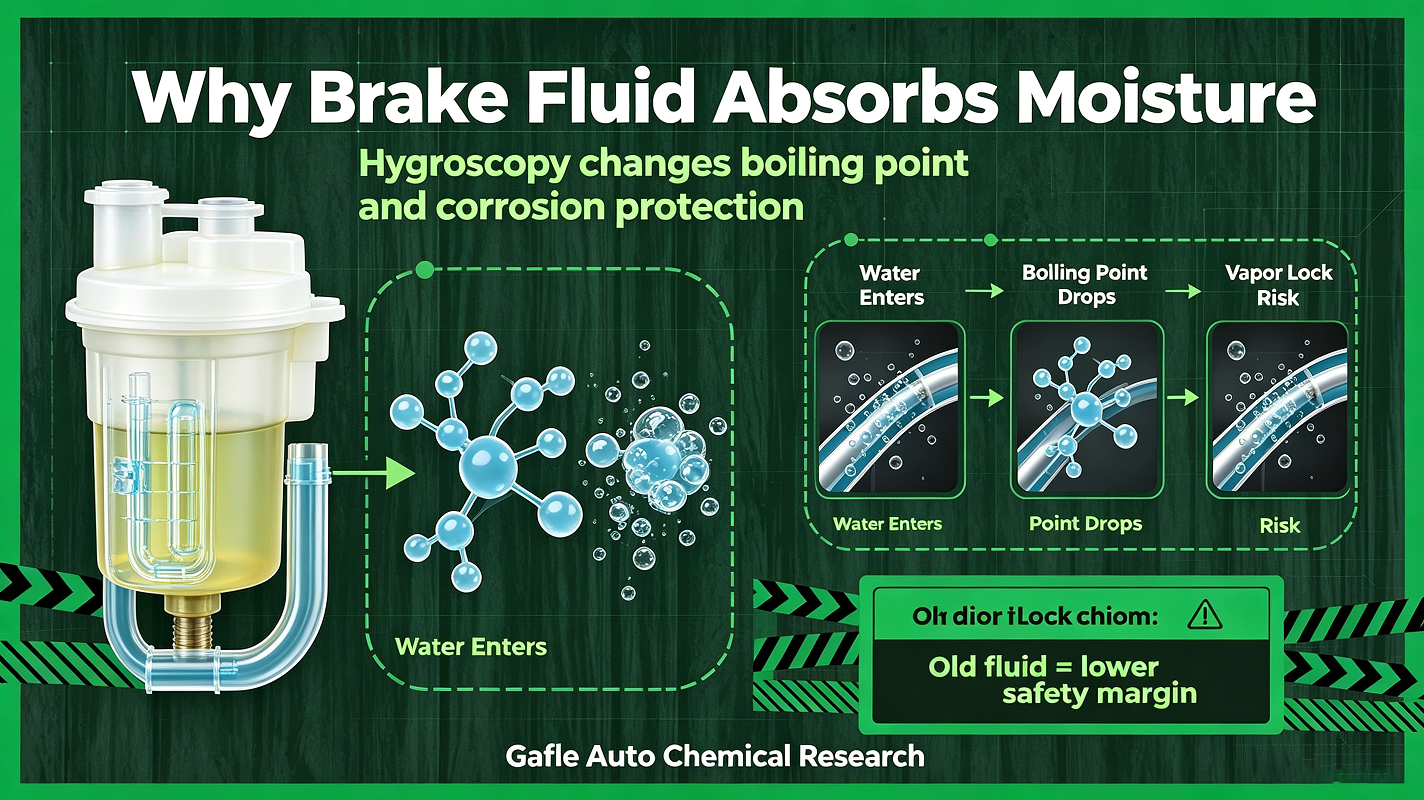
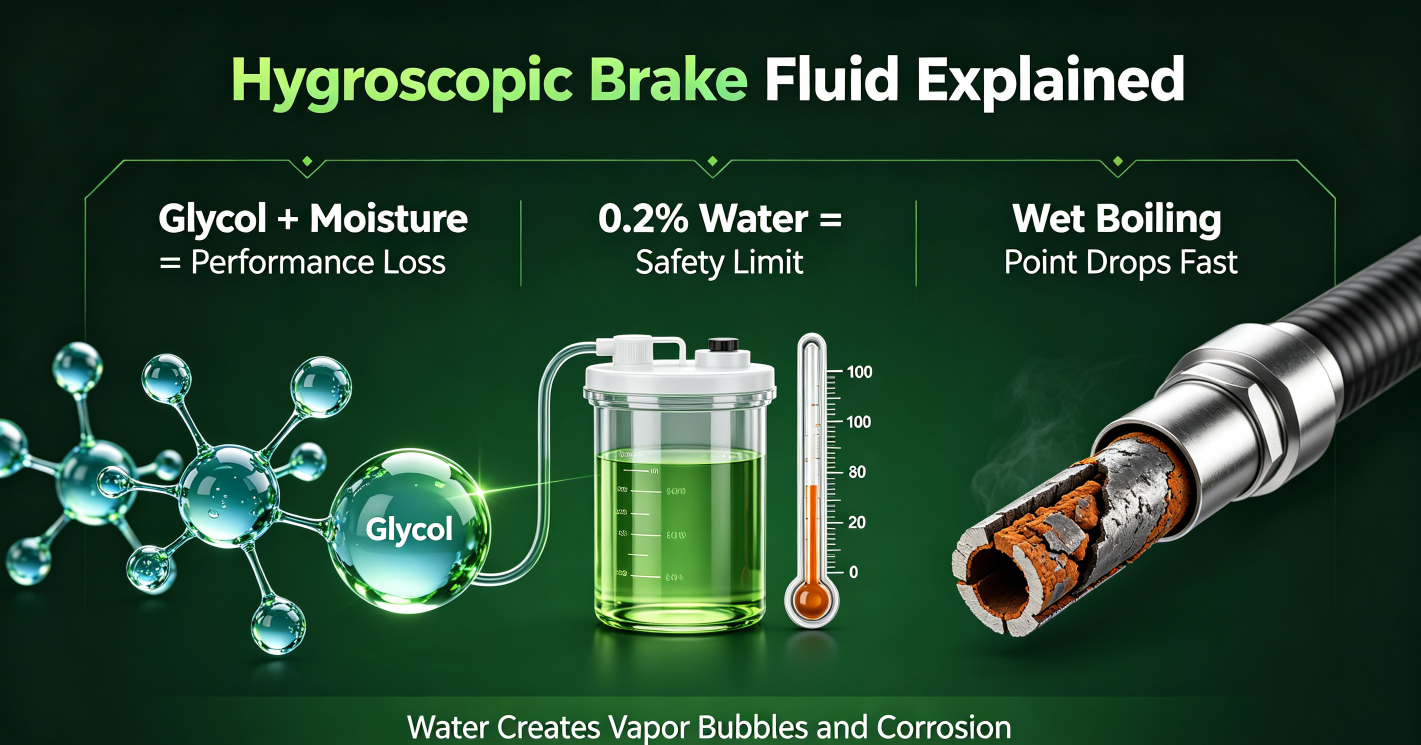
Glycol ether molecules, the base building block of standard brake fluid, contain polar hydroxyl (-OH) groups that form hydrogen bonds with water molecules. This chemical attraction pulls airborne moisture through minor gaps in the brake fluid reservoir cap, even when the vehicle is fully stationary.
Silicone-based DOT5 brake fluid is non-hygroscopic, but it cannot be mixed with glycol fluids and is rarely used for standard passenger vehicles due to incompatibility with factory ABS systems. For 98% of global passenger cars and light trucks, hygroscopic glycol fluid is the factory default, creating universal moisture absorption risks.
2. Step-by-Step Moisture Degradation Process
- Passive Water Intake: Ambient humidity seeps into the sealed brake reservoir continuously, adding trace water molecules to the fluid mix month after month.
- Boiling Point Degradation: Water has a far lower boiling point than glycol ether. Even 0.5% water content cuts the wet boiling point by 20°C; 2% water reduces it by over 50°C.
- Vapor Bubble Formation: High braking heat boils suspended water, creating compressible air pockets inside rigid steel brake lines. Unlike liquid fluid, vapor cannot transfer hydraulic pressure evenly.
- Corrosion Cycle Trigger: Water turns neutral glycol fluid slightly acidic, breaking down anti-corrosion additive packages and accelerating rust on all metal brake hardware.
3. Quantifiable Safety Threshold: The 0.2% Water Content Limit
All international automotive safety standards (SAE J1703, GB 12988, DOT specifications) cap maximum safe brake fluid water content at 0.2%. Beyond this limit, measurable performance degradation begins:
- 0.3% water: Minor soft pedal feel under heavy braking
- 1.0% water: 40°C drop in wet boiling point, vapor lock risk during downhill driving
- 2.0%+ water: Severe metal corrosion, permanent caliper seal swelling, frequent brake fade
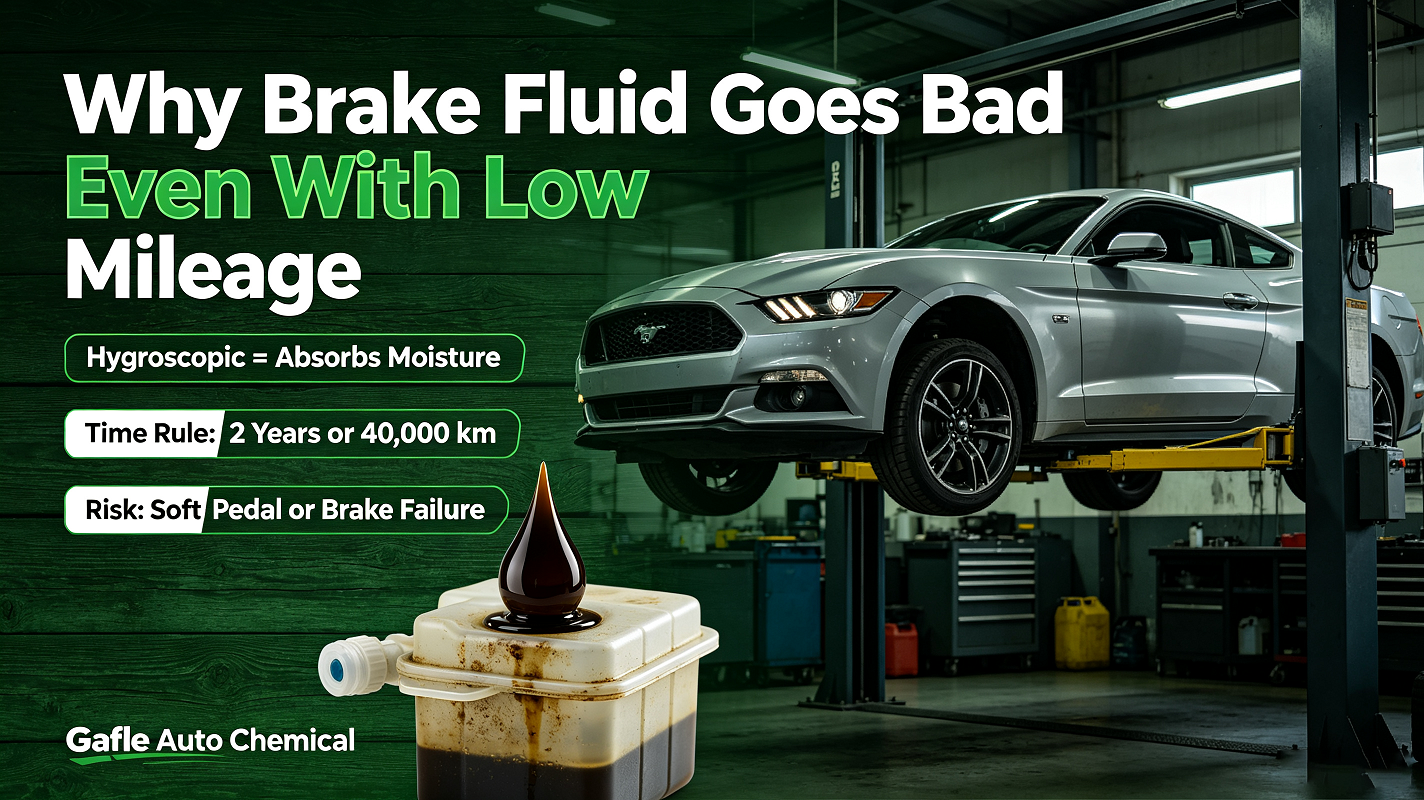
A car parked indoors for 24 months will almost always exceed this 0.2% safety threshold, regardless of total driving distance.
4. Permanent Damage From Unchecked Water Contamination
Moisture-laden brake fluid creates two types of irreversible brake system damage that cannot be fixed by simply topping up new fluid:
- Internal Metal Pitting: Rust and corrosion eat tiny holes into master cylinder walls, ABS valve channels, and brake pipe interiors, leading to slow fluid leaks and uneven pressure distribution.
- Rubber Seal Degradation: Diluted anti-swelling additives cause nitrile rubber caliper seals to crack, shrink, or leak, requiring full brake caliper replacement.
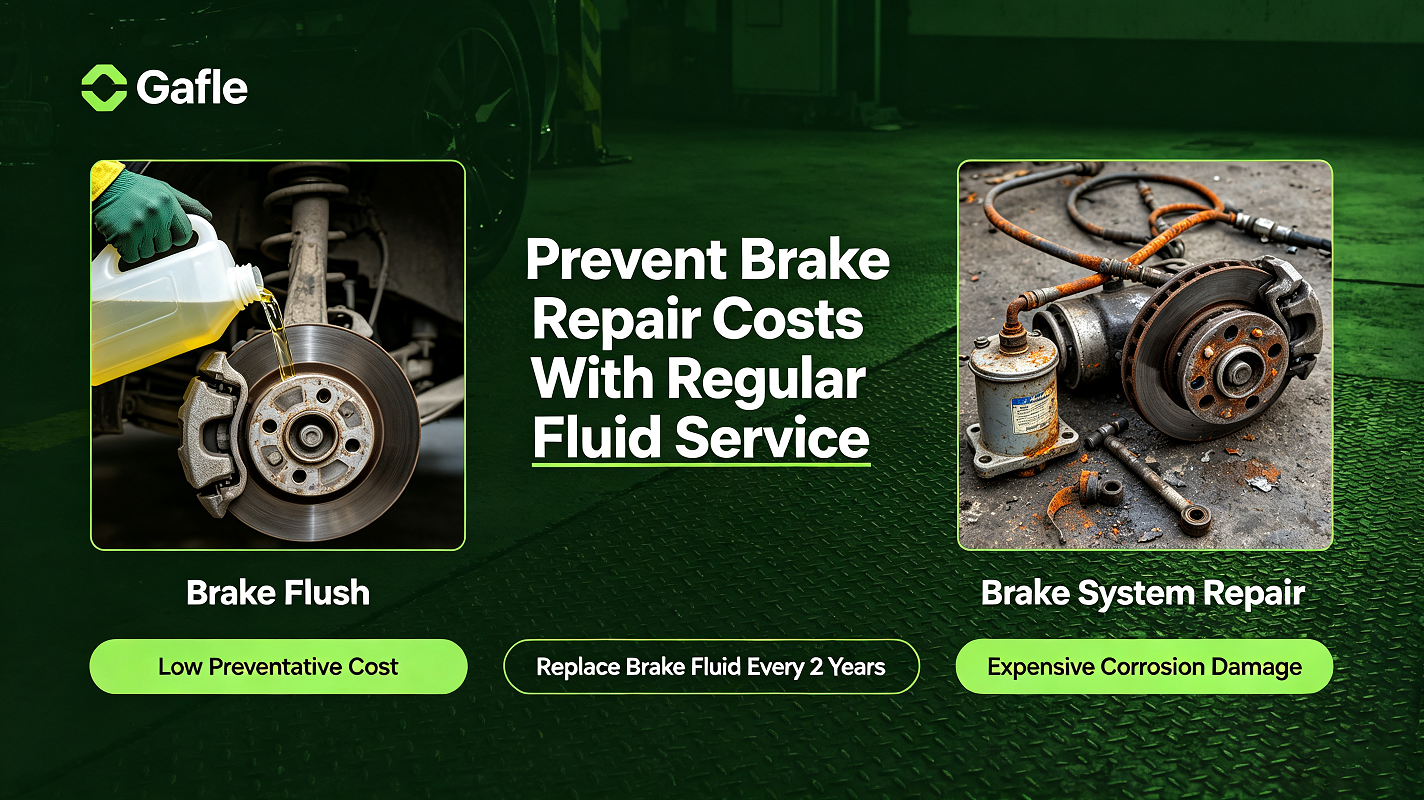
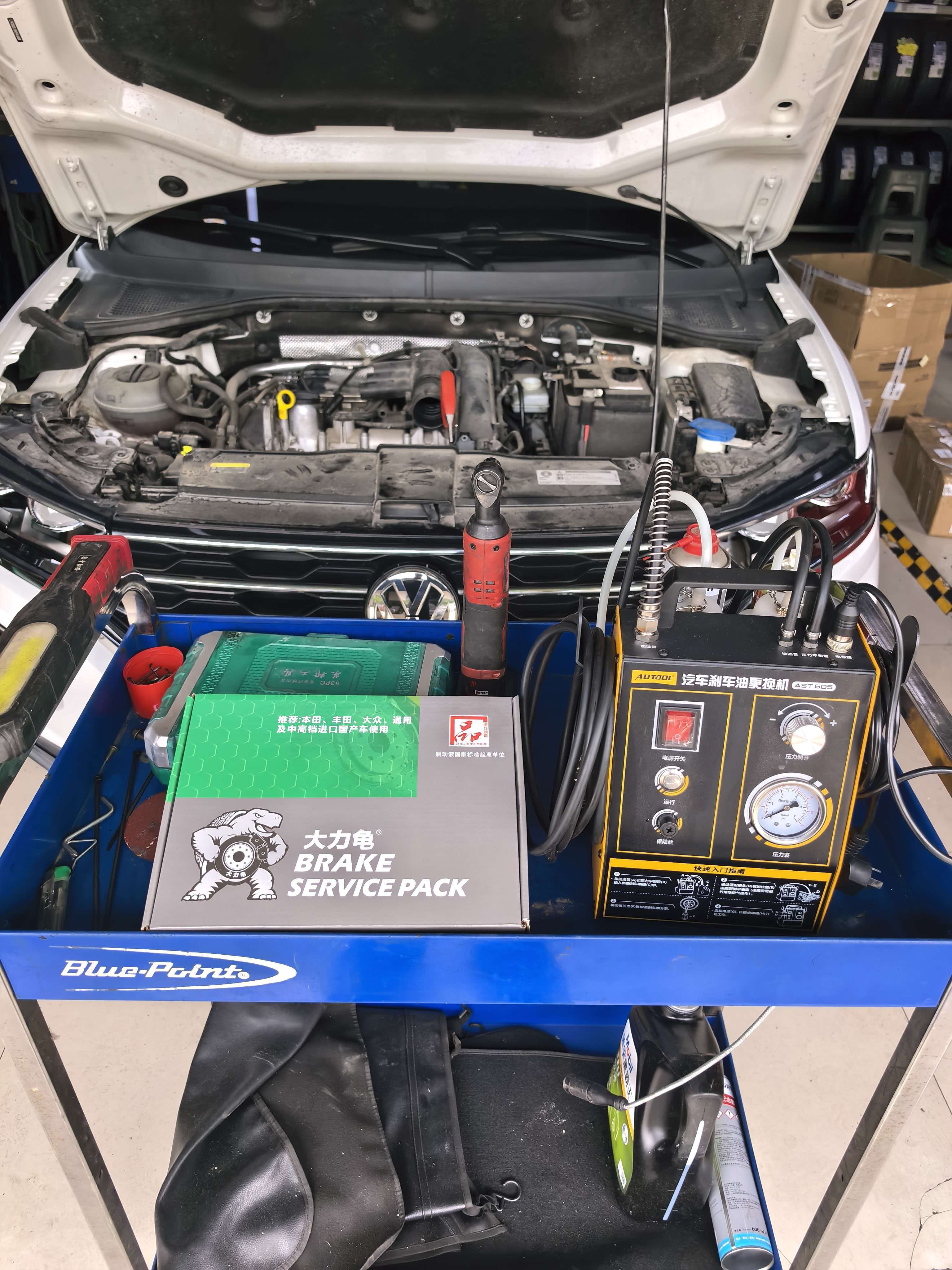
Flushing old contaminated fluid every two years removes accumulated water before this permanent hardware damage occurs, drastically cutting long-term vehicle repair costs.
Closing Summary
Hygroscopy is an unavoidable chemical property of glycol brake fluid, and moisture absorption proceeds nonstop whether your car is driven daily or parked unused. The science confirms time, not mileage, dictates brake fluid service life. Regular full-system flushing eliminates built-up water contamination, preserving critical boiling point performance and protecting expensive brake components from permanent corrosion damage.
Welcome to contact GAFLE for more information & cooperation!
peter
ZHEJIANG GAFLE AUTO CHEMICL CO.,LTD
Tel:86-579-8222 1665
Fax:86-579-8246 4690
Cel/Wechart:86-13335993986
E-mail:peter@gafle.net
Web:www.gafle.net
peter
ZHEJIANG GAFLE AUTO CHEMICL CO.,LTD
Tel:86-579-8222 1665
Fax:86-579-8246 4690
Cel/Wechart:86-13335993986
E-mail:peter@gafle.net
Web:www.gafle.net