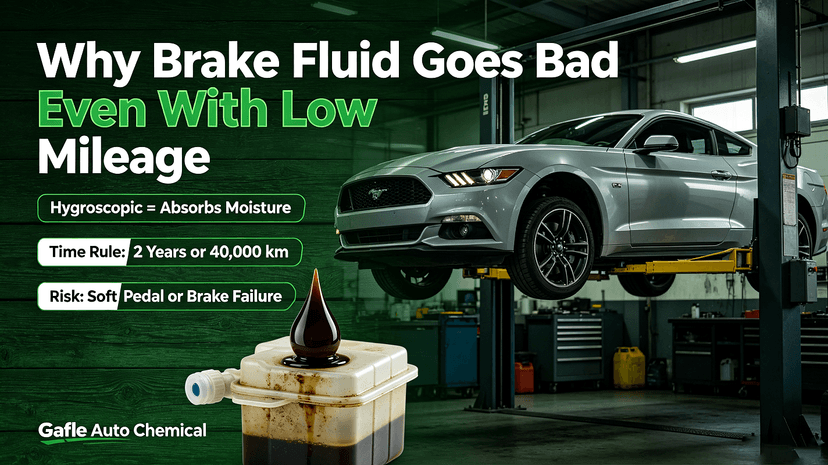
Why Brake Fluid Goes Bad Even If You Rarely Drive Your Car
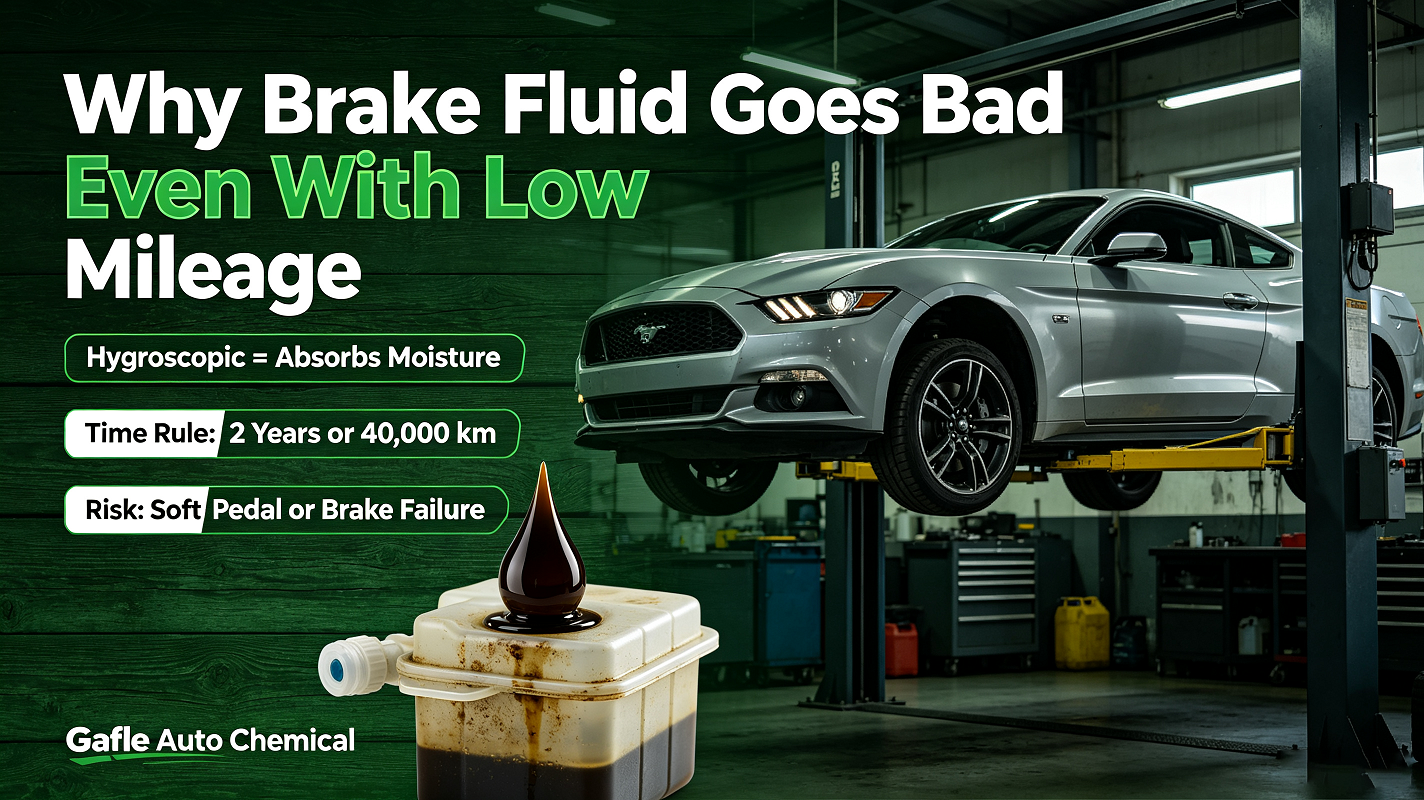
Many vehicle owners hold a dangerous misconception: as long as their odometer hasn’t hit the recommended mileage limit, their brake fluid remains safe. This misunderstanding puts countless drivers at risk of sudden brake failure, especially those who only drive occasionally or leave their vehicles parked for months at a time. Glycol-based DOT brake fluid is inherently hygroscopic, meaning it continuously pulls moisture from the air—whether your car is in daily use or sitting untouched in the garage. This article breaks down how idle storage ruins brake fluid, the hidden safety hazards, and the fixed time-based replacement rule every driver must follow.
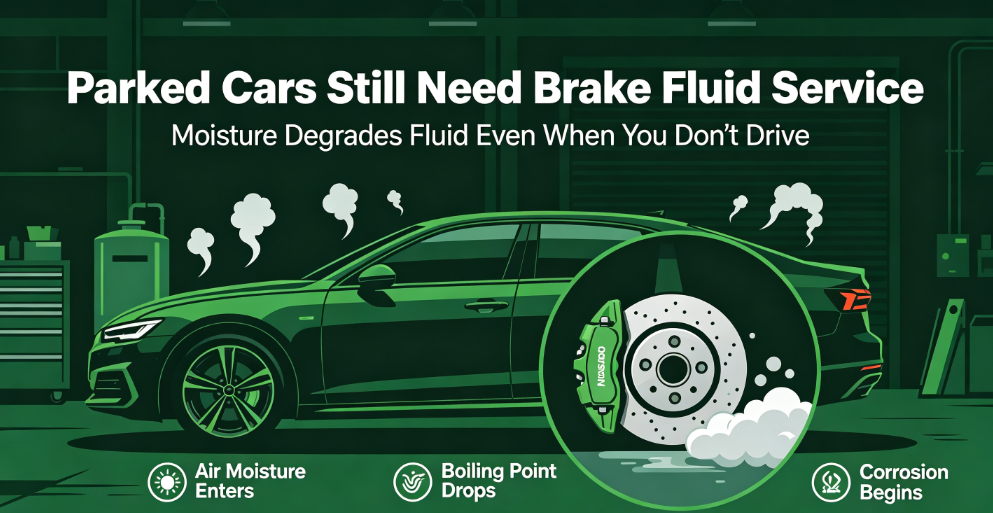
1. Brake Fluid “Breathes” Even When The Car Is Parked
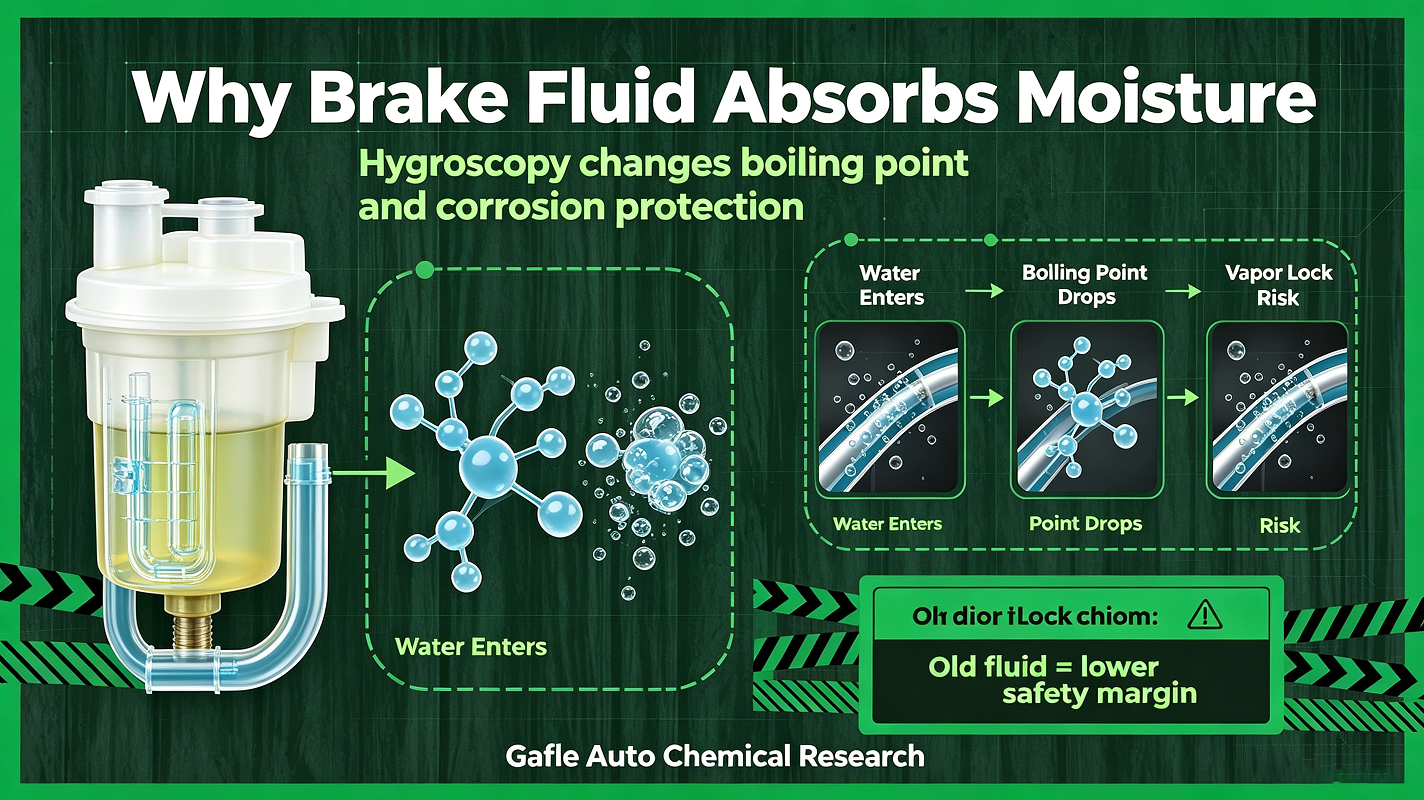
All standard glycol brake fluid formulations are designed to transmit hydraulic pressure, but their chemical structure creates a fatal flaw: constant moisture absorption. The brake fluid reservoir cap is not fully airtight, allowing small amounts of ambient air to seep into the fluid chamber day and night.
- Humid coastal climates, rainy seasons, and underground parking garages speed up water intake drastically.
- A vehicle parked unused for 12 months can absorb nearly 1.5% water content into its brake fluid, far exceeding the 0.2% safe threshold set by SAE DOT standards.
This process does not rely on engine operation or driving mileage; it happens passively, 24 hours a day, regardless of how little you drive. Low-mileage cars often end up with more degraded brake fluid than frequently driven vehicles, as regular driving heats the fluid and slows long-term moisture buildup.
2. Water Contamination Is Toxic To Your Brake System
Moisture trapped inside brake fluid acts as a corrosive “poison” for your entire hydraulic braking system, triggering two irreversible failures:
- Sharp Drop In Boiling Point
Pure DOT4 brake fluid has a wet boiling point of 155°C. Once water content climbs above 1%, the boiling point plummets below 120°C. Under hard braking, caliper temperatures easily exceed this threshold, boiling the water inside the fluid to form vapor bubbles.
- Galvanic Corrosion Of Metal Components
Water mixed with glycol creates a conductive electrolyte that eats away iron, aluminum, and copper brake parts. Unchanged aged fluid causes pitting on master cylinders, rusted brake lines, and clogged ABS valve assemblies over time.
3. Life-Threatening Consequences Of Degraded Idle Brake Fluid
When you hit the brakes during an emergency, vapor bubbles inside the brake lines compress under pressure, creating a soft, spongy brake pedal feel. In extreme cases, vapor lock cuts off hydraulic power entirely, leading to total brake failure.
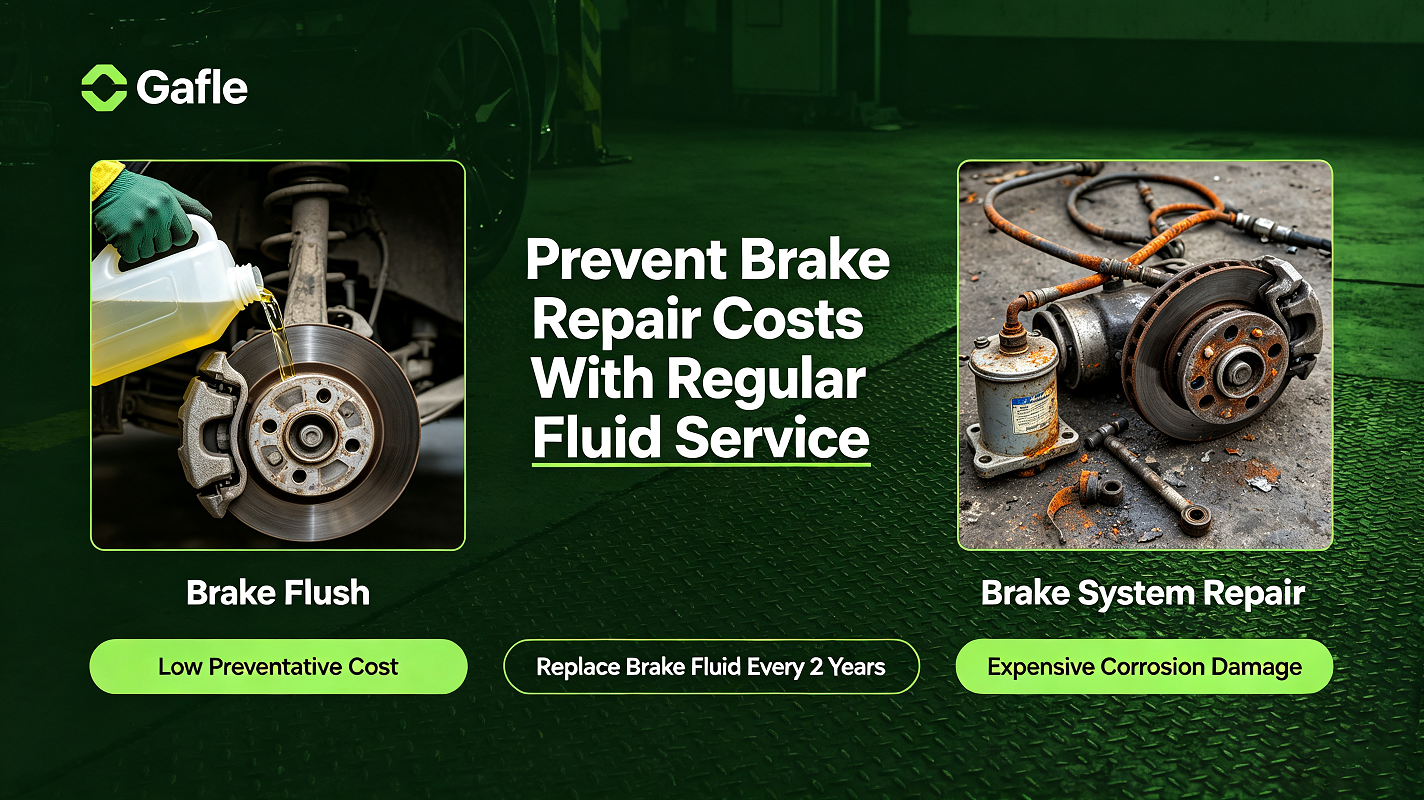
For occasional drivers who only use their cars for weekend trips or seasonal travel, this risk is amplified: months of parked moisture buildup creates hidden damage that only reveals itself during high-stress braking scenarios like highway downhill stops or sudden collision avoidance. Repairs for corroded brake systems cost hundreds of dollars, while regular brake fluid flushing is a low-cost preventative maintenance step.
4. The Non-Negotiable Replacement Rule: Time Trumps Mileage
Most OEM and SAE safety guidelines set a dual replacement standard for glycol brake fluid: replace every 2 years OR 40,000 kilometers, whichever comes first.
- If you drive only 5,000 km over two years, your fluid still requires a full flush.
- If you hit 40,000 km in under two years, schedule replacement immediately.
This rule exists specifically to counteract passive moisture absorption during vehicle idle periods. No amount of low-mileage driving can reverse the chemical degradation caused by air moisture exposure.
Final Takeaway
Brake fluid deterioration is a time-based process, not a mileage-based one. Rarely driven vehicles do not escape the risk of moisture contamination—they often face worse brake fluid degradation than daily commuter cars. Prioritize scheduled brake fluid replacement every two years to eliminate vapor lock and corrosion risks, protecting your vehicle’s braking performance and driving safety long-term.
Welcome to contact GAFLE for more information & cooperation!
peter
ZHEJIANG GAFLE AUTO CHEMICL CO.,LTD
Tel:86-579-8222 1665
Fax:86-579-8246 4690
Cel/Wechart:86-13335993986
E-mail:peter@gafle.net
Web:www.gafle.net
peter
ZHEJIANG GAFLE AUTO CHEMICL CO.,LTD
Tel:86-579-8222 1665
Fax:86-579-8246 4690
Cel/Wechart:86-13335993986
E-mail:peter@gafle.net
Web:www.gafle.net