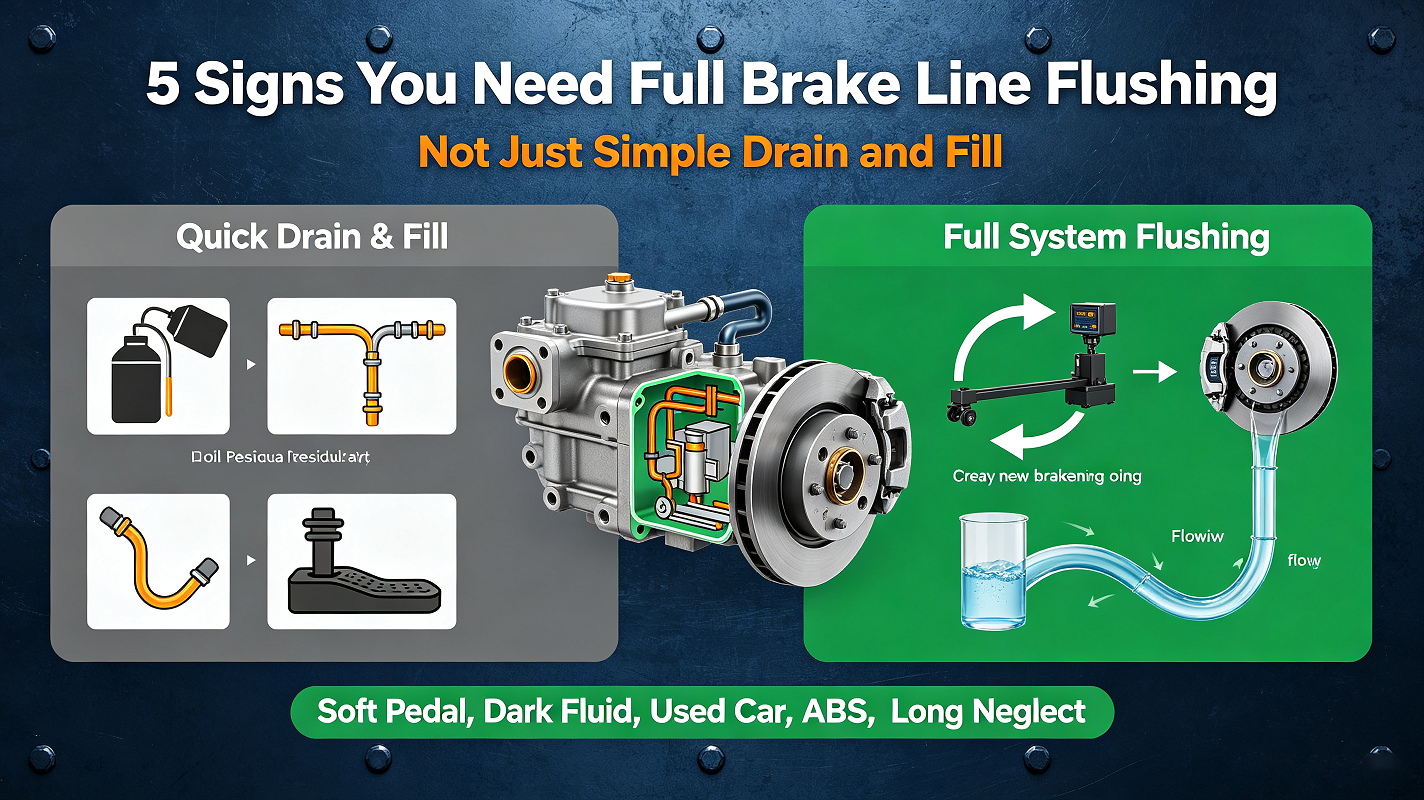
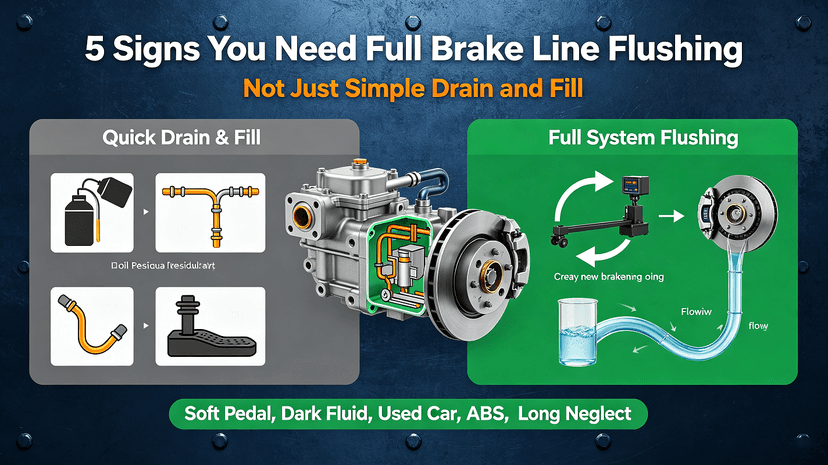
1. Spongy or soft brake pedal is one of the most obvious warning signals
A mushy brake pedal usually points to trapped moisture or air inside your hydraulic brake circuit.
When brake fluid absorbs water over time, water turns into steam under high braking heat and creates compressible bubbles. If you press the brake pedal and it sinks farther than normal, this simple drain‑and‑fill cannot fully solve the problem. Complete flushing removes water‑contaminated old fluid from every corner of pipelines, calipers and master cylinder, restoring firm pedal feel. This symptom deserves extra attention on vehicles running mountain routes or in hot‑humid regions.
2. Dark, murky brake fluid means heavy internal contamination
Fresh brake fluid is clear or light amber. Once it turns dark‑brown or black, sludge and metal particles have built‑up inside the brake system.
Many garages just drain fluid from the reservoir and pour in new fluid. But dirty sediment still stays hidden deep inside brake hoses and ABS modules. Adding new fluid on top of aged contaminated fluid will quickly degrade new fluid performance. Full system flushing washes out all sludge residue. Always inspect fluid color whenever the vehicle comes in for routine service.
3. You are working on a used car with unknown repair history
Second‑hand vehicles often carry hidden risks within the braking system.
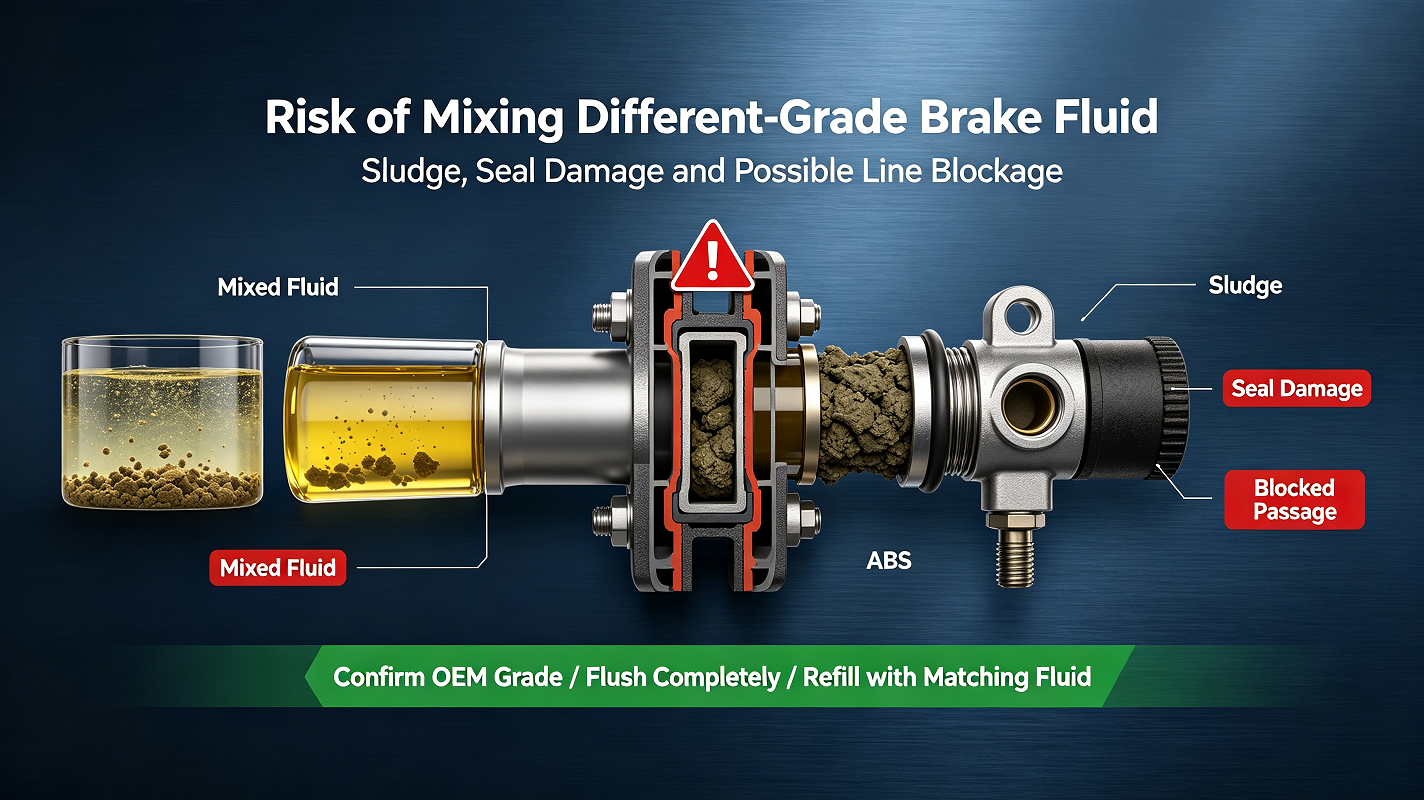
You cannot confirm what grade or brand brake fluid previous owners or former workshops used. Mixed incompatible fluid may already form deposits inside lines. For any used car, full brake flushing is a safe, cost‑effective step. It clears leftover unknown fluid and eliminates chemical incompatibility risks, rather than only draining partial old liquid.
4. Vehicles fitted with ABS or EV EHB systems require stricter fluid service standards
Electronic brake modules have complex narrow internal passages that easily trap old fluid and dirt.
Simple draining can never refresh fluid locked inside ABS / EHB valve bodies. Gradual accumulation of dirt will trigger fault codes, uneven braking or expensive module replacement. For modern passenger cars and electric vehicles, full flushing is strongly recommended instead of partial replacement, to keep precision electronic brake components working reliably.
5. Long‑term neglected vehicles without scheduled brake maintenance
If the car has gone 3‑4 years or more without any brake fluid work, do not rely on quick drain‑and‑fill.
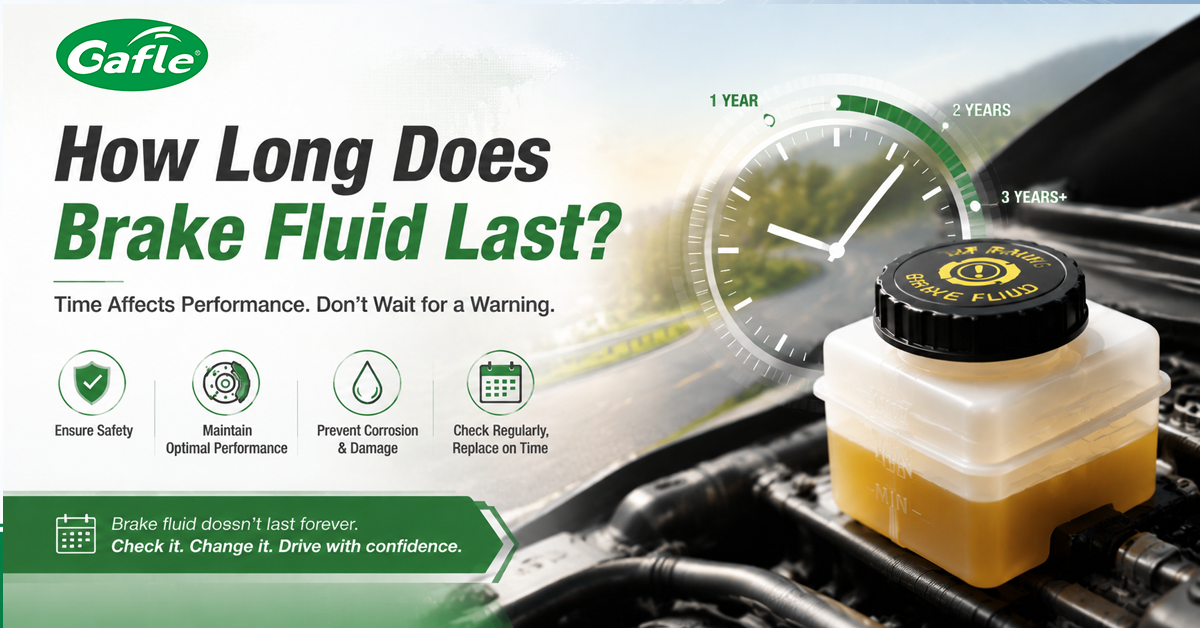
Glycol‑based brake fluid absorbs moisture from air year by year. Even low‑mileage parked cars suffer from fluid degradation. Moisture builds up at the low points of brake circuits. Only thorough circulation flushing expels trapped water. Skipping full flushing raises the risk of vapor‑lock failure during emergency or downhill heavy braking.
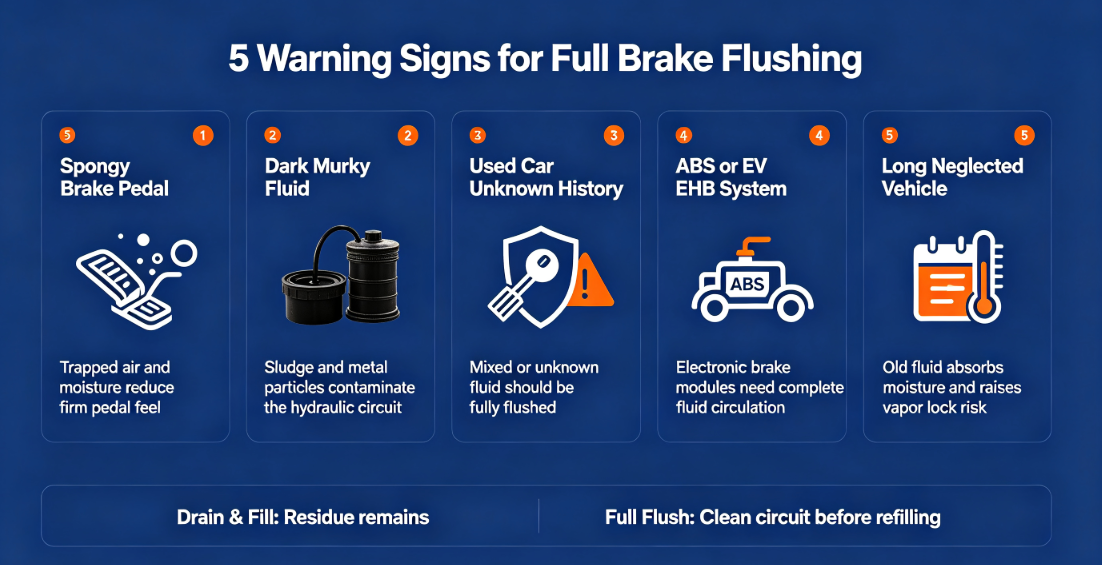
Conclusion
Quick drain‑and‑fill looks cheap and fast, yet it cannot fix hidden contamination. Watch for soft brake pedal, dark fluid colour, unknown service history on used cars, ABS/EHB‑equipped vehicles and long‑neglected units — these are clear signals you need full brake line flushing.
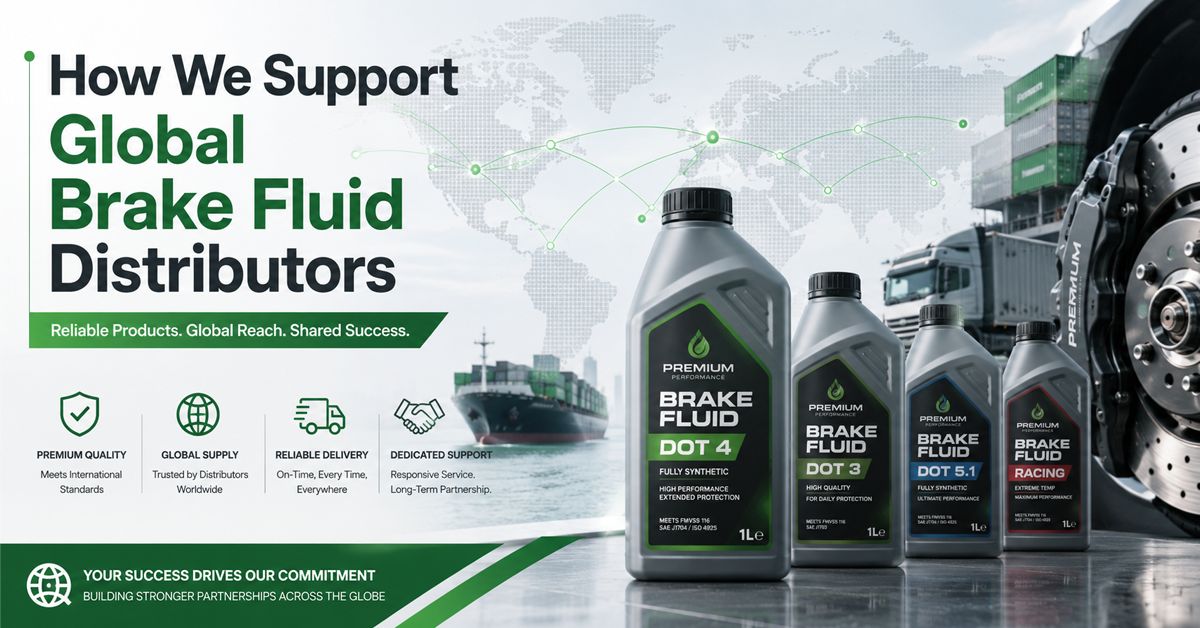
GAFLE offers DOT3, DOT4 and DOT4 EV608 brake fluid for both flushing and refilling. We support OEM private‑label and bulk export for global auto repair shops and importers.
Contact our sales team for your brake fluid supply solution.
Welcome to contact GAFLE for more information & cooperation!
peter
ZHEJIANG GAFLE AUTO CHEMICL CO.,LTD
Tel:86-579-8222 1665
Fax:86-579-8246 4690
Cel/Wechart:86-13335993986
E-mail:peter@gafle.net
Web:www.gafle.net
peter
ZHEJIANG GAFLE AUTO CHEMICL CO.,LTD
Tel:86-579-8222 1665
Fax:86-579-8246 4690
Cel/Wechart:86-13335993986
E-mail:peter@gafle.net
Web:www.gafle.net