
1. Basic brake fluid flushing for ordinary non‑ABS gasoline passenger cars
For simple traditional hydraulic brake systems without electronic assist, full flushing has a predictable time range.
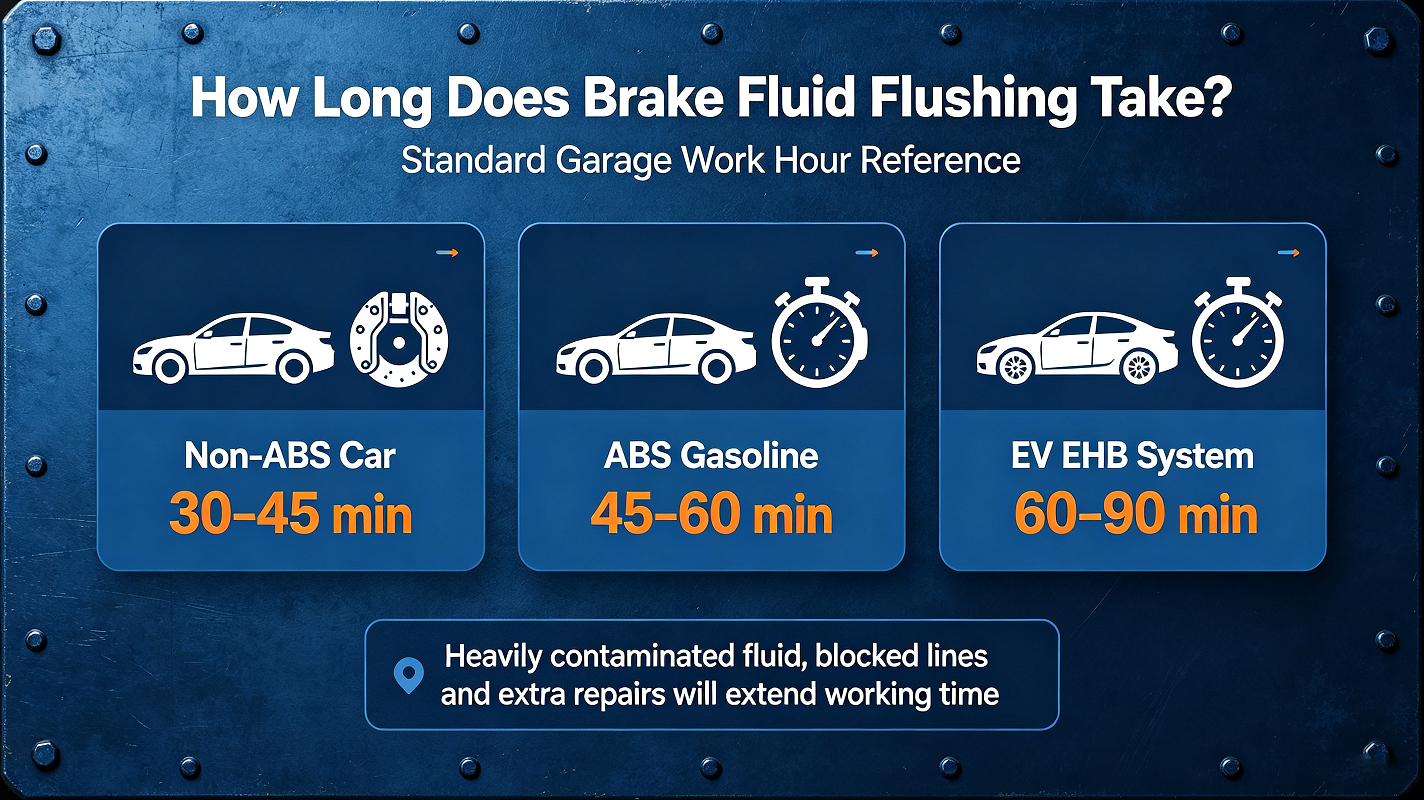
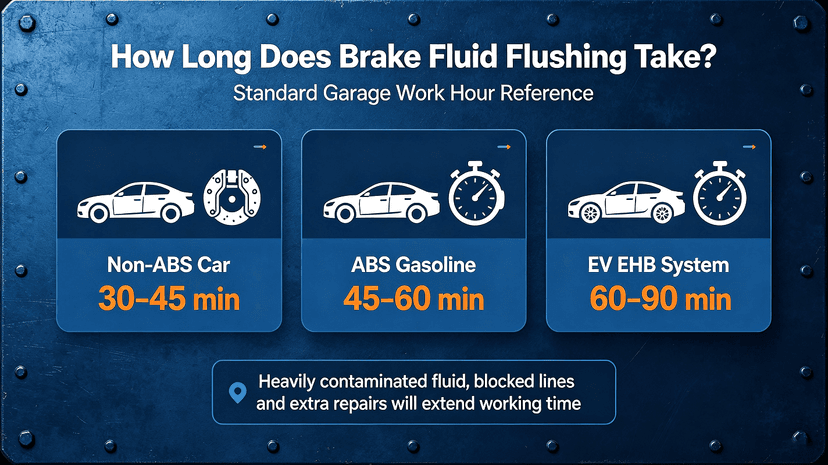
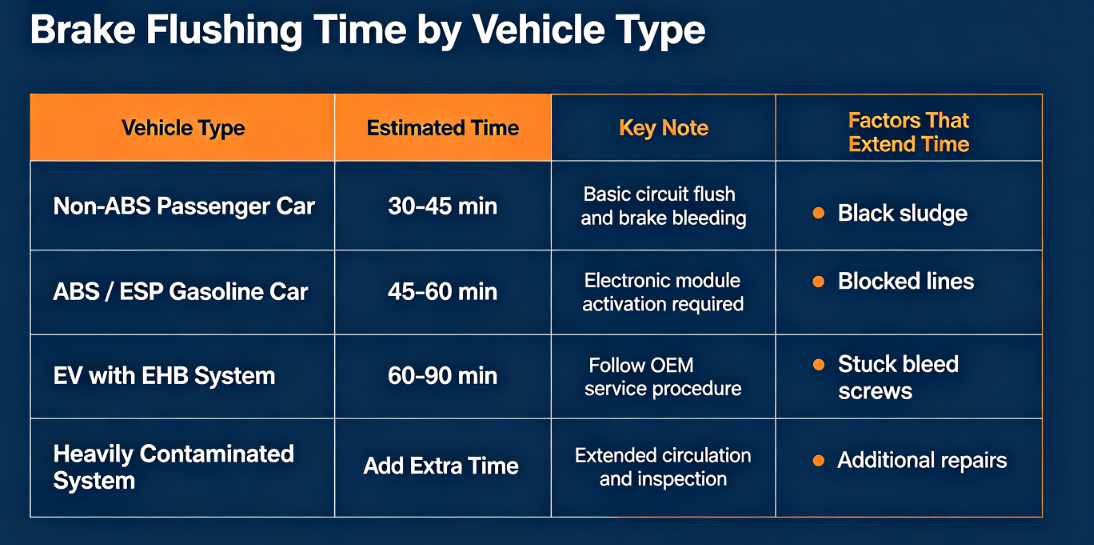
Under good workshop conditions with skilled technicians, complete brake flushing typically takes 30‑45 minutes. This covers wheel‑to‑wheel fluid circulation, visual check of outgoing fluid quality, and final brake bleeding. This timing assumes no blocked pipelines, stuck calipers or other pre‑existing mechanical faults. Repair shops can use this baseline for price quoting and daily work scheduling.
2. Extra time required for vehicles equipped with ABS / ESP modules
Cars with anti‑lock braking systems cannot follow the simple static flushing workflow.
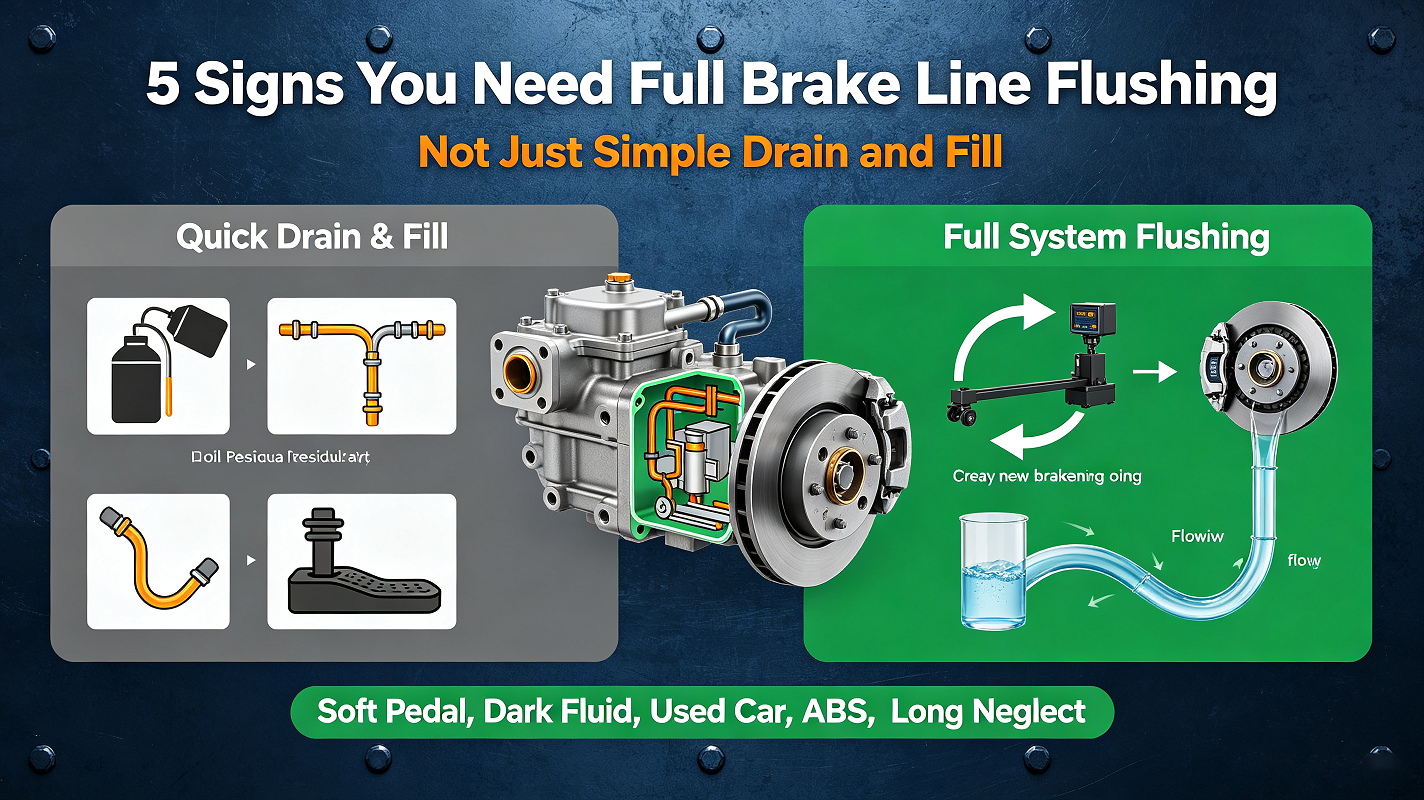
To refresh fluid inside ABS valve assemblies, technicians need to activate the electronic control unit during service. This extra diagnostic step adds work time. Normally, ABS‑equipped vehicles need 45‑60 minutes for a proper full flush. Rushing this job leaves old contaminated fluid trapped inside the ABS unit and leads to early component failure.
3. EV vehicles with EHB electro‑hydraulic brake systems need longer service hours
Electric cars with EHB brake systems contain highly sophisticated electronic hydraulic pumps and valve sets.
Special service procedures are required to cycle fluid throughout the whole EHB assembly. Technicians must follow vehicle OEM service manuals. The full flushing & bleeding process for most EVs runs between 60‑90 minutes. Many new garage teams underestimate this time slot, resulting in incomplete flushing work. Sufficient time allocation protects expensive EV brake hardware.
4. Situations that will extend brake‑flushing working hours
Several real‑world conditions make flushing take longer than standard estimates.
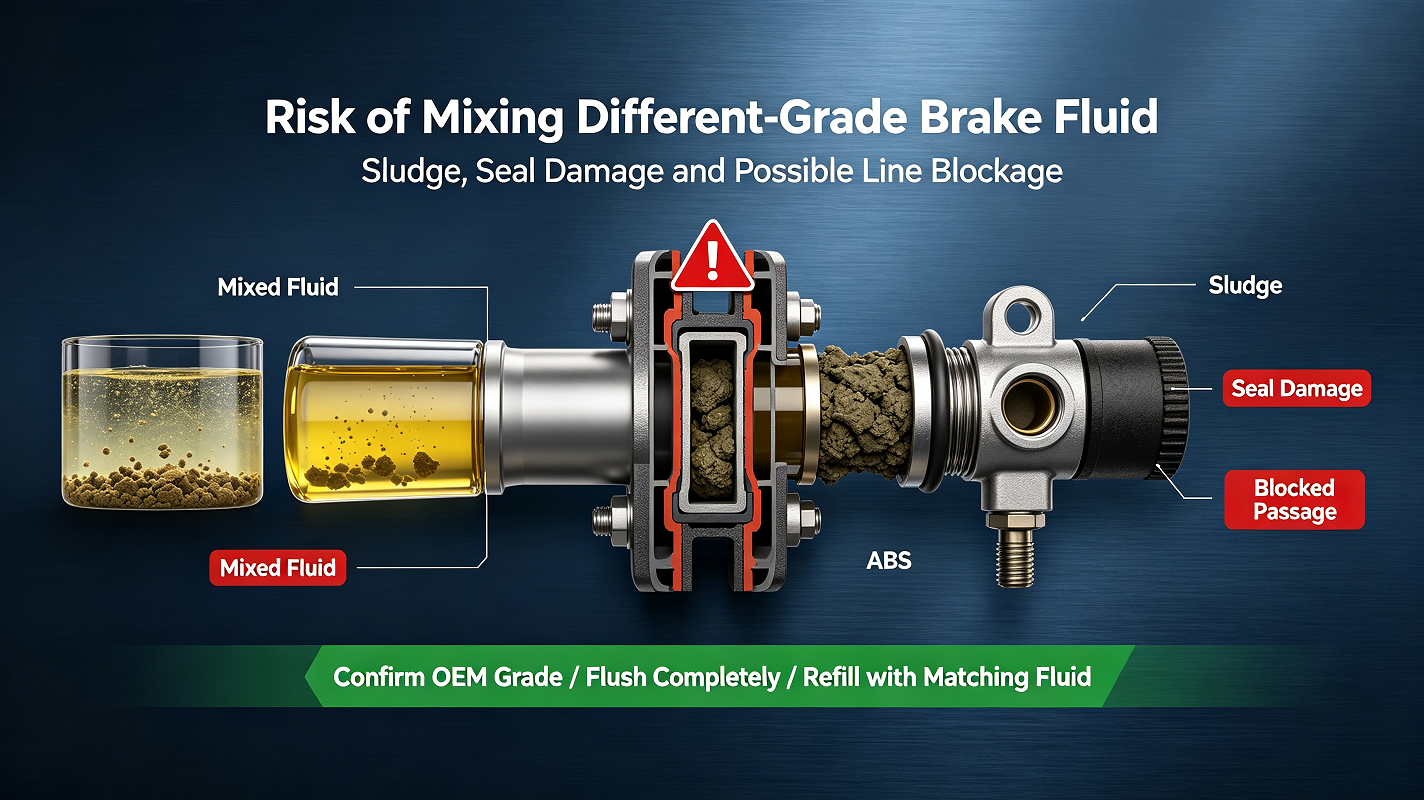
Heavily contaminated black fluid with thick sludge requires extended circulation time. Partially blocked brake lines, seized bleed screws or worn caliper components add extra troubleshooting work. If you also perform related repairs like hose replacement at the same time, project time increases further. Shops should inform car owners beforehand when these conditions appear.
5. Why rushing brake‑flushing work creates higher long‑term costs for garages
Cutting time short‑term may bring complaints and re‑work afterwards.
If you stop flushing too early, residual dirty fluid or trapped moisture stays inside circuits. Customers return with soft brake pedal complaints shortly after service. Re‑doing brake work wastes labour hours and damages workshop reputation. It pays off to reserve enough time to finish full flushing and proper bleeding in one visit.
Conclusion
Standard timing reference: 30‑45 min for ordinary non‑ABS cars; 45‑60 min for ABS gasoline vehicles; 60‑90 min for EV EHB brake systems. Heavy contamination or mechanical faults will add more time. Never rush brake flushing for the sake of workshop scheduling.
GAFLE provides high‑quality brake fluid for garage flushing service, supporting bulk wholesale and OEM branding for global importers.
Talk to our sales team for market‑oriented product proposals.
Welcome to contact GAFLE for more information & cooperation!
peter
ZHEJIANG GAFLE AUTO CHEMICL CO.,LTD
Tel:86-579-8222 1665
Fax:86-579-8246 4690
Cel/Wechart:86-13335993986
E-mail:peter@gafle.net
Web:www.gafle.net
peter
ZHEJIANG GAFLE AUTO CHEMICL CO.,LTD
Tel:86-579-8222 1665
Fax:86-579-8246 4690
Cel/Wechart:86-13335993986
E-mail:peter@gafle.net
Web:www.gafle.net