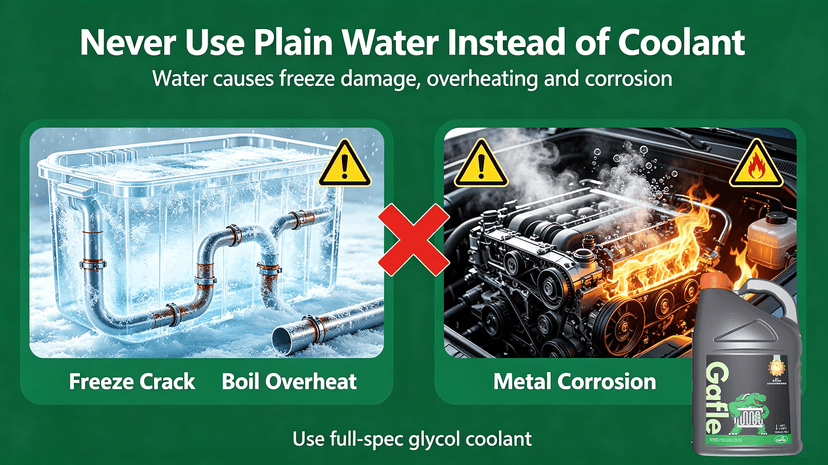
Never Use Plain Water Instead Of Coolant
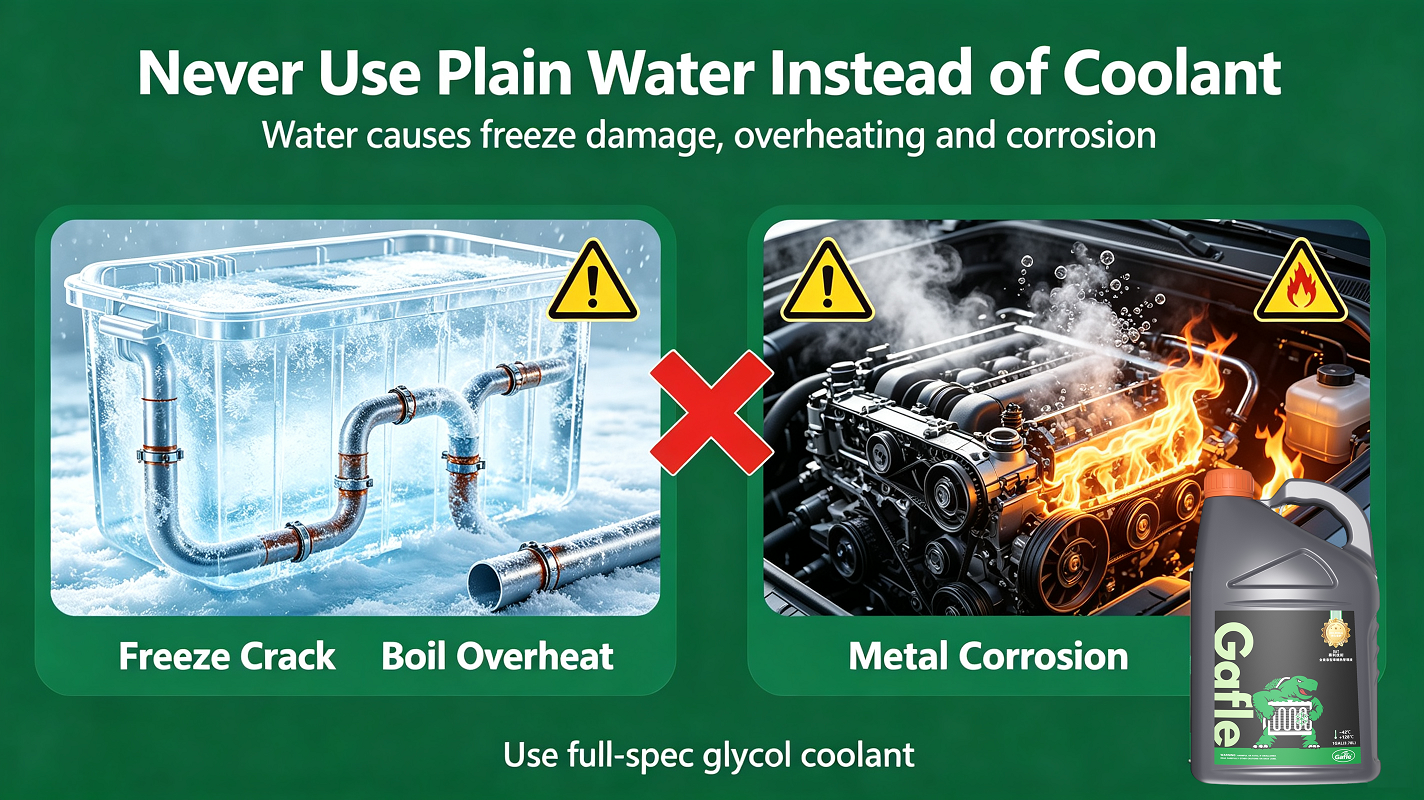
Many car owners cut corners by topping up radiators with tap water or distilled water to save money, thinking “water cools engines just fine.” This cheap shortcut leads to expensive, irreversible engine damage, in both cold winter and hot summer weather. Below are three unavoidable hazards water brings to your closed cooling system, and why factory coolant is non-negotiable.
1. Water Freezes And Cracks Your Engine & Radiator
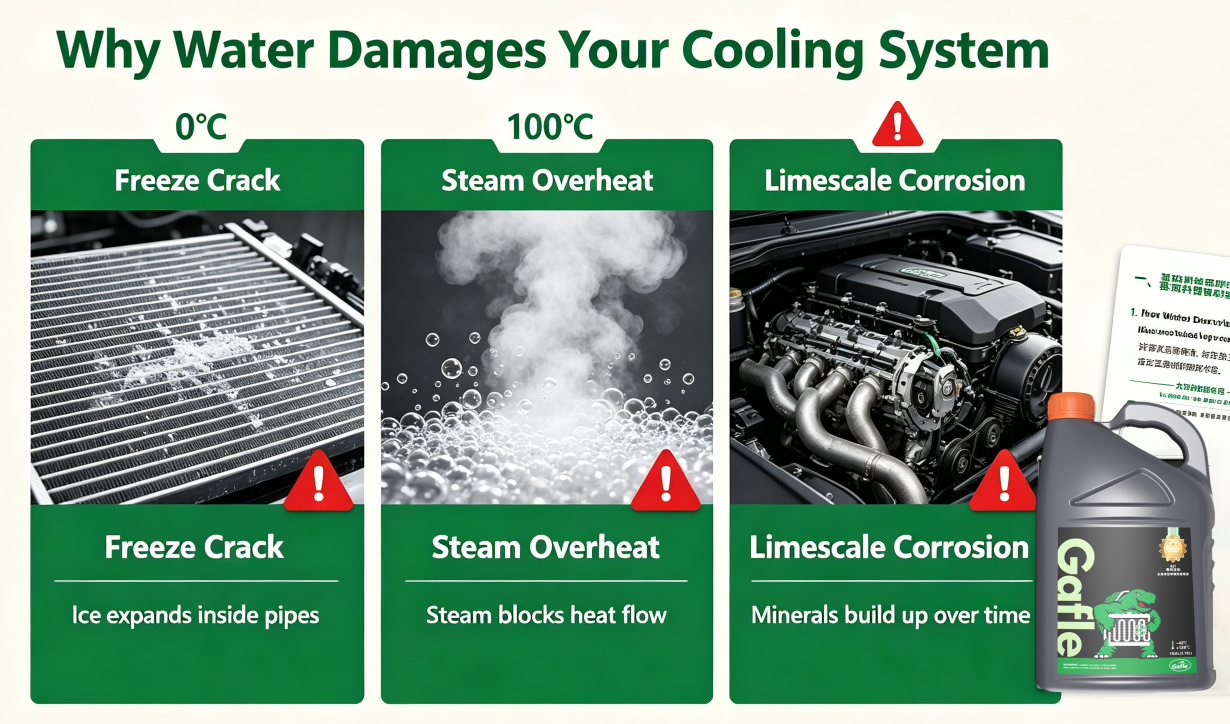
Water expands when it turns to ice. If you run pure water in cold weather, overnight frost will freeze liquid trapped inside thin aluminum radiators, plastic tanks and narrow engine water channels.
Expanding ice creates massive internal pressure that splits radiator fins, cracks engine blocks and bursts rubber cooling hoses. Repairing a cracked engine block costs thousands of dollars—far more than a full coolant flush every few years. Even mild winters with occasional light frost create this risk.
2. Water Boils Fast, Triggering Catastrophic Overheating
When driving in summer heat, highway traffic or steep mountain descents, engine temperatures spike quickly. Pure water boils at only 100°C, forming steam bubbles inside the cooling loop.
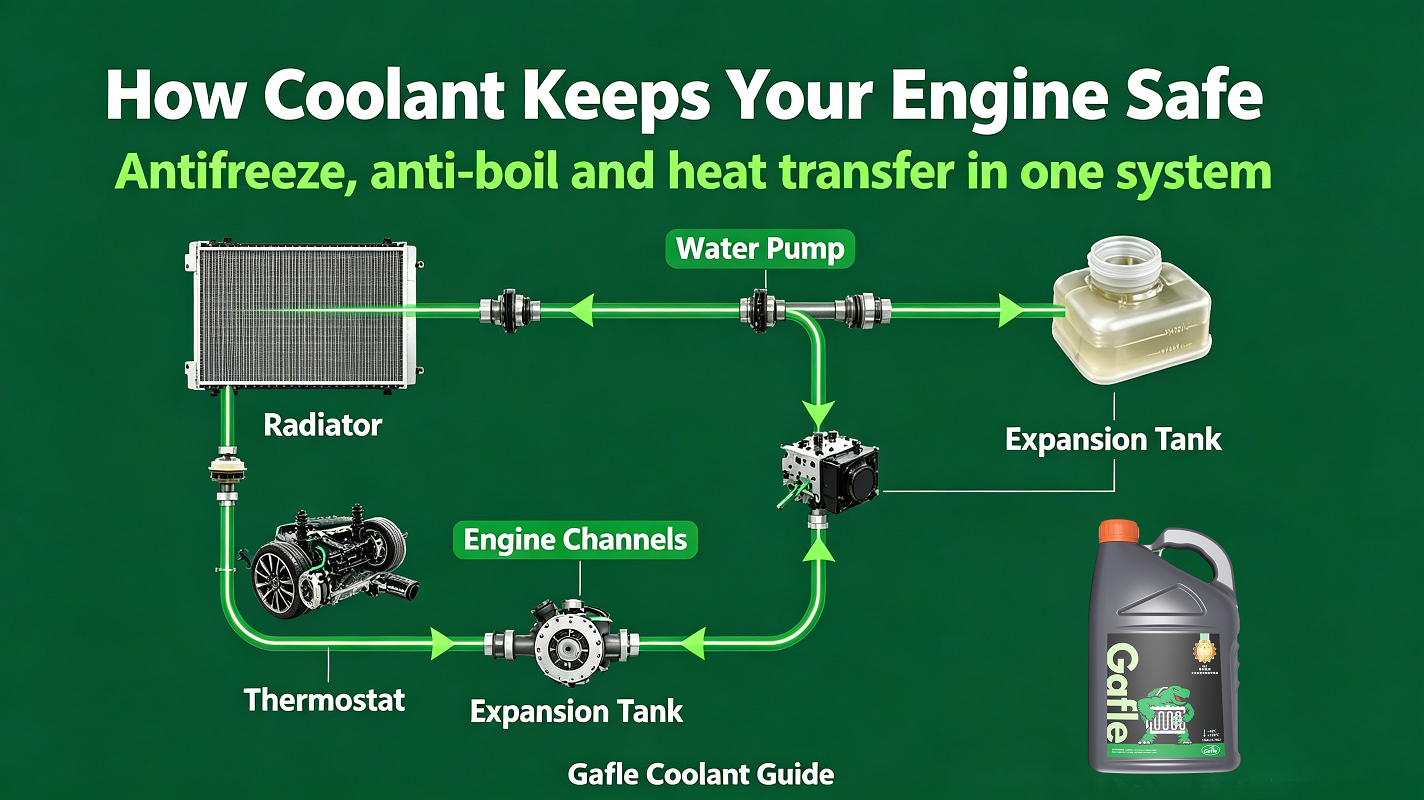
Steam cannot transfer heat like liquid coolant. These vapor pockets block cooling flow, making your engine overheat in minutes. Severe overheating warps cylinder heads, blows head gaskets and can fully seize your engine mid-drive. Coolant boosts boiling points to well above 108°C to avoid this deadly steam lock.
3. Tap & Distilled Water Corrode All Metal Cooling Parts
Tap water contains minerals, calcium and chlorine that build hard limescale deposits inside radiators and engine channels over time. Even pure distilled water lacks anti-corrosion additives, and slowly oxidizes aluminum, iron and copper cooling components.
- Limescale clogs narrow radiator tubes, slowing heat transfer permanently.
- Rust pits the inner walls of engine blocks and water pumps, causing slow fluid leaks.
- Degraded rubber hoses and seals crack early from unbalanced pH levels in water-only cooling systems.
Certified coolant mixes specialized anti-rust additives that form a thin protective film on all metal surfaces, stopping corrosion for years.
4. Common Owner Misconception Debunked
Myth: “Distilled water has no minerals, so it’s safe long-term.”
Fact: Distilled water still lacks glycol and anti-corrosion chemistry. It freezes easily in cold weather and boils rapidly in heat, plus it gradually oxidizes unprotected metal parts without protective additives. Distilled water is only acceptable for emergency short-distance top-ups—not permanent replacement for coolant.
5. Safe Emergency Rule
If your coolant level suddenly drops mid-trip, you may add small amounts of distilled water to reach the MIN line temporarily to drive to a repair shop. Once you arrive, perform a full coolant flush and refill with manufacturer-specified glycol coolant as soon as possible. Never rely on water for regular cooling system operation.
Final Takeaway
Water only solves temporary heat transfer, but fails at freezing protection, high-temperature stability and anti-corrosion defense. Replacing coolant with tap or distilled water creates hidden long-term damage that results in huge repair bills. Stick to full-spec glycol coolant year-round to fully protect your engine cooling system.
Welcome to contact GAFLE for more information & cooperation!
peter
ZHEJIANG GAFLE AUTO CHEMICL CO.,LTD
Tel:86-579-8222 1665
Fax:86-579-8246 4690
Cel/Wechart:86-13335993986
E-mail:peter@gafle.net
Web:www.gafle.net
peter
ZHEJIANG GAFLE AUTO CHEMICL CO.,LTD
Tel:86-579-8222 1665
Fax:86-579-8246 4690
Cel/Wechart:86-13335993986
E-mail:peter@gafle.net
Web:www.gafle.net