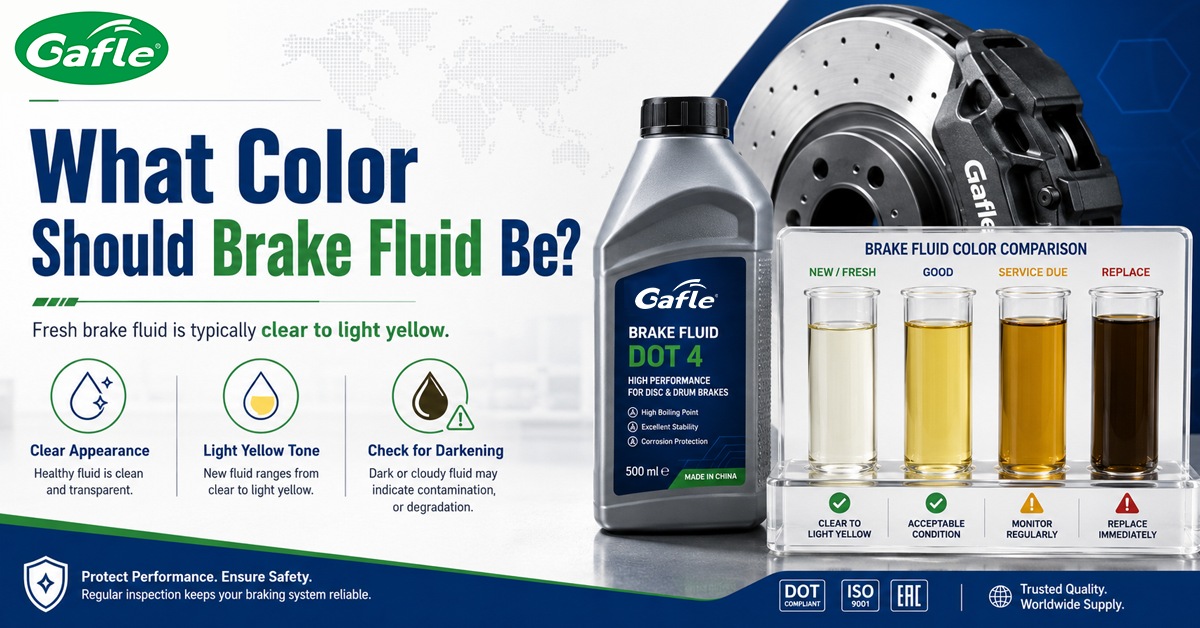
What Color Should Brake Fluid Be?
Brake fluid is one of the most important fluids in a vehicle’s braking system. It transfers hydraulic pressure from the brake pedal to the braking components, helping vehicles slow down and stop safely.
Many vehicle owners and automotive professionals often ask: What color should brake fluid be? The color of brake fluid can provide useful information about its condition, age, and possible contamination. However, color alone cannot determine the complete performance of brake fluid. Professional testing is still necessary to evaluate quality.
For importers, distributors, and automotive brands, understanding brake fluid appearance and quality indicators is also important when choosing a reliable supplier.
As a professional Brake Fluid Manufacturer, Gafle Brake Fluid Factory focuses on producing high-quality brake fluid with strict quality control, laboratory testing, and OEM solutions for global customers.
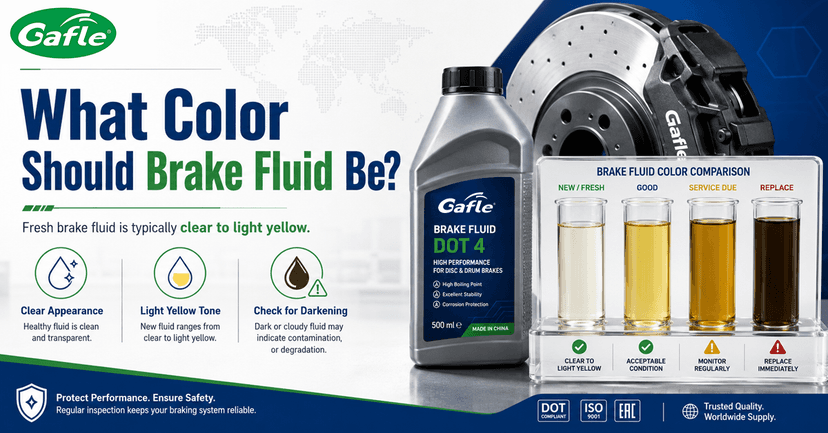
What Color Should Brake Fluid Be?
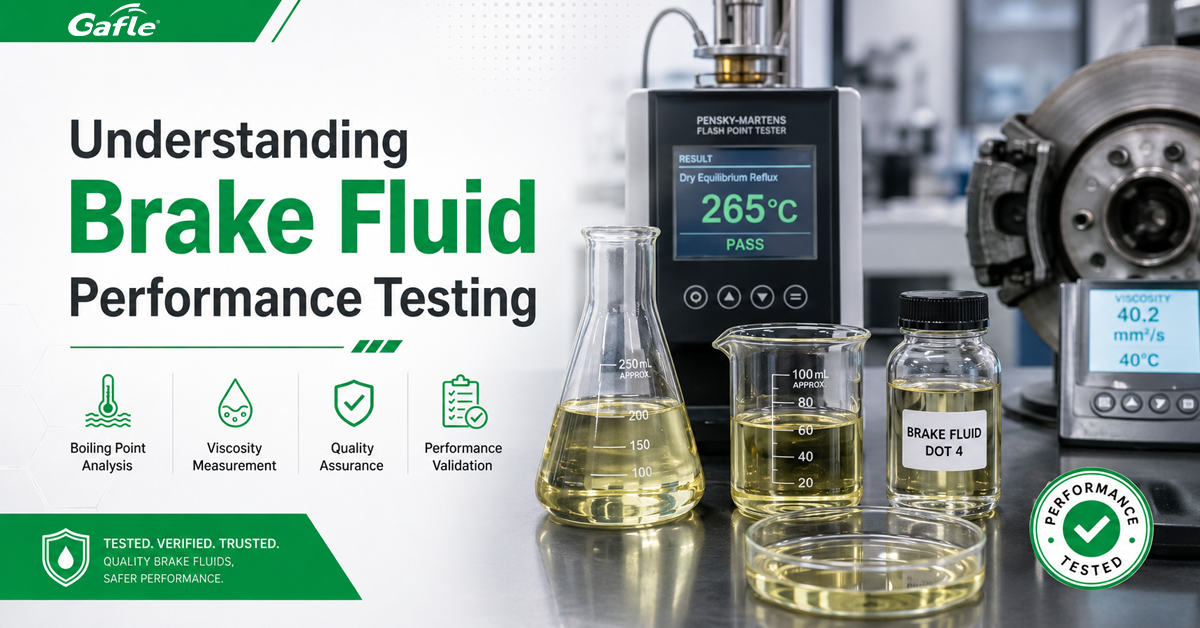
New brake fluid is usually clear to light amber in color. Depending on the formulation and product type, the color may vary slightly.
Common brake fluid colors include:
- Clear
- Transparent yellow
- Light amber
- Slightly golden
A clean and transparent appearance usually indicates that the brake fluid is new and properly stored.
However, brake fluid color can change over time because of:
- Moisture absorption
- Heat exposure
- Oxidation
- Contamination
- Long-term use
- Internal system deposits
This is why checking Brake Fluid Color can be a useful part of vehicle maintenance.
Why Does Brake Fluid Change Color?
Many customers notice that new brake fluid looks light and clean, but after some time it becomes darker.
This color change is usually caused by several factors.
1. Moisture Absorption
Most DOT 3, DOT 4, and DOT 5.1 brake fluids are hygroscopic, meaning they naturally absorb moisture from the air.
As brake fluid absorbs water, its chemical condition changes gradually.
Possible effects include:
- Lower boiling point
- Reduced high-temperature performance
- Increased corrosion risk
- Shorter service life
For this reason, moisture control is an important part of Brake Fluid Quality Control.
2. Heat and Oxidation
Brake fluid operates in a high-temperature environment.
Repeated heating and cooling cycles may cause the fluid to oxidize, which can lead to darker color over time.
High-quality brake fluid should maintain stable performance under temperature changes.
This is why professional manufacturers conduct:
- Boiling point testing
- Chemical stability testing
- Thermal performance testing
3. Contamination Inside the Brake System
Brake fluid may become contaminated by:
- Dirt
- Rubber particles
- Metal particles
- Internal corrosion materials
- Old fluid residue
When contamination increases, brake fluid may become darker or cloudy.
Dark fluid does not always mean immediate failure, but it indicates that further inspection may be needed.
What Does Dark Brake Fluid Mean?
Many people search for Dark Brake Fluid because they want to know whether darker fluid is dangerous.
Dark brake fluid may indicate:
- Aging fluid
- Moisture contamination
- Oxidation
- Internal system contamination
- Long service time
However, color alone cannot confirm whether brake fluid is still suitable for use.
A professional inspection may include:
- Moisture testing
- Boiling point testing
- Laboratory analysis
- Brake system inspection
For workshops and distributors, explaining this difference helps customers make better maintenance decisions.
Is Dirty Brake Fluid a Problem?
Dirty Brake Fluid is another common concern among vehicle owners.
Dirty brake fluid may look:
- Dark brown
- Cloudy
- Contaminated
- Full of visible particles
Possible reasons include:
- Old brake fluid
- Poor storage conditions
- Internal brake system wear
- Moisture contamination
- Lack of regular maintenance
Dirty brake fluid may affect:
- Brake system reliability
- Component protection
- High-temperature performance
- Customer driving confidence
Regular inspection and replacement help maintain brake system performance.
Can You Judge Brake Fluid Quality by Color?
Although color is a useful visual indicator, it is not enough to determine brake fluid condition.
Two brake fluids with similar colors may have different performance levels.
Professional evaluation should consider:
Boiling Point Performance
The boiling point determines how well brake fluid performs under high temperatures.
Moisture Content
Water contamination can reduce brake fluid performance over time.
Viscosity
Proper viscosity ensures good fluid movement under different temperatures.
Corrosion Protection
Good brake fluid should help protect metal brake components.
Rubber Compatibility
Brake fluid must work safely with seals and rubber materials.
A professional Brake Fluid Manufacturer should evaluate these factors through laboratory testing.
When Should Brake Fluid Be Replaced?
Brake fluid replacement may be needed when:
- The fluid becomes very dark
- Moisture content is too high
- Boiling point decreases significantly
- Brake pedal feels soft
- Brake performance changes
- The vehicle reaches the recommended service interval
For automotive workshops, checking brake fluid condition regularly can help prevent unexpected brake system problems.
How Brake Fluid Manufacturers Control Color and Quality
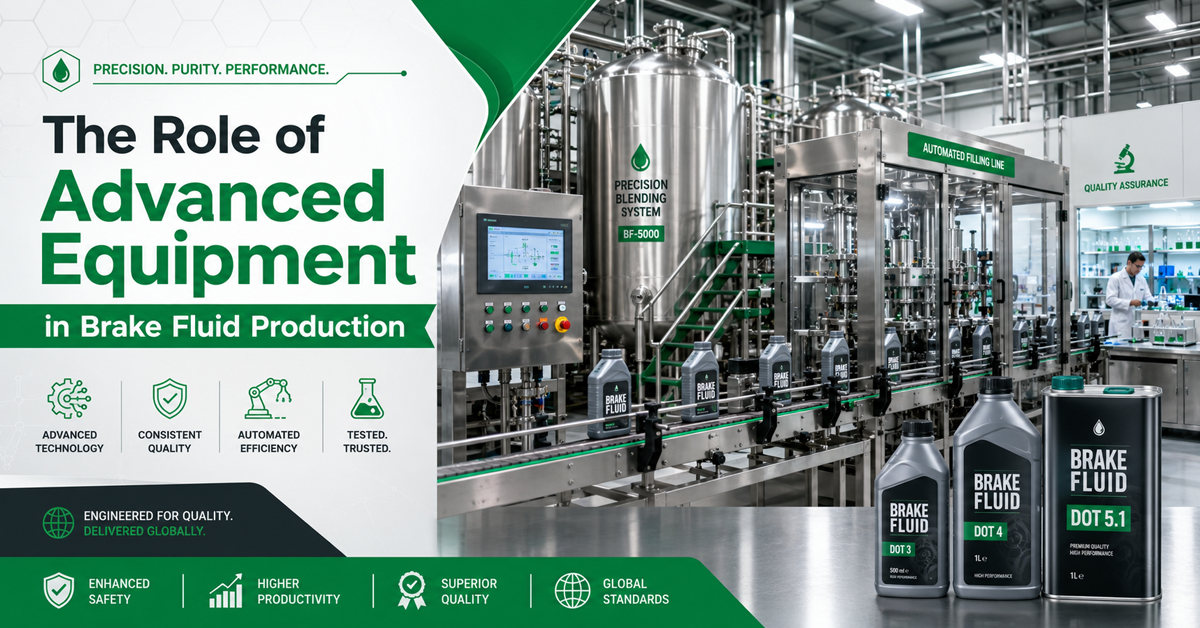
For a professional brake fluid factory, product appearance is only one part of quality control.
A reliable manufacturer should control every production stage:
Raw Material Inspection
High-quality raw materials help ensure stable product performance.
Production Process Control
Precise mixing, filtration, and production management help maintain consistency.
Laboratory Testing
Professional testing evaluates:
- Appearance
- Color stability
- Boiling point
- Viscosity
- Moisture resistance
- Corrosion protection
Packaging Inspection
Proper sealing and packaging prevent contamination during storage and transportation.
Why Choose Gafle Brake Fluid Factory?
Gafle Brake Fluid Factory is a professional brake fluid manufacturer providing reliable solutions for global customers.
Our manufacturing advantages include:
- Professional brake fluid production experience
- Strict quality control system
- Laboratory testing capability
- Stable production processes
- OEM and ODM support
- Private label brake fluid solutions
- Custom packaging service
- Export support
At Gafle, we understand that brake fluid quality is not only about appearance. It is about consistent performance, reliable manufacturing, and customer trust.
Gafle OEM and Private Label Brake Fluid Solutions
For overseas importers, distributors, and automotive brands, Gafle provides flexible OEM solutions.
Our services include:
- Product specification selection
- DOT 3, DOT 4, and DOT 5.1 brake fluid options
- Custom bottle design
- Label and carton customization
- Product testing support
- Batch traceability
- Export documentation
Whether customers are developing a new automotive brand or expanding an existing product line, Gafle helps create reliable brake fluid solutions.
Conclusion
So, what color should brake fluid be?
Fresh brake fluid is usually clear, transparent yellow, or light amber. Over time, it may become darker because of moisture absorption, oxidation, heat exposure, or contamination.
However, color is only one indicator. Professional brake fluid testing is necessary to fully evaluate product quality and performance.
For importers and automotive brands, choosing a trusted Brake Fluid Manufacturer is essential.
With professional production, strict quality control, and laboratory testing capabilities, Gafle Brake Fluid Factory helps customers worldwide build reliable brake fluid products and stronger automotive brands.
Quality starts from manufacturing. Trust starts from consistency.