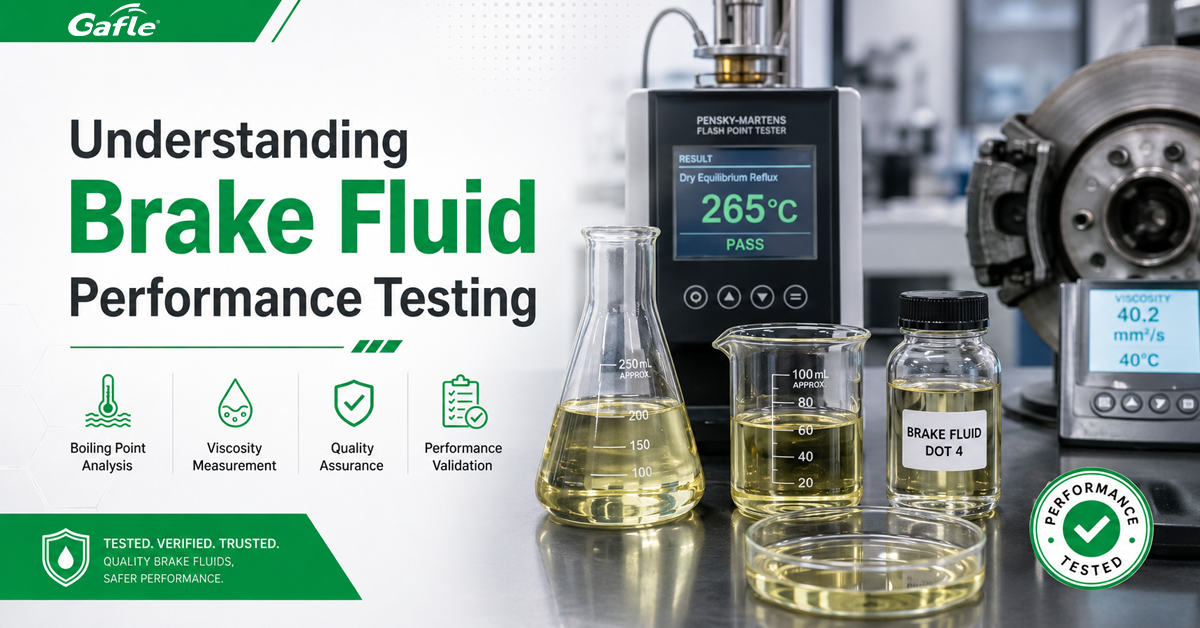
Understanding Brake Fluid Performance Testing
Brake fluid is a safety-critical automotive fluid. It must transfer hydraulic pressure smoothly, resist high temperatures, protect brake system components, and maintain stable performance in different climates.
For importers, distributors, automotive brands, and OEM customers, understanding Brake Fluid Performance Testing is important when choosing a reliable Brake Fluid Manufacturer. Testing is not only a technical process. It is also a way to reduce quality risks, protect brand reputation, and build customer trust.
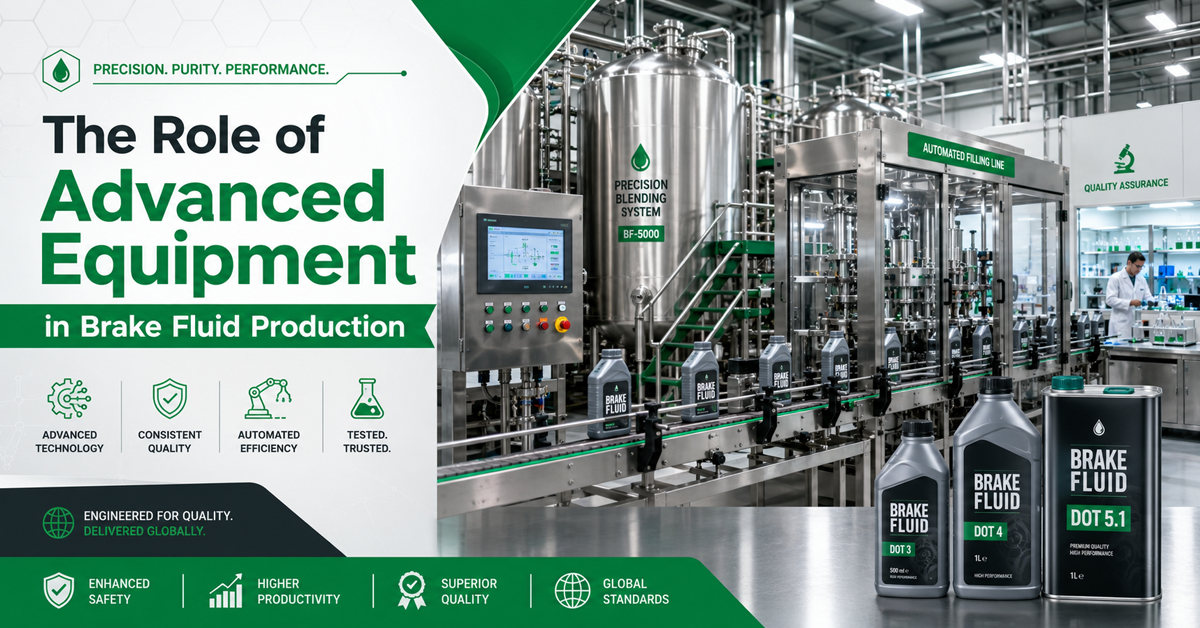
At Gafle Brake Fluid Factory, performance testing is an essential part of our brake fluid manufacturing process. Through laboratory testing, quality control, and batch management, Gafle helps global customers receive stable and reliable brake fluid products.
Why Brake Fluid Performance Testing Is Important
Brake fluid works under demanding conditions. During braking, heat is generated by friction and transferred into the braking system. At the same time, brake fluid may face moisture exposure, temperature changes, and long-term storage.
Without proper Brake Fluid Testing, poor-quality brake fluid may cause problems such as:
- Low boiling point
- Poor cold-weather flow
- Increased corrosion risk
- Moisture contamination
- Rubber compatibility problems
- Unstable brake response
- Inconsistent batch quality
For overseas buyers, these issues can lead to customer complaints, product returns, and damage to local brand reputation.
That is why professional Brake Fluid Quality Testing is necessary before products are shipped to the market.
What Is Brake Fluid Performance Testing?
Brake Fluid Performance Testing refers to a series of laboratory tests used to evaluate whether brake fluid can meet required performance standards.
These tests help check:
- High-temperature performance
- Low-temperature flow
- Moisture resistance
- Corrosion protection
- Rubber compatibility
- Chemical stability
- Appearance and cleanliness
- Long-term product consistency
A professional brake fluid factory should not rely only on appearance or simple inspection. Real performance must be verified through laboratory testing.
1. Brake Fluid Boiling Point Test
The Brake Fluid Boiling Point Test is one of the most important tests for brake fluid.
When a vehicle brakes frequently or under heavy load, the braking system becomes hot. If brake fluid boils too easily, vapor can form inside the brake system. Vapor is compressible, which may cause a soft brake pedal or reduced braking response.
There are two main boiling point tests:
Dry Boiling Point
Dry boiling point measures the boiling temperature of fresh brake fluid before it absorbs moisture.
This test shows the initial high-temperature performance of the product.
Wet Boiling Point
Wet boiling point measures the boiling temperature after the brake fluid has absorbed moisture.
This is very important because many DOT 3, DOT 4, and DOT 5.1 brake fluids naturally absorb moisture over time.
For importers and distributors, a stable wet boiling point is a key sign of reliable brake fluid quality.
2. Brake Fluid Viscosity Test
The Brake Fluid Viscosity Test measures how easily brake fluid flows under different temperatures.
Brake fluid must flow smoothly in both hot and cold environments. If the fluid becomes too thick in cold weather, braking response may slow down. If it becomes too thin under high temperature, system performance may become unstable.
Viscosity testing is especially important for:
- Cold climate markets
- Modern vehicles with ABS systems
- High-performance braking systems
- Markets with large temperature changes
A professional Brake Fluid Manufacturer should test viscosity to ensure the product can perform reliably in different driving conditions.
3. Moisture Content Test
Brake fluid can absorb moisture from the air during storage and use. Moisture can reduce the boiling point and increase corrosion risk.
A moisture test helps evaluate:
- Water content in brake fluid
- Storage stability
- Contamination risk
- Potential performance decline
For workshops, moisture testing helps decide whether brake fluid needs replacement.
For factories, moisture control is important during raw material storage, production, filling, and packaging.
At Gafle Brake Fluid Factory, moisture control is part of our complete brake fluid quality-control process.
4. Corrosion Resistance Test
Brake fluid comes into contact with many metal parts inside the braking system, including brake lines, calipers, master cylinders, wheel cylinders, and ABS hydraulic components.
The corrosion resistance test checks whether the brake fluid can help protect these metal parts.
Poor corrosion protection may cause:
- Internal rust
- Component damage
- Reduced system reliability
- Higher maintenance costs
- Shorter brake system service life
For global buyers, corrosion resistance is an important part of Brake Fluid Quality Testing because vehicles operate in different environments and climates.
5. Rubber Compatibility Test
Brake systems also contain rubber seals, hoses, and internal parts. Brake fluid must be compatible with these materials.
A rubber compatibility test helps check whether brake fluid may cause rubber parts to swell, harden, crack, or leak.
Good rubber compatibility helps support:
- Stable brake system sealing
- Longer component life
- Reduced leakage risk
- Safer braking performance
For OEM and private-label customers, this test is important because product quality directly affects the customer’s brand image.
6. Chemical Stability Test
Brake fluid must remain stable during production, storage, transportation, and use.
Chemical stability testing helps evaluate whether the brake fluid can maintain its performance over time.
This test may check:
- Color stability
- Sediment formation
- Oxidation resistance
- Reaction with system materials
- Long-term storage performance
Stable brake fluid helps importers reduce quality risks during warehouse storage and market distribution.
7. Appearance and Cleanliness Inspection
Although appearance alone cannot prove brake fluid quality, it is still an important part of final inspection.
A professional Brake Fluid Laboratory Testing process should also check:
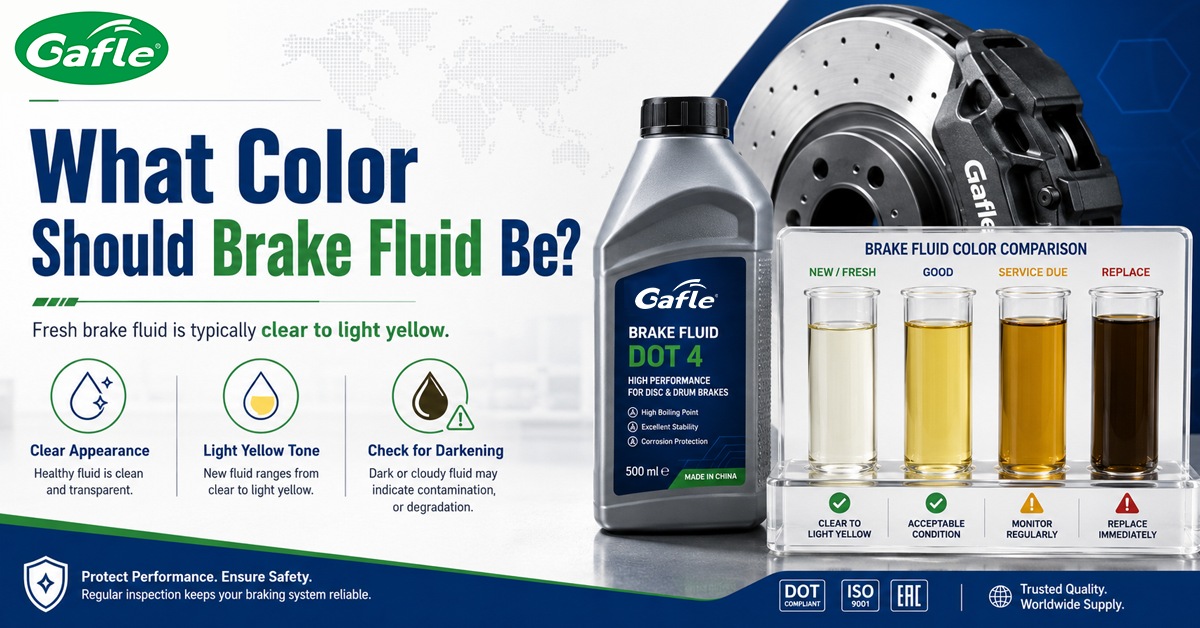
- Color
- Transparency
- Particles
- Sediment
- Contamination
- Packaging condition
Clean and consistent appearance helps improve customer confidence, especially for retail and private-label brake fluid products.
How Brake Fluid Testing Supports Quality Control
A complete Brake Fluid Quality Control system should include both production management and laboratory testing.
Professional quality control usually covers:
Raw Material Inspection
Raw materials should be checked before production to reduce quality variation.
Production Process Control
Formula, blending, filtration, storage, and filling should be monitored during manufacturing.
Laboratory Testing
Finished brake fluid should be tested for key performance indicators before shipment.
Packaging Inspection
Bottles, caps, labels, cartons, sealing, and filling volume should be checked carefully.
Batch Traceability
Each batch should have production records and testing records for future tracking.
This complete system helps ensure that customers receive stable products with consistent quality.
Why Testing Matters for OEM and Private Label Customers
For customers developing their own brake fluid brands, testing is especially important.
An OEM Brake Fluid Manufacturer should provide more than basic production. It should also help protect the customer’s brand through reliable quality control.
OEM and private-label customers usually care about:
- Stable product performance
- Consistent batch quality
- Reliable packaging
- Product testing support
- Quality documentation
- Repeat-order stability
- Export support
At Gafle Brake Fluid Factory, we support OEM and private-label customers with product manufacturing, packaging customization, laboratory testing, and quality control.
What Importers Should Ask About Brake Fluid Testing
Before choosing a brake fluid supplier, importers should ask these questions:
- Does the factory have brake fluid laboratory testing capability?
- What performance tests are done before shipment?
- Does the factory test dry and wet boiling point?
- Is viscosity tested for different temperature conditions?
- How does the factory control moisture?
- Are corrosion and rubber compatibility tested?
- Are batch records available?
- Can the factory provide quality documents?
- Does the factory support OEM and private label projects?
- How does the factory ensure repeat-order consistency?
These questions help buyers identify a more reliable long-term partner.
Why Choose Gafle Brake Fluid Factory?
Gafle Brake Fluid Factory is a professional brake fluid manufacturer serving global customers.
As an experienced Brake Fluid Manufacturer, Gafle provides:
- DOT 3 Brake Fluid
- DOT 4 Brake Fluid
- DOT 5.1 Brake Fluid
- Brake Fluid Performance Testing
- Brake Fluid Quality Testing
- Brake Fluid Laboratory Testing
- OEM and ODM services
- Private label brake fluid
- Custom packaging support
- Batch traceability
- Export documentation support
- Stable global supply
Gafle focuses on quality, consistency, and long-term cooperation to help customers build reliable brake fluid product lines.
Gafle OEM Brake Fluid Solutions
For overseas customers, Gafle provides flexible OEM and private-label solutions.
Our service may include:
- Product specification selection
- Custom bottle sizes
- Label and carton design
- Sample confirmation
- Mass production
- Laboratory testing
- Quality documentation
- Export packaging support
- Long-term supply planning
Whether customers sell to repair shops, distributors, retail channels, or automotive brands, Gafle helps them develop market-ready brake fluid products.
Conclusion
Brake Fluid Performance Testing is essential for product safety, quality stability, and customer trust.
Important tests include brake fluid boiling point test, viscosity test, moisture test, corrosion resistance test, rubber compatibility test, chemical stability test, and appearance inspection.
For importers, distributors, OEM customers, and private-label brands, choosing a professional Brake Fluid Manufacturer with strong testing capability can reduce quality risks and protect brand reputation.
At Gafle Brake Fluid Factory, performance testing is part of our complete quality-control system. With professional manufacturing, laboratory testing, OEM support, and global supply capability, Gafle helps customers receive reliable brake fluid products for international markets.
Better testing creates better brake fluid. Better brake fluid creates stronger trust.