Why Antifreeze Needs Regular Replacement? Corrosion Protection Mechanism
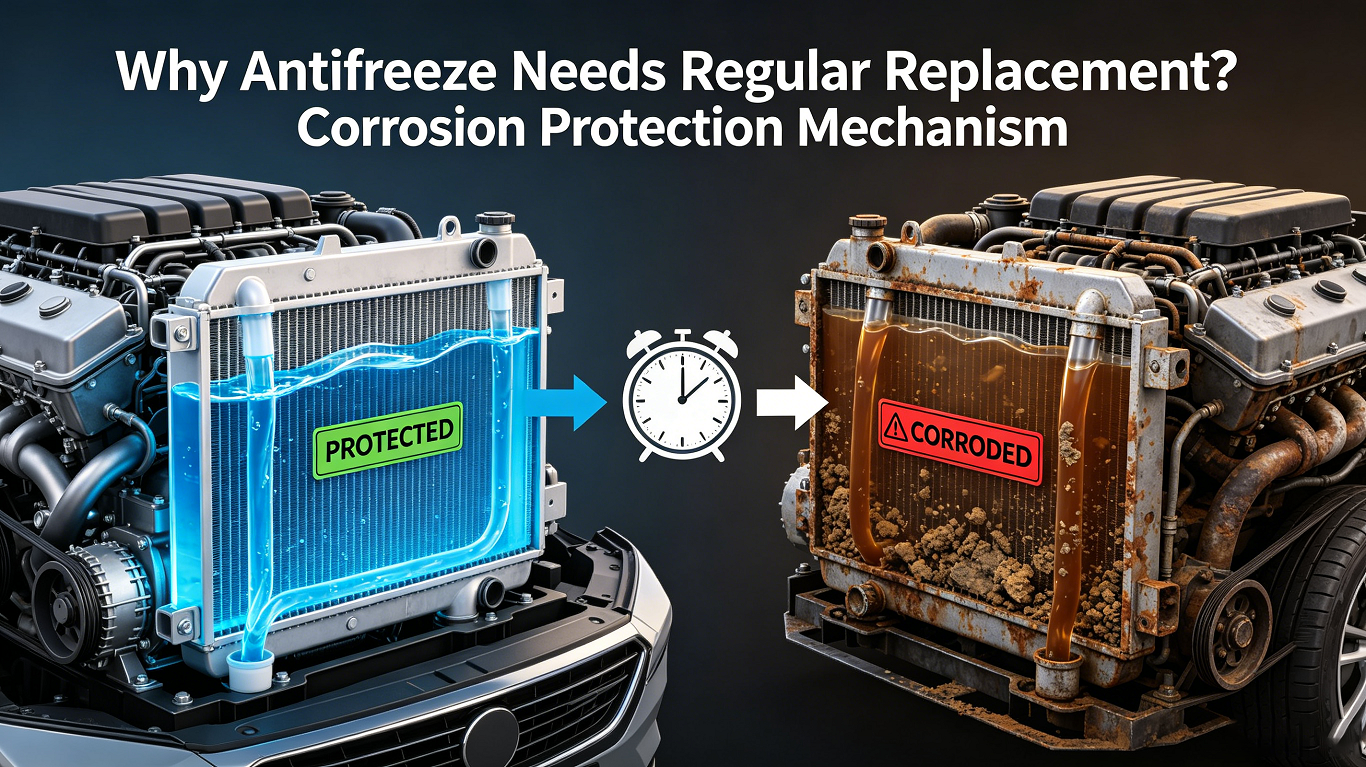
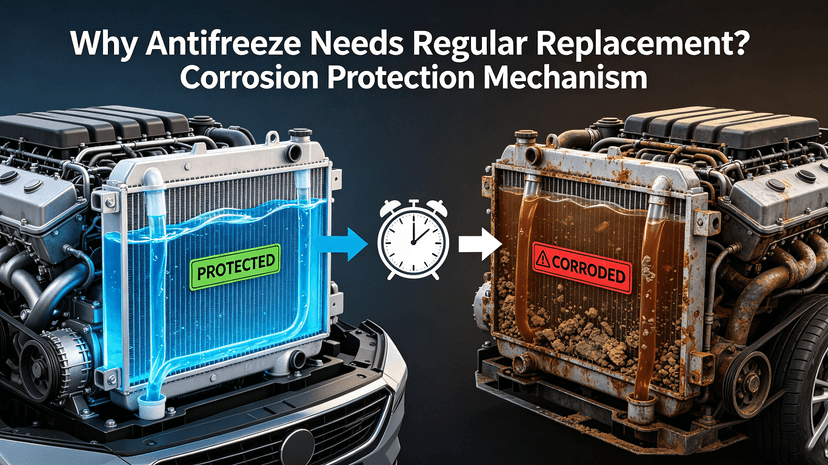
Many vehicle owners and small repair shops view antifreeze as a "permanent fluid" and only top up liquid levels when leaks occur, ignoring scheduled full coolant flushing. In fact, the core protective additives in antifreeze degrade gradually with heat, oxidation and water absorption, losing anti-corrosion, anti-scale and anti-cavitation functions. This article breaks down the antifreeze anti-corrosion chemical mechanism, tracks additive failure processes, and explains the severe engine damage caused by overdue coolant replacement.
1. The Core Anti-Corrosion Mechanism Of Antifreeze
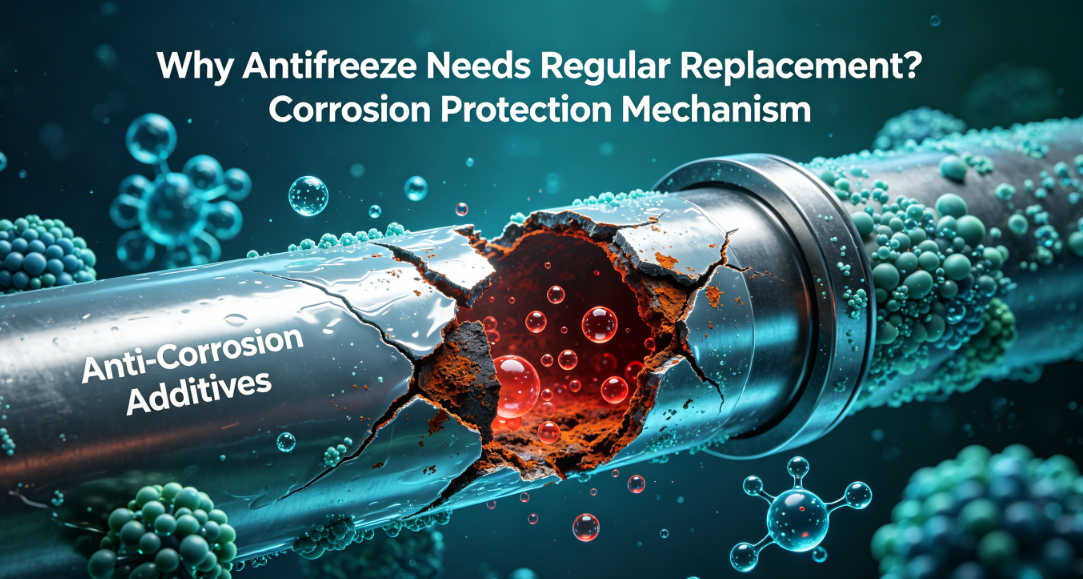
Automotive cooling systems consist of mixed metal materials: cast iron engine blocks, aluminum cylinder heads, copper radiators, steel water pipes and brass heater cores. These metals form galvanic corrosion cells when submerged in conductive glycol-water mixed liquid, triggering rust, pitting and cavitation erosion without protective additives. Three additive systems provide multi-layer protection:
1.1 Passivation Film Anti-Corrosion Additives (IAT Traditional Formula)
Silicate, borate and phosphate additives form a thin, dense inert oxide film on all metal inner surfaces, isolating glycol solution from direct metal contact to block electrochemical corrosion. Widely used in older gasoline vehicles.
1.2 Organic Acid Anti-Corrosion Formula (OAT / HOAT Long-Life Coolant)
Carboxylate organic acids adsorb onto metal surfaces to form self-repairing protective layers, without silicate sediment scaling. HOAT blends organic acids with low-dose silicates for hybrid aluminum-iron engine protection, the mainstream formula for modern passenger cars and heavy trucks.
1.3 Cavitation Suppressors
Nitrite and organic azole additives eliminate micro-bubble cavitation erosion generated by high-speed water flow around cylinder liners, a critical protective function for high-load diesel heavy-duty engines.
2. Why Additives Degrade Over Time (Root Cause Of Mandatory Replacement)
Three irreversible consumption processes deplete anti-corrosion additives during vehicle operation:
- High-temperature thermal decomposition: Engine operating temperature (85℃–105℃) breaks down organic acid and silicate additives into inactive fragments, losing film-forming capacity;
- Continuous metal surface consumption: The protective film wears away with coolant flow friction, requiring constant additive replenishment—reserve additives run out after fixed mileage/time cycles;
- Water absorption dilution: Glycol coolant absorbs airborne moisture through loose reservoir caps, increasing solution conductivity and accelerating galvanic corrosion, further accelerating additive depletion.
Once additive reserves are exhausted, the coolant loses all anti-corrosion functions, turning into a corrosive solvent that eats away engine metal components.
3. Severe Consequences Of Delaying Antifreeze Replacement
- Aluminum cylinder head pitting & leakage: Unprotected aluminum corrodes rapidly, creating tiny cracks that cause coolant mixing with engine oil, leading to bearing seizure and full engine failure;
- Radiator clogging & overheating: Degraded silicate additives precipitate white scale sludge, blocking radiator micro-tubes and cutting heat dissipation efficiency by over 40%, triggering frequent engine boiling;
- Cylinder liner cavitation perforation: Heavy-duty trucks face the highest risk—cavitation holes penetrate liners, coolant floods combustion chambers and causes engine stall;
- Rubber hose aging & rupture: Depleted pH stabilizers make coolant acidic, accelerating EPDM hose and water pump seal swelling/cracking, resulting in sudden roadside coolant leaks.
4. Global Standard Coolant Replacement Intervals
Classified by additive formula, following SAE J1034 and OEM factory specifications:
- IAT Conventional Green Coolant (Silicate-based): Replace every 2 years / 40,000 km (25,000 miles);
- OAT Long-Life Coolant (Organic Acid, Pink/Orange): Replace every 5 years / 240,000 km (150,000 miles);
- HOAT Hybrid Coolant (Red/Yellow, For Heavy-Duty Diesel): Replace every 4 years / 160,000 km (100,000 miles);
- Heavy-Duty Truck Extended-Life Coolant with SCA supplemental additives: Test nitrite concentration every 6 months, full flush every 3 years.
Vehicles operating in high-temperature mountainous areas, heavy-load constant haulage or coastal high-salt environments require replacement cycles shortened by 30%.
5. Professional Coolant Maintenance Standard
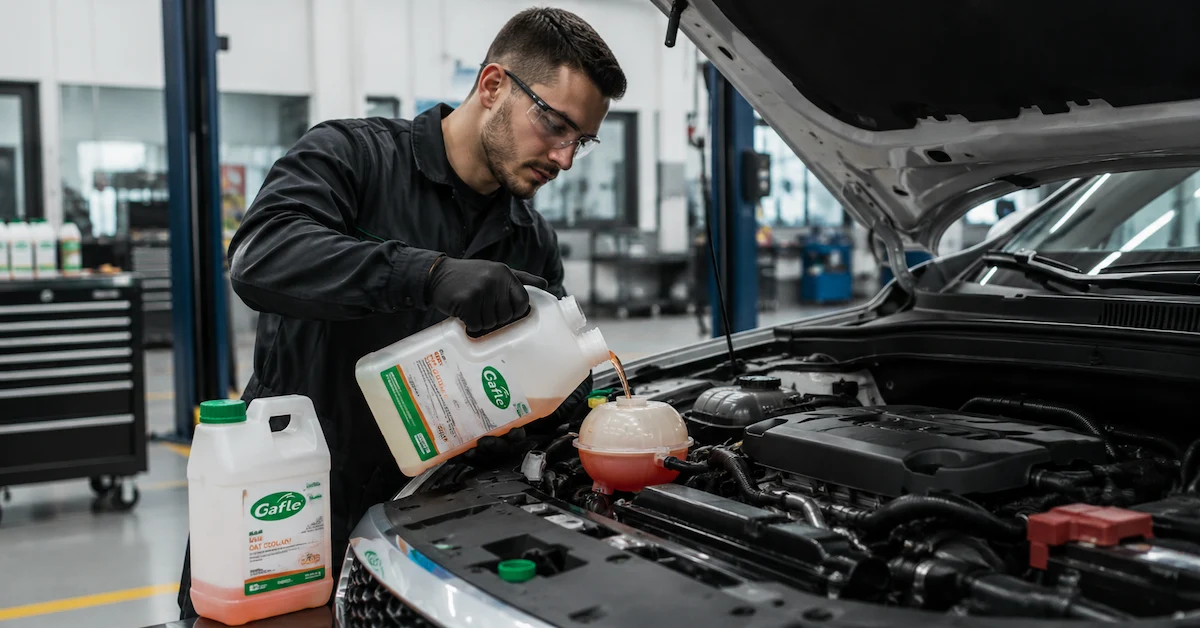
Simple topping-up cannot restore depleted anti-corrosion additives; full-system flushing is mandatory:
- Drain all aged coolant, flush engine block and radiator with deionized water to remove scale and residual corrosive liquid;
- Refill new full-spec coolant matching the vehicle’s original OAT/HOAT/IAT formula; avoid mixing different additive systems;
- For heavy-duty fleets, regularly test coolant pH value, nitrite concentration and glycol concentration via portable lab test kits to monitor additive residual levels between replacement cycles.
Closing Takeaway
Antifreeze’s core value lies in its anti-corrosion additive package, which has a limited service life determined by heat and wear. Scheduled full replacement is not an optional maintenance item, but a necessary measure to avoid costly engine overhaul repairs. Global auto distributors should add coolant replacement cycle guidance to product technical brochures to help repair shop clients educate end vehicle users and reduce engine failure after-sales claims.
Welcome to contact GAFLE for more information & cooperation!
peter
ZHEJIANG GAFLE AUTO CHEMICL CO.,LTD
Tel:86-579-8222 1665
Fax:86-579-8246 4690
Cel/Wechart:86-13335993986
E-mail:peter@gafle.net
Web:www.gafle.net
peter
ZHEJIANG GAFLE AUTO CHEMICL CO.,LTD
Tel:86-579-8222 1665
Fax:86-579-8246 4690
Cel/Wechart:86-13335993986
E-mail:peter@gafle.net
Web:www.gafle.net