Many international auto parts distributors face the same dilemma: a single antifreeze formula cannot fit all global markets. Different countries and regions apply distinct coolant standards, formula requirements, freezing point specifications and certification rules. Choosing the wrong grade or unqualified products will lead to customs clearance failure, unsalable inventory and even vehicle system damage. To help global purchasers make accurate sourcing decisions, this article sorts out the mainstream antifreeze standards and regional selection differences worldwide.
Main Antifreeze Standards & Market Requirements by Region
1. North America (USA, Canada)
The North American market follows strict ASTM D3306 / D4985 industry standards. It classifies coolants into three mainstream formulas: IAT, OAT and HOAT. Modern passenger vehicles widely adopt long-life OAT and HOAT coolants for longer service cycles and better anti-corrosion performance.
Due to large temperature differences across regions, Canada and northern U.S. states require ultra-low freezing point antifreeze (-45°C), while southern hot areas mainly use -25°C standard coolant. SGS official test reports are commonly required for local aftermarket sales.
2. European Market
European countries follow ASTM international standards plus exclusive automotive manufacturer specifications (VW, MB, BMW) and local AFNOR/BS standards. The European market prefers high-performance HOAT long-life coolant with stable oxidation resistance and low water absorption.
Northern European frigid regions focus on ultra-low temperature resistance, while southern European regions prioritize high-temperature boiling resistance. TUV certification and complete test reports are essential for formal market access.
3. Middle East & Southeast Asia
These tropical and subtropical regions have no extreme cold weather. Local markets mainly adopt -25°C general-purpose antifreeze, focusing on high-temperature heat dissipation and anti-boiling performance rather than ultra-low temperature resistance.
There are no mandatory exclusive industry standards. Most customs and local supermarkets require valid SGS inspection reports for product verification.
4. Latin America & Africa
Mexico and Brazil fully reference North American ASTM standards, with mainstream OAT coolant for new vehicles. The African market is highly differentiated: northern high-altitude areas need low-freezing-point coolant, while most tropical African regions choose cost-effective traditional IAT antifreeze.
Since local industry regulations are relatively loose, product cost performance and stable basic quality become the core selection criteria.
5. Chinese & Asian Markets
China implements GB national standards, fully aligned with international ASTM standards. As a participant in formulating China’s national auto fluid standards, GAFLE strictly applies standardized quality systems to both brake fluid and antifreeze production, ensuring full compatibility with global mainstream standards.
Core Differences in Global Antifreeze Selection
To sum up, regional coolant differences mainly lie in three dimensions:
1. Formula difference: Europe and North America prioritize long-life OAT/HOAT coolant; African and Southeast Asian aftermarket still favors cost-effective IAT formulas.
2. Freezing point difference: -45°C for ultra-cold regions, -35°C for temperate zones, and -25°C for tropical high-temperature regions.
3. Certification threshold difference: European markets require TUV qualification; North America recognizes ASTM & SGS reports; most emerging markets accept SGS third-party certification for customs clearance.
Why Choose GAFLE for Global Standard-Compliant Antifreeze
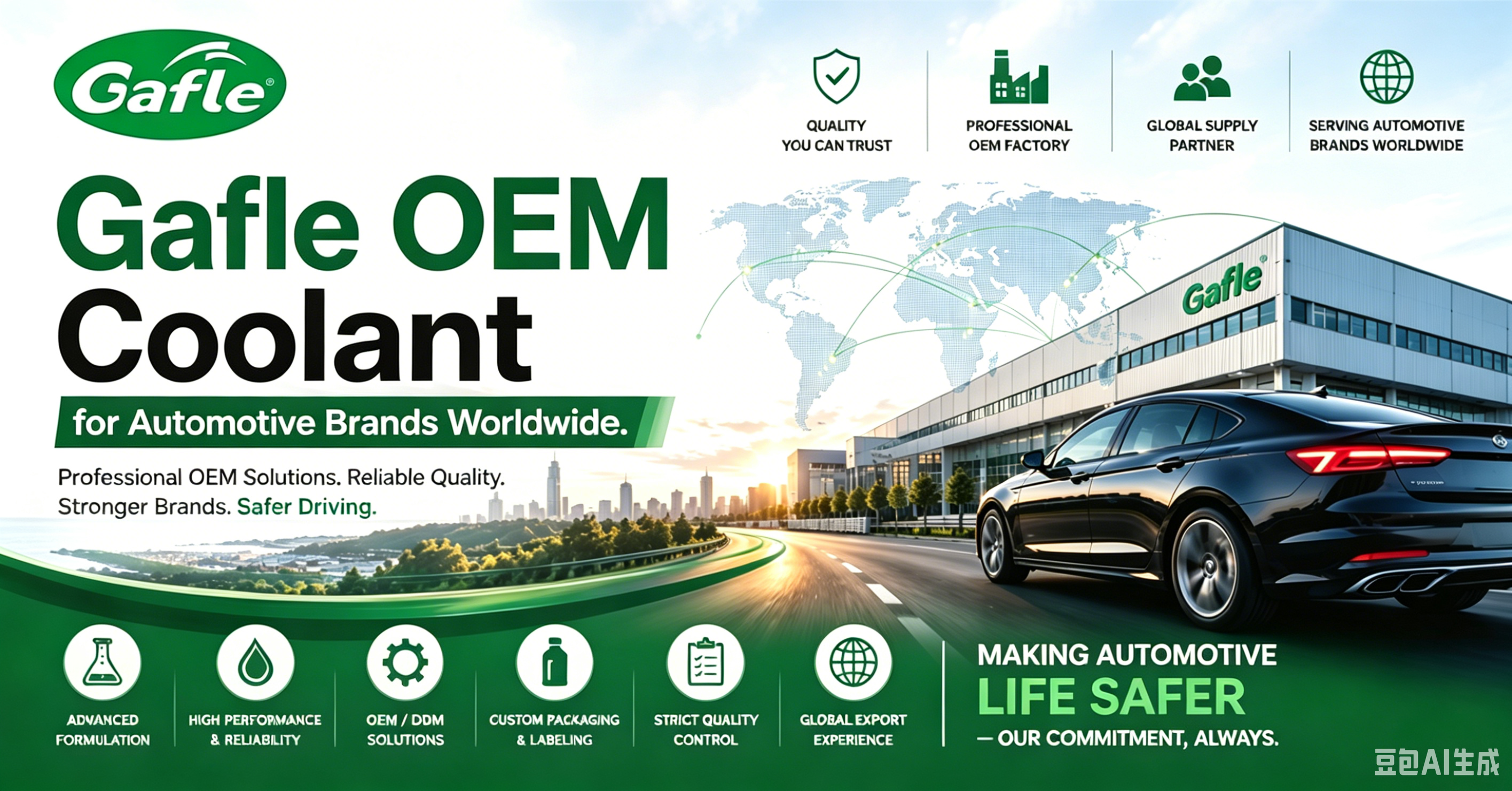
As a professional manufacturer specializing in automotive brake fluid and antifreeze, Zhejiang GAFLE AUTO CHEMICAL CO.,LTD owns more than 20 years of mature export experience serving global clients.
We are an official participant in drafting China’s national brake fluid standards. All our antifreeze products comply with SGS, TUV, AMECA and DOT international standards. Equipped with the domestic first-class clean workshop, full-automatic production lines, complete precision testing equipment and independent R&D laboratory, GAFLE can flexibly adjust coolant formulas, freezing points and technical indicators to meet customized requirements for different countries and regions.
We provide standardized and customized antifreeze solutions for North America, Europe, the Middle East, Latin America, Africa and Southeast Asia, supporting global wholesale and OEM/ODM services.
Professional Sourcing Tips for Global Buyers
-
Confirm local climate conditions, required freezing point and mandatory certification before bulk procurement
-
Do not mix IAT, OAT and HOAT coolants to avoid chemical failure
-
Cooperate with certified factories to avoid customs clearance risks and quality complaints
Final Words
Global antifreeze standards are diverse and region-specific. Only targeted customized production can meet local market access rules and vehicle working conditions. With standardized production, full international certifications and professional R&D capabilities, GAFLE provides stable, compliant and cost-effective antifreeze products for global distributors.
Contact us for professional customized automotive coolant solutions and long-term wholesale cooperation!