Introduction
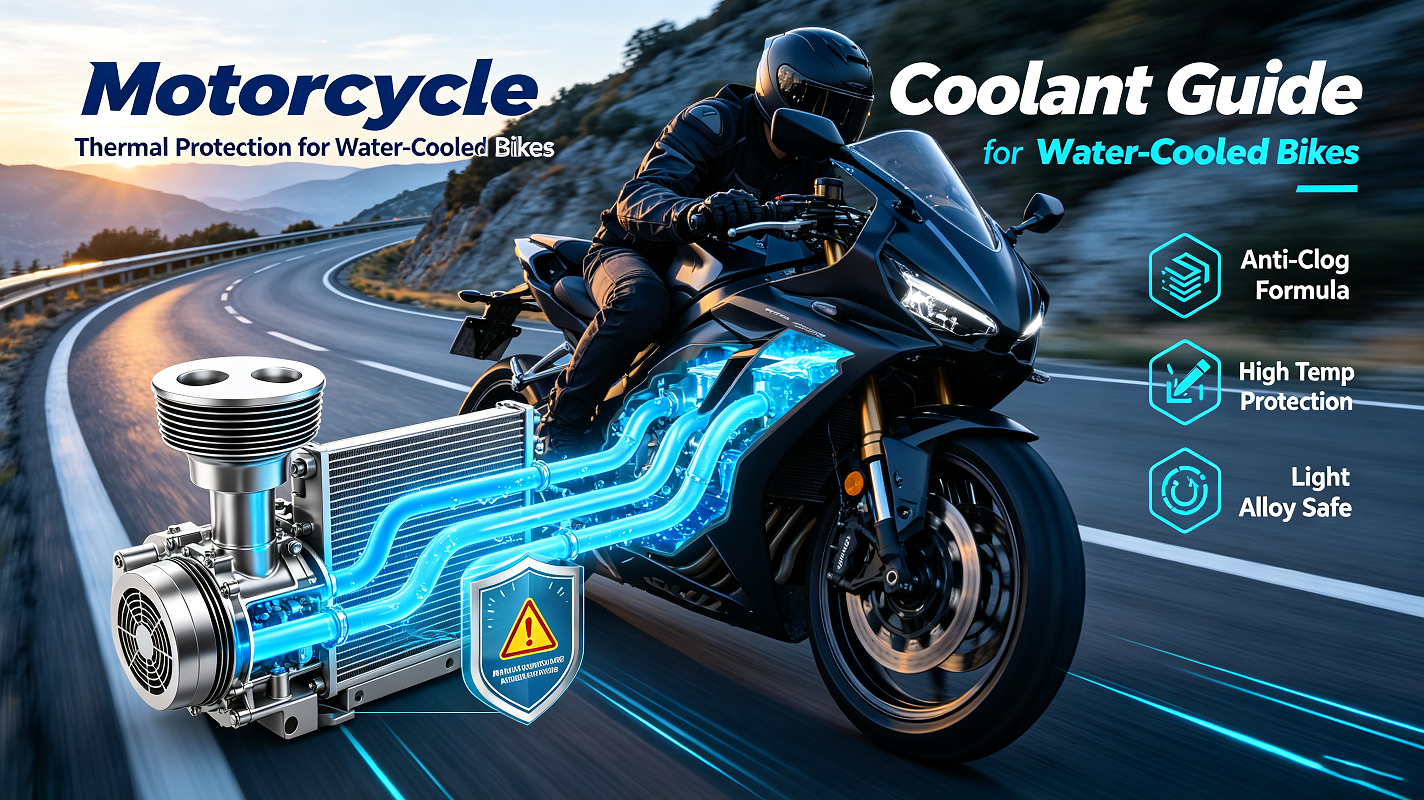
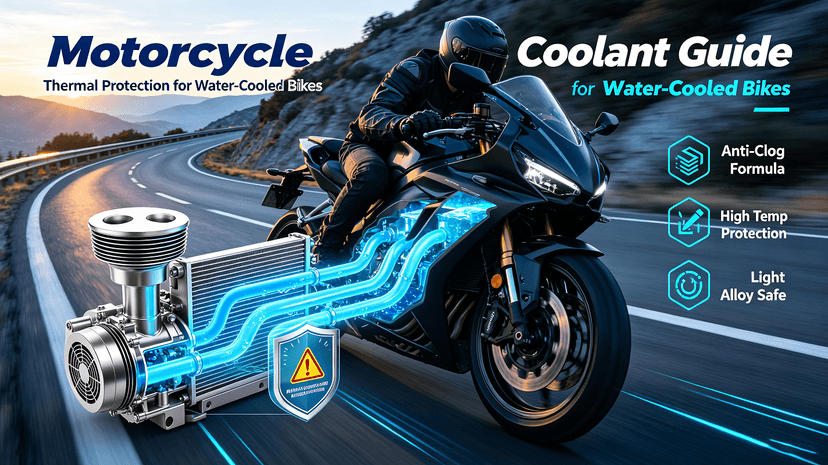
Water-cooled motorcycles rely on tiny, compact cooling channels inside small-displacement engines—far narrower than car or truck cooling pipelines. Ordinary automotive coolant cannot adapt to this compact structure: it clogs thin waterways, fails to dissipate fast riding heat, and accelerates internal metal corrosion. Dedicated motorcycle coolant is designed exclusively for two-wheeler liquid cooling systems to solve these unique pain points.
Why Car Coolant Damages Motorcycle Engines
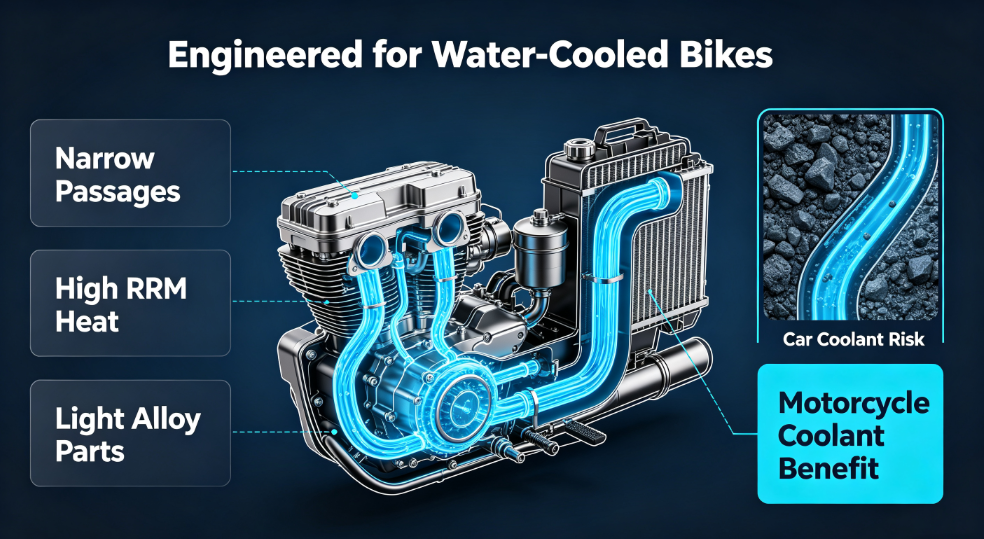
Motorcycle cooling systems have unmatched special characteristics that generic car coolant cannot handle:
- Ultra-narrow water passages
Motorcycle cylinder heads and radiators feature micro-thin cooling channels. Standard coolant generates mineral deposits that block circulation and trigger instant engine overheating at high RPM.
- Rapid heat spikes during aggressive riding
Sport bikes and touring motorcycles hit high engine temperatures quickly during highway speeds or mountain climbing. Low-grade coolant loses boiling protection and creates air pockets inside the cooling loop.
- Mixed lightweight alloy components
Modern bikes use thin aluminum radiators, magnesium cylinder covers and small copper heat exchangers. Ordinary coolants contain harsh silicates that pit and erode these delicate lightweight alloys over time.
Core Benefits of Our Specialized Motorcycle Coolant
- Anti-clog low-sediment formula
Fine-filtered fluid prevents mineral buildup in narrow motorcycle cooling channels, maintaining smooth liquid circulation at all engine speeds.
- Extreme high-temperature resistance
Advanced anti-boil additives stabilize fluid temperature during high-RPM riding, eliminating overheating risk for sport bikes and long-distance touring motorcycles.
- Mild anti-corrosion inhibitor blend
Gentle protective film shields aluminum, magnesium and copper motorcycle engine parts, stopping rust and pitting even with year-round daily riding.
- Multi-scene compatibility
Works for liquid-cooled scooters, sport bikes, adventure touring motorcycles and off-road dirt bikes. Bulk wholesale and OEM private label service for motorcycle parts distributors.
Basic Motorcycle Coolant Service Rules
- Replace coolant every 2 years or 20,000 km, whichever comes first. Motorcycle coolant degrades faster than commercial vehicle fluid due to frequent rapid temperature shifts.
- Never mix motorcycle coolant with automotive antifreeze—different additive packages will react and form solid sediment.
- Always use distilled water for dilution; hard tap water creates scale inside tiny radiator tubes.
- After coolant replacement, bleed all air bubbles from the cooling circuit to avoid hot spots on the engine cylinder.
Conclusion
Standard car coolant puts your water-cooled motorcycle at risk of overheating and permanent engine corrosion. Our dedicated motorcycle coolant is engineered for small two-wheeler cooling systems, delivering reliable thermal and anti-rust protection for all liquid-cooled bike models. Global motorcycle parts wholesalers can reach our team for bulk OEM coolant orders and full export documentation support.
Welcome to contact GAFLE for more information & cooperation!
peter
ZHEJIANG GAFLE AUTO CHEMICL CO.,LTD
Tel:86-579-8222 1665
Fax:86-579-8246 4690
Cel/Wechart:86-13335993986
E-mail:peter@gafle.net
Web:www.gafle.net
peter
ZHEJIANG GAFLE AUTO CHEMICL CO.,LTD
Tel:86-579-8222 1665
Fax:86-579-8246 4690
Cel/Wechart:86-13335993986
E-mail:peter@gafle.net
Web:www.gafle.net