What Is The Difference Between Ready-Mix Coolant & Concentrate Coolant
Auto parts distributors and repair shop owners often struggle to choose between concentrated coolant and pre-diluted ready-mix products for their inventory. The two forms share identical core anti-corrosion, anti-freeze additives but differ drastically in shipping expenses, storage space requirements, target customer groups and correct dilution rules. This complete comparison guide helps wholesale buyers pick the most cost-effective coolant format based on their regional market demand.
1. Core Product Definition & Standard Dilution Ratios
Concentrate Coolant
100% pure glycol-based coolant without added water, designed to be mixed with distilled water by end users or repair shops before filling vehicles.
Global standard dilution ratios for most climates:
- 50% concentrate + 50% distilled water: Balanced -37°C freeze protection & high boiling point, suitable for temperate regions
- 60% concentrate + 40% distilled water: -45°C ultra-low freeze protection for subzero northern & mountain areas
- Never mix with tap water containing mineral impurities, which creates limescale inside cooling systems
Ready-Mix Pre-Diluted Coolant
Factory pre-blended coolant with distilled water at a fixed 50/50 ratio, fully usable directly out of the bottle with zero extra mixing steps. No calculation or extra water required for vehicle top-ups or full flushes.
2. Warehouse & Shipping Cost Gap (Key Wholesale Advantage)
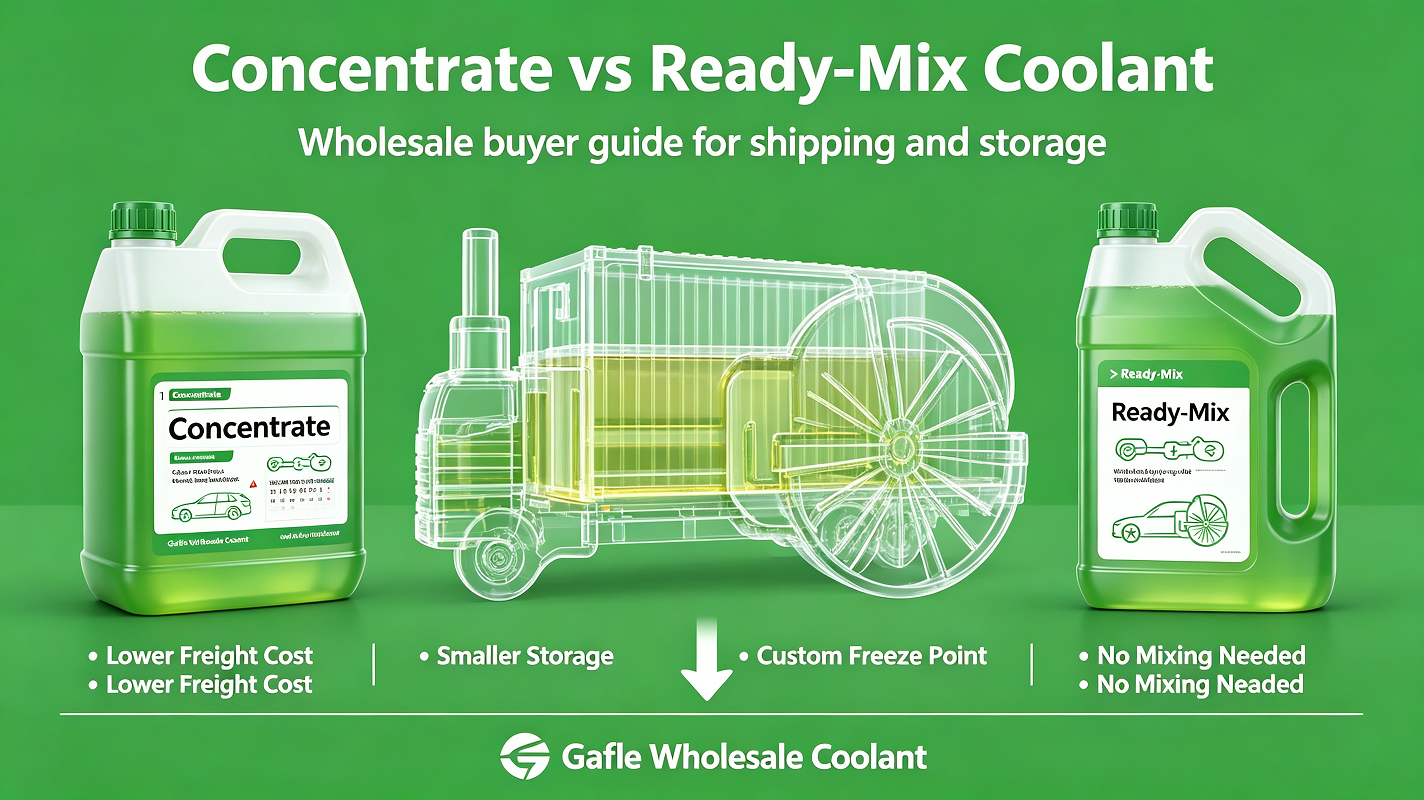
Concentrated coolant cuts logistics costs dramatically for bulk importers:
- Concentrate only carries pure glycol fluid; half the weight and volume of equivalent ready-mix inventory
- For a full 20ft shipping container, concentrate holds double the usable coolant volume compared to ready-mix, slashing per-liter ocean freight fees
- Smaller storage footprint in repair shop warehouses and retail auto stores, lowering monthly warehouse rental expenses
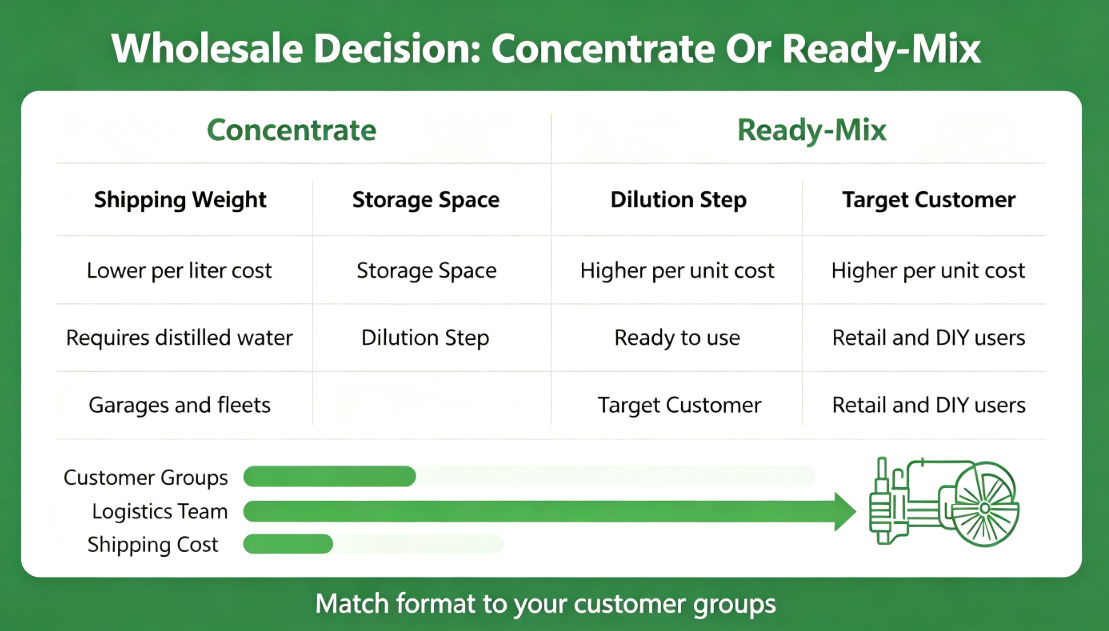
Ready-mix has higher per-unit shipping and storage costs due to water weight, best suited for small retail single-bottle consumer sales rather than large bulk wholesale orders.
3. Target Customer & Market Suitability
Choose Concentrate Coolant If Your Clients Are:
- Independent auto repair garages with professional mixing tools
- Large fleet maintenance centers managing dozens of vehicles
- Wholesale distributors serving cold climate regions requiring custom freeze point adjustments
- Private label brands packaging their own finished coolant locally
Choose Ready-Mix Coolant If Your Clients Are:
- Individual daily drivers purchasing single bottles for emergency top-ups
- Small retail auto accessory shops catering to DIY amateur car owners
- Warm tropical markets with consistent mild climate that only need fixed 50/50 freeze protection
4. Critical Wholesale Purchase Reminders
- Always remind concentrate buyers to only use distilled water for dilution; tap water voids coolant anti-corrosion performance
- Stock both formats for mixed customer bases: concentrate for bulk garage clients, ready-mix for retail walk-in consumers
- Concentrate has a longer shelf life in sealed storage, with no risk of water separation over long warehouse idle periods
Final Takeaway
Concentrate coolant delivers massive shipping and storage savings for bulk wholesale importers and repair shops that can perform on-site dilution. Ready-mix pre-blended coolant targets casual DIY car owners seeking instant, no-hassle fluid. Match your coolant inventory format to your customer groups and local climate to maximize profit margins as an auto parts distributor.
Welcome to contact GAFLE for more information & cooperation!
peter
ZHEJIANG GAFLE AUTO CHEMICL CO.,LTD
Tel:86-579-8222 1665
Fax:86-579-8246 4690
Cel/Wechart:86-13335993986
E-mail:peter@gafle.net
Web:www.gafle.net
peter
ZHEJIANG GAFLE AUTO CHEMICL CO.,LTD
Tel:86-579-8222 1665
Fax:86-579-8246 4690
Cel/Wechart:86-13335993986
E-mail:peter@gafle.net
Web:www.gafle.net