Why Brake Fluid Needs Regular Replacement?
Brake fluid is one of the most important fluids in a vehicle’s braking system, yet it is often overlooked during routine maintenance. Many drivers focus on engine oil and tire condition while forgetting that brake fluid directly affects braking performance and driving safety.
Over time, brake fluid gradually loses its effectiveness due to moisture absorption, contamination, and thermal stress. Regular brake fluid replacement is essential for maintaining stable braking performance and protecting the brake system.
Why Brake Fluid Replacement Matters
Professional brake fluid replacement helps ensure that the hydraulic braking system can maintain proper pressure and reliable braking response.
Old or contaminated brake fluid may lead to:
- Reduced braking efficiency
- Longer stopping distance
- Corrosion inside brake lines
- Damage to rubber seals and components
- Reduced high-temperature braking performance
Regular replacement helps keep the braking system stable, responsive, and safe.
How Often to Change Brake Fluid
One of the most common questions drivers ask is: how often to change brake fluid?
Most vehicle manufacturers recommend replacing brake fluid every:
- 2 years
- Or according to vehicle maintenance schedules
However, replacement frequency may vary depending on:
- Driving environment
- Climate conditions
- Driving habits
- Vehicle type
- Brake system temperature exposure
Vehicles operating in humid climates, mountainous areas, or heavy traffic conditions may require more frequent brake fluid replacement.
Common Signs of Bad Brake Fluid
Recognizing the signs of bad brake fluid can help drivers avoid braking problems before they become serious safety risks.
Common warning signs include:
Soft or Spongy Brake Pedal
Moisture-contaminated brake fluid may reduce hydraulic pressure stability, causing the brake pedal to feel soft or less responsive.
Longer Braking Distance
Old brake fluid can reduce braking efficiency, increasing stopping distance during emergency braking.
Dark Brake Fluid Color
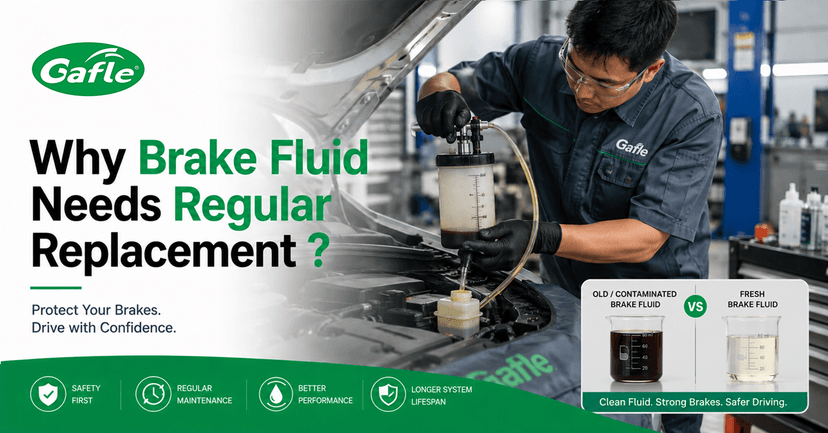
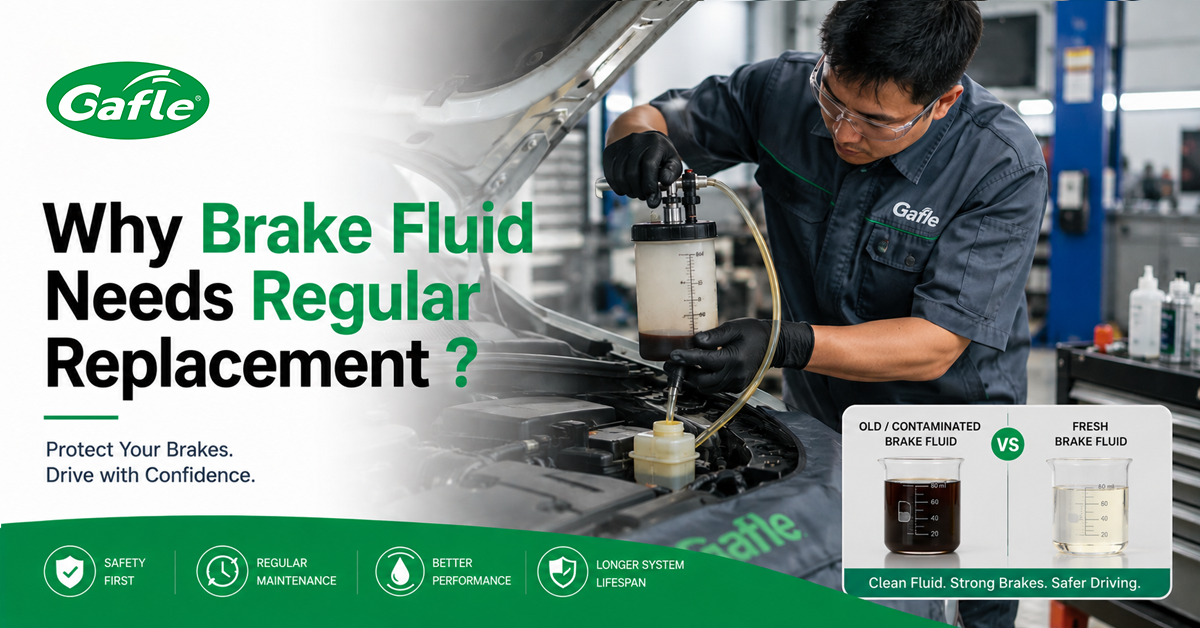
Fresh brake fluid is usually clear or light yellow. Over time, contamination may cause the fluid to become dark brown or black.
Brake Warning Light
Some vehicles display brake warning indicators when brake fluid performance becomes unstable or fluid levels become too low.
Burning Smell During Heavy Braking
Brake fluid with reduced boiling point performance may overheat under high-temperature braking conditions.
Importance of Brake Fluid Maintenance
Regular brake fluid maintenance is essential for protecting the entire braking system.
Professional maintenance includes:
- Brake fluid inspection
- Moisture content testing
- Brake system leakage checks
- Fluid condition monitoring
- Timely fluid replacement
Routine maintenance helps extend brake system lifespan and improve overall driving safety.
Brake Fluid Moisture Contamination: A Hidden Risk
One of the biggest problems affecting brake fluid performance is brake fluid moisture contamination.
Brake fluid naturally absorbs moisture from the air over time. Excess moisture can lower the fluid’s boiling point and increase corrosion risks inside the braking system.
Moisture contamination may cause:
- Brake fade under high temperatures
- Reduced braking response
- Internal rust and corrosion
- Damage to brake components
This is why regular fluid replacement is critical for maintaining stable brake system performance.
Brake System Safety Depends on Fluid Quality
Reliable brake system safety depends heavily on the condition of the brake fluid. Even advanced braking systems cannot perform properly if the fluid becomes contaminated or degraded.
Using high-quality brake fluid and replacing it regularly helps ensure:
- Stable hydraulic pressure
- Reliable emergency braking
- Better high-temperature performance
- Protection for brake system components
- Safer driving experience
DOT Brake Fluid Performance Matters
Professional DOT brake fluid performance standards help ensure brake fluids can maintain stable performance under different driving conditions.
At Gafle Brake Fluid Factory, our products are manufactured according to international standards and undergo strict laboratory testing for:
- Dry boiling point performance
- Wet boiling point performance
- Viscosity stability
- Corrosion resistance
- Moisture control performance
Our products include:
- DOT 3 brake fluid
- DOT 4 brake fluid
- DOT 5.1 brake fluid
Gafle Brake Fluid Factory: Supporting Safer Driving
At Gafle Brake Fluid Factory, we focus on providing stable, reliable, and high-quality brake fluid solutions for global automotive markets.
Through strict manufacturing standards, laboratory testing, and quality control systems, Gafle continues helping customers maintain safer and more reliable brake system performance.
Conclusion
Brake fluid plays a critical role in vehicle safety, but many drivers underestimate the importance of regular replacement. Over time, moisture contamination and fluid degradation can significantly reduce braking performance and increase safety risks.
Regular brake fluid maintenance and timely replacement are essential for protecting the braking system, improving vehicle safety, and maintaining reliable driving performance.
Brake Fluid Replacement is one of those service items that rarely gets attention until the pedal feels wrong, the warning light appears, or a vehicle comes in with a brake complaint that is hard to pin down. For fleets, repair shops, and parts buyers, the issue is not just maintenance for maintenance’s sake. Brake fluid sits at the center of hydraulic brake force, and when it ages or absorbs moisture, the whole system becomes less predictable. That matters whether you are maintaining passenger vehicles, light-duty commercial vans, or a mixed fleet where downtime and safety both cost money.
The decision this article helps you make is straightforward: when should fluid be changed, what should you look for, and what mistakes can quietly undermine brake system safety. The details vary by vehicle and operating conditions, but the basic principle does not. Brake fluid does a demanding job in a hot, sealed, high-pressure environment, and it does not last forever.
What brake fluid does, and why age changes its behavior
Brake fluid transfers force from the pedal to the calipers or wheel cylinders. It also has to tolerate heat from braking, resist vapor formation, and keep working through temperature swings, road vibration, and time. In practice, that means the fluid’s condition affects pedal feel, corrosion inside the hydraulic system, and how consistently the brakes respond in real traffic.
One of the biggest issues is brake fluid moisture contamination. Most common brake fluids are hygroscopic, which means they can absorb moisture over time. That moisture lowers the fluid’s boiling margin and can accelerate internal corrosion. The result is not always dramatic at first. More often, it shows up as a softer pedal, longer stopping distances under load, or uneven braking behavior that creeps in so gradually that drivers adapt to it without realizing the system has changed.
How often to change brake fluid: the practical answer
How Often to Change Brake Fluid depends on the vehicle maker’s service schedule, the fluid type, and the duty cycle. There is no single interval that fits every application, which is why buyers and service teams should resist the temptation to treat brake fluid like engine oil.
A sensible maintenance plan starts with the OEM recommendation, then adjusts for severity of use. Vehicles that see frequent stop-and-go driving, heavy loads, mountain descents, towing, humidity, or long service life without fluid service are usually stronger candidates for earlier replacement. In fleet work, the hidden cost is often not the fluid itself but the risk of avoidable brake repairs and unplanned shop time.
Signs of bad brake fluid that deserve a closer look
Signs of Bad Brake Fluid can be subtle. A spongy or inconsistent pedal is the classic complaint, but it is not the only one. Discolored fluid, a burnt odor after severe use, or visible contamination in the reservoir should prompt attention. In some vehicles, brake warning messages or ABS-related complaints may appear, though those symptoms can also point elsewhere.
The cautious buyer’s view is this: do not wait for dramatic failure. Brake fluid that has clearly darkened or absorbed contamination should be treated as a service item, not a debate.
Common warning signs at the shop
A pedal that feels softer than usual
A braking response that changes after repeated stops
Fluid that looks darker than fresh stock
Evidence of moisture or debris in the reservoir
Corrosion concerns around hydraulic components
DOT brake fluid performance and why matching matters
DOT Brake Fluid Performance is often discussed as if it were only about boil points, but compatibility matters just as much. The vehicle specification should guide the fluid choice, not the other way around. Mixing the wrong type can create service problems, seal issues, or performance drift. For sourcing teams, this is where product discipline pays off: the right fluid type, clearly labeled, traceable, and aligned to the application, avoids downstream confusion in the workshop.
That is also why Brake Fluid Maintenance should be treated as a controlled process. Flushes, fill procedures, and reservoir cleanliness matter. A clean replacement done sloppily can still leave contamination behind.
Buyer and maintenance team cautions that save trouble later
A few practical warnings are worth keeping in mind.
First, do not judge fluid condition only by color. Darker fluid is often a sign of age, but appearance alone does not tell the full story.
Second, keep fluid containers sealed until use. Brake fluid can absorb moisture from ambient air once opened, which is an easy way to compromise fresh inventory.
Third, make sure the shop process is consistent. If a system is bled incorrectly or topped off with the wrong spec, the service record may say “replaced,” but the vehicle is not really protected.
For sourcing managers evaluating suppliers, a reliable manufacturing partner matters as much as the formulation on paper. If you are comparing options such as a Gafle Brake Fluid Factory or another OEM/ODM source, ask for clear product documentation, application guidance, and packaging practices that support shelf life and traceability. Those are ordinary details, but they separate a controlled supply from a risky one.
FAQ: quick answers for service planning
Can brake fluid be topped off instead of replaced?
Sometimes, but topping off does not remove moisture or aged fluid. It is not a substitute for a proper service interval.
Does every vehicle need the same fluid?
No. Follow the vehicle specification. Brake fluids are not universally interchangeable.
What should a fleet manager prioritize?
Consistency. Use the correct fluid, keep inventory sealed, and schedule replacement before the system shows obvious complaints.
A practical next step
If your team is revisiting brake service schedules, start with the vehicle spec, then compare it against operating severity and current fluid condition. For procurement, that means choosing a product and supplier that fit the application cleanly instead of treating brake fluid as a commodity with no technical consequences. A careful Brake Fluid Replacement program is unglamorous work, but it protects Brake System Safety in a way that drivers notice immediately when it goes wrong.