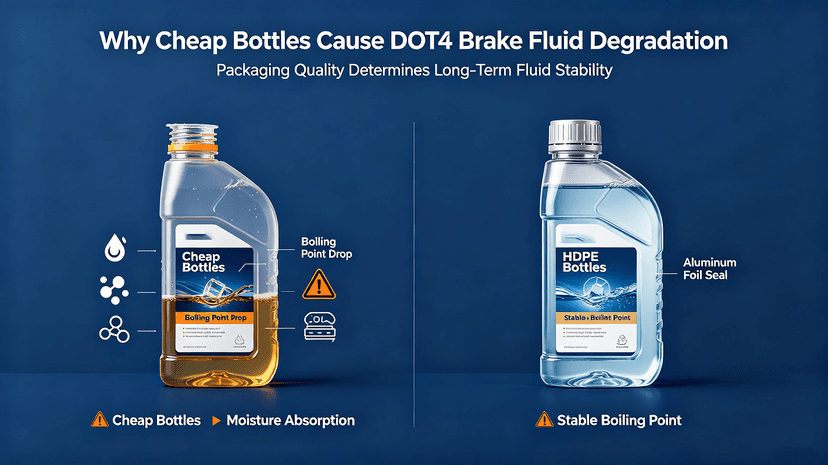
Many overseas auto chemical importers cut costs by selecting cheap thin plastic bottles for bulk DOT4 brake fluid orders. Most buyers only focus on the unit price of containers but ignore long-term quality losses caused by inferior packaging. After months of sea transit and warehouse storage, degraded brake fluid leads to workshop complaints, returned goods and damaged brand reputation.
Low-cost recycled plastic triggers chemical reaction with DOT4 brake fluid
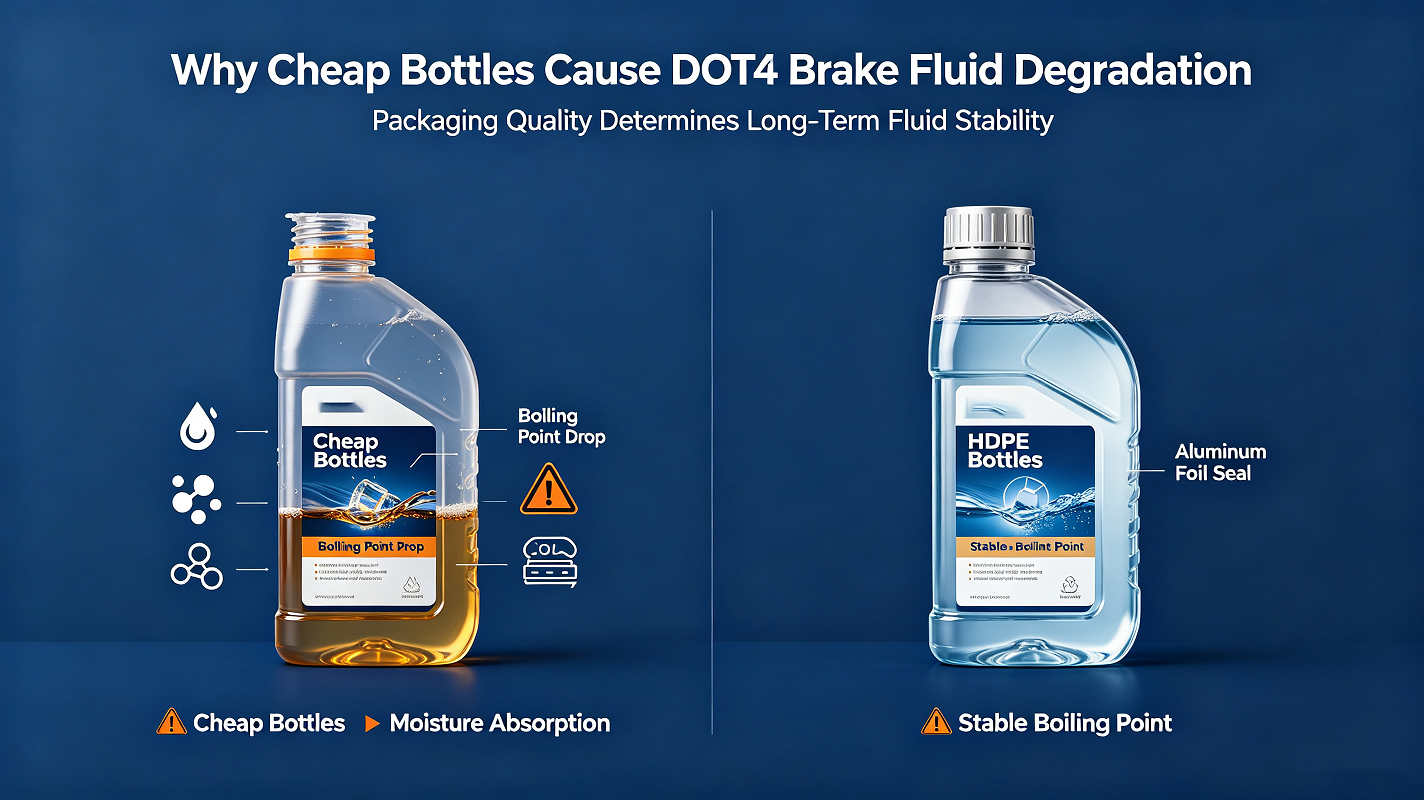
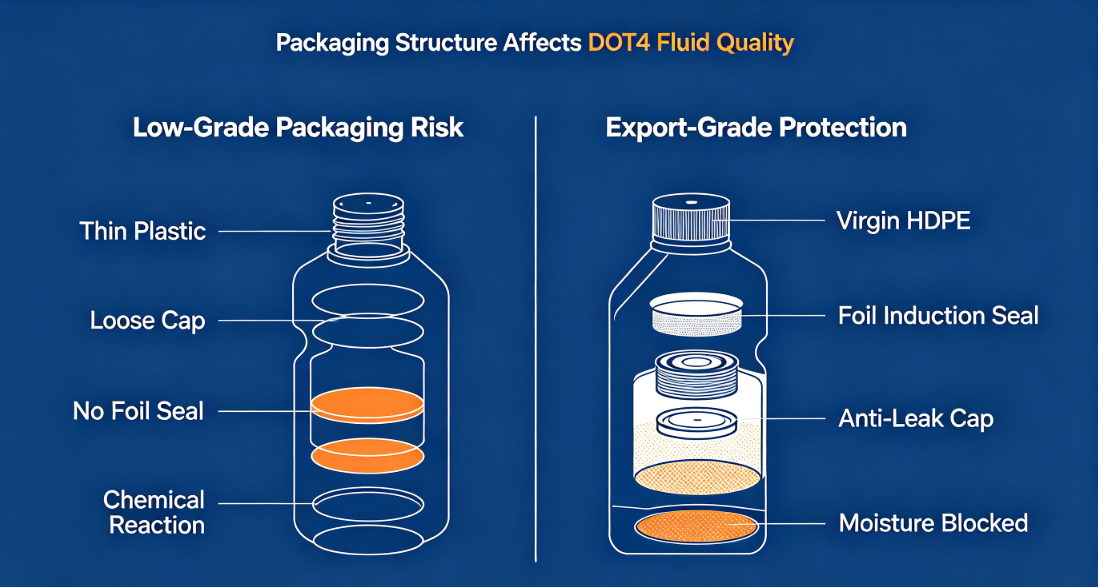
Cheap brake fluid containers are usually made of mixed recycled plastic with miscellaneous impurities. DOT4 brake fluid contains high-efficiency glycol ether additives with strong chemical activity. Long-term contact between recycled plastic and brake fluid will produce chemical contamination, resulting in liquid discoloration, sediment generation and reduced anti-oxidation performance. Pure HDPE raw material used by professional factories is chemically inert and will not react with any DOT4 brake fluid formulas even for 5 years sealed storage.
Poor sealing of cheap bottles causes continuous moisture absorption
Standard brake fluid has extremely strong hygroscopicity. Low-cost bottles adopt thin plastic caps without rubber gaskets and omit aluminum foil induction sealing. Tiny gaps between bottle mouths allow air and humid sea moisture to penetrate into the packaging nonstop during shipping and storage. Humidity inside the container accumulates inside bottles day by day, which is the root cause of fluid deterioration.
Moisture penetration leads to sharp boiling point decline and hidden braking hazards
The core safety indicator of DOT4 brake fluid is its high boiling point. Once moisture enters the liquid, the wet boiling point will drop rapidly. When vehicles run on mountainous roads or under heavy load with frequent braking, the brake system will produce vapor lock, resulting in soft brake pedals or even temporary brake failure. Local repair shops will refuse to purchase brake fluid that fails boiling point tests, directly cutting off your wholesale sales channels.
Export-grade HDPE packaging eliminates fluid degradation risks fundamentally
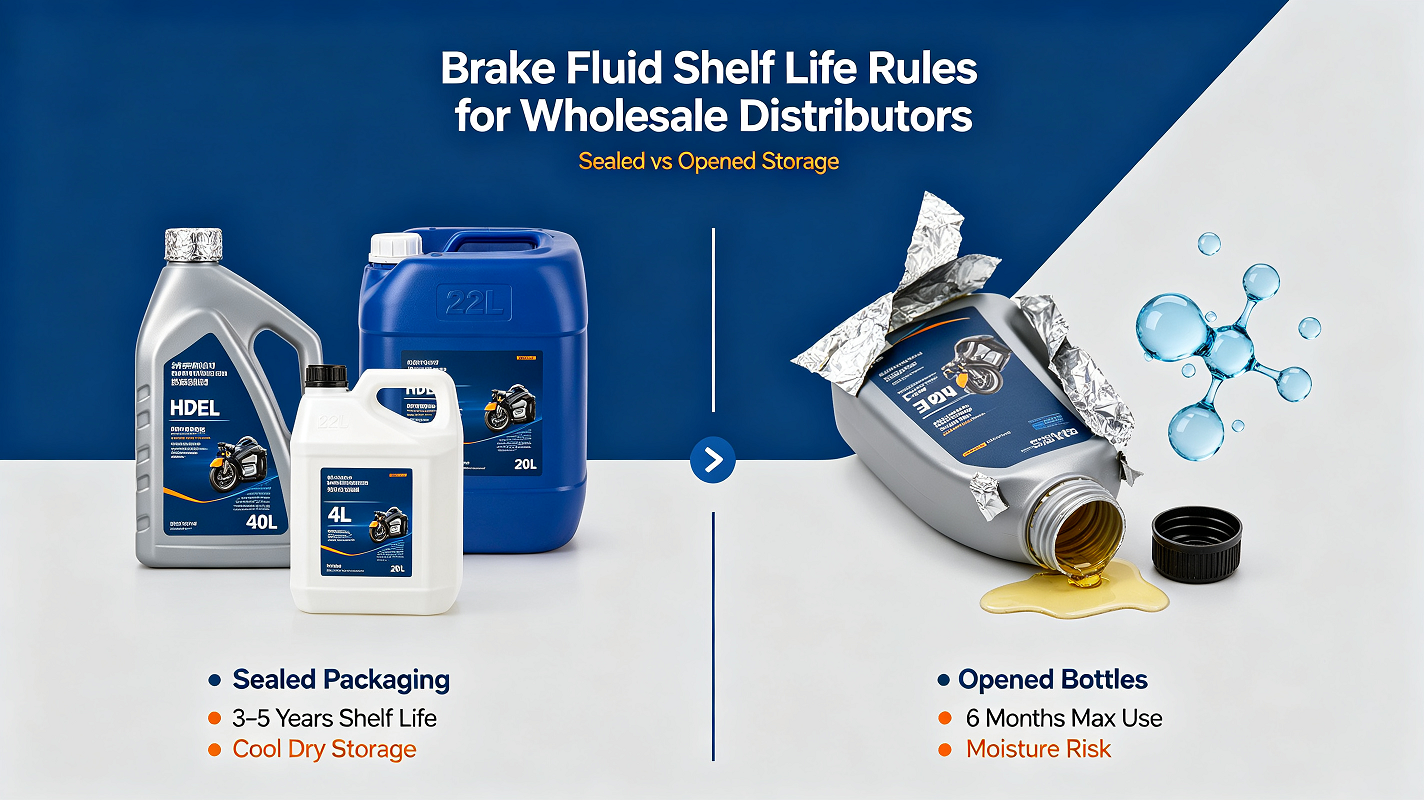
GAFLE only uses thickened virgin HDPE bottles for all DOT4 brake fluid exports. Every bottle is equipped with double protection: full aluminum foil induction sealing film plus spill-proof threaded caps with anti-leak rubber rings. This dual isolation structure completely blocks external moisture and air. The stable plastic material avoids chemical reactions with brake fluid formulas, maintaining original boiling point and chemical stability throughout the whole shelf life for global distributors.
If you want to avoid batch fluid degradation losses caused by cheap packaging, contact our sales team to get standard anti-degradation brake fluid packaging solutions for your bulk orders.
Matching English Image Design Guide
- Blog Main Cover Image (16:9 horizontal)
Two-side split contrast layout: left side shows thin cheap plastic bottles with faded DOT4 fluid, marked "Moisture Absorption, Low Boiling Point"; right side displays thick HDPE GAFLE brake fluid bottles with intact aluminum foil seals. Central headline: Why Cheap Bottles Cause DOT4 Brake Fluid Degradation, all text in English, industrial deep blue tone.
- In-text Illustration
Cross-section structural comparison diagram: contrast inferior thin bottle loose cap structure vs export HDPE bottle aluminum foil double sealing structure, mark chemical reaction risk and moisture isolation function in English labels.
Welcome to contact GAFLE for more information & cooperation!
peter
ZHEJIANG GAFLE AUTO CHEMICL CO.,LTD
Tel:86-579-8222 1665
Fax:86-579-8246 4690
Cel/Wechart:86-13335993986
E-mail:peter@gafle.net
Web:www.gafle.net