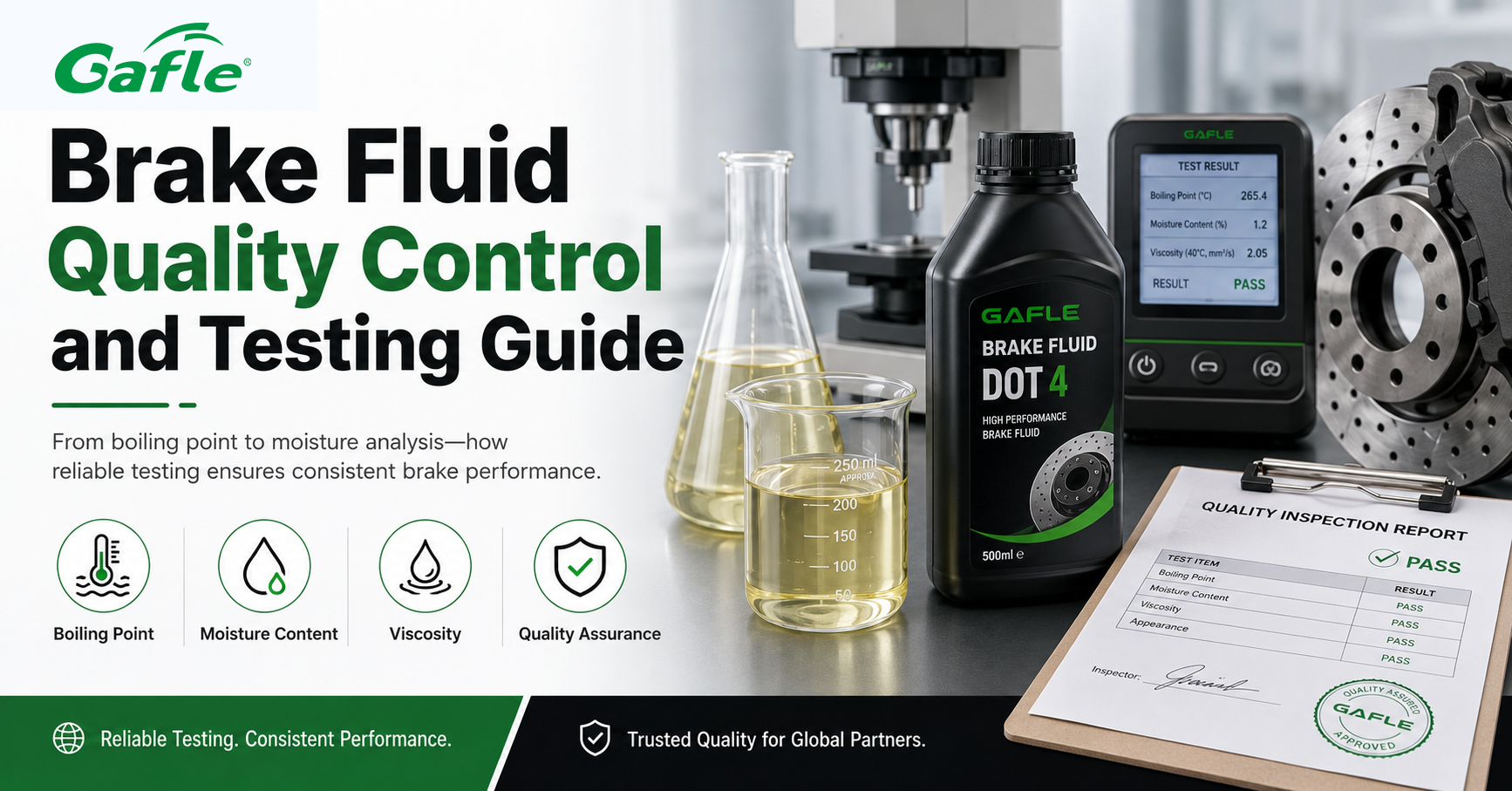
 Why Brake Fluid Quality Control Deserves More Attention Than It Gets
Brake Fluid Quality Control is one of those manufacturing disciplines that only looks simple from the outside. To a buyer, brake fluid may seem like a commodity: same bottle, same label, same basic function. In practice, it is a safety-critical chemical product that has to perform under heat, moisture, storage aging, and customer handling. If the fluid drifts out of spec, the consequences are not limited to a warranty headache. They can affect braking response, customer trust, and downstream compliance decisions.
That is why sourcing teams and product engineers should treat quality control as part of the purchasing decision, not an afterthought. The right supplier is not just filling containers. A capable Brake Fluid Manufacturer is controlling raw materials, blending consistency, contamination risk, packaging integrity, and batch traceability. If any of those weak points slip, the product may still look acceptable on arrival and fail later where it matters most.
What Quality Control Has to Protect Against
Brake fluid works in a harsh operating environment. It sits in a system that experiences heat cycling, long storage periods, and exposure to moisture through normal use. That means quality control needs to guard against more than one failure mode.
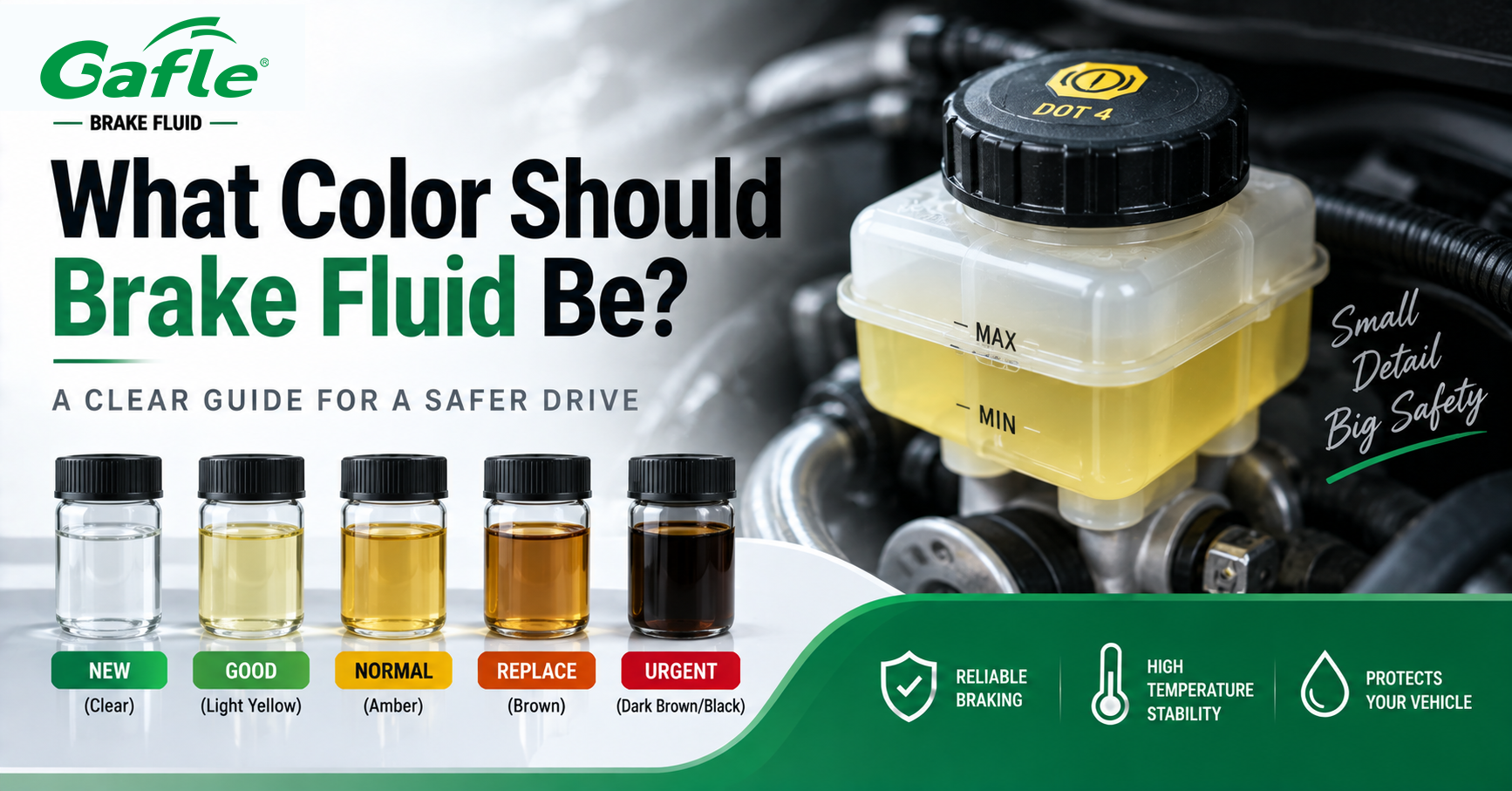
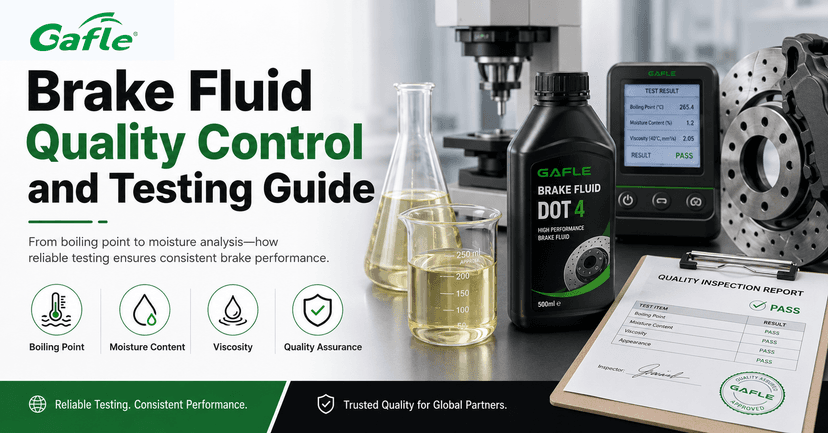
First is water absorption. Many brake fluids are hygroscopic, so moisture management matters from production through packaging and storage. Second is boiling performance. Under heavy braking, the fluid must retain usable performance at elevated temperatures. Third is viscosity behavior, especially in colder conditions, where response and hydraulic movement can change. Then there is cleanliness: particles, air, or incompatible residues can cause problems that are easy to miss in a quick visual check.
A practical buyer should assume that a decent-looking sample is not enough. The real question is whether the supplier has a repeatable process that catches variation before the fluid leaves the plant.
What a Serious Brake Fluid Testing Program Usually Covers
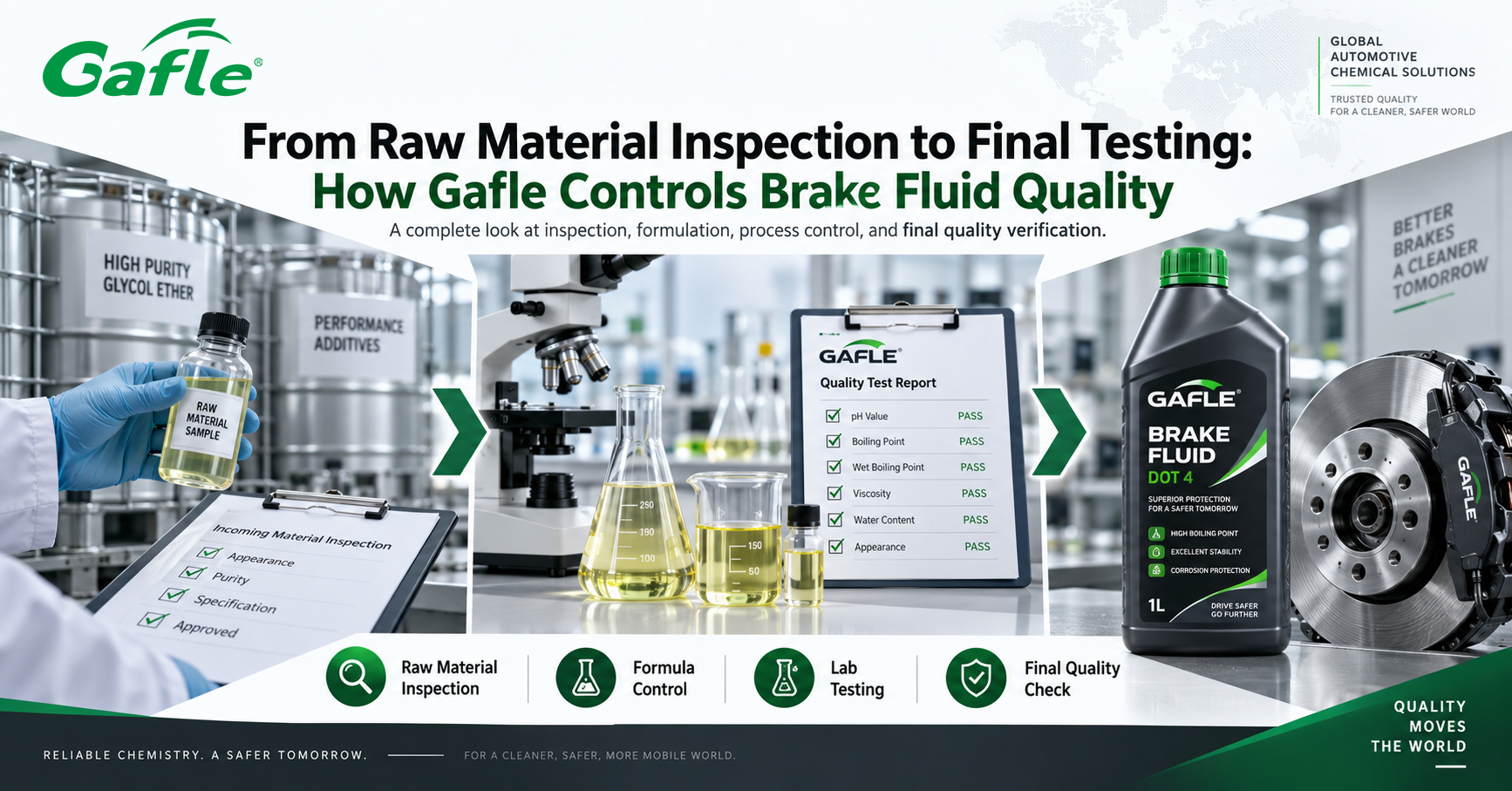
Brake Fluid Testing should not be a single check at the end of production. It works better as a chain of controls. Incoming raw materials need verification. Blending should be monitored. Finished product needs final release testing, and the packaging line should be checked for contamination and seal integrity.
Key checks buyers should ask about
For most purchasing teams, the useful questions are straightforward:
Does the supplier test boiling point, viscosity, and moisture-related stability?
Does the lab monitor contamination risk during blending and filling?
Are retained samples kept for complaint investigations?
Can the supplier trace a finished batch back to raw materials and processing records?
These are not fancy questions, but they reveal whether the plant is managing risk or simply passing a basic release check.
Why DOT 4 Testing Gets So Much Attention
DOT 4 Brake Fluid Testing is a good example of how product claims and real manufacturing discipline intersect. DOT 4 fluids are often selected for modern vehicles because the performance window needs to be dependable, especially where higher temperatures or more demanding braking conditions are expected. If a supplier cannot control the formula and production conditions tightly, the finished fluid may not behave consistently from batch to batch.
That does not mean every buyer needs to become a lab chemist. It does mean that the test method, sampling plan, and release criteria should be discussed early. A clean spec sheet is useful, but it is not the same thing as a mature quality system. If the supplier hesitates to talk about test frequency or batch controls, that is usually a warning sign.
How OEM Buyers Should Evaluate a Supplier
OEM programs are usually less forgiving than aftermarket supply. An OEM Brake Fluid Manufacturer is expected to support consistent large-scale delivery, documentation discipline, and stable product behavior over time. For sourcing managers, the best evaluation is not based on a single sample or a sales presentation. It is based on process confidence.
Look at how the supplier handles change. If a raw material source shifts, if packaging changes, or if a line is reconfigured, does the supplier revalidate the product? Do they communicate changes clearly? Can they support private-label or customer-specific packaging without mixing batches or weakening traceability? These are the details that matter in real procurement work.
If you are comparing options across regions, you may also see marketing claims such as Best Brake Fluid Manufacturer in China. Treat that phrasing cautiously. A good supplier is not defined by geography or a slogan. It is defined by stable testing, disciplined production, and the ability to solve problems without drama when the order volume increases.
Common Mistakes Buyers Still Make
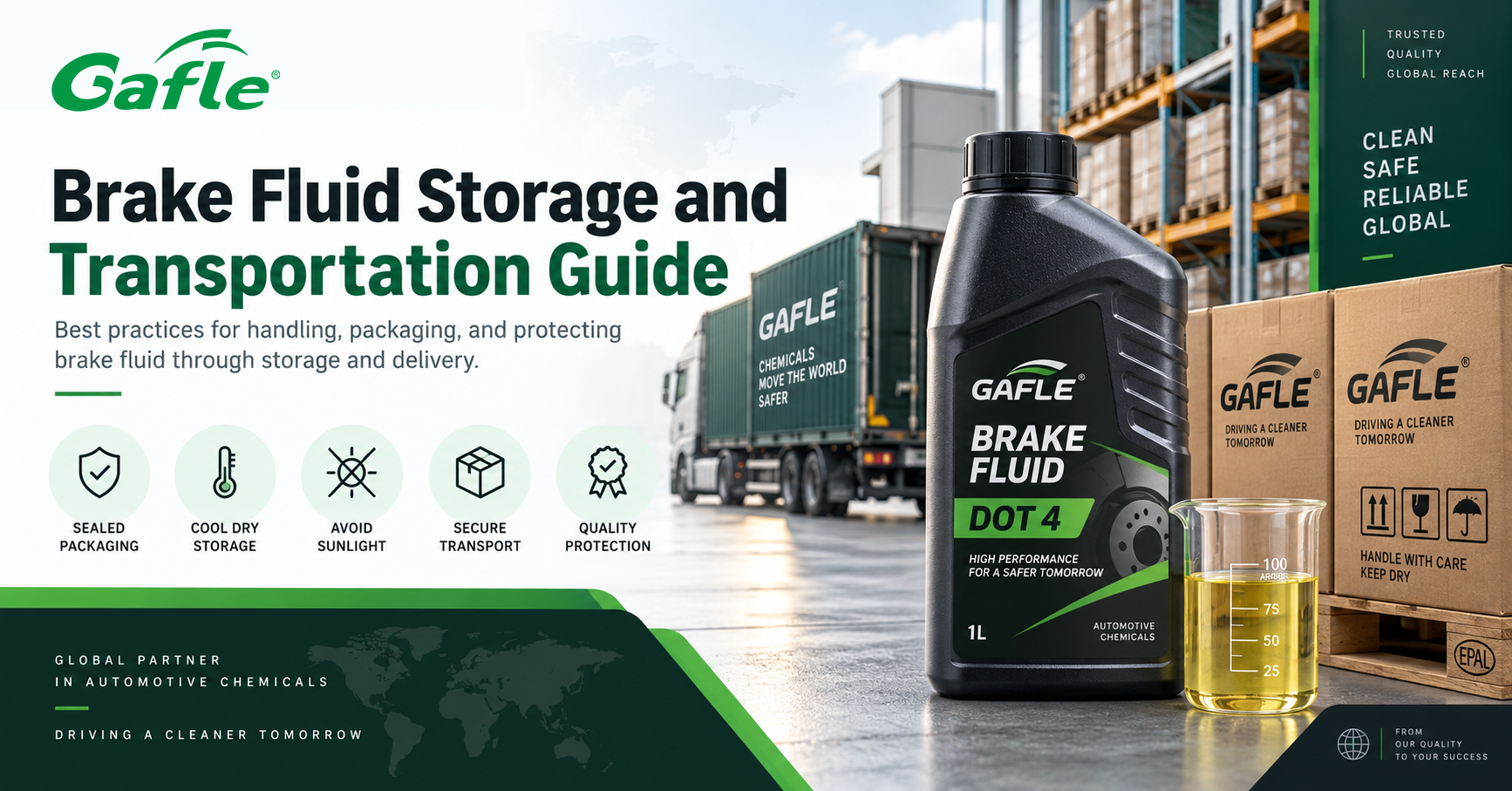
One common mistake is overvaluing price while underweighting lab capability. Another is assuming that a supplier’s technical sheet proves the whole process is under control. A third is failing to ask about packaging and storage conditions after production. Brake fluid can be technically acceptable at fill time and still suffer if handling is sloppy later.
There is also a quiet procurement mistake that shows up often: buying without agreeing on what happens when a batch falls short. A strong supplier should have a response path for hold, investigation, and corrective action. If that process is vague, the buyer ends up carrying more risk than expected.
Practical Buying Advice for Engineering and Sourcing Teams
If you are selecting a supplier, ask for evidence of process control before you ask for bigger volume. Ask for sample history. Ask which tests are run in-house and which are outsourced to a Brake Fluid Laboratory. Ask how the company isolates nonconforming material. Ask what happens during seasonal temperature swings, because storage and transport can expose weaknesses that do not show up in a short demo cycle.
For product teams, the most useful mindset is simple: brake fluid is not a container business with a chemical inside it. It is a controlled performance product. That difference explains why some suppliers are reliable year after year and others struggle as soon as demand increases or specifications tighten.
What Good Quality Control Really Buys You
Good Brake Fluid Quality Control reduces returns, protects downstream assembly lines, and makes technical support conversations shorter and less painful. It also helps a buyer avoid the hidden costs of unstable inventory, failed rework, and unpredictable customer complaints. In a category tied so closely to safety, those costs are hard to absorb and even harder to explain.
If you are reviewing suppliers now, do not stop at the brochure. Push for testing details, batch traceability, and handling procedures. The right manufacturer will welcome those questions, because a mature process is easier to show than to fake. That is usually where the real difference appears.
Next Step
When you compare suppliers, use quality control as the filter first and price second. Request testing methods, batch records, and packaging details, then judge whether the Brake Fluid Manufacturer can support your application with consistency. That approach is slower than chasing the lowest quote, but it usually saves time once the product is in the field.