Why coolant supply stability matters more than most teams admit
A coolant stable supply chain sounds like a procurement phrase, but it is really a production issue. When coolant is treated as a routine consumable, buyers tend to focus only on unit price. That works until a shipment slips, a formulation changes, or a plant runs low during a scheduled maintenance window. Then the hidden cost shows up in line stoppages, rushed freight, and uncomfortable conversations between sourcing, operations, and the customer.
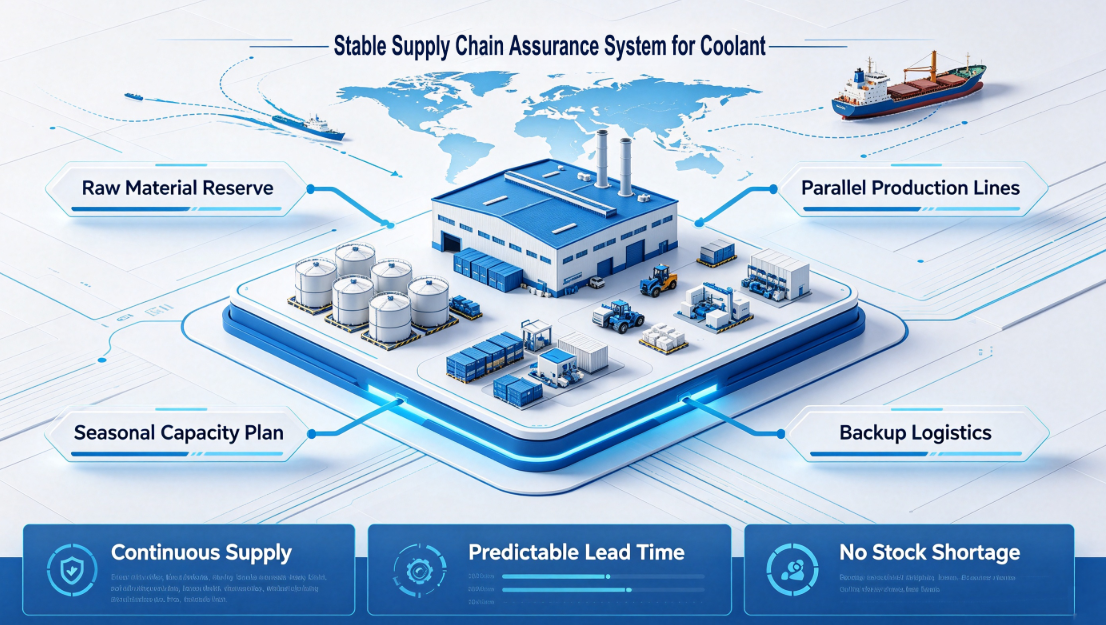
For engineers and product teams, coolant supply is not just about having drums on the floor. It affects machining consistency, heat control, tool life, operator handling, and the ability to keep a production schedule intact. For sourcing managers, the question is whether the supplier can support predictable replenishment, not just one-time purchase orders. That is why supply chain reliability belongs in the same conversation as fluid performance.
What buyers are really trying to avoid
Most plants do not need a dramatic supply strategy. They need fewer surprises. The practical risk is usually one of four things: raw material interruptions, poor forecasting, slow fulfillment, or weak communication when demand changes. A supplier can have a solid product and still create problems if supply planning and scheduling are loose.
Coolant buyers should ask a simple question: if our usage rises suddenly, can the supply base absorb it without compromising on-time bulk order delivery? If the answer is vague, the downstream risk is probably being underestimated.
Quick reference: what a stable coolant supply chain should include
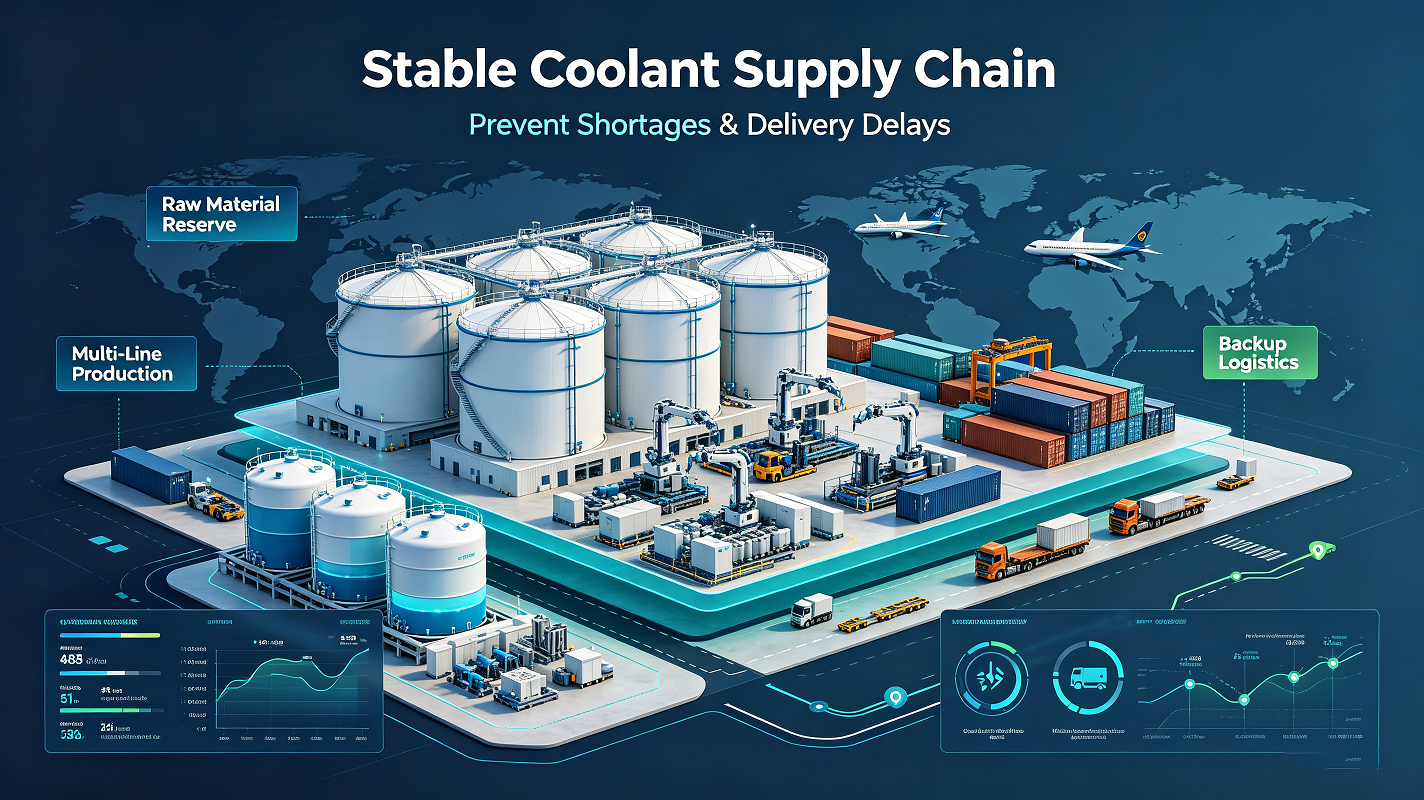
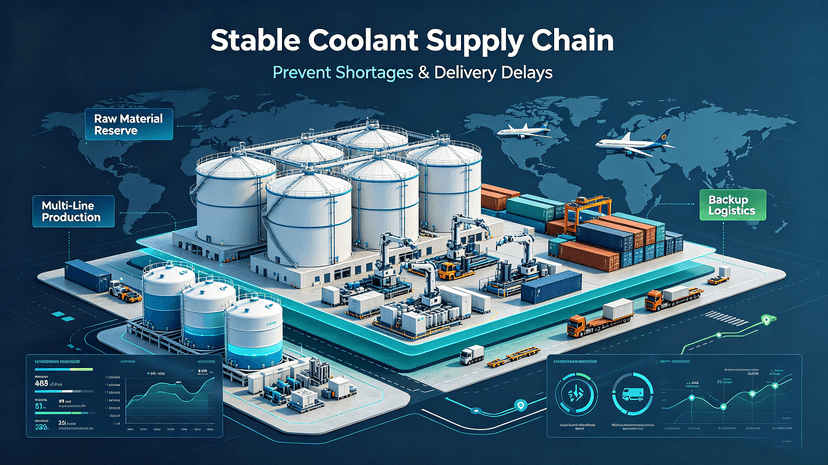
There is no single formula, but a dependable setup usually includes a few practical features.
First, some level of raw material reserve management. That does not mean warehousing everything forever. It means the supplier has thought through material availability and is not living hand-to-mouth on critical inputs.
Second, realistic supply planning and scheduling. Production and dispatch plans should reflect actual demand patterns, seasonal swings, and customer ordering behavior. If a supplier cannot explain how they smooth demand, that is a warning sign.
Third, visible communication around lead-time changes, packaging constraints, and shipment sequencing. Even a short delay is manageable when everyone knows about it early.
Fourth, the ability to support bulk ordering without turning each order into a special project. Plants often save money by consolidating purchases, but only if the supplier can deliver at that scale.
How coolant supply instability affects production
On paper, a missed coolant delivery may seem minor compared with a failure in a critical machine component. In practice, the impact can spread quickly. If coolant inventory gets too low, operators may have to ration usage, which can affect machining temperatures and surface finish. Maintenance teams may delay changeovers. Purchasing may approve emergency purchases at unfavorable terms. None of this is catastrophic on its own, but together it erodes plant discipline.
There is also a quality-management angle that is easy to overlook. When supply becomes uncertain, teams are more likely to substitute products without proper review or stretch inventory beyond sensible limits. That is not a good place to be in a controlled manufacturing environment.
What to evaluate before committing to a supplier
1. Inventory posture
Ask how the supplier manages raw materials, finished goods, and replenishment signals. You do not need every internal detail, but you do need confidence that supply chain reliability is built into the operating model.
2. Order responsiveness
Look closely at how the supplier handles standard replenishment versus urgent requests. Some vendors look strong on paper but struggle when a bulk order arrives outside the normal cycle.
3. Forecasting discipline
Good suppliers ask for usage trends, seasonality, and planned shutdowns. That is a good sign. It means they are treating supply planning and scheduling as a shared process rather than a reactive task.
4. Packaging and logistics fit
Sometimes the bottleneck is not the coolant itself but the pack size, pallet configuration, or shipping method. If the packaging does not match plant handling practices, the supply chain becomes awkward very quickly.
Common mistakes buyers make
The biggest mistake is choosing a supplier on price alone and assuming logistics will take care of themselves. Another is failing to discuss demand volatility until the first rush order is already overdue. Buyers also sometimes underestimate how much communication matters. A supplier that gives early notice of a delay is usually easier to work with than one that stays silent until the truck is late.
One more practical caution: do not let a stable supply conversation become purely theoretical. Ask for specific examples of how the supplier handles replenishment, inventory visibility, and schedule changes. Even general answers can reveal whether the operation is disciplined or improvisational.
What a good buying decision looks like
The best decision is rarely the cheapest line item. It is the supplier that gives the plant enough continuity to plan ahead, protect production, and avoid scramble buying. For many teams, that means selecting a coolant partner that can support consistent availability, sensible batch planning, and on-time bulk order delivery without forcing every order through a fire drill.
If you are comparing vendors, treat supply stability as part of product suitability, not as an afterthought. Ask about reserves, scheduling, order handling, and logistics together. That gives you a much clearer picture of whether the relationship will hold up once the order volume increases or the production calendar gets tight.
FAQ: quick buyer questions
Is a larger inventory always better? Not necessarily. Excess stock can be costly, but too little stock creates operational risk. The goal is balance.
Should sourcing and engineering both review supply stability? Yes. Engineering understands process sensitivity; sourcing sees commercial and logistics risk. Both viewpoints matter.
What is the first red flag? Vague answers about replenishment, forecasting, or delivery commitments are usually the earliest warning.
Next step for buyers
Before your next coolant purchase, ask suppliers how they handle reserve management, demand changes, and bulk shipment execution. A product that performs well in the lab still needs a dependable supply base in the field. If you can secure that combination, the rest of the production conversation gets much easier.
Welcome to contact GAFLE for more information & cooperation!
peter
ZHEJIANG GAFLE AUTO CHEMICL CO.,LTD
Tel:86-579-8222 1665
Fax:86-579-8246 4690
Cel/Wechart:86-13335993986
E-mail:peter@gafle.net
Web:www.gafle.net