logo

DOT 4 Brake Fluid: Ideal Choice for Modern Passenger Cars & Light Commercial Vehicles

logo

Published

Oct 09 2026

  • Buying Guide

Follow us

dot-4-brake-fluid-ideal-choice-for-modern-passenger-cars-light-commercial-vehicles
DOT 4 brake fluid
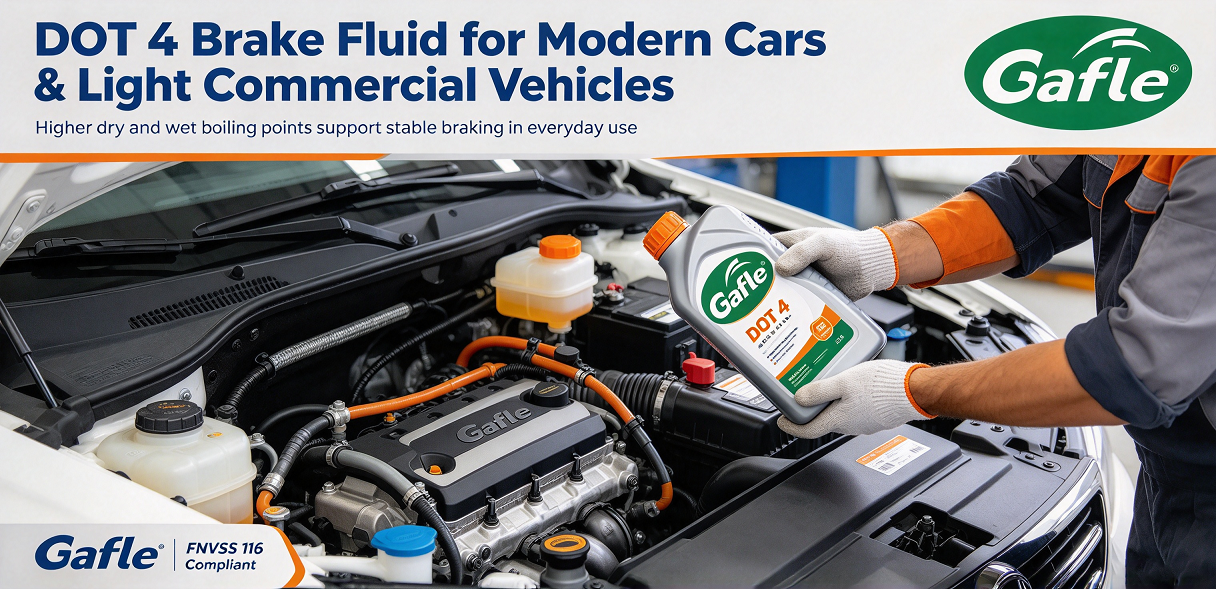
DOT 4 brake fluid remains the most widely adopted brake fluid grade for modern passenger vehicles and light commercial fleets around the world.
Many car manufacturers fill DOT4 brake fluid as factory original fluid for sedans, SUVs and light vans. Compared with DOT3, DOT4 delivers higher dry boiling point and better high-temperature stability, which fits the braking demand of modern vehicles equipped with disc brake systems. Understanding DOT4 performance characteristics helps auto sellers recommend the right product to customers.
Boiling point parameters define the core performance of DOT 4 brake fluid.
According to FMVSS 116 standard, qualified DOT4 brake fluid requires a minimum dry boiling point of 230°C and wet boiling point of 155°C. Dry boiling point represents performance when the fluid is fresh and free of moisture. Wet boiling point shows performance after absorbing 3.5% water. During repeated hard braking, brake calipers generate massive heat. If brake fluid boiling point is insufficient, vapor bubbles form inside the hydraulic circuit, causing brake fade and loss of braking force.
DOT4 brake fluid works well for daily driving and occasional heavy load scenarios.
Ordinary city commuting, highway driving and light towing are all suitable working conditions for DOT4 brake fluid. Light commercial vehicles such as delivery vans also benefit from DOT4’s improved heat resistance. However, it is important to clarify that DOT4 is not the top option for professional motorsport racing. For track racing with continuous extreme braking, Gafle Racing325 racing brake fluid offers far higher boiling point than standard DOT4.
Compatibility rules for DOT4 brake fluid.
DOT4 brake fluid can be mixed with DOT3 and DOT5.1 brake fluid, since they are all glycol-based. But mixing different brands is not recommended for long-term use. Different additive packages may cause unexpected chemical reactions over time. DOT4 cannot be mixed with silicone-based DOT5 brake fluid. Mixing glycol and silicone brake fluid will lead to seal swelling and brake system failure. When replacing brake fluid, fully flush the old fluid from the system.
Gafle DOT4 brake fluid is manufactured for aftermarket wholesale and OEM supply.
Our DOT4 brake fluid strictly meets FMVSS 116 standard, with stable boiling point and anti-corrosion additives. We supply DOT4 brake fluid in multiple package sizes from small retail bottles to bulk drums, supporting global distributors and repair chains. If you want bulk DOT4 brake fluid or technical datasheets, contact our sales team for details.
Welcome to contact GAFLE for more information & cooperation!
peter
ZHEJIANG GAFLE AUTO CHEMICL CO.,LTD
Tel:86-579-8222 1665
Fax:86-579-8246 4690
Cel/Wechart:86-13335993986
E-mail:peter@gafle.net
Web:www.gafle.net
Featured Blogs
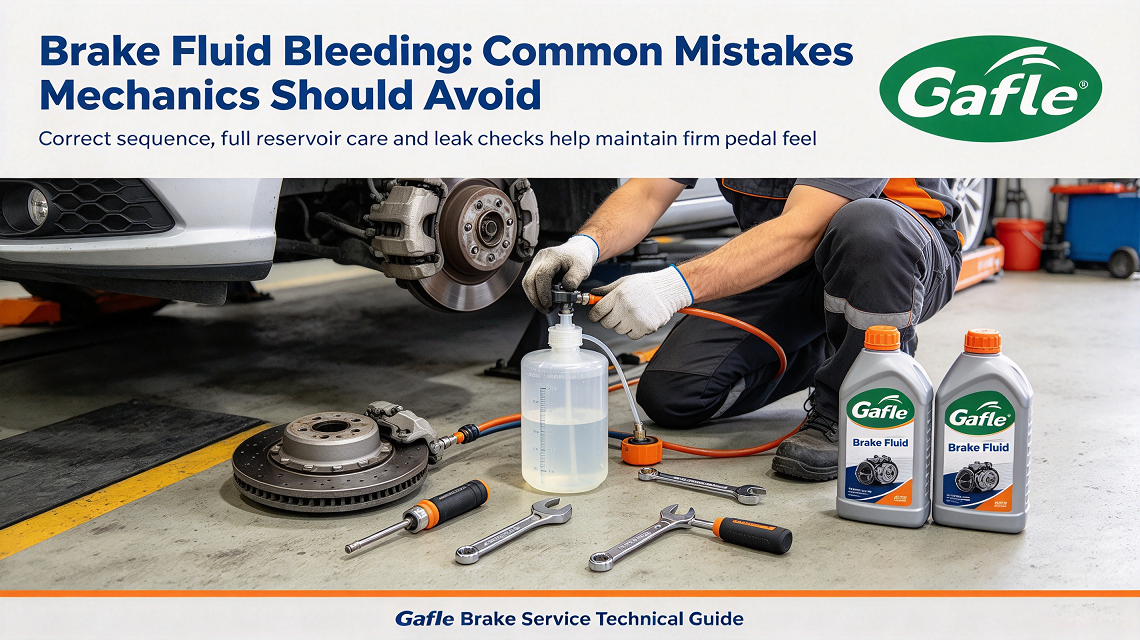
Brake Fluid Bleeding: Common Mistakes Mechanics Should Avoid

Brake Fluid Bleeding: Common Mistakes Mechanics Should Avoid

1. Brake fluid bleeding is the essential final step after brake fluid replacement, yet many technicians make small mistakes that compromise braking performance. 2. The most frequent mistake: incomplete bleeding sequence. 3. Another common error: letting the master cylinder reservoir run dry during bleeding. 4. Mixing different brake fluid brands or grades during bleeding. 5. Neglecting to inspect for leaks after bleeding. 6. For repair shop owners, standardizing bleeding procedures reduces comebacks.

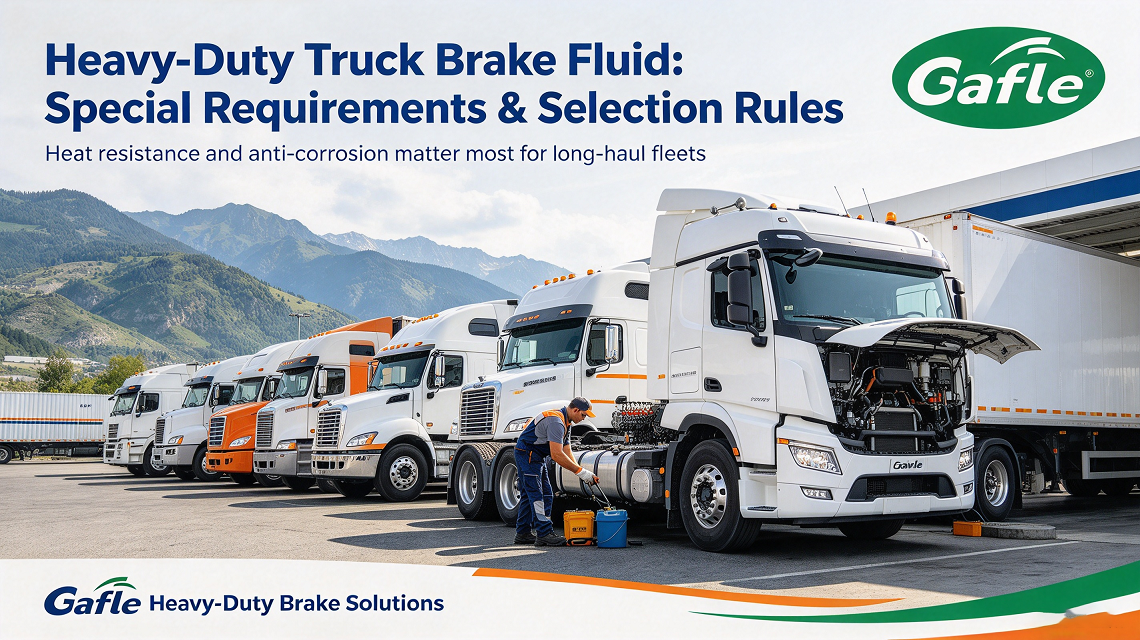
Heavy-Duty Truck Brake Fluid: Special Requirements & Selection Rules

Heavy-Duty Truck Brake Fluid: Special Requirements & Selection Rules

1. Heavy-duty commercial trucks place far higher stress on brake fluid compared with ordinary passenger cars. 2. Heat build-up is the biggest challenge for truck brake fluid. 3. Brake fluid grade recommendation for different heavy-duty use cases. 4. Brake system contamination risk in heavy-duty trucks. 5. Gafle supplies heavy-duty suitable brake fluid for global fleet partners.

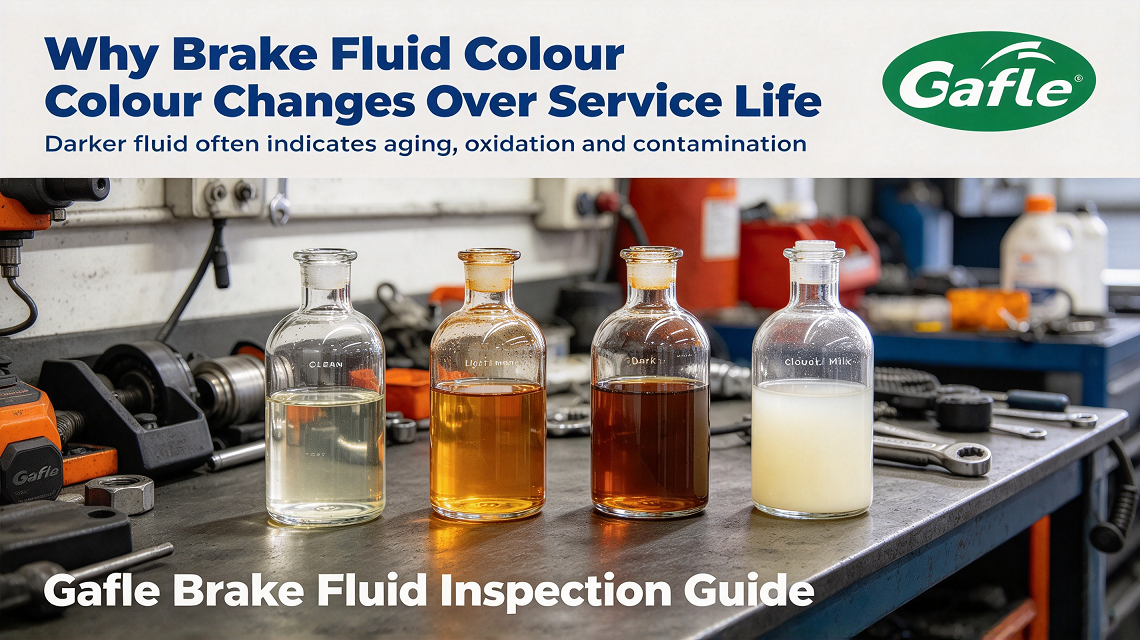
Why Brake Fluid Colour Changes Over Service Life

Why Brake Fluid Colour Changes Over Service Life

1. Fresh brake fluid is usually clear, pale yellow or light amber, and it gradually darkens as it ages inside the brake system. 2. New, unused Gafle brake fluid is translucent pale amber. 3. Dark brown or nearly black brake fluid signals severe aging and heavy contamination. 4. Cloudy or milky brake fluid is a clear sign of water contamination. 5. Important note for technicians:

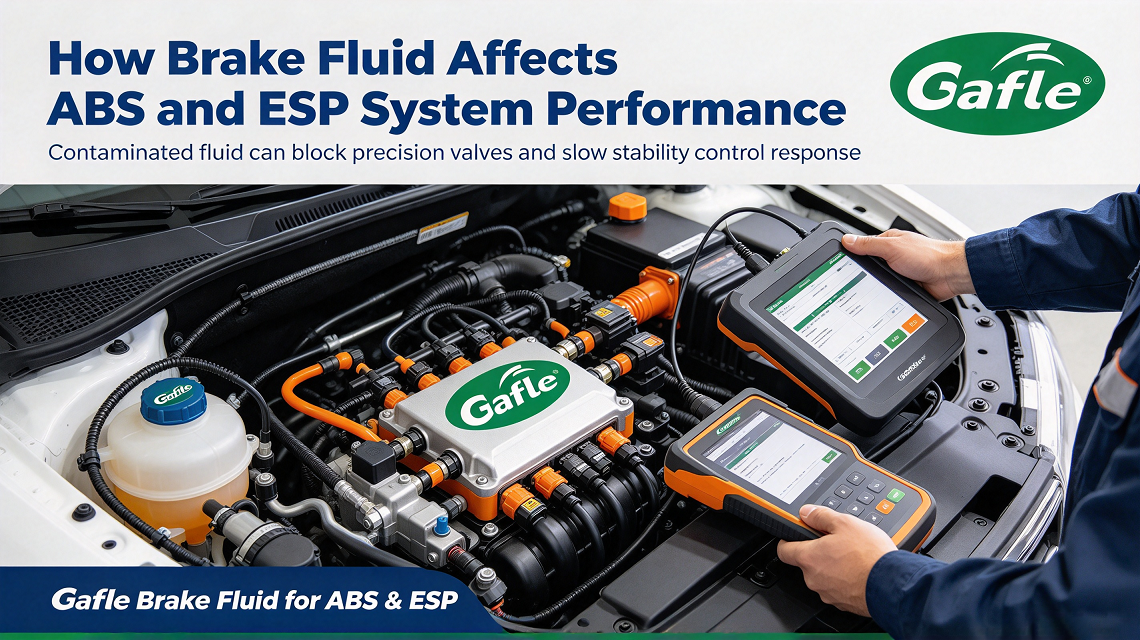
How Brake Fluid Affects ABS and ESP System Performance

How Brake Fluid Affects ABS and ESP System Performance

1. Modern vehicles equipped with ABS and ESP rely heavily on qualified brake fluid for normal operation. 2. ABS and ESP systems work by rapidly adjusting hydraulic pressure during wheel slip. 3. Moisture in brake fluid accelerates wear of ABS hydraulic components. 4. Brake fluid selection rules for ABS and ESP vehicles. 5. Business tips for auto aftermarket distributors.

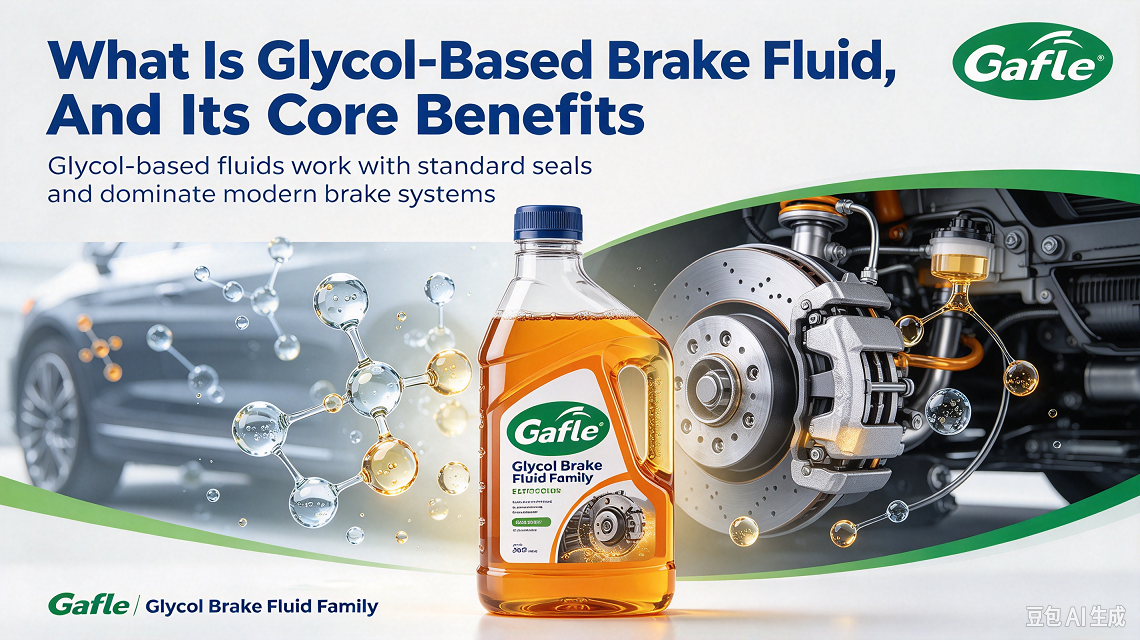
What Is Glycol-Based Brake Fluid, And Its Core Benefits

What Is Glycol-Based Brake Fluid, And Its Core Benefits

1. Glycol-based brake fluid accounts for more than 90% of the brake fluid used in passenger cars, light trucks and racing vehicles worldwide. 2. The core chemical feature of glycol brake fluid is hygroscopy. 3. Glycol brake fluid has excellent compatibility with standard brake system rubber parts. 4. Wide application range covers daily cars, commercial fleets and motorsport. 5. Key reminders when handling glycol brake fluid.

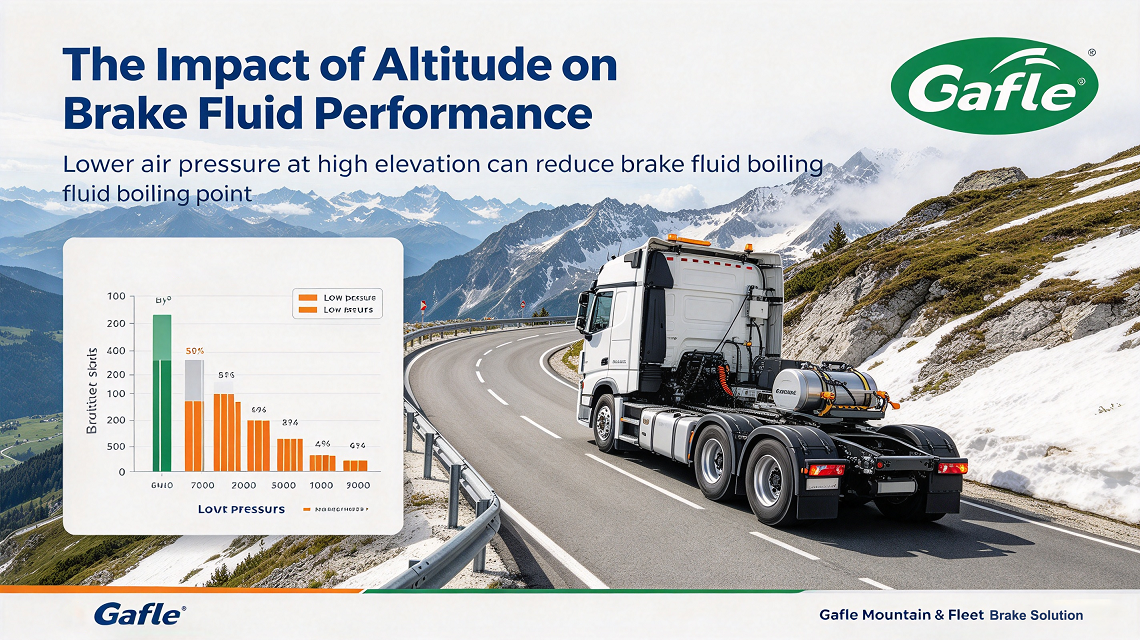
The Impact of Altitude on Brake Fluid Performance

The Impact of Altitude on Brake Fluid Performance

1. Many fleet owners and repair shops overlook the fact that altitude changes can alter the working performance of brake fluid. 2. Atmospheric pressure drops as elevation increases, lowering the boiling point of liquids including brake fluid. 3. Different brake fluid grades show different tolerance to high-altitude working conditions. 4. Maintenance adjustments for vehicles operating at high altitude. 5. Practical advice for auto aftermarket distributors.