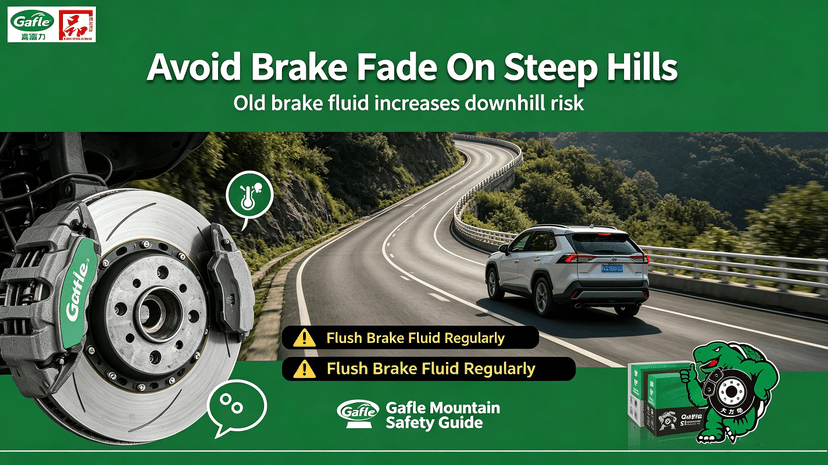
Mountain Road Brake Safety: How Contaminated Brake Fluid Causes Downhill Brake Fade
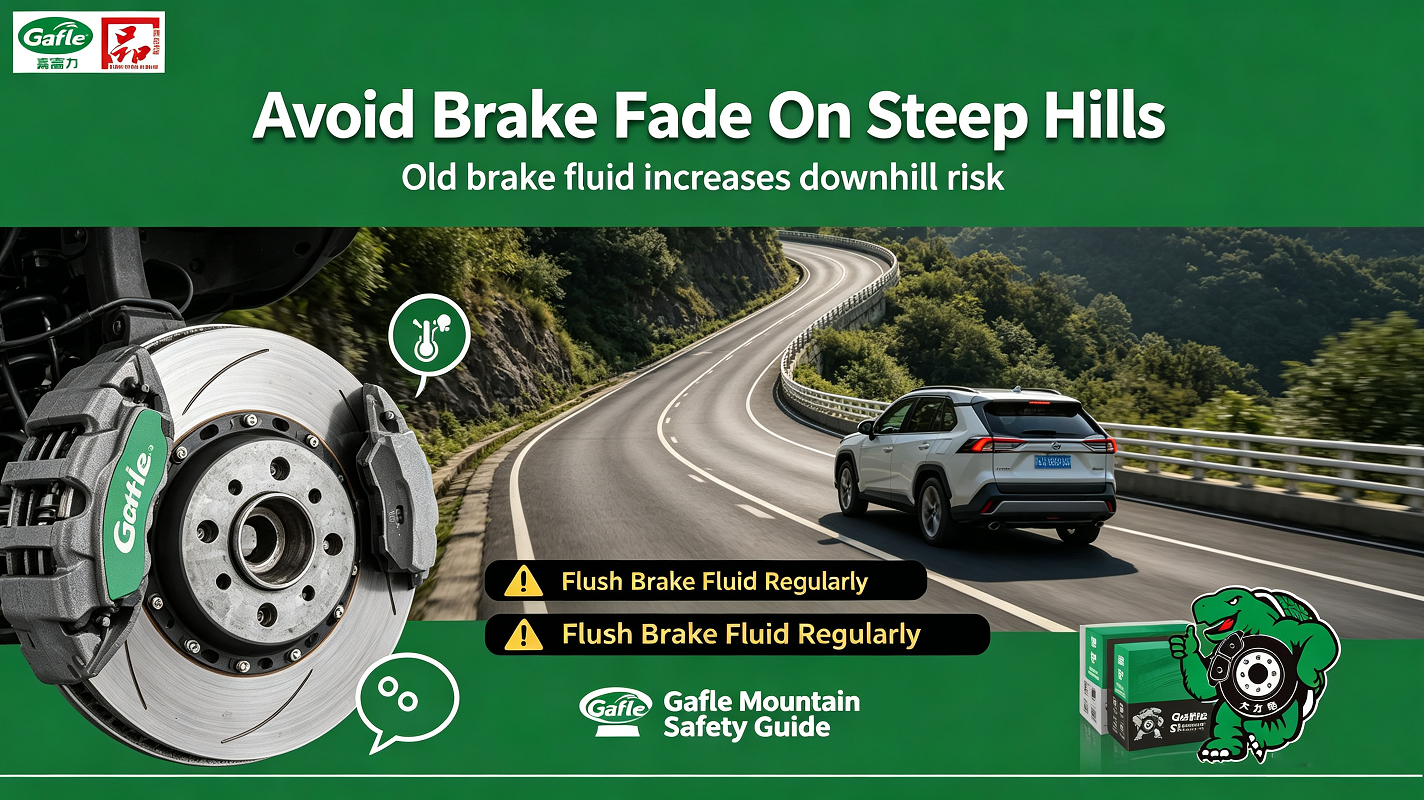
Drivers who regularly navigate steep mountain passes face a unique braking threat that flat-road motorists rarely encounter: sustained thermal overload from constant downhill braking. While many mountain driving guides focus on engine braking techniques, few address the silent underlying risk—moisture-contaminated brake fluid that boils rapidly under prolonged caliper heat, triggering sudden brake fade on sharp descents. This guide explains mountain-specific brake fluid hazards, downhill driving best practices, and fluid selection for vehicles used in hilly terrain.
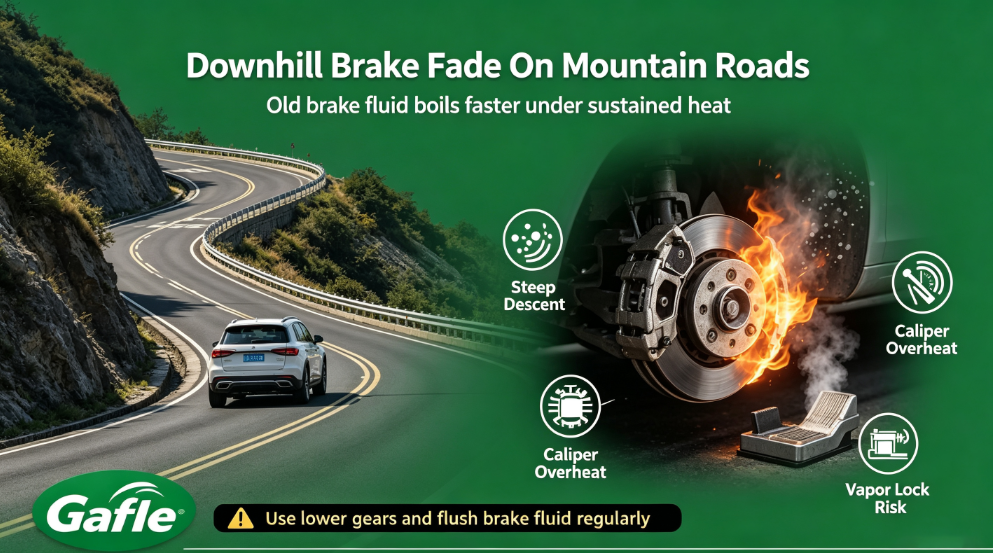
1. Why Mountain Descents Overheat Brake Systems Far Faster
On flat highways, brakes activate briefly only to slow or stop the vehicle. Mountain downhill travel requires continuous light brake pressure to control speed for kilometers at a time, generating nonstop friction heat inside brake calipers. Even moderate mountain grades push caliper temperatures above 130°C within minutes of steady descending.
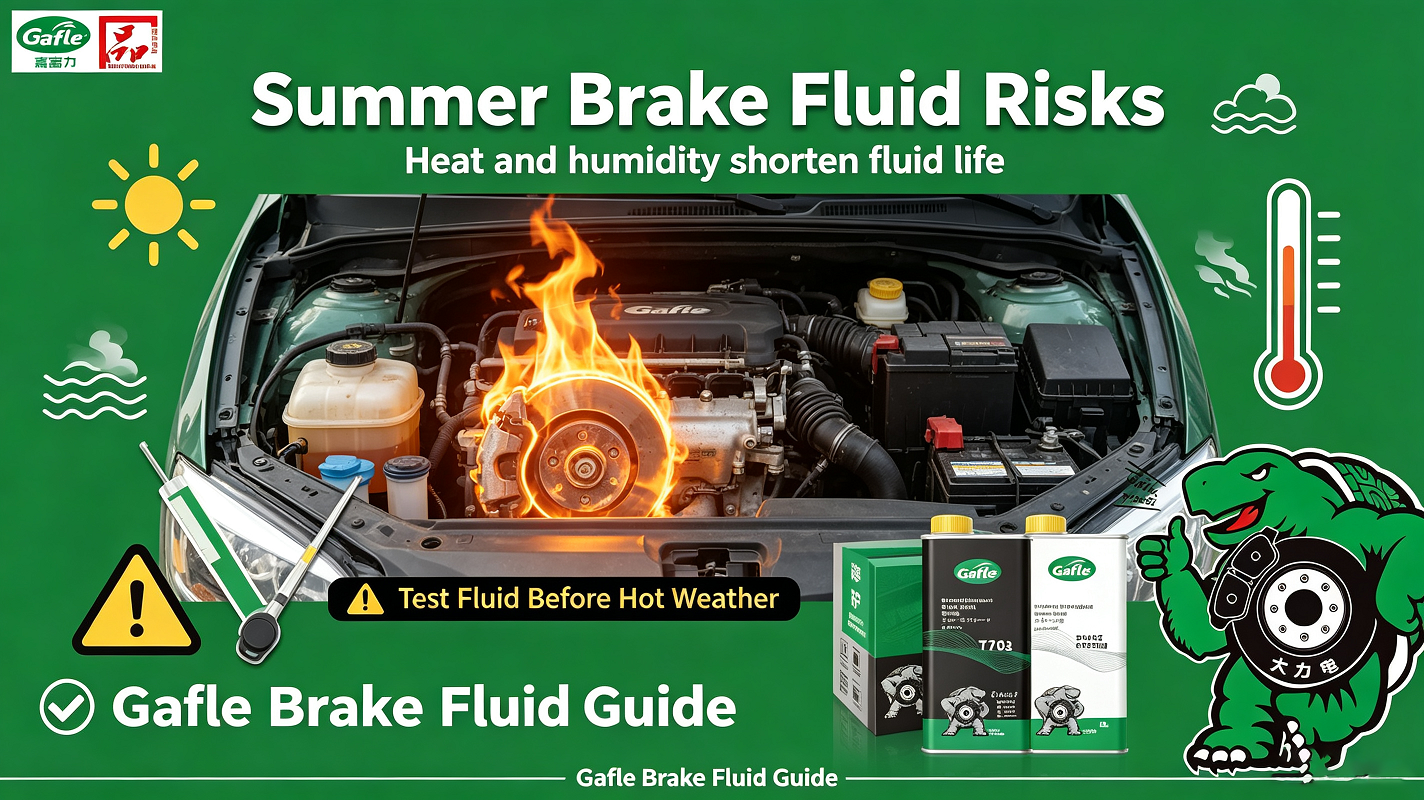
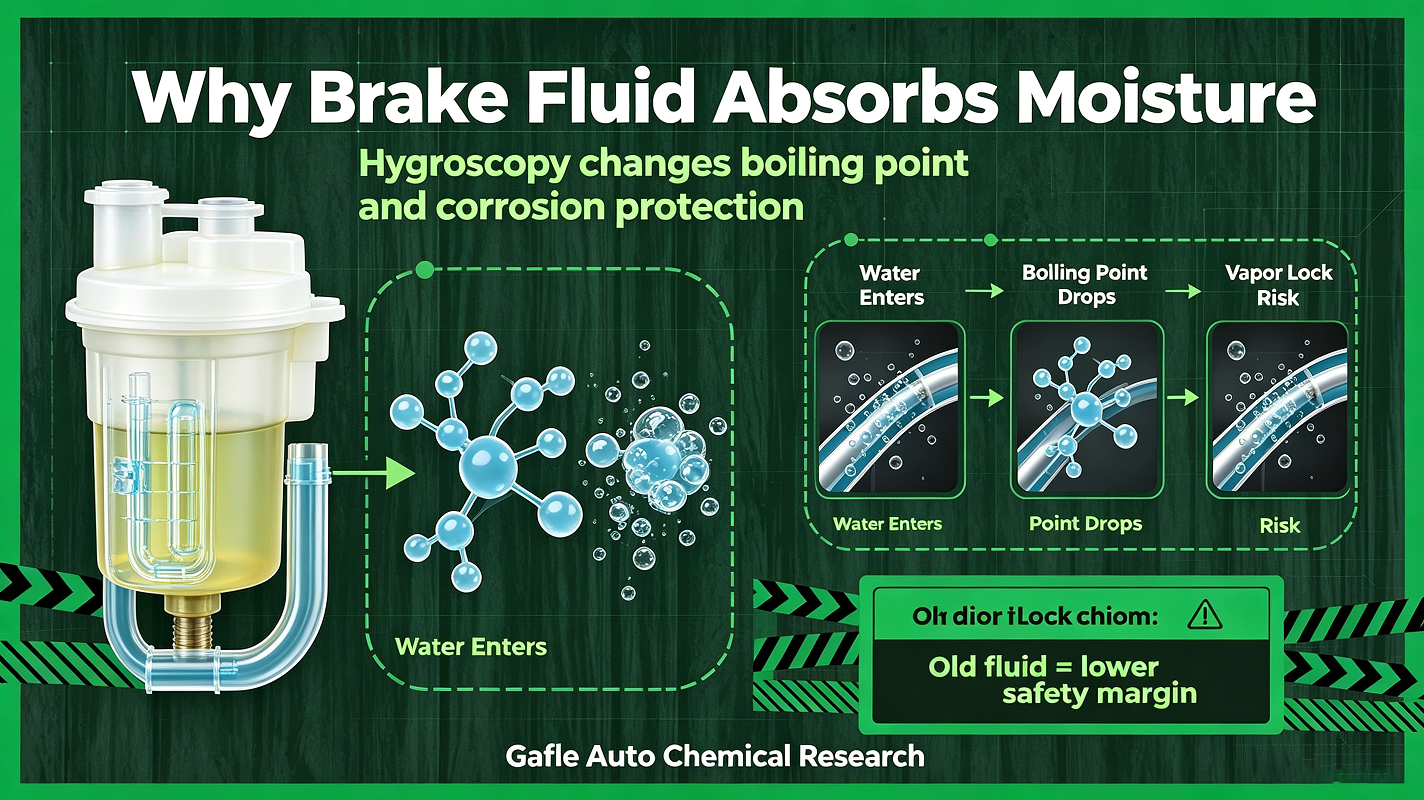
This constant high heat creates a perfect storm for vapor lock if brake fluid holds any water content, as trapped moisture boils instantly and forms pressure-blocking vapor bubbles inside brake lines.
2. The Chain Reaction Of Brake Failure On Steep Mountain Passes
- Minor moisture contamination accumulates in brake fluid over months of regular driving;
- Continuous downhill braking spikes caliper heat past the boiling point of suspended water;
- Water vaporizes into compressible bubbles inside sealed steel brake lines;
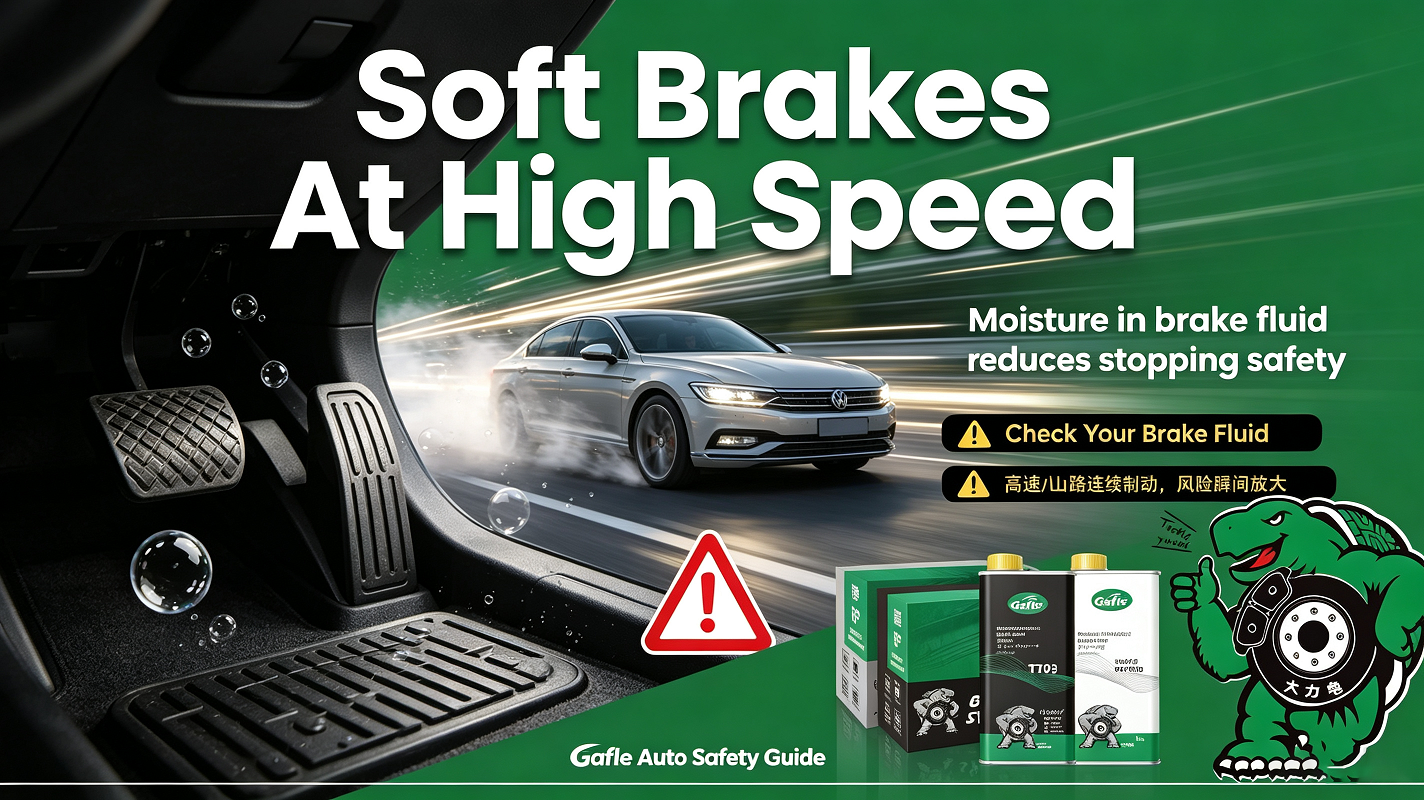
- Brake pedal sinks and turns soft as bubbles collapse under hydraulic pressure;
- Stopping distance lengthens dramatically, and in severe cases, total temporary brake loss occurs.
This failure sequence unfolds rapidly without advance warning, leaving drivers little time to react on narrow, guardrail-lined mountain roads.
3. Common Misconceptions Mountain Drivers Hold
Misconception 1: Engine braking alone eliminates brake heat risk
Engine braking reduces but does not fully remove friction load on brake pads. Even light periodic brake taps to adjust speed generate enough cumulative heat to boil contaminated brake fluid over long descents.
Misconception 2: New brake pads solve downhill brake fade
Fresh brake pads improve friction grip but cannot address vapor lock caused by water inside brake fluid. Many mountain drivers replace pads annually yet still experience soft pedals due to neglected fluid flushing.
Misconception 3: Fluid only needs changing once mileage limits are hit
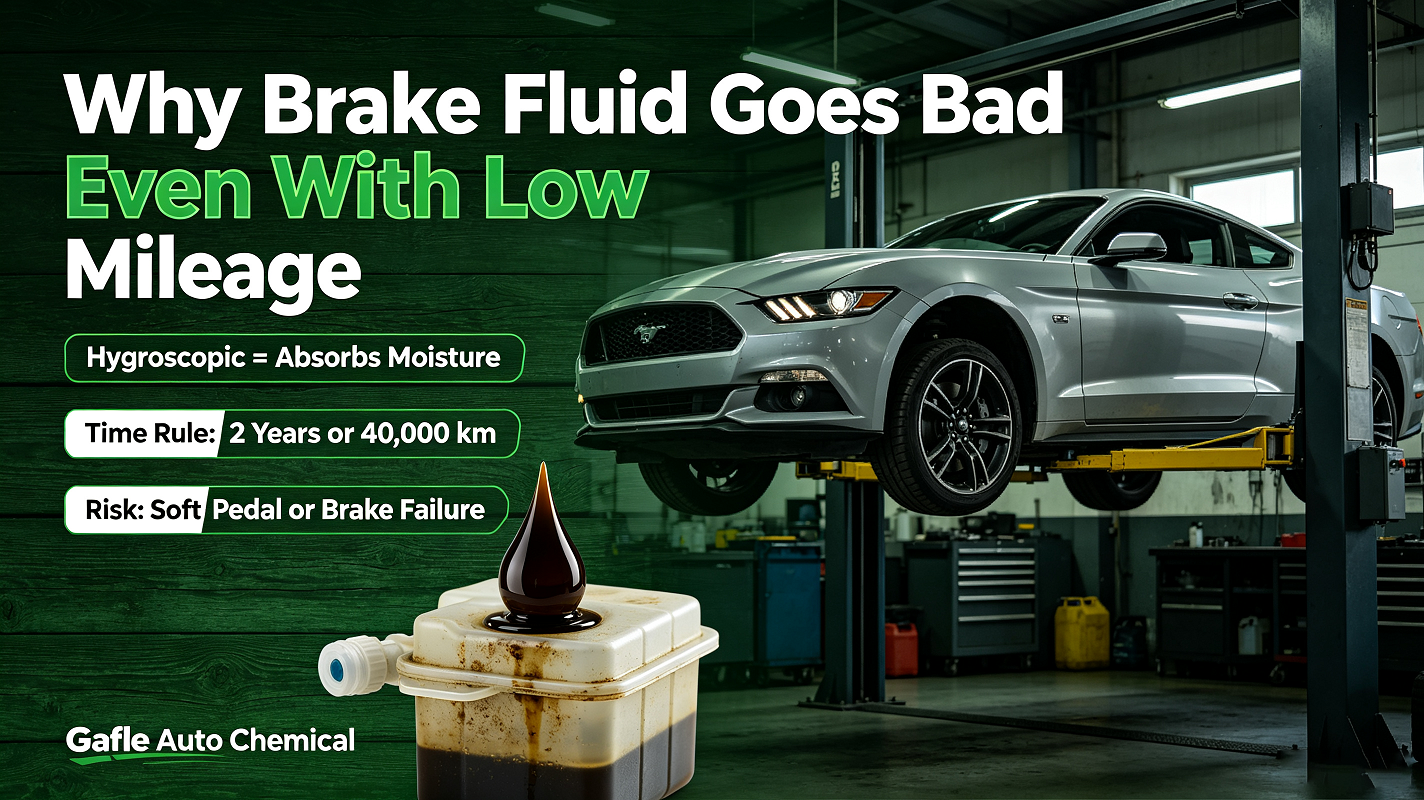
Mountain driving’s repeated thermal cycling accelerates additive degradation and moisture absorption, making time-based replacement far more critical than odometer readings for hill-region vehicles.
4. Mountain Driver Brake Fluid Maintenance & Driving Best Practices
Maintenance Rules For Hilly Terrain Vehicles
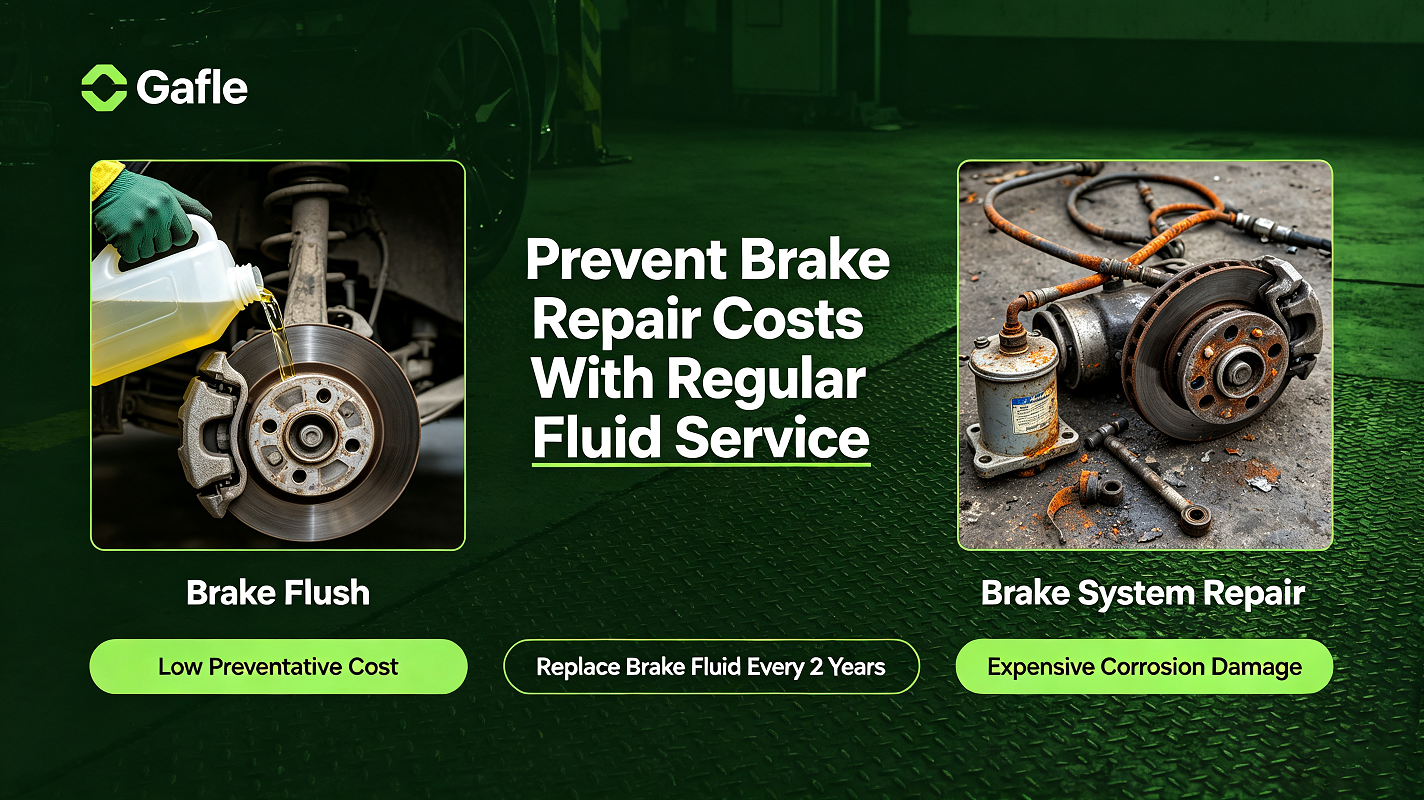
- Complete full brake fluid flush every 18 months (shortened from the standard 2-year flat-road cycle);
- Select heavy-duty high boiling point DOT4 brake fluid with enhanced thermal stability for consistent mountain use;
- Test brake fluid water content with a professional tester before long cross-mountain trips.
Downhill Driving Techniques To Reduce Fluid Overheating
- Shift to lower gears for engine braking to minimize sustained brake pressure;
- Alternate short brake taps with coasting intervals to let calipers cool between speed adjustments;
- Pull into mountain rest stops for 5–10 minute cooling breaks on extra-long steep descents to prevent cumulative heat buildup.
Closing Summary
Mountain downhill driving creates extreme sustained brake heat that turns minor brake fluid moisture contamination into life-threatening vapor lock and brake fade. New brake pads and engine braking techniques cannot fully mitigate this risk without regular complete brake fluid replacement. Mountain region vehicle owners must follow shortened fluid service cycles and use high-temperature resistant DOT brake fluid to stay safe on steep winding passes.
Welcome to contact GAFLE for more information & cooperation!
peter
ZHEJIANG GAFLE AUTO CHEMICL CO.,LTD
Tel:86-579-8222 1665
Fax:86-579-8246 4690
Cel/Wechart:86-13335993986
E-mail:peter@gafle.net
Web:www.gafle.net
peter
ZHEJIANG GAFLE AUTO CHEMICL CO.,LTD
Tel:86-579-8222 1665
Fax:86-579-8246 4690
Cel/Wechart:86-13335993986
E-mail:peter@gafle.net
Web:www.gafle.net