Choosing the Right Brake Fluid for Commercial Vehicles
Commercial vehicles often operate under demanding conditions. Delivery vans may spend all day in stop-and-go city traffic, fleet vehicles can accumulate high mileage, and trucks operating in mountainous areas may experience repeated braking and increased thermal loads.
These conditions make brake system maintenance especially important. For commercial vehicles equipped with hydraulic braking systems that require brake fluid, choosing the correct product can help maintain reliable hydraulic performance throughout demanding operating cycles.
So, how do you choose the right brake fluid for commercial vehicles?
There is no single brake fluid that is best for every truck, van, or commercial vehicle. The correct choice depends on the vehicle manufacturer's specification, brake system design, operating environment, applicable standards, and the actual performance characteristics of the fluid.
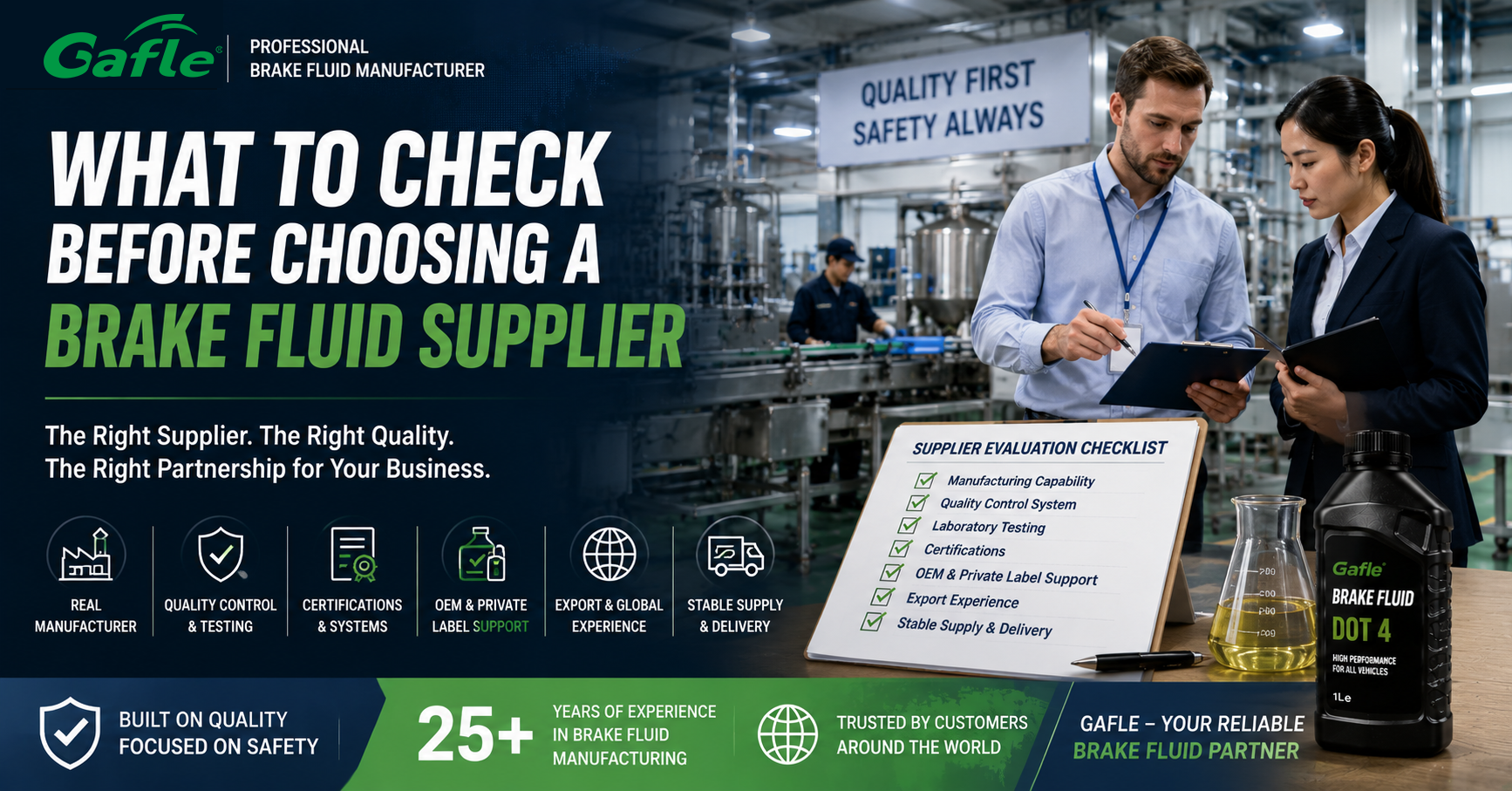
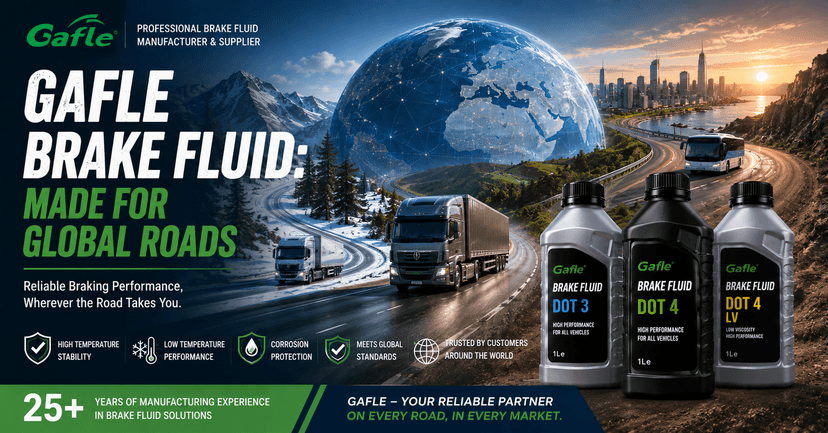
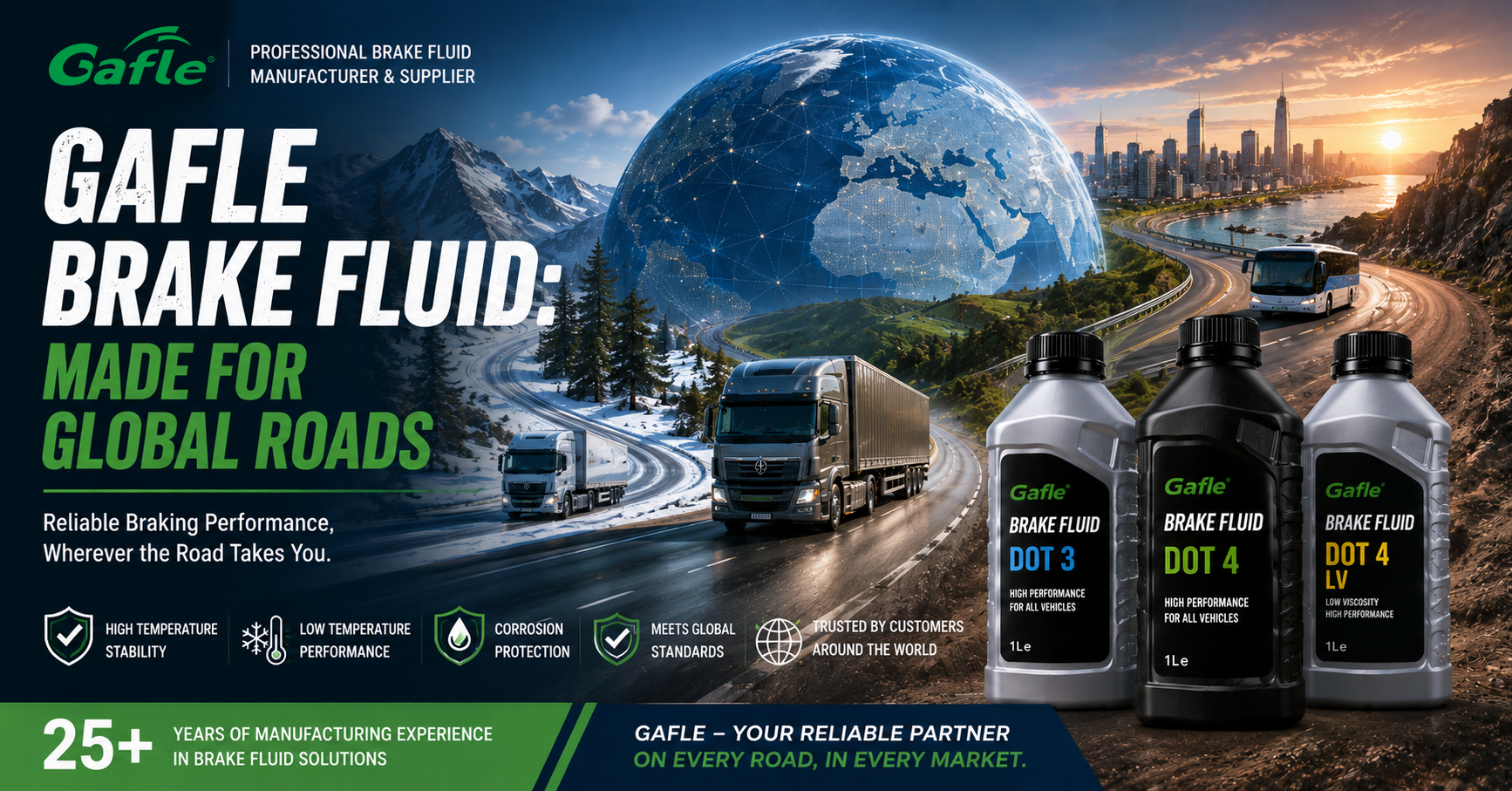
Gafle is a professional brake fluid manufacturer with more than 25 years of manufacturing experience, providing DOT 3, DOT 4, OEM, and private label brake fluid solutions for customers in global automotive markets.
In this guide, we explain the most important factors to consider when selecting commercial vehicle brake fluid.
Why Commercial Vehicles Can Place Greater Demands on Brake Fluid
Commercial vehicles are designed to work.
Compared with many privately owned passenger cars, they may operate for longer periods, travel greater distances, carry heavier loads, and experience more frequent braking.
Common operating conditions include:
- High annual mileage
- Frequent stop-and-go driving
- Cargo or passenger loads
- Long-distance operation
- Mountain and downhill routes
- High ambient temperatures
- Repeated braking
- Fleet-based operation
All of these factors can increase the demands placed on the braking system.
When braking repeatedly, heat generated at the brakes can eventually transfer into the hydraulic system. This makes the condition and temperature performance of the brake fluid particularly important.
However, brake fluid selection should never be based simply on the assumption that "commercial vehicle" automatically means "higher DOT number."
The vehicle manufacturer's required specification always comes first.
Do All Commercial Vehicles Use Brake Fluid?
No, and this distinction is important.
Many passenger cars, vans, light commercial vehicles, and some trucks use hydraulic braking systems that require brake fluid.
However, many heavy commercial trucks and buses use air brake systems, particularly for their primary service brakes. These systems operate differently and should not be treated as conventional hydraulic brake systems requiring standard automotive brake fluid.
Some commercial vehicles can also incorporate different hydraulic, pneumatic, electronic, or combined braking technologies.
Therefore, before choosing brake fluid for trucks or other commercial vehicles, first determine whether the specific braking system requires brake fluid and which specification the vehicle manufacturer specifies.
This article focuses primarily on commercial vehicles equipped with braking systems that require conventional hydraulic brake fluid.
What Brake Fluid Do Commercial Vehicles Use?
There is no universal brake fluid specification for all commercial vehicles.
Depending on the vehicle and braking system, manufacturers may specify DOT 3, DOT 4, or another suitable fluid specification.
When selecting brake fluid for commercial vehicles, check:
- Vehicle owner's manual
- Vehicle manufacturer service information
- Brake fluid reservoir markings
- Required DOT classification
- Any additional OEM-specific specifications
Fleet operators should also ensure that maintenance personnel use the correct product consistently across each vehicle type.
Using one brake fluid across an entire fleet may simplify inventory, but it should only be done when that product meets the required specifications for every applicable vehicle.
DOT 3 vs DOT 4 Brake Fluid for Commercial Vehicles
DOT 3 and DOT 4 brake fluid are both widely recognized specifications for glycol-based brake fluids.
However, they have different minimum performance requirements.
DOT 3 Brake Fluid
DOT 3 is used in various hydraulic braking systems where the vehicle manufacturer specifies this classification.
It provides established minimum requirements for characteristics including boiling point and viscosity.
DOT 4 Brake Fluid
DOT 4 has higher minimum dry and wet boiling-point requirements than DOT 3 under FMVSS 116.
This can provide additional thermal performance for braking systems designed to use DOT 4.
However, it is important not to oversimplify the comparison.
DOT 4 is not automatically the correct brake fluid for every commercial vehicle.
The appropriate fluid should always meet the specification required by the vehicle manufacturer.
Why High-Temperature Brake Fluid Performance Matters
Commercial vehicles can operate under conditions that generate significant braking heat.
Consider a delivery van making hundreds of stops during a working day or a loaded commercial vehicle descending a long mountain road.
Repeated braking generates heat at the brake components. Under demanding conditions, some of that heat can transfer into the brake fluid.
If brake fluid reaches its boiling point, vapor can form. Unlike liquid brake fluid, vapor is compressible, which can interfere with consistent hydraulic pressure transmission.
This is why high temperature brake fluid performance can be an important consideration for demanding commercial applications.
Two specifications deserve particular attention:
Dry Boiling Point
Dry boiling point represents the boiling performance of fresh brake fluid under standardized test conditions.
Higher boiling-point capability can provide a greater thermal margin under demanding braking conditions.
Wet Boiling Point
Wet boiling point represents performance after the brake fluid has absorbed a specified amount of moisture under standardized conditions.
For vehicles operating frequently and accumulating significant mileage, wet boiling-point performance is particularly relevant to long-term brake fluid condition.
Why Wet Boiling Point Matters for Fleet Vehicles
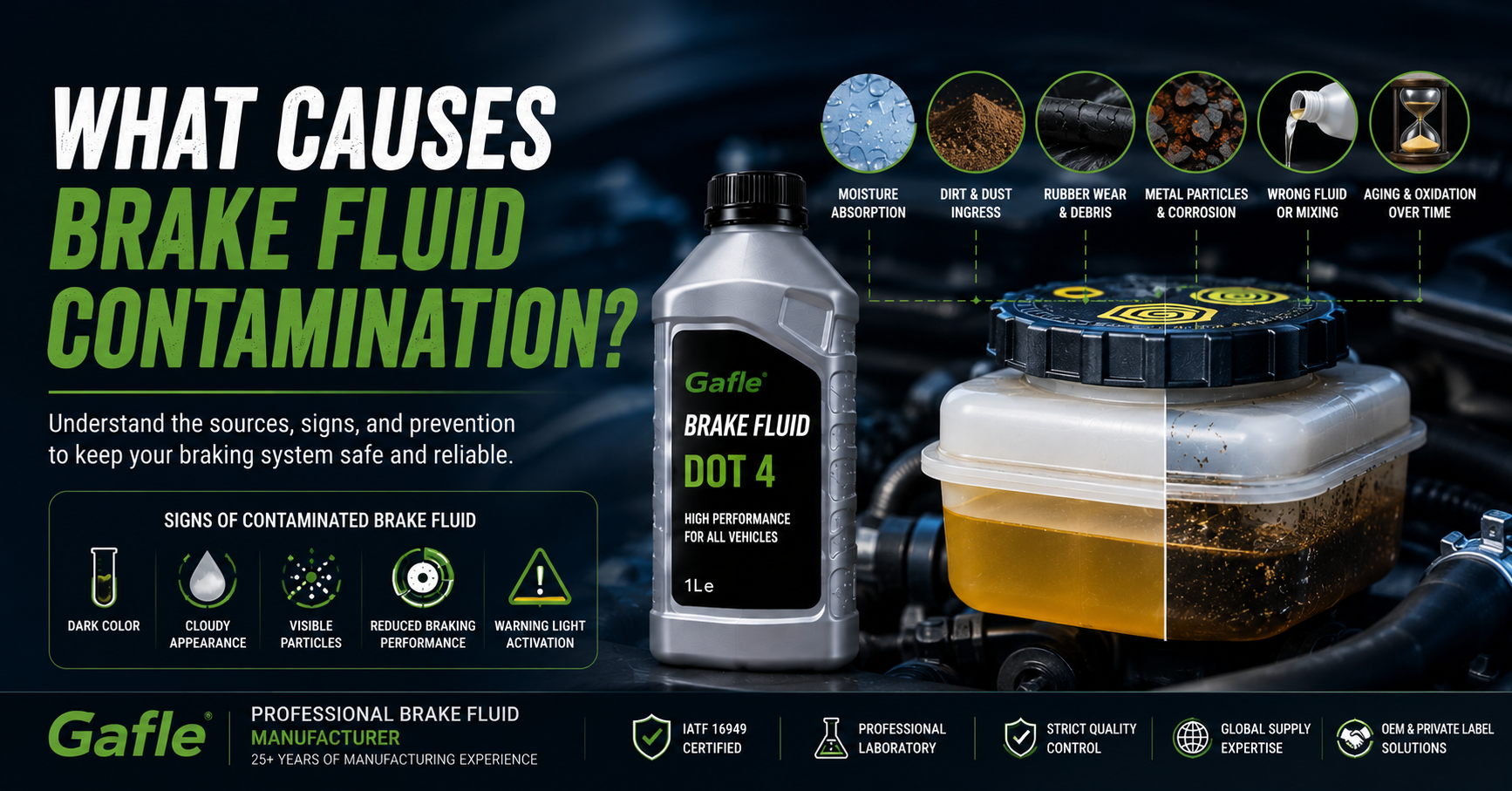
Most conventional DOT 3 and DOT 4 brake fluids are glycol-based and hygroscopic, meaning they absorb moisture over time.
As moisture content increases, brake fluid boiling-point performance can decrease.
For fleet operators, this matters because commercial vehicles may accumulate mileage quickly and remain in regular service for long periods.
A brake fluid that performs well when new still needs appropriate inspection and maintenance throughout its service life.
Fleet maintenance programs should therefore consider:
- Vehicle mileage
- Time in service
- Operating conditions
- Brake system condition
- Manufacturer maintenance schedules
- Brake fluid condition
Regular maintenance is particularly important for vehicles exposed to frequent braking or demanding operating environments.
5 Factors to Consider When Choosing Heavy Duty Brake Fluid
When evaluating heavy duty brake fluid, avoid choosing a product based on one specification or marketing claim alone.
Consider these five factors.
1. Vehicle Manufacturer Specification
This is the most important factor.
Always select brake fluid that meets the required specification for the specific vehicle and braking system.
2. Dry and Wet Boiling Points
For demanding commercial applications, both fresh-fluid and moisture-conditioned boiling-point performance should be considered.
A high dry boiling point alone does not tell the complete story.
3. Low-Temperature Viscosity
Commercial vehicles may operate in extremely cold climates.
Brake fluid must maintain appropriate viscosity characteristics so that the braking system can function as designed at low temperatures.
This can be especially relevant for vehicles equipped with ABS, ESC, and other electronically controlled hydraulic systems.
4. Corrosion Protection and Material Compatibility
Brake fluid comes into contact with metals, seals, and other materials within the hydraulic braking system.
A properly formulated product should provide appropriate corrosion performance and material compatibility according to the applicable specification.
5. Operating Environment
Consider how the vehicle is actually used.
A delivery van operating in city traffic has different demands from a commercial vehicle traveling long distances or working on mountain routes.
The right product should combine vehicle specification requirements with real operating conditions.
Brake Fluid for Trucks, Vans and Fleet Vehicles
Different types of commercial vehicles face different operating demands.
Delivery Vans
Delivery vehicles commonly experience frequent stop-and-go braking.
They may operate for many hours each day and accumulate mileage quickly.
For these vehicles, following the manufacturer's brake fluid specification and maintenance schedule is particularly important.
Light Commercial Trucks
Light trucks may carry heavier loads than passenger vehicles and operate for extended periods.
Braking-system maintenance should take both load and operating conditions into consideration.
Fleet Vehicles
Fleet operators often manage dozens, hundreds, or even thousands of vehicles.
Consistency becomes extremely important.
Using clearly defined maintenance procedures and approved brake fluid specifications can help reduce maintenance errors and simplify inventory management.
Commercial Vehicles in Mountainous Areas
Repeated downhill braking can create significant heat.
Brake fluid condition, boiling-point performance, and overall brake-system maintenance become particularly important in these operating environments.
Is Heavy Duty Brake Fluid Different From Regular Brake Fluid?
The term heavy duty brake fluid is often used in product marketing, but buyers should look beyond the name.
"Heavy duty" by itself is not a substitute for a recognized technical specification.
When evaluating a product, check its actual:
- DOT classification
- Dry boiling point
- Wet boiling point
- Viscosity
- Applicable standards
- Manufacturer specifications
- Intended applications
A product labeled "heavy duty" should still meet the required technical specification for the vehicle.
This is particularly important for professional fleet buyers and distributors.
How Often Should Commercial Vehicle Brake Fluid Be Changed?
There is no universal replacement interval suitable for every commercial vehicle.
Brake fluid replacement should follow the vehicle manufacturer's maintenance schedule.
Operating conditions can also influence how frequently the braking system and fluid should be inspected.
Factors may include:
- High annual mileage
- Frequent braking
- Heavy loads
- Mountain driving
- High-temperature operation
- Humid environments
- Vehicle age
- Fleet duty cycle
Commercial vehicles operating under severe service conditions may require closer inspection than vehicles used under lighter conditions.
Fleet operators should incorporate brake fluid into a structured preventive maintenance program rather than waiting for braking performance problems to appear.
Why Brake Fluid Quality Matters for Fleet Operators
For an individual vehicle owner, maintenance affects one vehicle.
For a fleet operator, the same maintenance decision may affect hundreds of vehicles.
This makes product consistency especially important.
A professional fleet may require:
Consistent Product Quality
Repeat orders should provide stable performance and specifications.
Reliable Supply
Maintenance schedules depend on having products available when required.
Clear Product Specifications
Technicians need to know which product should be used in each vehicle.
Batch Traceability
Professional quality management supports better product control.
Technical Documentation
Fleet managers and distributors may require product and test information.
Choosing a reliable brake fluid product can therefore support both vehicle maintenance and overall fleet management efficiency.
Why Manufacturing Quality Matters
For automotive businesses purchasing brake fluid in volume, product quality begins at the factory.
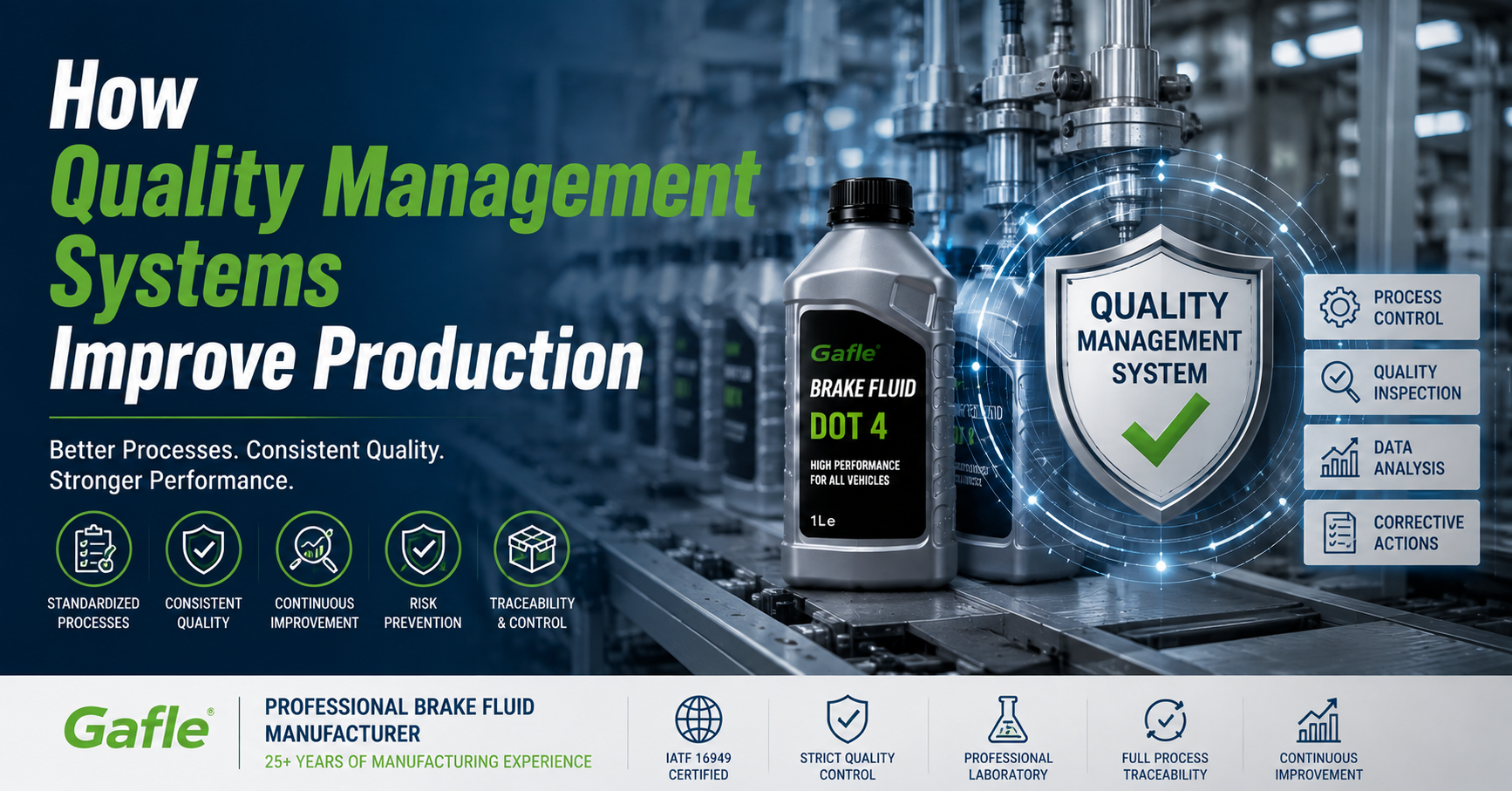
A professional brake fluid manufacturer should control the entire manufacturing process.
This includes:
- Raw material management
- Formula control
- Production process control
- Laboratory testing
- Filling and packaging
- Finished-product inspection
- Batch traceability
Laboratory capability is especially important.
Depending on the applicable specification, professional testing may evaluate characteristics such as boiling point, viscosity, chemical stability, corrosion performance, fluidity, appearance, and material compatibility.
For fleet suppliers and automotive brands, manufacturing consistency is critical because the same product may be used across large numbers of vehicles.
Commercial Vehicle Brake Fluid for Different Climates
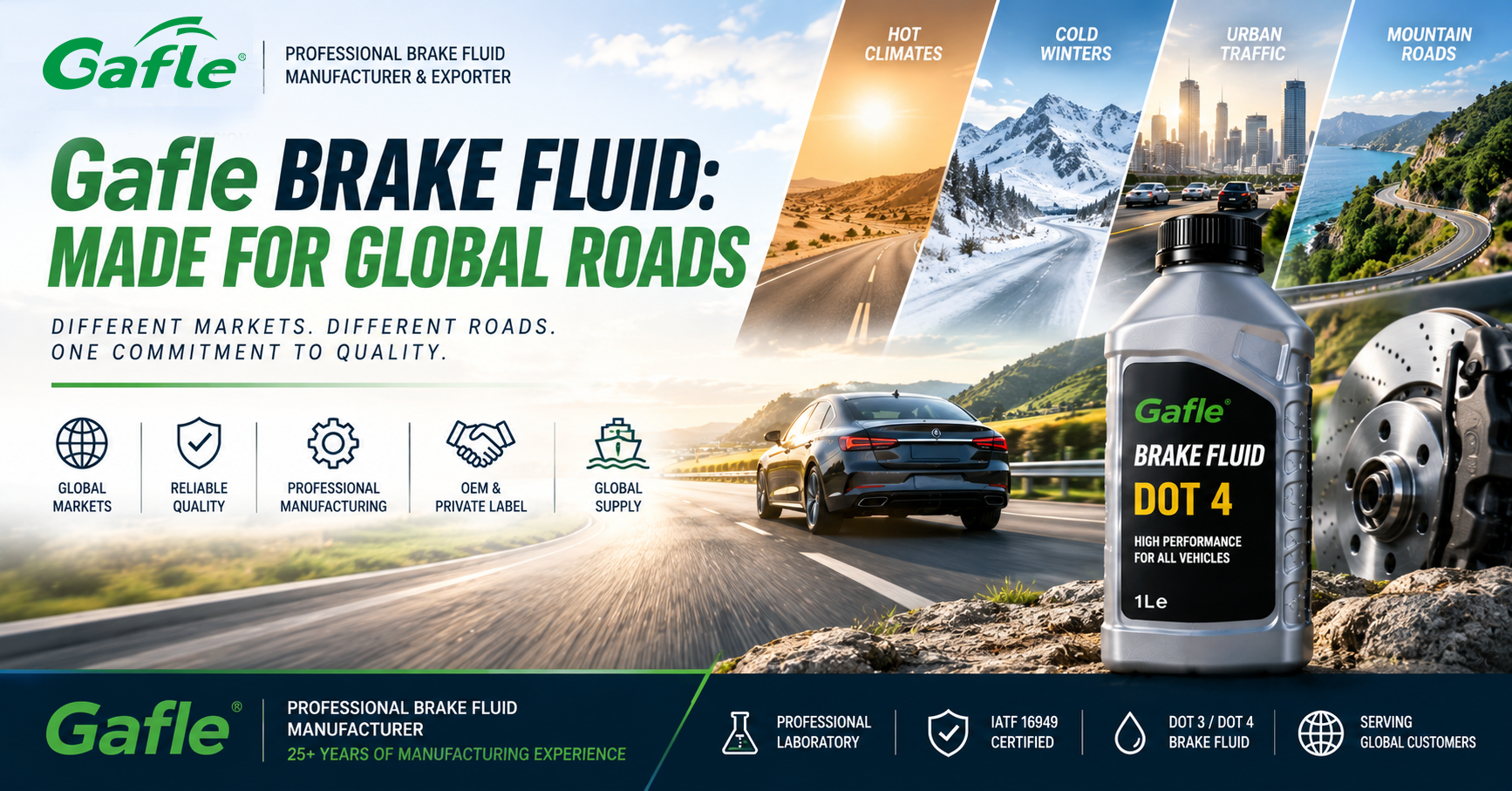
Commercial vehicles operate in very different environments around the world.
Hot Markets
High ambient temperatures combined with repeated braking can increase thermal demands.
Boiling-point performance becomes an important consideration.
Cold Markets
Low-temperature viscosity becomes increasingly important as temperatures fall.
Humid Markets
Because glycol-based brake fluids absorb moisture over time, appropriate inspection and replacement practices are particularly important.
Mountainous Markets
Repeated braking during long descents can generate additional heat, increasing the importance of brake fluid condition and thermal performance.
For international distributors, these differences should be considered when developing a commercial vehicle brake fluid product range.
Choosing Brake Fluid for a Commercial Fleet
Fleet operators should take a systematic approach rather than selecting brake fluid vehicle by vehicle without a clear policy.
A practical process includes:
Step 1: Identify the brake fluid specification required for every applicable vehicle model.
Step 2: Group vehicles that share compatible requirements.
Step 3: Select products that meet the required specifications.
Step 4: Establish clear maintenance and replacement procedures.
Step 5: Train technicians to avoid mixing incompatible products or using incorrect specifications.
Step 6: Maintain purchasing and maintenance records.
This approach can help standardize fleet maintenance while respecting the technical requirements of individual vehicles.
Why Choose Gafle as Your Brake Fluid Manufacturer?
Gafle is a professional brake fluid manufacturer with more than 25 years of brake fluid manufacturing experience.
We provide brake fluid manufacturing solutions for international automotive markets, including products for passenger vehicles, automotive aftermarket businesses, distributors, and suitable commercial-vehicle applications according to required specifications.
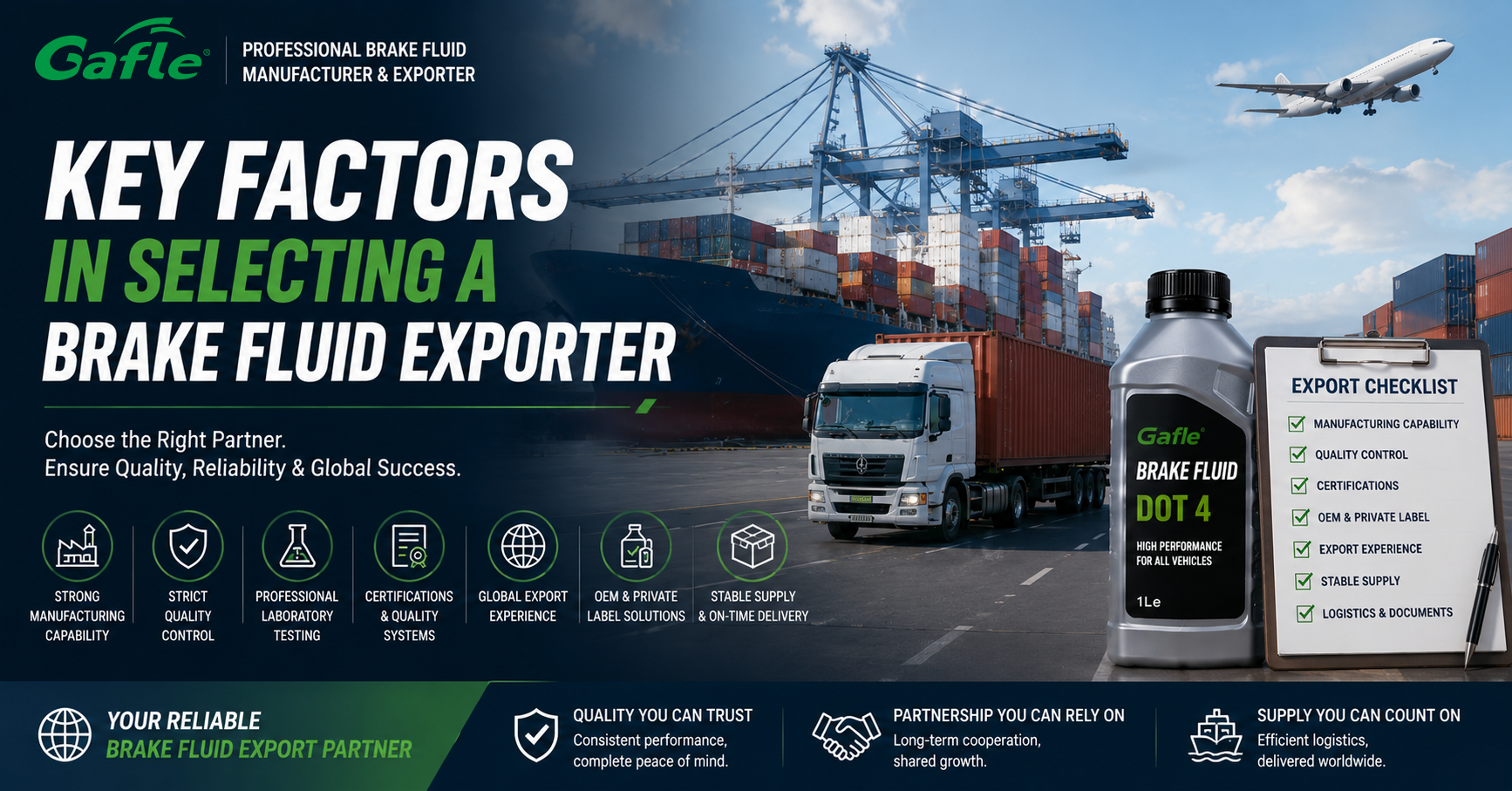
Gafle's key capabilities include:
- 25+ years of brake fluid manufacturing experience
- DOT 3 and DOT 4 brake fluid manufacturing
- Professional brake fluid laboratory
- Strict production and quality control
- IATF 16949 quality management system
- OEM brake fluid manufacturing
- Private label brake fluid solutions
- Customized bottles, labels, and cartons
- International export experience
- Stable production and supply capabilities
- Participation in drafting China's national brake fluid standards
For distributors, fleet product suppliers, wholesalers, and automotive brands, Gafle can provide manufacturing support from product selection and technical requirements through packaging, production, quality control, and international supply.
OEM Brake Fluid Solutions for Commercial Vehicle Markets
Commercial vehicle maintenance can also create opportunities for automotive aftermarket brands.
Importers and distributors may want to develop brake fluid products targeted toward:
- Commercial vehicle workshops
- Fleet maintenance companies
- Automotive distributors
- Service centers
- Truck and van parts retailers
Working with an experienced brake fluid manufacturer allows businesses to develop OEM and private label products without establishing their own production facilities.
Gafle supports OEM projects with options including DOT 3 and DOT 4 products, bottle capacities, labels, cartons, and customized brand packaging.
The final product specification should always be selected according to the intended application and applicable market requirements.
Frequently Asked Questions
What is the best brake fluid for commercial vehicles?
There is no single best brake fluid for every commercial vehicle. Use the specification required by the vehicle manufacturer and consider the braking system, operating environment, boiling-point requirements, viscosity, and other relevant performance characteristics.
Is DOT 4 brake fluid good for commercial vehicles?
DOT 4 can be suitable for commercial vehicles whose manufacturers specify DOT 4. It should not be assumed to be the correct choice for every commercial vehicle.
What brake fluid should trucks use?
It depends on the truck and braking system. Some light and medium commercial vehicles use hydraulic brake fluid, while many heavy trucks use air brakes. Always check the vehicle manufacturer's specification.
Is high-temperature brake fluid better for trucks?
High boiling-point performance can be valuable in demanding hydraulic braking applications, but the product must still meet the vehicle manufacturer's required specification.
Do commercial vehicles need brake fluid changes more often?
Not necessarily. Replacement intervals vary by vehicle and operating conditions. Follow the manufacturer's maintenance schedule and consider severe-service conditions when determining inspection frequency.
Conclusion
Choosing the right brake fluid for commercial vehicles requires more than selecting the product with the highest DOT number or the words "heavy duty" on the label.
The correct decision should begin with the vehicle manufacturer's required specification.
From there, fleet operators and automotive businesses should consider dry and wet boiling points, low-temperature viscosity, corrosion performance, material compatibility, operating environment, and maintenance requirements.
Commercial vehicles can face demanding conditions, including high mileage, frequent braking, heavy loads, long-distance operation, and extreme climates. For vehicles equipped with hydraulic braking systems, using the correct brake fluid and maintaining it properly is an important part of reliable brake-system operation.
With more than 25 years of brake fluid manufacturing experience, Gafle provides professional DOT 3 and DOT 4 brake fluid manufacturing, laboratory testing, OEM and private label services, quality management, and international supply support.
If you are looking for a professional brake fluid manufacturer for commercial vehicle, fleet, OEM, or private label markets, contact Gafle to discuss the right solution for your business.