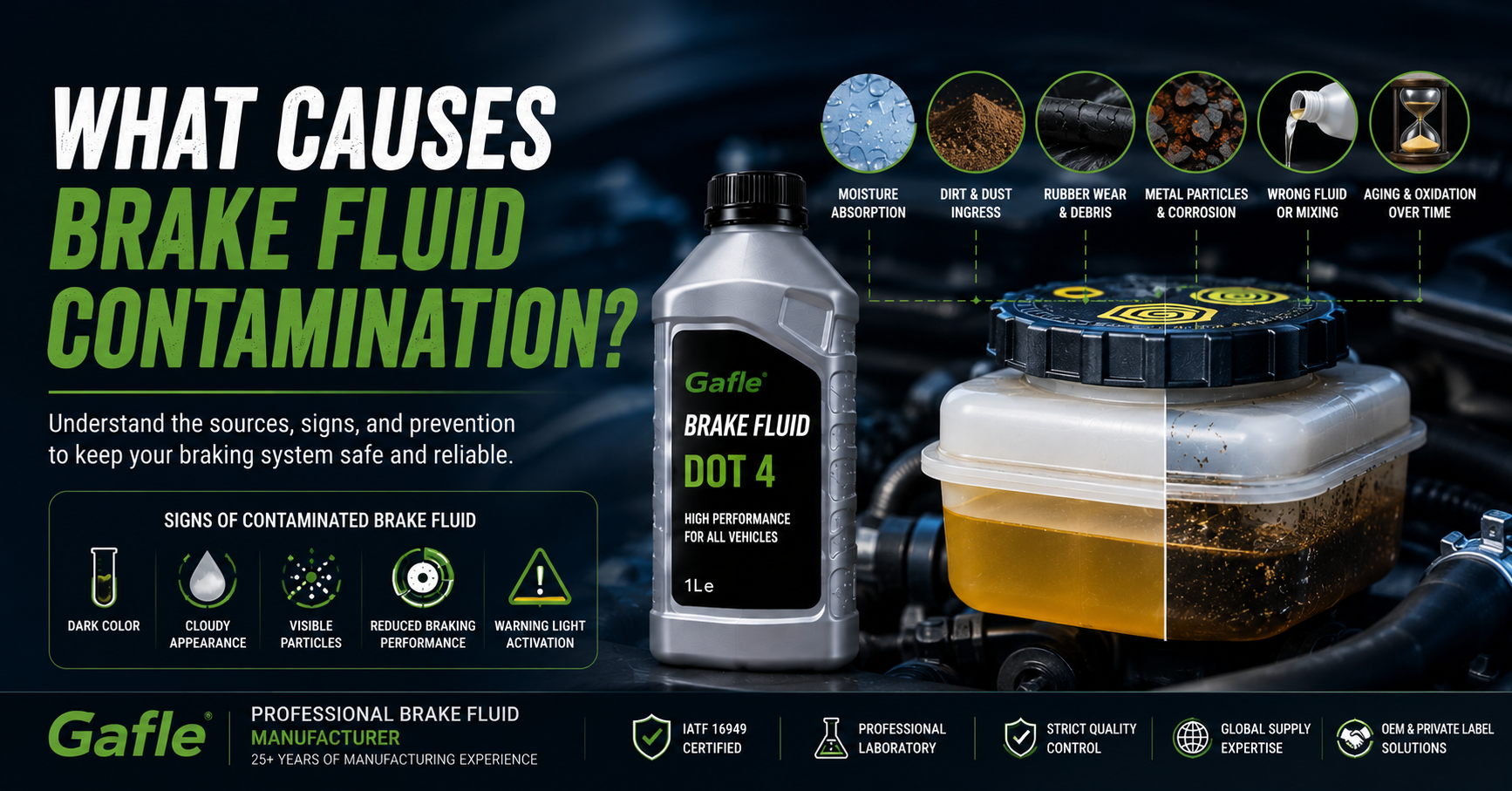
What Causes Brake Fluid Contamination?
Brake fluid is one of the most important fluids in a vehicle's hydraulic braking system. It transfers the force from the brake pedal to the brake components, helping the vehicle slow down and stop safely.
However, brake fluid does not remain in perfect condition forever. Over time, it can become contaminated by moisture, dirt, worn components, or improper maintenance. Contaminated brake fluid may affect its physical properties and reduce its ability to perform as intended.
So, what causes brake fluid contamination, and how can drivers and automotive businesses help prevent it?
As a professional brake fluid manufacturer with more than 25 years of manufacturing experience, Gafle provides DOT 3, DOT 4, OEM, and private label brake fluid solutions for customers in global automotive markets.
In this guide, we'll explain the common causes of brake fluid contamination, how to recognize contaminated brake fluid, and why proper maintenance is essential.
What Is Brake Fluid Contamination?
Brake fluid contamination occurs when unwanted substances or changes in the brake fluid affect its intended properties.
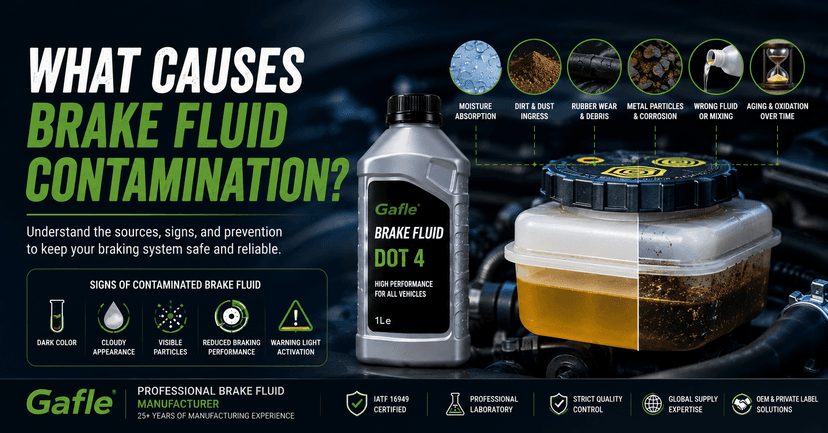
Contamination does not necessarily mean that the fluid contains visible dirt. It may also involve:
- Moisture (water absorption)
- Dust or dirt
- Rust particles
- Metal particles
- Rubber debris from seals or hoses
- Mixing incompatible brake fluids
- Aging or degraded brake fluid
Any of these conditions may influence brake fluid performance and should be evaluated during regular vehicle maintenance.
The Most Common Causes of Brake Fluid Contamination
1. Moisture Absorption
One of the most common causes of contaminated brake fluid is moisture.
Most DOT 3 and DOT 4 brake fluids are glycol-based, which means they are hygroscopic—they naturally absorb moisture from the surrounding environment over time.
Even though the braking system is designed to be sealed, small amounts of moisture may gradually enter the system during normal service or maintenance.
As moisture content increases, the brake fluid's boiling point can decrease, which is why manufacturers recommend periodic brake fluid replacement.
2. Dirt and Dust During Maintenance
Brake fluid can also become contaminated when dirt or dust enters the hydraulic system.
This may occur if:
- The brake fluid reservoir is opened in a dirty environment
- Reservoir caps are not cleaned before removal
- Dirty tools are used during maintenance
- Brake fluid containers are left open for long periods
Even small amounts of contamination may introduce particles into the braking system.
Good workshop practices help minimize this risk.
3. Rubber Wear From Brake System Components
Brake systems contain various rubber seals, hoses, and other elastomer components.
Over time, normal wear can produce very small rubber particles that enter the brake fluid.
These particles are generally the result of normal component aging and service rather than a manufacturing defect.
Regular brake system inspection helps identify worn components before they become a larger maintenance issue.
4. Metal Particles and Corrosion
Brake systems contain many metal components.
Over time, corrosion or normal wear may generate tiny metal particles.
Possible sources include:
- Master cylinder components
- Brake calipers
- Hydraulic lines
- Internal brake system wear
These particles may circulate with the brake fluid and contribute to contamination if maintenance is neglected.
5. Mixing the Wrong Brake Fluid
Another common cause of brake fluid contamination is using the wrong brake fluid.
Different brake fluids are designed for different applications.
For example:
- DOT 3 and DOT 4 are generally glycol-based.
- DOT 5 is silicone-based and should not be mixed with glycol-based brake fluids.
- DOT 5.1 is glycol-based but has different performance requirements from DOT 5.
Using an incompatible brake fluid may affect the braking system and should be avoided.
Always follow the vehicle manufacturer's recommended brake fluid specification.
6. Old Brake Fluid
Brake fluid naturally changes over time.
As it ages, moisture absorption and normal service conditions can affect its performance.
Even if the fluid appears acceptable, following the vehicle manufacturer's recommended brake fluid change interval remains important.
Routine maintenance helps maintain brake system reliability.
How to Identify Contaminated Brake Fluid
Drivers often ask how to recognize contaminated brake fluid.
Although laboratory testing provides the most reliable evaluation, several signs may indicate that the brake fluid or braking system should be inspected.
Darker Fluid Color
Brake fluid often becomes darker over time.
A darker appearance does not automatically mean the fluid is unsafe, but it can indicate that inspection and maintenance may be appropriate.
Cloudy Appearance
Brake fluid should normally appear clear.
Cloudiness may indicate contamination or other changes that require further inspection.
Visible Particles
If particles are visible inside the brake fluid reservoir, the braking system should be inspected by qualified personnel.
Soft or Spongy Brake Pedal
A soft brake pedal can have many possible causes.
Brake fluid condition may be one factor, but other hydraulic or mechanical issues may also contribute.
Reduced Braking Performance
If braking performance changes noticeably, the entire braking system should be inspected rather than assuming brake fluid contamination is the only cause.
What Happens If Brake Fluid Becomes Contaminated?
Contaminated brake fluid can influence several important characteristics.
Possible effects include:
- Lower boiling point
- Increased moisture content
- Internal corrosion
- Reduced hydraulic performance
- Accelerated wear of braking-system components
- Less consistent braking feel
The exact effect depends on the type and degree of contamination.
For this reason, contaminated brake fluid should not simply be ignored.
How to Prevent Brake Fluid Contamination
Preventing contamination is usually easier than correcting it later.
The following practices can help maintain brake fluid quality.
Use the Correct Brake Fluid
Always use the specification recommended by the vehicle manufacturer.
Avoid mixing incompatible brake fluids.
Keep the Reservoir Closed
Brake fluid absorbs moisture from the air.
Open the brake fluid reservoir only when necessary and close it promptly after service.
Use Clean Tools
Maintenance should always be performed using clean equipment.
Avoid introducing dirt or debris into the hydraulic system.
Store Brake Fluid Properly
Brake fluid containers should remain tightly sealed until use.
Partially opened containers may absorb moisture over time and are generally less suitable for long-term storage.
Follow Brake Fluid Maintenance Schedules
Routine brake fluid maintenance helps reduce contamination risks.
Drivers should follow the replacement interval recommended by the vehicle manufacturer rather than waiting for visible problems.
Why Brake Fluid Quality Matters
Brake fluid quality begins long before the product reaches a vehicle.
Professional manufacturing helps reduce contamination risks from the start.
Important manufacturing controls include:
- Raw material inspection
- Controlled production
- Clean manufacturing environment
- Laboratory testing
- Filling control
- Packaging inspection
- Batch traceability
These processes help ensure that brake fluid meets its intended specification before leaving the factory.
How Gafle Maintains Brake Fluid Quality
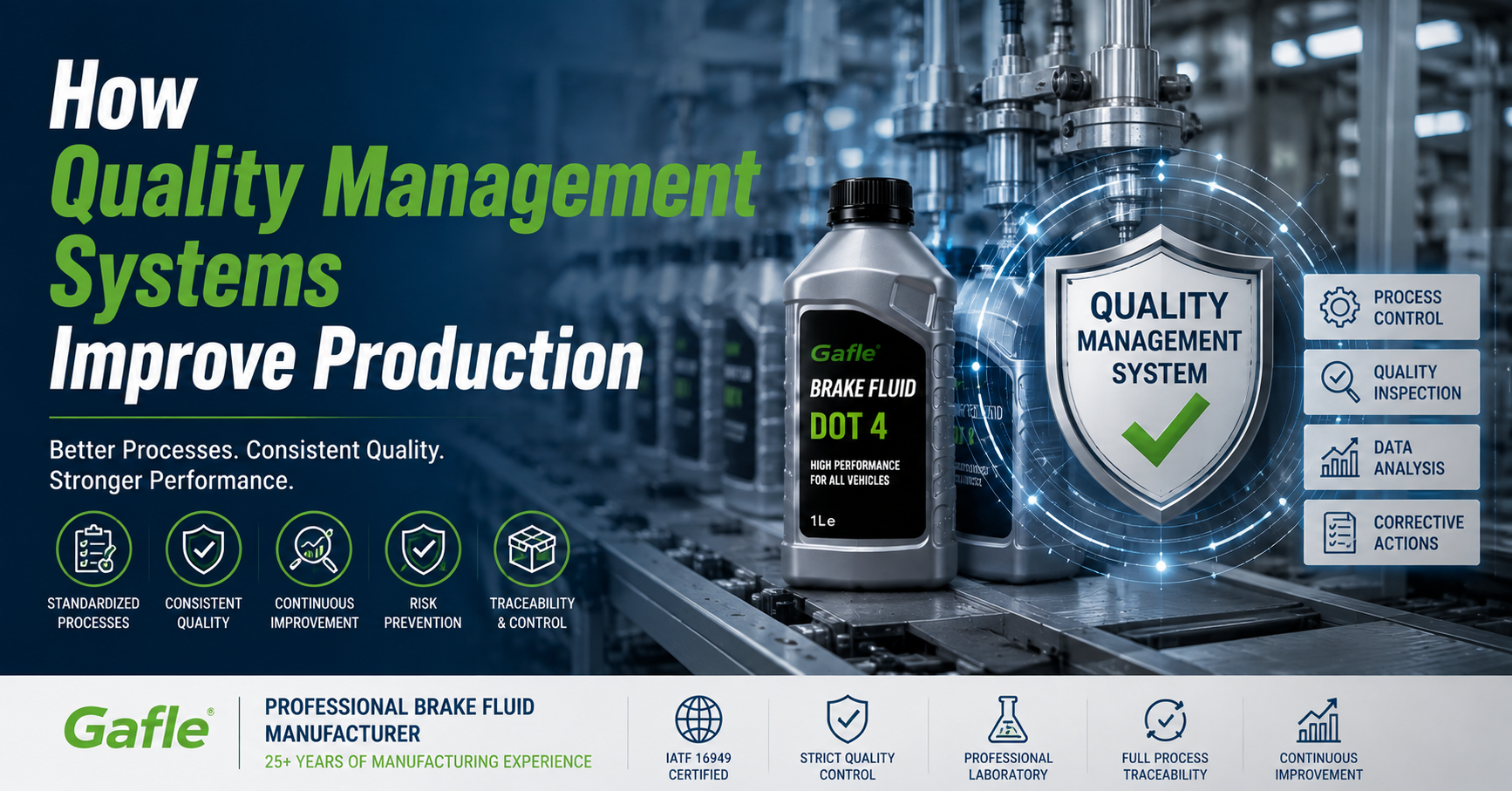
At Gafle, quality management is integrated throughout the brake fluid manufacturing process.
Our production system includes:
Raw Material Control
Incoming materials are inspected and managed according to established quality procedures.
Controlled Manufacturing
Brake fluid is produced using standardized manufacturing processes designed to support batch consistency.
Professional Laboratory Testing
Our laboratory evaluates important brake fluid characteristics such as:
- Dry boiling point
- Wet boiling point
- Low-temperature viscosity
- Chemical stability
- Corrosion performance
- Appearance
- Material compatibility
Filling and Packaging
Products are filled and packaged under controlled conditions to help maintain product quality.
Batch Traceability
Manufacturing and inspection records support traceability throughout the production process.
Why Choose Gafle Brake Fluid?
Gafle is a professional brake fluid manufacturer with more than 25 years of manufacturing experience.
We provide brake fluid solutions for automotive customers worldwide, including:
- 25+ Years of Brake Fluid Manufacturing Experience
- DOT 3 and DOT 4 Brake Fluid
- Professional Laboratory Testing
- Strict Quality Control
- IATF 16949 Quality Management System
- OEM Brake Fluid Manufacturing
- Private Label Brake Fluid Solutions
- Customized Bottles, Labels, and Cartons
- Global Export Experience
- Participation in Drafting China's National Brake Fluid Standards
Whether you are an importer, distributor, wholesaler, or automotive brand, Gafle provides reliable manufacturing support from product development through production and international supply.
Frequently Asked Questions
What causes brake fluid contamination?
The most common causes include moisture absorption, dirt, dust, worn rubber components, metal particles, incorrect brake fluid, and aging brake fluid.
Does brake fluid absorb moisture?
Yes. Most DOT 3 and DOT 4 brake fluids are hygroscopic and naturally absorb moisture over time.
Is dark brake fluid always contaminated?
Not necessarily. Darker brake fluid can be a sign that inspection or maintenance is appropriate, but color alone does not determine whether the fluid should be replaced.
Can contaminated brake fluid affect braking performance?
Yes. Depending on the type and degree of contamination, it may influence boiling point, corrosion, and hydraulic performance. A complete brake system inspection is recommended if braking performance changes.
How often should brake fluid be changed?
Follow the vehicle manufacturer's recommended maintenance schedule. Replacement intervals vary depending on the vehicle and operating conditions.
Conclusion
Brake fluid contamination is a normal maintenance concern that can develop over time through moisture absorption, dirt, worn components, corrosion particles, incorrect fluid selection, or aging.
Regular brake fluid maintenance, using the correct brake fluid specification, following the vehicle manufacturer's replacement schedule, and keeping the hydraulic system clean all help reduce contamination risks.
For automotive businesses, product quality starts with the manufacturer.
With more than 25 years of manufacturing experience, Gafle combines professional production, laboratory testing, strict quality control, OEM and private label services, and global supply capabilities to deliver reliable DOT 3 and DOT 4 brake fluid solutions for customers worldwide.