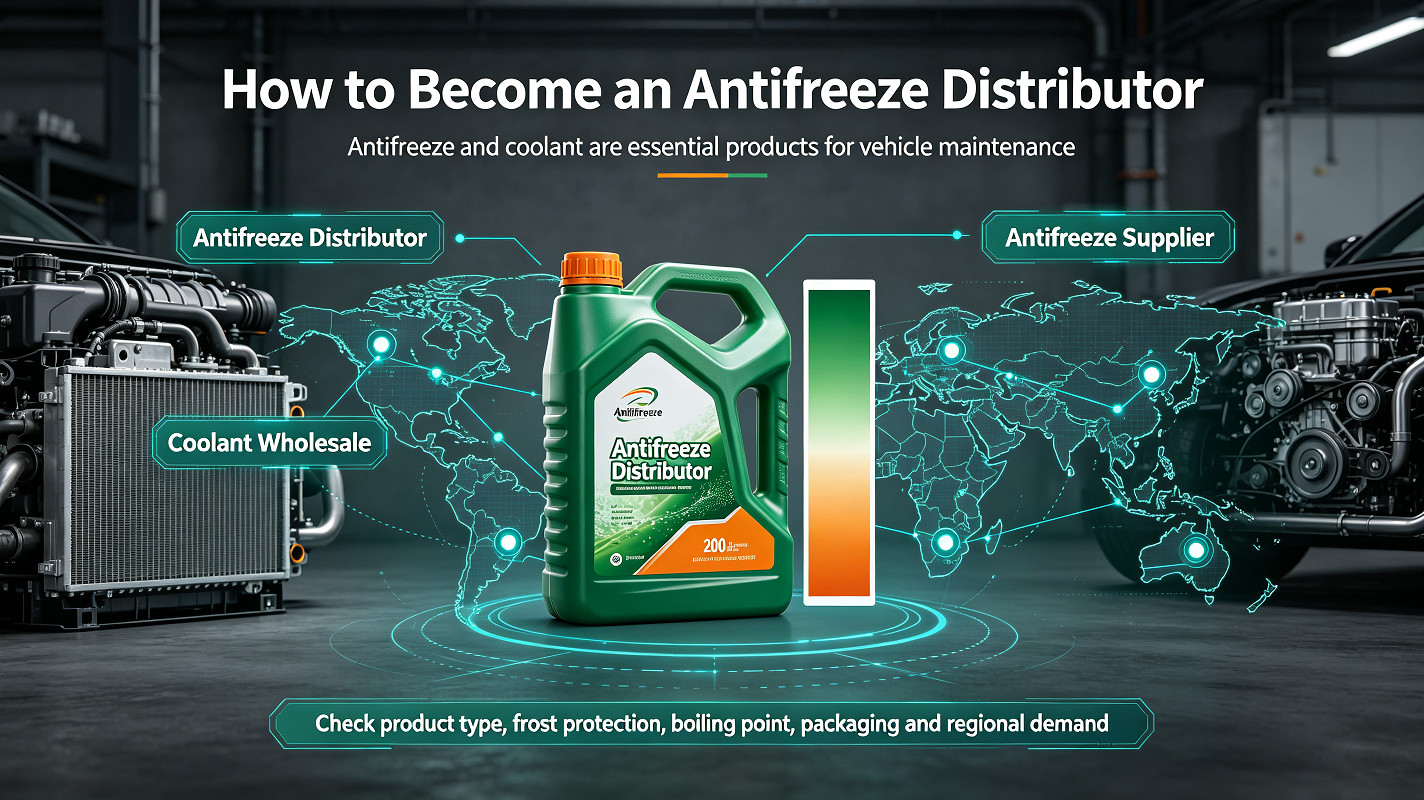
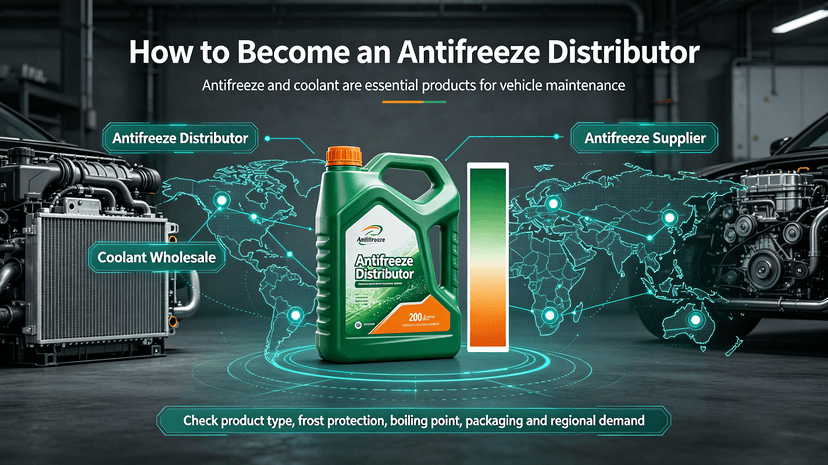
How to Become an Antifreeze Distributor Without Walking Into the Wrong Business Model
If you are researching how to become an antifreeze distributor, you are probably weighing a straightforward question: is this a stable chemical supply business, or a logistics-heavy commodity trade with thin margins and a lot of paperwork? The answer is somewhere in between. Antifreeze sits inside the broader coolant category, and while demand is steady, the business rewards operators who understand formulation basics, storage discipline, and the realities of local channel sales.
For engineers, sourcing managers, and product teams, the decision is less about “can I buy product and resell it?” and more about whether you can build a compliant, serviceable distribution model around a product that is sensitive to handling, labeling, and end-use requirements. The global market is broad, but local execution usually decides whether a distributorship becomes a dependable line of business or just an inventory headache.
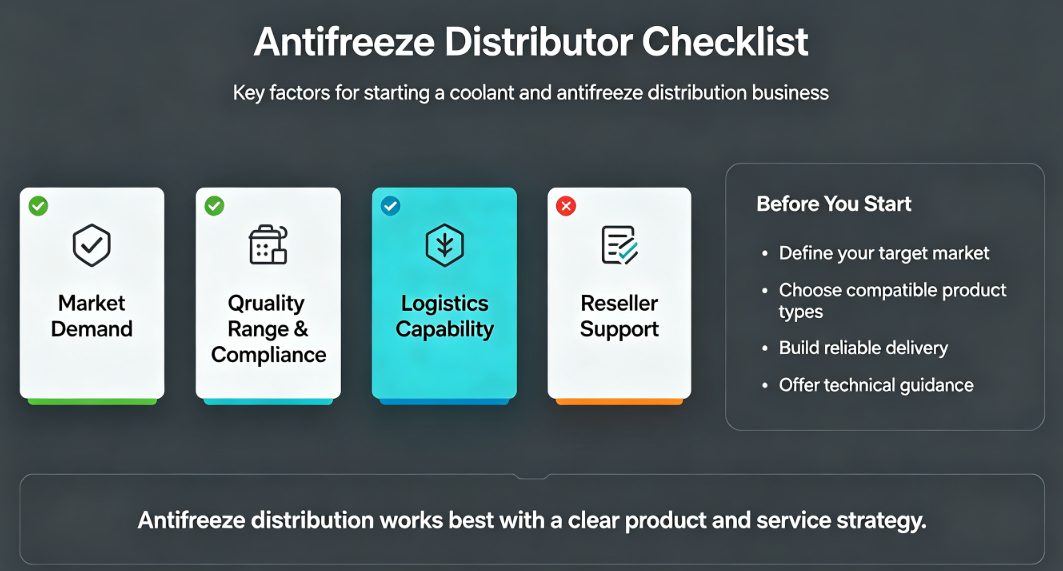
What an antifreeze distributor actually does
An antifreeze distributor typically buys packaged product, bulk liquid, or private-label coolant from a manufacturer and supplies it to automotive aftermarket channels, industrial maintenance buyers, fleet operators, wholesalers, and sometimes OEM-adjacent accounts. The distributor may also handle warehousing, repacking, delivery, technical support, and regulatory documentation.
That sounds simple. It usually is not. Antifreeze is often sold on trust, availability, and compatibility more than on flashy branding. If a buyer needs a product for a specific vehicle platform, cooling system, or climate condition, they want confidence that the formulation and packaging will match the intended use.
Quick reference: the business choices you need to settle early
1. Sell branded product or private label
Branded distribution can be easier to launch if the name already carries market recognition. Private label can offer better margin control, but only if you can support consistent demand and manage packaging, artwork, and inventory turns.
2. Focus on retail, industrial, or fleet channels
Retail tends to move smaller packs and depends on shelf presence. Industrial and fleet accounts often buy in larger volumes, but they expect reliable delivery and clearer technical support. The channel you choose changes everything from warehousing to credit terms.
3. Carry finished goods or work with bulk supply
Finished goods are simpler operationally. Bulk supply can lower packaging cost per unit, but it also increases the need for tanks, transfer equipment, and tighter quality control. Not every new distributor should start there, even if the margin looks attractive on paper.
Antifreeze distributorship requirements that matter in practice
When people search for antifreeze distributorship requirements, they often expect a short checklist. In reality, the requirements depend on your region, your customers, and whether you are handling packaged coolant or raw bulk product. Still, several needs show up almost everywhere.
You will need a lawful business entity, product liability awareness, storage space that can handle chemical packaging safely, and a plan for labeling and documentation. Depending on the market, transportation rules may apply because coolant and antifreeze products are controlled through general chemical handling standards and local environmental rules. Buyers should also expect basic worker safety procedures, spill response planning, and inventory rotation practices.
One practical point: if you plan to sell into commercial accounts, ask what documentation they expect before you invest in stock. Some buyers want safety data sheets, product specification sheets, or traceability information with every shipment. That request is not a nuisance; it is part of being taken seriously as a supplier.
How to evaluate suppliers before you sign anything
Your supplier relationship will shape the distributorship more than the logo on the carton. Ask whether the manufacturer can provide multiple coolant types, packaging sizes, and labeling options. Check whether the supplier can support stable lead times, because volatile replenishment can destroy a local distribution business faster than weak demand.
Also look at the formulation range. Not every antifreeze is suitable for every application. Conventional, extended-life, and application-specific coolant products serve different user groups. If your customer base includes mixed vehicles or industrial equipment, you may need more than one SKU family to avoid losing sales to more complete competitors.
Common mistakes new distributors make
The first mistake is treating antifreeze like bottled water with a chemical name. It is not. Packaging, labeling, and compatibility matter, and so does the credibility of the product line. The second mistake is overbuying inventory before proving demand by channel. A few strong accounts are more useful than a warehouse full of slow-moving stock.
The third mistake is ignoring freight economics. Coolant is heavy. That sounds obvious, but many first-time distributors underestimate how much transport costs erode margin, especially when servicing smaller customers across a wide territory.
Practical buyer advice for starting the distributorship
Start with the customer segment you can reach fastest. If you already sell related automotive or maintenance products, antifreeze can fit into an existing route-to-market. If you are entering cold, choose one region and one channel first. Expand only after you understand reorder frequency and the price band your buyers will actually accept.
Ask for samples, technical sheets, and packaging details before committing. Verify container durability, pallet configuration, and label legibility. Small issues become large ones once product begins moving through warehouses and retail racks.
And if the opportunity seems to require unusually low prices to win business, be careful. In coolant distribution, price pressure can hide weak supplier support or questionable product consistency. That is a bad trade if you are trying to build repeat business.
FAQ: what people usually want to know
Is antifreeze distribution a high-margin business?
Not usually at the commodity end. Margins improve when you add service, private label, or a specialized channel focus.
Do I need technical expertise?
You do not need to be a chemist, but you do need enough technical understanding to discuss product categories, compatibility, storage, and customer documentation without sounding unsure.
What makes the business work long term?
Reliable supply, disciplined inventory, and a customer base that buys repeatedly. That combination matters more than a large initial order.
Next step
If you are mapping out how to become an antifreeze distributor, begin with your target channel, storage setup, and supplier shortlist. Then test the market with a narrow product range before scaling. The business is workable, but it favors operators who respect the details. In this category, the details are the business.
Welcome to contact GAFLE for more information & cooperation!
peter
ZHEJIANG GAFLE AUTO CHEMICL CO.,LTD
Tel:86-579-8222 1665
Fax:86-579-8246 4690
Cel/Wechart:86-13335993986
E-mail:peter@gafle.net
Web:www.gafle.net