
 How Does Brake Fluid Work in a Vehicle’s Braking System?
Every time you press the brake pedal, your vehicle slows down almost instantly. While most drivers understand that brakes are essential for safety, many don't realize that brake fluid is the invisible force that makes the entire braking system work.
Without brake fluid, the braking system cannot transfer the force from your foot to the wheels. That's why choosing high-quality brake fluid and maintaining it properly are essential for safe and reliable driving.
As a professional Brake Fluid Manufacturer, Gafle has over 20 years of dedicated manufacturing experience, providing premium brake fluid solutions to distributors, OEM customers, and automotive brands worldwide. In this guide, we'll explain How Brake Fluid Works, why it is critical to the Brake Hydraulic System, and how to choose the right brake fluid for long-term performance.
What Is Brake Fluid?
Brake fluid is a specially formulated hydraulic fluid used in a vehicle's braking system.
Its primary function is to transfer the force generated when the driver presses the brake pedal into hydraulic pressure that activates the brakes.
Unlike mechanical systems, modern hydraulic braking systems rely on brake fluid because liquids are virtually incompressible. This allows braking force to be transmitted quickly, smoothly, and consistently.
High-quality brake fluid must also perform reliably under:
- High temperatures
- Cold weather
- Heavy braking
- Long-term vehicle operation
How Brake Fluid Works in the Brake Hydraulic System
Understanding How Brake Fluid Works is easier when looking at the braking process step by step.
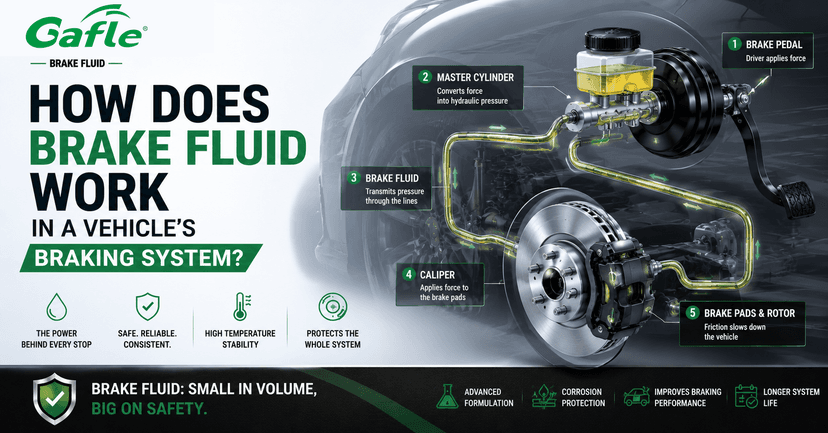
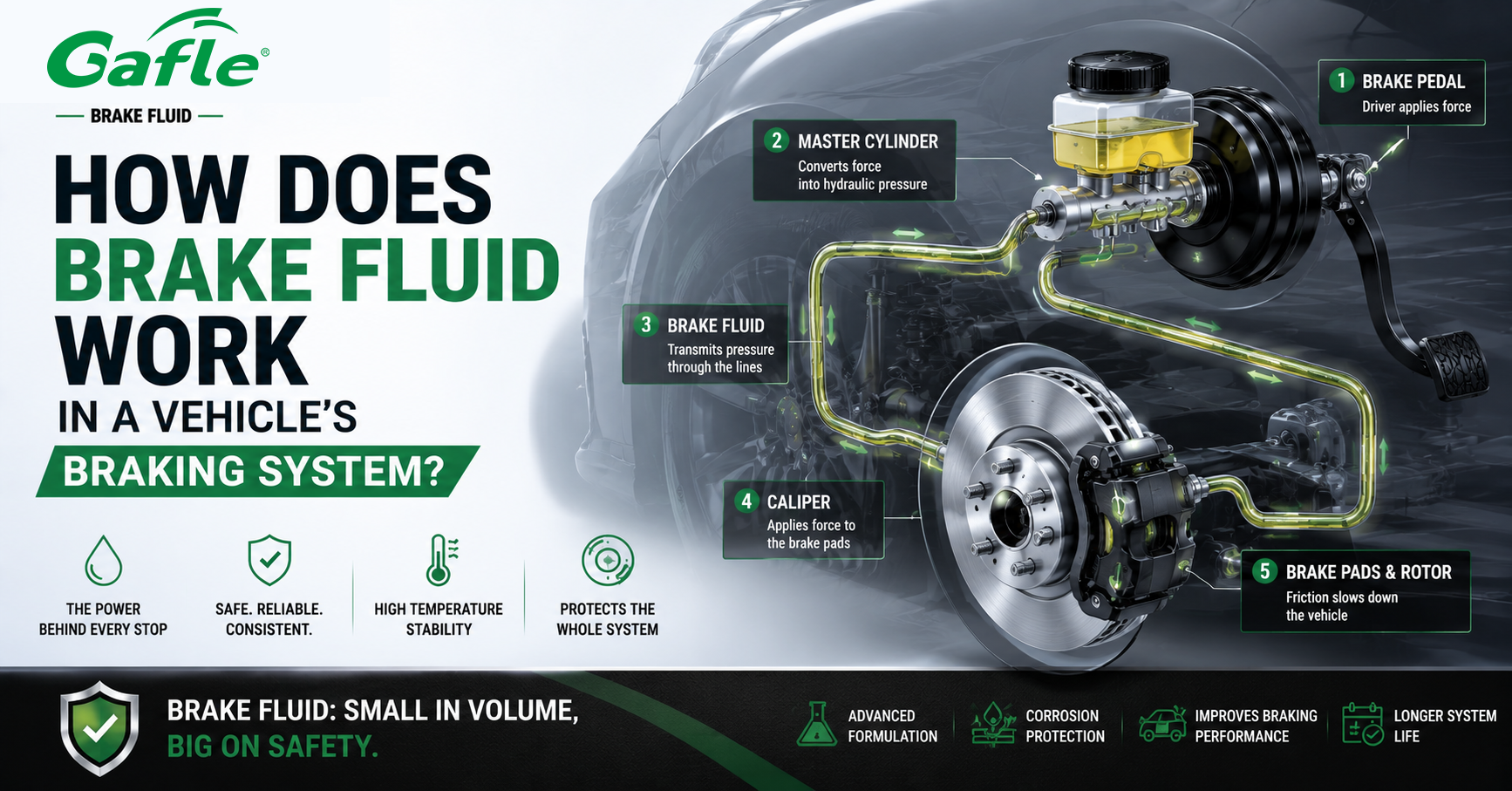
Step 1: The Driver Presses the Brake Pedal
Everything begins when the driver applies pressure to the brake pedal.
This mechanical force is transferred to the master cylinder.
Step 2: The Master Cylinder Creates Hydraulic Pressure
Inside the master cylinder, the brake pedal force pushes a piston that compresses the brake fluid.
Because brake fluid is nearly incompressible, the pressure is transmitted efficiently throughout the hydraulic system.
Step 3: Brake Fluid Travels Through the Brake Lines
The pressurized brake fluid flows through sealed brake lines to each wheel.
This hydraulic pressure travels almost instantly, ensuring a quick and balanced braking response.
Step 4: The Brake Calipers Apply Force
At each wheel, hydraulic pressure pushes the pistons inside the brake calipers (or wheel cylinders in drum brake systems).
The pistons press the brake pads against the brake discs (rotors).
Step 5: The Vehicle Slows Down
The friction created between the brake pads and brake discs converts the vehicle's kinetic energy into heat.
As a result, the vehicle slows down or comes to a complete stop safely.
This entire process happens in just a fraction of a second, demonstrating the importance of a properly functioning Brake Hydraulic System.
Why Brake Fluid Is Essential
The Brake Fluid Function goes far beyond simply transferring pressure.
High-quality brake fluid also provides several additional benefits.
Efficient Hydraulic Pressure Transfer
Brake fluid delivers consistent hydraulic pressure throughout the braking system, allowing the brakes to respond quickly and predictably.
High-Temperature Stability
Braking generates significant heat, especially during:
- Mountain driving
- Heavy traffic
- Emergency braking
- Commercial vehicle operation
- Performance driving
Quality brake fluid maintains stable performance even under demanding conditions.
Corrosion Protection
Brake fluid contains additives that help protect internal brake system components from corrosion and wear.
This contributes to longer service life for master cylinders, brake lines, calipers, and other hydraulic components.
Material Compatibility
Brake fluid is formulated to work safely with seals, hoses, and metal components commonly found in modern braking systems.
What Happens When Brake Fluid Deteriorates?
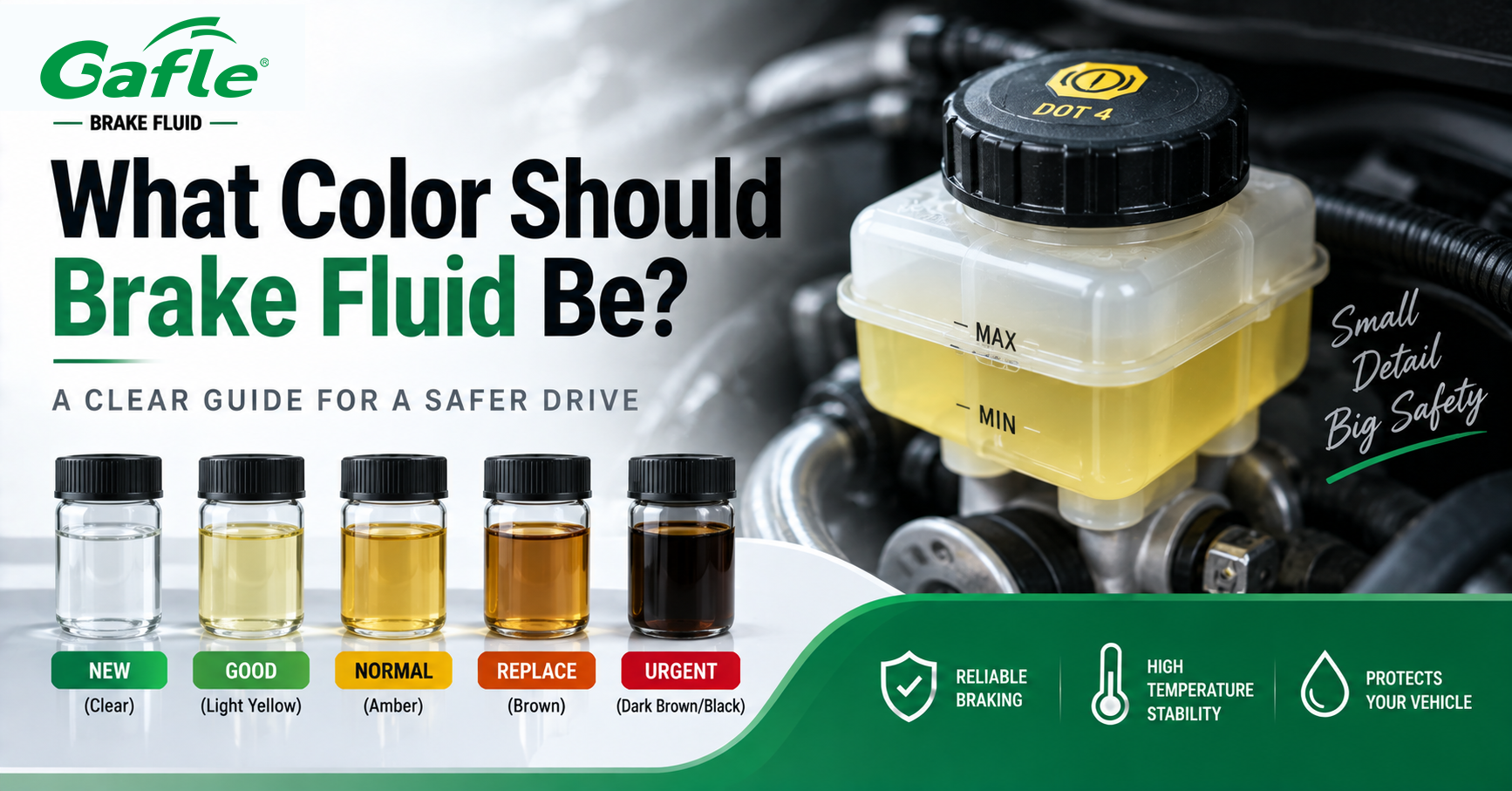
Brake fluid gradually changes over time because it naturally absorbs moisture from the surrounding environment.
As brake fluid ages, several issues may occur.
Lower Boiling Point
Moisture reduces the brake fluid's wet boiling point, making it more susceptible to vapor formation under high temperatures.
Reduced Hydraulic Efficiency
Changes in fluid properties can affect the consistency of hydraulic pressure transmission.
Increased Risk of Corrosion
Water contamination may contribute to corrosion inside brake system components.
Less Consistent Braking Performance
Older brake fluid may no longer provide the same level of performance as fresh fluid, particularly under demanding driving conditions.
For these reasons, regular brake fluid replacement is recommended according to the vehicle manufacturer's maintenance schedule.
Choosing the Right Brake Fluid
Selecting the correct brake fluid is essential for maintaining safe braking performance.
Common brake fluid specifications include:
DOT 3 Brake Fluid
Suitable for many standard passenger vehicles and everyday driving conditions.
DOT 4 Brake Fluid
Offers higher minimum boiling point requirements than DOT 3 and is commonly used in modern passenger vehicles, SUVs, and light commercial vehicles.
DOT 5.1 Brake Fluid
Designed for applications requiring enhanced high-temperature performance while remaining compatible with glycol-based brake systems.
Always use the brake fluid specification recommended by the vehicle manufacturer.
Why Manufacturing Quality Matters
Brake fluid performance depends not only on formulation but also on manufacturing quality.
A professional Brake Fluid Manufacturer should provide:
- Modern manufacturing facilities
- Clean production environments
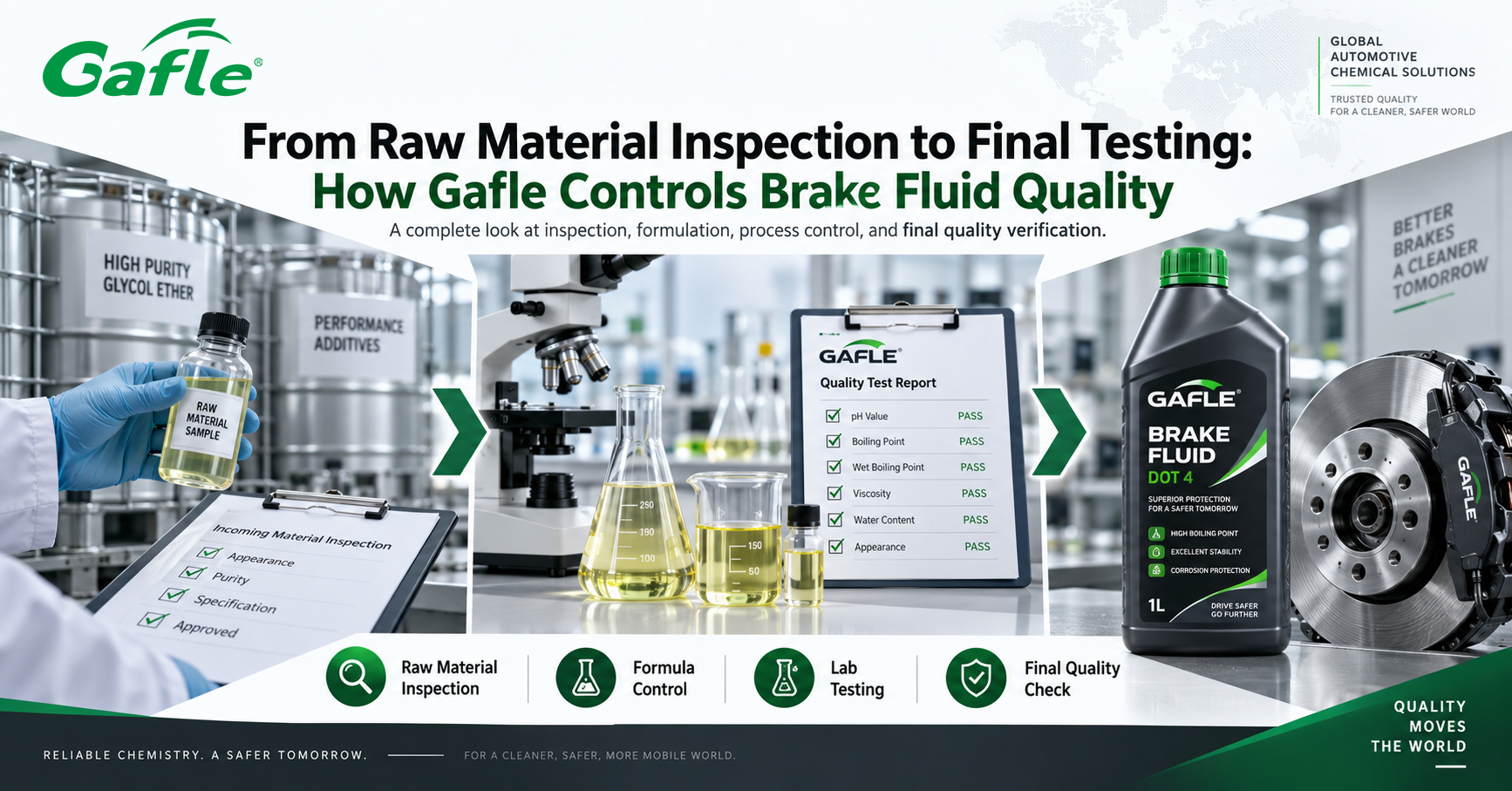
- Professional laboratory testing
- Strict quality management
- Stable production processes
- Batch consistency
- Comprehensive product inspection
Reliable manufacturing helps ensure consistent product performance from every production batch.
How to Choose the Best Brake Fluid Manufacturer in China
Many international buyers searching for the Best Brake Fluid Manufacturer in China understand that choosing the right manufacturing partner is just as important as selecting the right product.
When evaluating suppliers, consider:
- Manufacturing experience
- Professional laboratory testing
- Quality management systems
- Modern production facilities
- OEM manufacturing capability
- Private label solutions
- Stable production capacity
- Export experience
- Technical support
- Long-term partnership value
Selecting a manufacturer with these strengths helps improve product reliability while reducing sourcing risks.
Why Global Customers Choose Gafle
As a trusted Brake Fluid Manufacturer, Gafle provides reliable manufacturing solutions for distributors, importers, and automotive brands worldwide.
Our strengths include:
- 20+ Years of Dedicated Brake Fluid Manufacturing Experience
- DOT 3, DOT 4, and DOT 5.1 Brake Fluid Production
- Modern Manufacturing Facilities
- Clean Production Environment
- Professional Laboratory Testing
- Strict Quality Management
- IATF 16949 Quality Management System
- OEM Brake Fluid Manufacturing
- Private Label Solutions
- Customized Bottles, Labels, and Cartons
- Stable Large-Scale Production
- Global Export Experience
- Participation in Drafting China's National Brake Fluid Standards
Our commitment to quality helps customers deliver reliable brake fluid products to markets around the world.
Frequently Asked Questions
How does brake fluid work?
Brake fluid transfers hydraulic pressure from the master cylinder to the brake calipers or wheel cylinders, allowing the vehicle to slow down or stop when the brake pedal is pressed.
What is the function of brake fluid?
The primary Brake Fluid Function is to transmit hydraulic force efficiently throughout the braking system. It also provides high-temperature stability, corrosion protection, and compatibility with brake system materials.
Why is brake fluid important?
Without brake fluid, a hydraulic braking system cannot transmit braking force. It is essential for safe, responsive, and reliable braking performance.
How often should brake fluid be replaced?
Most vehicle manufacturers recommend replacing brake fluid approximately every 2 years or 40,000 km (25,000 miles), depending on driving conditions and maintenance requirements.
How should buyers choose the Best Brake Fluid Manufacturer in China?
Buyers should evaluate manufacturing experience, laboratory testing capabilities, quality management systems, OEM services, production consistency, export experience, and long-term technical support rather than focusing only on price.
Conclusion
Understanding How Brake Fluid Works helps explain why it is one of the most important components in a vehicle's Brake Hydraulic System. By efficiently transferring hydraulic pressure, brake fluid enables smooth, responsive, and reliable braking while also protecting critical components from heat and corrosion.
Choosing the correct brake fluid and replacing it at the recommended intervals are essential steps in maintaining braking safety and vehicle reliability.
For distributors, importers, and automotive brands searching for the Best Brake Fluid Manufacturer in China, partnering with an experienced manufacturer that offers advanced production facilities, professional laboratory testing, strict quality management, and flexible OEM solutions is equally important.
With more than 20 years of dedicated manufacturing experience, Gafle continues to supply premium brake fluid products, customized OEM services, and dependable manufacturing support to customers around the world.
At Gafle, we believe that every safe stop begins with high-quality brake fluid—and every bottle we produce reflects our commitment to performance, consistency, and long-term customer success.