
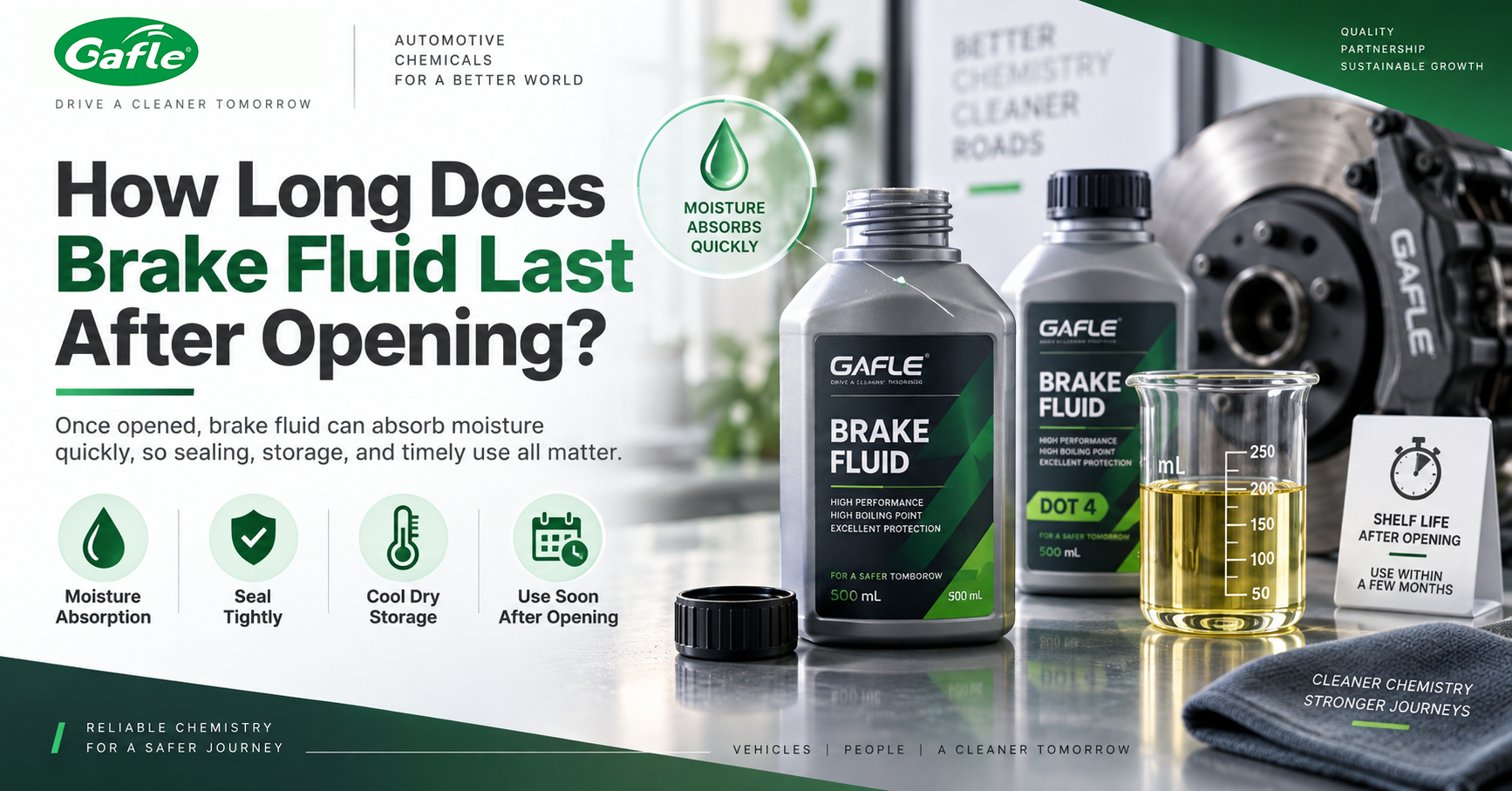
 How Long Does Brake Fluid Last After Opening?
Brake fluid is one of the most important safety fluids in any vehicle. It transfers hydraulic pressure from the brake pedal to the braking system, allowing drivers to stop safely and efficiently. While many people pay attention to replacing brake fluid at regular service intervals, fewer understand what happens after a bottle of brake fluid has been opened.
Once opened, brake fluid is exposed to air and begins absorbing moisture. Over time, this can affect its performance and reduce its ability to withstand high temperatures. Understanding Brake Fluid Shelf Life and following proper Brake Fluid Storage practices can help maintain product quality and ensure reliable braking performance.
As a professional Brake Fluid Manufacturer, Gafle has more than 20 years of manufacturing experience, supplying premium brake fluid to OEM customers, distributors, and automotive brands worldwide. In this guide, we'll explain how long brake fluid lasts after opening, how to store it correctly, and why choosing a reliable manufacturer matters.
Why Brake Fluid Has a Limited Shelf Life After Opening
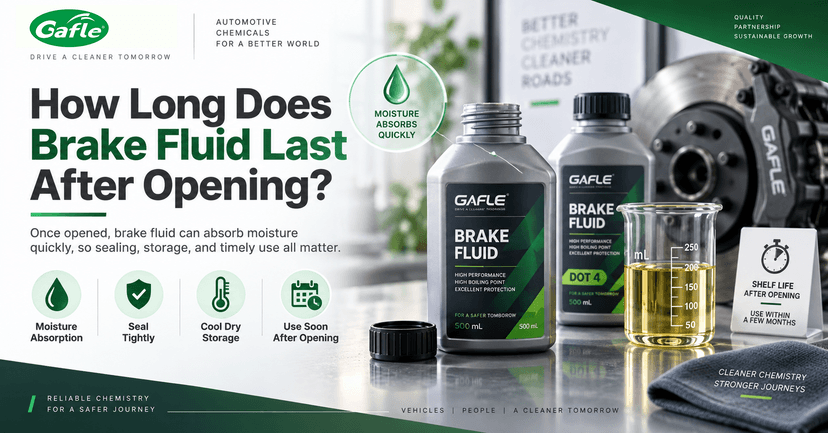
Unlike engine oil or transmission fluid, brake fluid is hygroscopic, meaning it naturally absorbs moisture from the air.
Even after the bottle is tightly closed again, a small amount of moisture may have already entered the container during use.
As moisture content increases, brake fluid gradually loses some of its original performance characteristics.
This can result in:
- Lower wet boiling point
- Reduced resistance to vapor formation
- Increased risk of internal corrosion
- Shorter service life
- Reduced braking reliability under demanding conditions
For this reason, opened brake fluid should never be stored indefinitely.
How Long Does Brake Fluid Last After Opening?
Many vehicle owners ask, "How Long Does Brake Fluid Last After Opening?"
There is no single answer because storage conditions play an important role. However, under normal conditions, most manufacturers recommend using opened brake fluid as soon as possible after opening and avoiding long-term storage.
The actual usable period depends on factors such as:
- How much air entered the bottle
- Storage temperature
- Humidity
- Whether the cap was tightly sealed
- Storage environment cleanliness
If brake fluid has been exposed to moisture or contamination, it should not be used in a braking system.
For workshops and distributors, using freshly opened brake fluid helps ensure maximum product performance and customer safety.
How to Store Brake Fluid Properly
Proper Brake Fluid Storage helps reduce moisture absorption and maintain product quality.
Keep the Container Tightly Sealed
Immediately close the cap after each use.
A tightly sealed container minimizes contact with humid air.
Store in a Cool, Dry Place
Brake fluid should be stored away from:
- Direct sunlight
- High temperatures
- High humidity
- Water sources
A clean, temperature-controlled storage area is recommended.
Prevent Contamination
Never allow dirt, dust, oil, or other fluids to enter the container.
Even small amounts of contamination may affect brake fluid performance.
Use Clean Equipment
Funnels, filling equipment, and containers should always be clean before handling brake fluid.
Maintaining cleanliness helps preserve product quality.
Can Opened Brake Fluid Still Be Used?
Opened brake fluid may still be suitable for use if it has been stored correctly and has not been contaminated. However, before using any previously opened container, it is important to verify that:
- The container remained tightly sealed.
- The fluid appears clean and free of visible contamination.
- There are no unusual odors or signs of degradation.
- It has not been stored for an excessive period.
If there is any doubt about the condition of the fluid, replacing it with a newly opened container is the safest option.
Because the braking system is directly related to vehicle safety, using fresh brake fluid is always the preferred choice.
How Gafle Ensures Product Quality During Storage
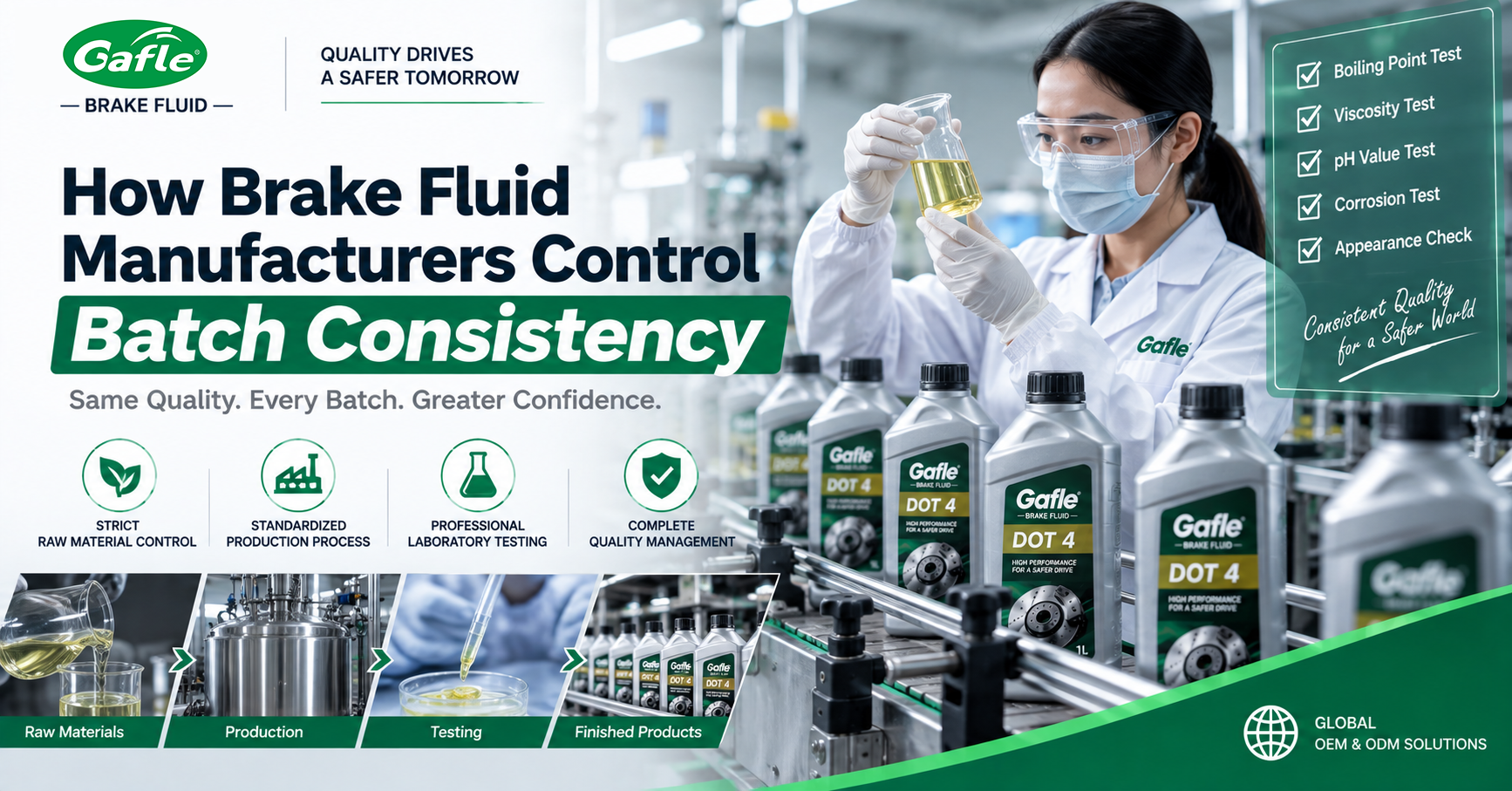
At Gafle, product quality is carefully controlled from raw material selection through packaging and storage.
High-Quality Packaging
Our brake fluid containers are designed to provide excellent sealing performance, helping reduce moisture exposure before the product reaches customers.
Professional Laboratory Testing
Every production batch undergoes comprehensive testing, including:
- Dry boiling point
- Wet boiling point
- Low-temperature viscosity
- Corrosion resistance
- Material compatibility
- Appearance inspection
Only products that pass all quality inspections are released for shipment.
Strict Warehouse Management
Finished products are stored in clean, well-managed warehouse facilities under controlled conditions to help preserve product quality throughout storage and transportation.
Comprehensive Quality Control
From raw materials to finished products, every manufacturing stage follows standardized quality management procedures to ensure consistent product performance.
Why Proper Storage Matters for OEM Customers
For OEM customers and distributors, proper storage practices are just as important as product quality.
Correct storage helps:
- Maintain consistent product performance
- Protect customer satisfaction
- Reduce product waste
- Support long-term inventory management
- Preserve brand reputation
Professional manufacturers also provide storage recommendations to help customers maximize product quality after delivery.
How to Choose the Best Brake Fluid Manufacturer in China
Many international buyers searching for the Best Brake Fluid Manufacturer in China understand that manufacturing quality extends beyond production.
A reliable supplier should provide:
- Professional manufacturing facilities
- Advanced laboratory testing
- Strict Brake Fluid Quality Control
- Reliable packaging technology
- Proper warehouse management
- OEM & Private Label services
- Stable production capacity
- International export experience
- Comprehensive technical support
These capabilities help ensure that brake fluid maintains its quality throughout production, storage, transportation, and customer use.
Why Global Customers Choose Gafle
As a trusted Brake Fluid Manufacturer, Gafle provides reliable brake fluid solutions for customers around the world.
Our advantages include:
- 20+ Years of Dedicated Brake Fluid Manufacturing Experience
- Professional Brake Fluid Laboratory
- Advanced Brake Fluid Testing Equipment
- Strict Brake Fluid Quality Control
- Modern Manufacturing Facilities
- Clean Production Environment
- IATF 16949 Quality Management System
- OEM & Private Label Manufacturing
- Customized Packaging Solutions
- Stable Large-Scale Production
- Global Export Experience
- Participant in Drafting China's National Brake Fluid Standards
These strengths allow Gafle to provide distributors, importers, and automotive brands with premium brake fluid products and dependable long-term manufacturing partnerships.
Frequently Asked Questions
How long does brake fluid last after opening?
Opened brake fluid should be used as soon as practical after opening. Its usable life depends on storage conditions, how well the container is sealed, and the level of exposure to moisture.
Does brake fluid expire after opening?
Yes. Once opened, brake fluid gradually absorbs moisture from the air, which can reduce its performance over time.
How should brake fluid be stored?
Brake fluid should be stored in a tightly sealed container in a cool, dry, clean environment away from direct sunlight and sources of contamination.
Can opened brake fluid still be used?
It may still be usable if it has been properly sealed, stored correctly, and remains free from contamination. If there is any uncertainty about its condition, replacing it with fresh brake fluid is the safest approach.
How should buyers choose the Best Brake Fluid Manufacturer in China?
Buyers should evaluate manufacturing capability, laboratory testing, quality control systems, packaging quality, OEM experience, export capability, and long-term technical support rather than focusing only on price.
Conclusion
Understanding Brake Fluid Shelf Life is essential for maintaining safe and reliable braking performance. Because brake fluid naturally absorbs moisture after opening, proper Brake Fluid Storage plays a critical role in preserving its quality.
Whether you are a vehicle owner, workshop, distributor, or OEM customer, following good storage practices helps protect braking performance and reduce unnecessary product waste.
For businesses searching for the Best Brake Fluid Manufacturer in China, partnering with an experienced manufacturer that combines advanced laboratory testing, strict quality control, high-quality packaging, and professional OEM services provides greater confidence throughout the entire supply chain.
With more than 20 years of manufacturing experience, Gafle continues to supply premium brake fluid products through scientific manufacturing, rigorous testing, and continuous quality improvement.
At Gafle, every bottle is carefully manufactured, securely packaged, and rigorously tested—because maintaining brake fluid quality begins long before it reaches the vehicle.