Why premium coolant matters more than many buyers assume
Choosing a premium coolant is not just a maintenance decision for passenger cars and trucks; it is a small purchasing choice that affects temperature control, corrosion protection, and the life of the cooling system itself. When an engine runs too hot, the damage is obvious. The less visible problem is what happens over time: scale buildup, degraded heat transfer, worn hoses, and corrosion inside the radiator, water pump, and passages that are hard to inspect until they fail.
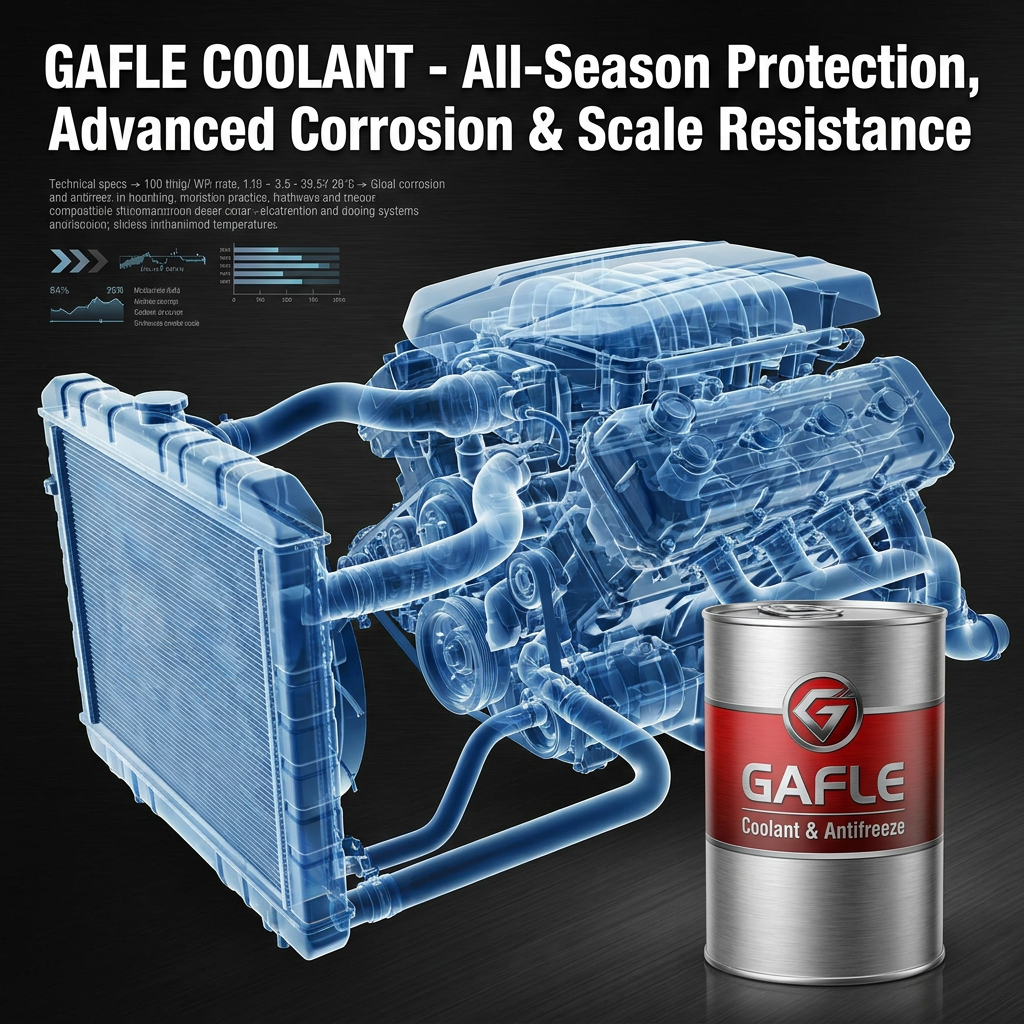
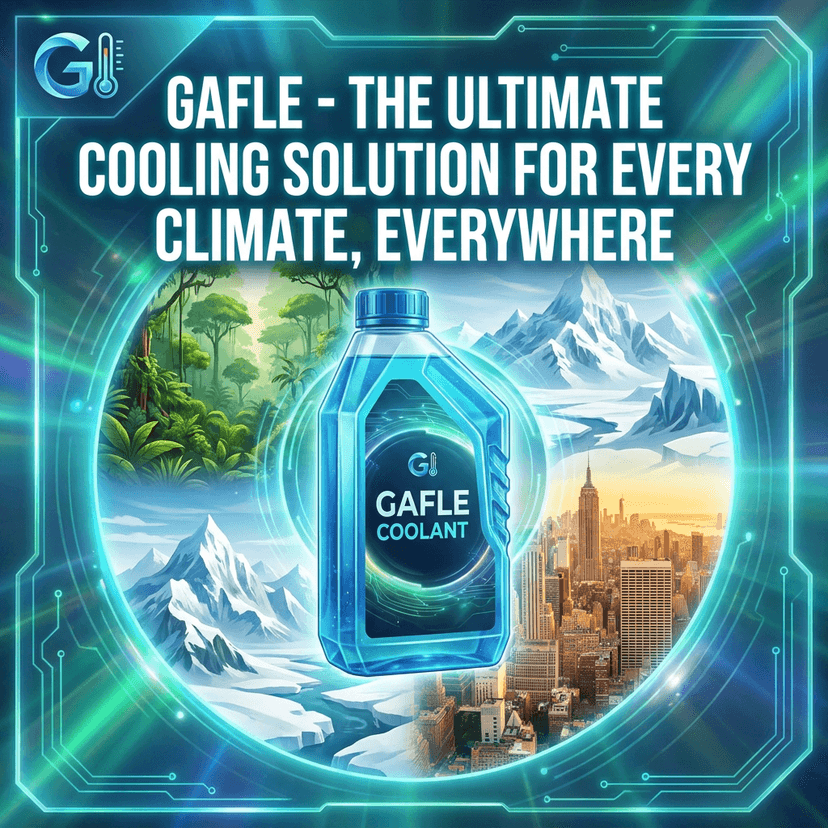
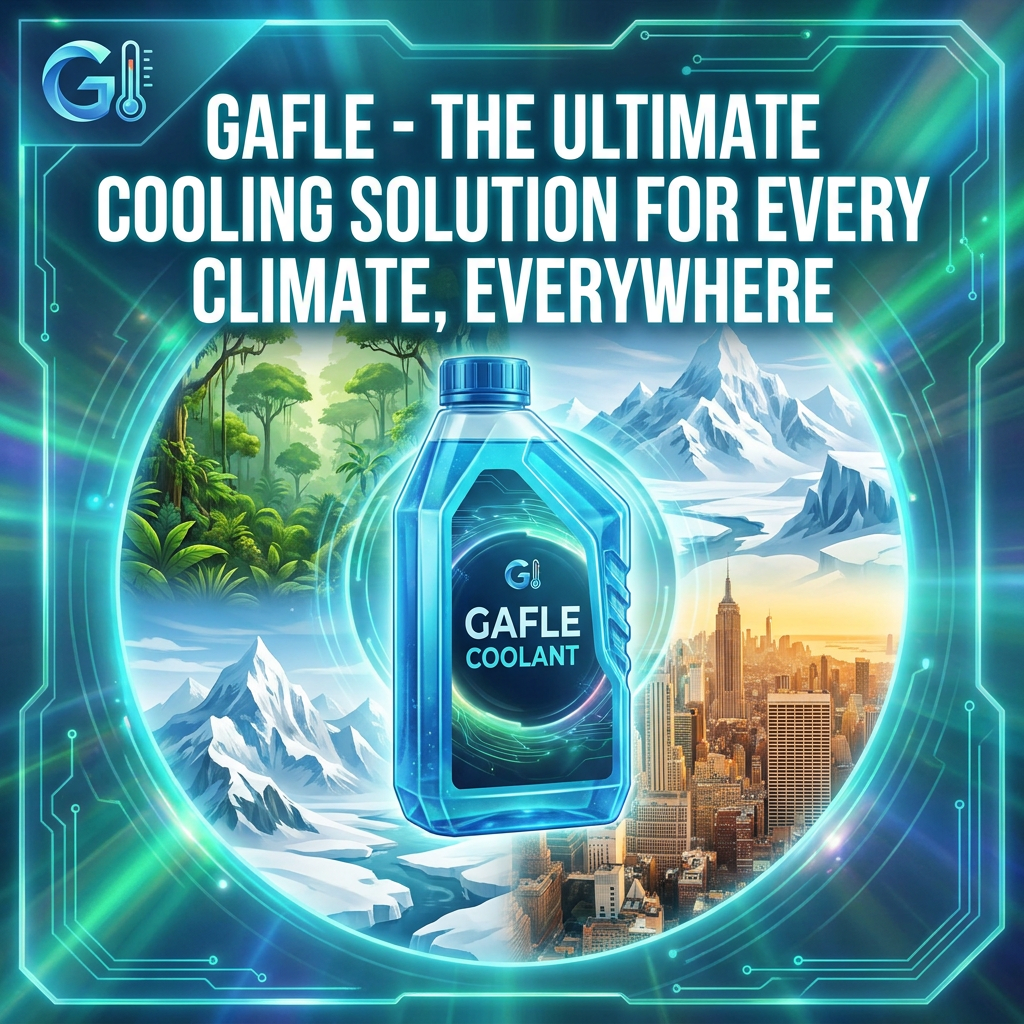
That is why buyers in workshops, fleet maintenance, and parts sourcing tend to look beyond the word “antifreeze.” They want a fluid that supports all-season operation, resists corrosion, and performs consistently in mixed driving conditions. A packaged product such as GAFLE Coolant & Antifreeze, shown as an industrial canister for automotive cooling systems, is positioned around those needs. The promotional artwork points to all-season protection and advanced corrosion and scale resistance, which is the right general direction for this category even when the exact chemistry is not disclosed.
What a cooling system buyer is really evaluating
The label may say coolant, antifreeze, or both, but the practical question is simpler: will the fluid help the engine stay within its operating window while protecting the system from winter freezing and long-term internal wear? In most purchasing situations, that means weighing three things at once.
First is thermal control. A coolant has to carry heat away from the engine and release it in the radiator. Second is freeze and boil protection, especially for vehicles that face seasonal swings or idle in stop-start service. Third is chemical protection. Corrosion, scale, and deposits do not always cause immediate breakdowns, but they slowly reduce efficiency and can shorten the service life of metal components and seals.
That is the real reason many buyers search for terms like premium antifreeze or antivries premium: they are looking for a product that does more than simply lower the freezing point. They want a formulation that behaves well across the full cooling circuit.
What the product presentation tells us
The visible packaging is a metal canister with a silver body and red label band, marked “GAFLE Coolant & Antifreeze.” The artwork shows a stylized engine and radiator rather than the fluid itself, which is common in industrial chemical marketing. That means you should read the claim as a category signal, not as a technical datasheet.
From the visible information, the product is meant for liquid-cooled engines, radiators, passenger vehicles, trucks, and other systems that need year-round thermal management. The stated themes are familiar and sensible for this class of product: all-season protection and resistance to corrosion and scale buildup. What is not visible should stay unassumed. Exact coolant type, mix ratio, freeze and boil points, OEM approvals, and whether the fluid is concentrated or premixed are not provided here, so a buyer should not build a specification sheet from the artwork alone.
Quick buyer checks before you place a coolant order
For sourcing teams and service managers, the shortlist is usually more practical than technical. Match the coolant to the vehicle population you actually maintain. A fleet with mixed makes and older radiators may have different needs from a dealer service bay or a commercial repair shop. Confirm compatibility with the current fill strategy, because topping off the wrong chemistry can create more problems than it solves. And do not ignore packaging details: industrial liquid products need secure transport, legible labeling, and shelf storage that keeps containers clean and sealed.
Common buying mistakes
One frequent mistake is treating all coolants as interchangeable. They are not. Another is focusing only on freeze protection while overlooking corrosion control. A third is assuming that a premium label guarantees OEM approval or a specific service interval. It does not. Those details must be verified from the actual product documentation.
Where premium coolant fits in maintenance planning
For engineers and maintenance planners, coolant should be treated as a system fluid, not a refill item. It interacts with aluminum, cast iron, seals, hoses, pumps, and radiator materials. Over time, even a good formulation can be compromised by contamination, incorrect dilution, or poor service practices. That is why many shops prefer to standardize on one verified product family and train staff on top-off and drain intervals.
If you are comparing a premium koelvloeistof against a generic alternative, the deciding factor is often not price alone. It is how much risk you want to carry in the cooling system. A lower-cost fluid may look acceptable at purchase, but if it offers weaker corrosion control or inconsistent protection, the real cost shows up later in repairs and downtime.
Practical takeaway for sourcing and service teams
Use the product claim as a starting point, then ask for the technical document set before committing. Confirm chemistry, application fit, packaging size, and service recommendations. For industrial buyers, that small amount of diligence saves more trouble than most last-minute repairs ever do.
If you are evaluating GAFLE Coolant & Antifreeze or any similar premium koelmiddel for automotive or fleet use, the next step is straightforward: request the full specification sheet, verify compatibility with your cooling systems, and compare it against your maintenance standard rather than a marketing headline.