Why premium coolant matters before the engine starts running hot
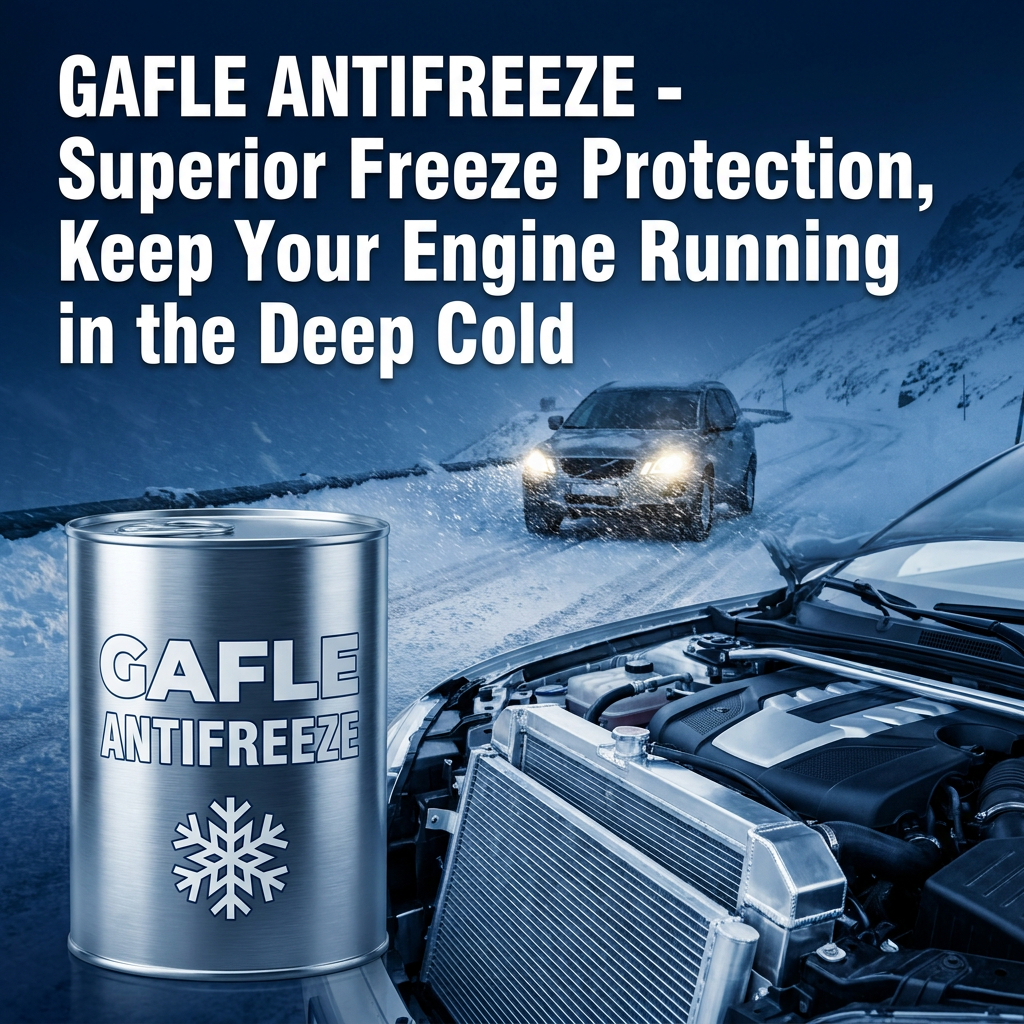
Choosing premium coolant is not just a maintenance habit for neat-freak owners. It is one of the simplest ways to protect an engine’s cooling system from two failures that do real damage: freezing in cold weather and overheating when the load climbs. For fleet managers, repair shops, and vehicle owners who keep cars or trucks longer than a lease term, the decision is less about buying a bottle and more about protecting radiators, hoses, water pumps, and the engine block itself.
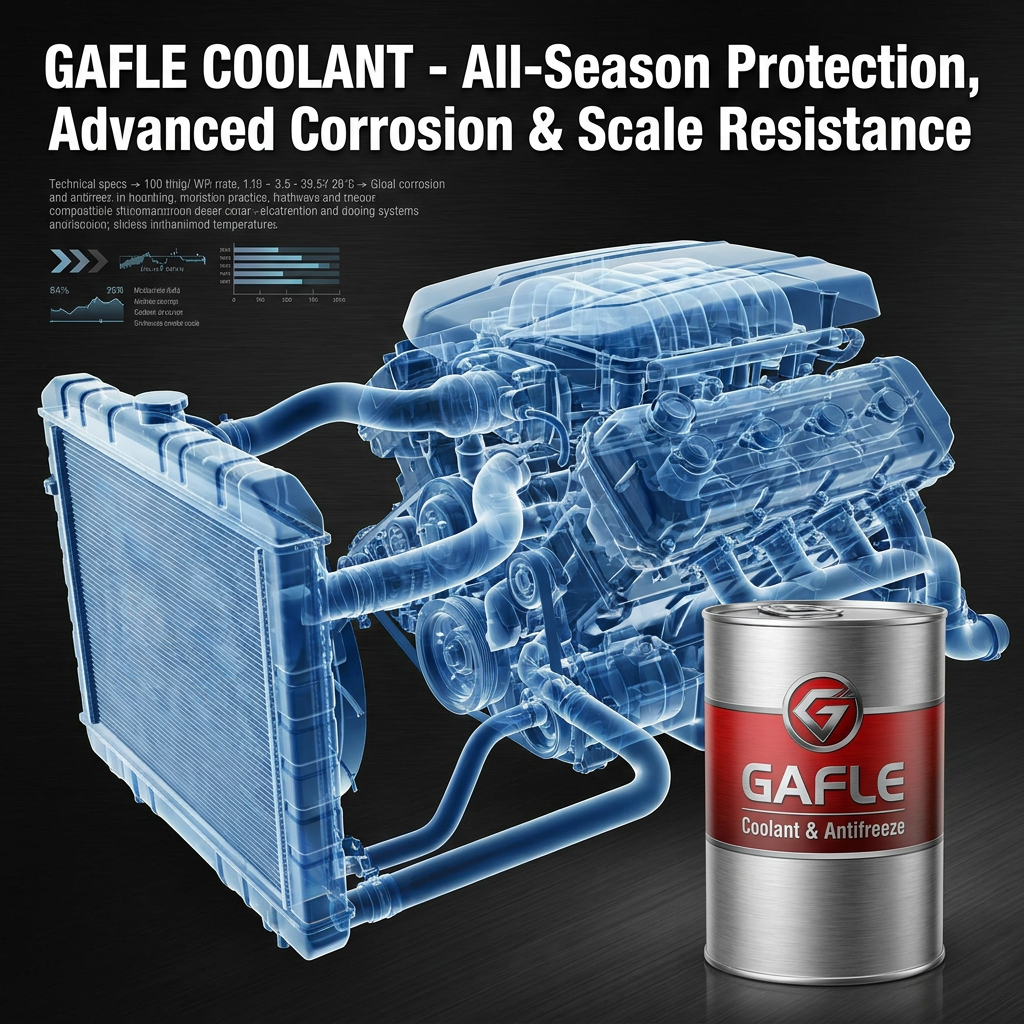
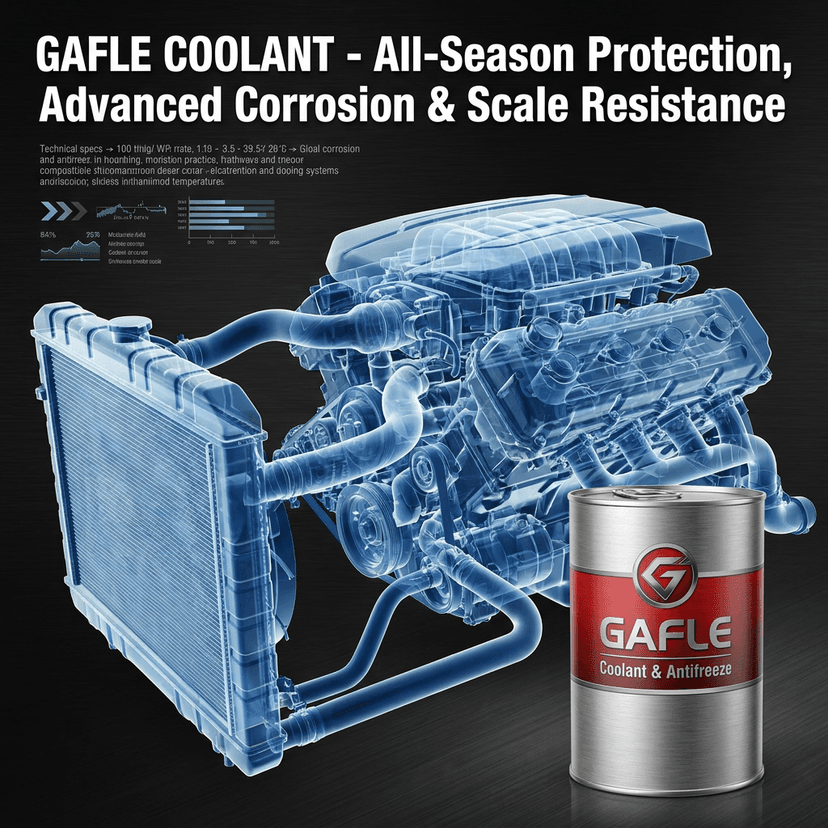
The product shown here, GAFLE Coolant & Antifreeze, is presented as a closed-loop heat-transfer fluid for engine cooling systems. The visual cues are familiar: radiator, hoses, engine passages, and a metallic can intended for maintenance use. The label points to “All-Season Protection” and “Advanced Corrosion & Scale Resistance,” which is the sort of message buyers should look for when comparing coolant options. It is practical language, not a sales flourish, and it reflects what most buyers actually need to decide: can this fluid help the system stay stable over time?
What the buyer is really evaluating
On paper, many coolant products sound similar. In practice, the differences matter because the wrong choice can shorten component life or create compatibility headaches. When people search for premium antifreeze or premium koelvloeistof, they usually want one of four things: seasonal protection, corrosion control, scale resistance, or a dependable refill fluid for routine service. That is especially true in mixed-use environments where passenger vehicles and trucks may be operating under different duty cycles, but the maintenance team still wants a straightforward product decision.
A premium coolant should be judged less by the word “premium” and more by what it is designed to do in the cooling circuit. The engine coolant must transfer heat efficiently, remain stable under operating conditions, and help protect metal surfaces inside the system. If deposits form, or if corrosion starts eating at internal parts, the whole system gets less efficient. That can show up as higher operating temperatures, weaker heater performance, or premature wear in components that should have lasted much longer.
Quick comparison: what good coolant packaging usually tells you
Buyers do not always have a full lab sheet in front of them, so the package and product description become the first screening tool. A well-presented coolant product usually tells you the intended function, the protection claims, and whether it is for maintenance, refill, or seasonal use. The GAFLE canister, for example, clearly emphasizes coolant and antifreeze function rather than hiding behind vague wording.
What it does not tell you is just as important. The available information does not specify the exact base chemistry, package concentration, vehicle approvals, or service interval. That means a responsible buyer should avoid assuming compatibility just because the product is labeled as premium koelmiddel or antivries premium. In coolant selection, assumptions are expensive. Mixing incompatible chemistries can create sludge, reduce protection, or complicate future service work.
Selection criteria that actually help
For sourcing teams and workshop buyers, the most useful questions are straightforward:
Is the coolant intended for the vehicle type you service most often?
Does the product description clearly mention corrosion and scale resistance?
Is the package and labeling clear enough for controlled storage and issue from inventory?
Can the product support all-season use without special handling?
Those questions may sound basic, but they catch many bad buys early. A coolant that looks fine in a catalog can still be a poor fit if the chemistry is not aligned with the engine family or the maintenance program. If the supplier cannot confirm compatibility, that is a warning sign worth respecting.
Common mistakes buyers still make
The biggest mistake is treating all antifreeze as interchangeable. Another is focusing only on freeze protection and ignoring corrosion control. In a liquid cooling system, corrosion may be slower to reveal itself, but it can be more expensive in the long run. Deposits and scale buildup reduce heat transfer, and once that happens the engine starts losing the advantage that the coolant was meant to provide in the first place.
There is also a practical storage issue. Metal cans are often chosen for robustness and shelf presentation, but the real concern is keeping product identity clean in the warehouse. If a plant or workshop stores multiple coolants, labels must remain legible and product segregation should be disciplined. A small mismatch during topping-up is the kind of mistake that is easy to make and annoying to clean up later.
Practical buyer advice for maintenance teams
If you are buying coolant for a service bay, keep the decision close to the vehicle population you actually maintain. Passenger cars, light-duty trucks, and other internal combustion engines all use radiator-based cooling, but their service requirements can differ. When possible, standardize around a coolant that is clearly documented by the supplier and easy for technicians to identify at a glance.
For procurement, the safest path is to request the product data you need before ordering volume: base chemistry, approvals, compatibility notes, and storage guidance. None of that should be guessed. If a supplier cannot provide it, the “premium” label does not do enough work on its own.
FAQ
Is premium coolant only for new vehicles?
No. It is often used in maintenance and refill applications as long as the product matches the system and the manufacturer guidance.
Does premium antifreeze always mean better protection?
Not automatically. The term helps with positioning, but the real value comes from verified chemistry, correct compatibility, and reliable corrosion control.
Can one product cover seasonal changes?
That is the point of all-season coolant products, but buyers should still confirm what the supplier actually states and avoid mixing unfamiliar fluids.
A sensible next step
If you are comparing coolant suppliers, start with the product data rather than the marketing line. Look for clear application notes, compatibility information, and the protection claims that matter in service: heat transfer, freeze protection, and resistance to corrosion and scale. That is the difference between buying a liquid in a can and buying something that can quietly protect an entire cooling system for the long haul.