Why premium coolant is not just a refill item
For many buyers, premium coolant only comes into focus when a vehicle starts running hot, a service bay sees brown sludge in the expansion tank, or winter exposes a weak freeze margin. That is usually too late. Coolant is not simply colored fluid in a radiator; it is part heat-transfer medium, part corrosion inhibitor, part scale control, and part long-term insurance for the engine, radiator, hoses, and water pump.
In a liquid-cooled internal combustion engine, the cooling circuit has to do several things at once. It must move heat away from the engine, keep freezing from splitting components in cold weather, and resist the gradual damage caused by oxidation, minerals, and mixed-metal corrosion. A product marketed as a premium antifreeze or premium koelvloeistof is usually positioned around those broader duties, not just seasonal freeze protection. That matters because the wrong fluid choice can create maintenance problems that are slow, expensive, and hard to trace back to the refill on the service invoice.
What the product presentation tells a buyer
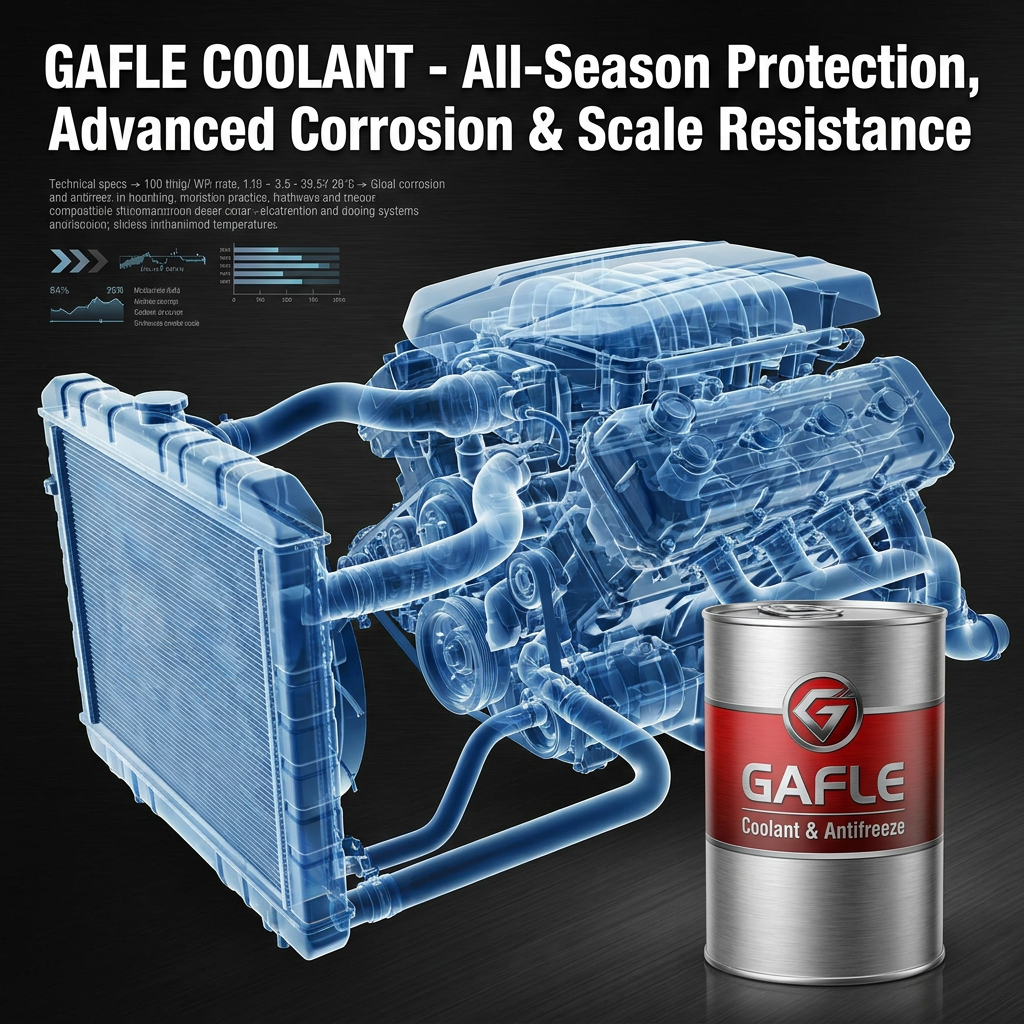
The branded metal can shown for GAFLE Coolant & Antifreeze is clearly aimed at the automotive cooling system market. The visual cues are familiar: a radiator, hoses, and an engine depicted in a transparent layout, which signals use in the full cooling loop rather than a single component. The headline claims all-season protection, with corrosion and scale resistance called out as the main performance benefits.
That combination is useful to sourcing managers and maintenance teams because it points to a general-purpose automotive coolant category, likely intended for topping up or replacement in passenger cars, trucks, and other liquid-cooled engines. The exact chemistry is not visible, so it would be risky to assume whether this is ethylene glycol, propylene glycol, or a specific inhibitor system such as OAT or HOAT. A careful buyer should always confirm the service specification before mixing with an existing fill.
Quick reference: what buyers usually compare
When evaluating premium koelmiddel or antivries premium products, the real comparison is usually not brand language but service fit. Buyers look at whether the product is premixed or concentrated, what vehicle families it supports, and whether it is compatible with the current coolant already in the system. They also ask whether the fluid is meant for long drain intervals or standard service use, and whether it has a documented corrosion package for mixed metals.
Those questions matter because a coolant can look fine in a jug and still be wrong for the vehicle platform. Mixing technologies without checking compatibility is a common shortcut, and it is often the source of gel formation, reduced inhibitor performance, or deposits that restrict heat transfer. In other words, the cheapest top-up can become the most expensive fluid in the workshop.
Why corrosion and scale resistance matter so much
Coolant has to work against forces that are easy to overlook. Corrosion attacks aluminum, steel, cast iron, solder joints, and other metals in the cooling loop. Scale builds up when minerals precipitate out and coat hot surfaces, reducing the system’s ability to shed heat. Even a thin layer of deposit can make a radiator less efficient and force the engine to run hotter than it should.
That is why the claim of corrosion resistance and scale resistance is more than marketing fluff. For fleet operators, it can mean fewer cooling-related interruptions. For repair shops, it can mean fewer repeat visits after a flush. For OEM supply teams, it is one of the baseline expectations for any premium antifreeze sold into the aftermarket. Still, the buyer should remember that these benefits depend on the fluid being used as directed, with the right concentration and in a clean system.
Selection criteria that actually help
Match the vehicle requirement first
Start with the vehicle maker’s coolant requirement, not the product label color or the word “premium.” Some engines are picky about inhibitor type. Others need a particular mix ratio or service interval. If the product is intended as a universal top-up, check compatibility before it enters a sealed system.
Decide whether you need concentrate or premix
The product image does not confirm whether this is a concentrate or ready-to-use fluid. That distinction affects storage, mixing control, and service consistency. Concentrates offer flexibility but require disciplined water quality and accurate dilution. Premixes are simpler in the field, though less adjustable.
Consider operating climate and duty cycle
All-season protection sounds broad, but engine duty can vary a lot. Short-trip passenger cars, delivery vans, and heavy-duty trucks do not face the same thermal pattern. A product that handles hot and cold conditions well is valuable, yet the service decision still needs to account for load, ambient temperature, and how often the system is opened.
Common mistakes that cause trouble later
The most common mistake is mixing coolant types without verifying chemistry. The second is using tap water for dilution in hard-water regions, which can contribute to scale. A third, less dramatic but still costly mistake is assuming that any fluid labeled coolant and antifreeze will fit every engine. That assumption is convenient, and often wrong.
Another practical caution: if the old fluid is already contaminated, simply topping up with a premium coolant will not fix the underlying issue. Sludge, rust, or oily residue usually means the system needs inspection and a proper flush. It is a small point, but worth saying because coolant complaints often begin with one neglected service interval and then snowball.
What buyers should ask before placing an order
Before sourcing premium coolant at scale, ask for the formulation type, service compatibility, and whether the product is premixed or concentrated. Request the technical data sheet and confirm the intended vehicle applications. If the fluid will be used across mixed fleets, make sure the maintenance team understands where it can be used safely and where it cannot.
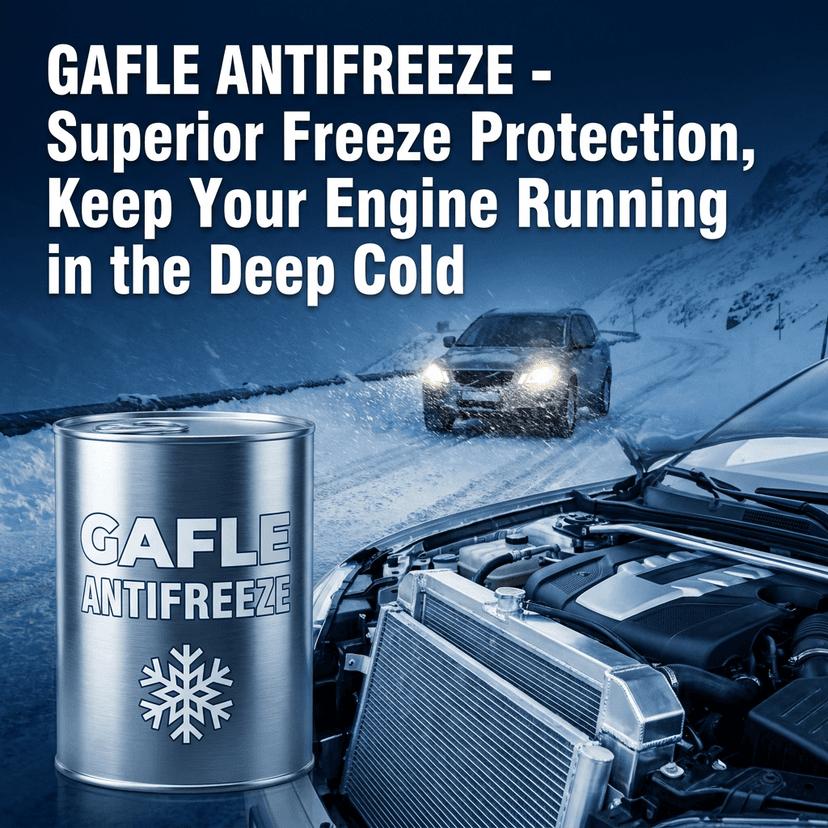
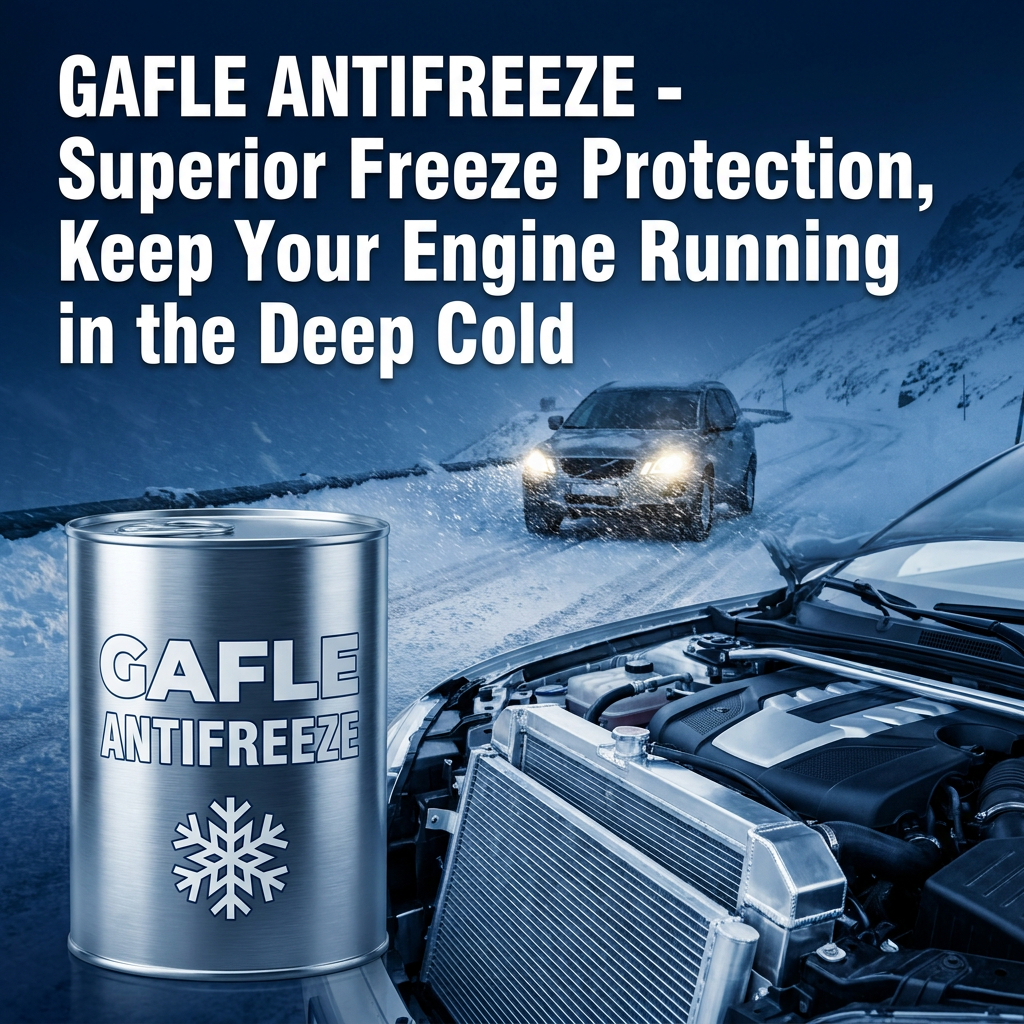
For procurement, packaging also matters. The GAFLE product is shown in a cylindrical metal can with a screw-top lid, which may appeal to buyers who want a more durable retail or workshop presentation than a plastic jug. That does not tell you everything about performance, of course, but it does tell you something about how the product is being positioned in the market.
FAQ: premium coolant in plain terms
Is premium coolant the same as premium antifreeze?
Often the terms are used together, but not always with identical meaning. Many products combine freeze protection with corrosion inhibition and heat transfer, which is why the labels overlap.
Can I mix premium koelvloeistof with the old fluid already in the engine?
Only if the product is confirmed compatible with the existing coolant type. If you cannot verify that, do not guess.
Does a premium label guarantee better performance?
No. The label is only the starting point. Chemistry, compatibility, concentration, and maintenance practice decide the real result.
What to do next
If you are selecting premium coolant for service work, fleet maintenance, or aftermarket resale, start with the vehicle requirement sheet and the product technical data. Use the label claims as a clue, not as proof. A coolant that promises all-season protection, corrosion resistance, and scale control can be a strong candidate, but only if it fits the engine family and the service method you actually use.
That is the real buying decision here: not whether the can looks premium, but whether the fluid will keep the cooling system stable after months of heat cycles, cold starts, and ordinary workshop mistakes.