
Spongy Brake Pedal At High Speed: The Hidden Danger Of Moisture-Contaminated Brake Fluid
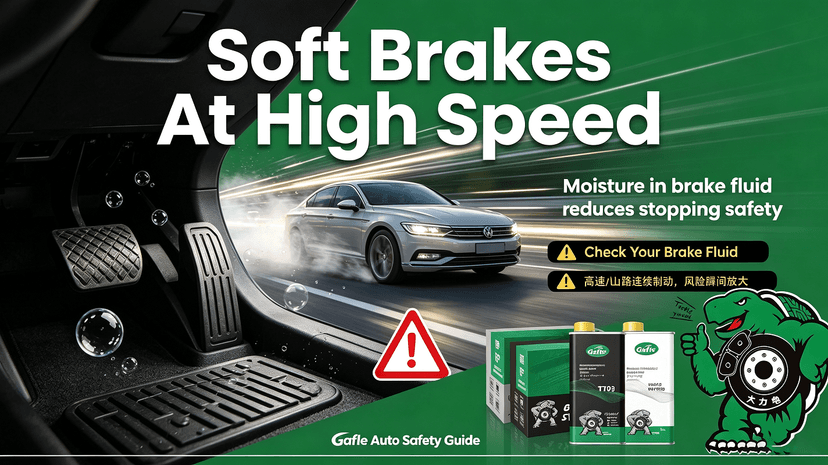
Most drivers attribute a mushy brake pedal to worn brake pads or aging calipers, overlooking a far more dangerous root cause: moisture buildup inside aged brake fluid. This hazard becomes deadly during highway cruising, mountain descents, and summer high-temperature travel, scenarios where repeated heavy braking spikes brake system heat to extreme levels. This article breaks down how contaminated brake fluid triggers sudden brake fade at high speeds, real-world accident risks, and actionable maintenance rules for all long-distance drivers.
1. The Terrifying Scenario: Soft Brakes During Highway Emergency Stops
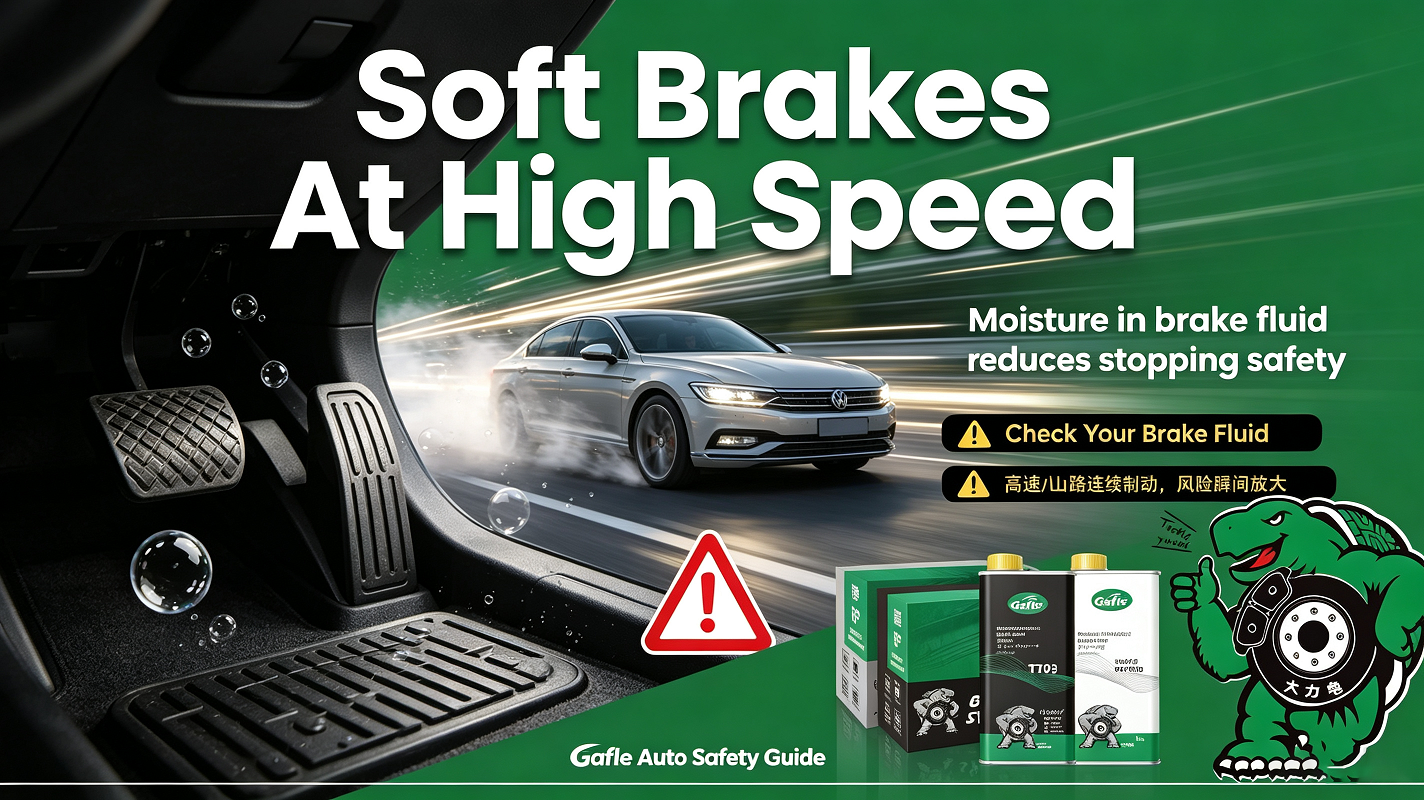
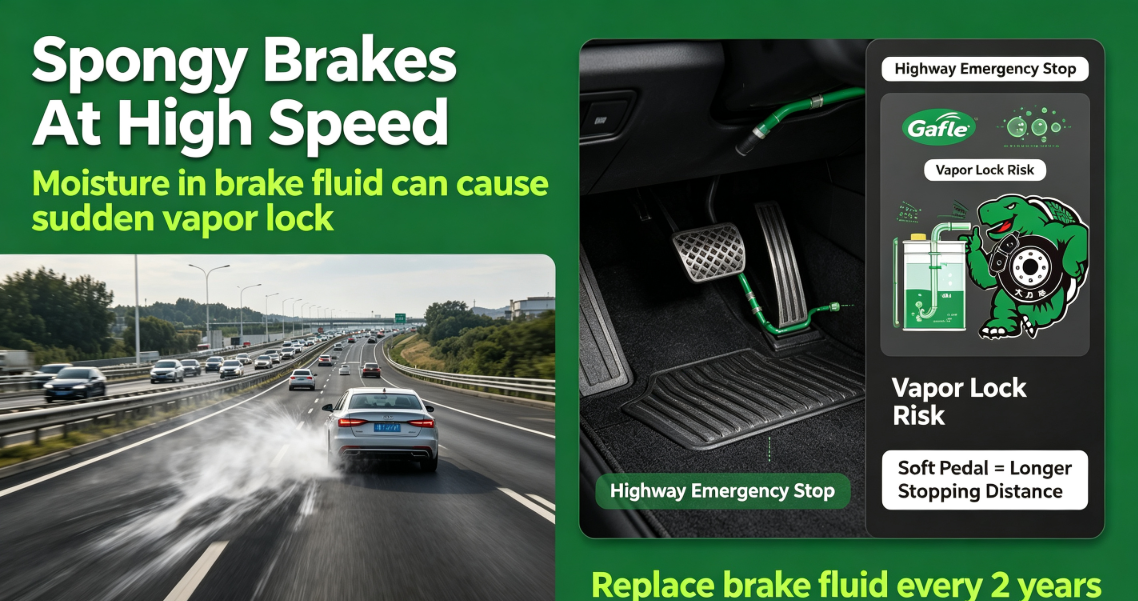
Imagine driving on a multi-lane highway at 110km/h, when traffic ahead suddenly slams on brakes. You press your brake pedal hard to avoid a collision, only to feel the pedal sink slowly toward the floor, with drastically reduced stopping power. This terrifying spongy brake sensation rarely stems from worn friction pads—it is almost always vapor lock caused by water-saturated brake fluid.
Brake pads wear gradually, giving drivers gradual warning of reduced stopping performance. Vapor lock from moisture-laden brake fluid strikes instantly without early warning, creating zero reaction time to avoid highway collisions.
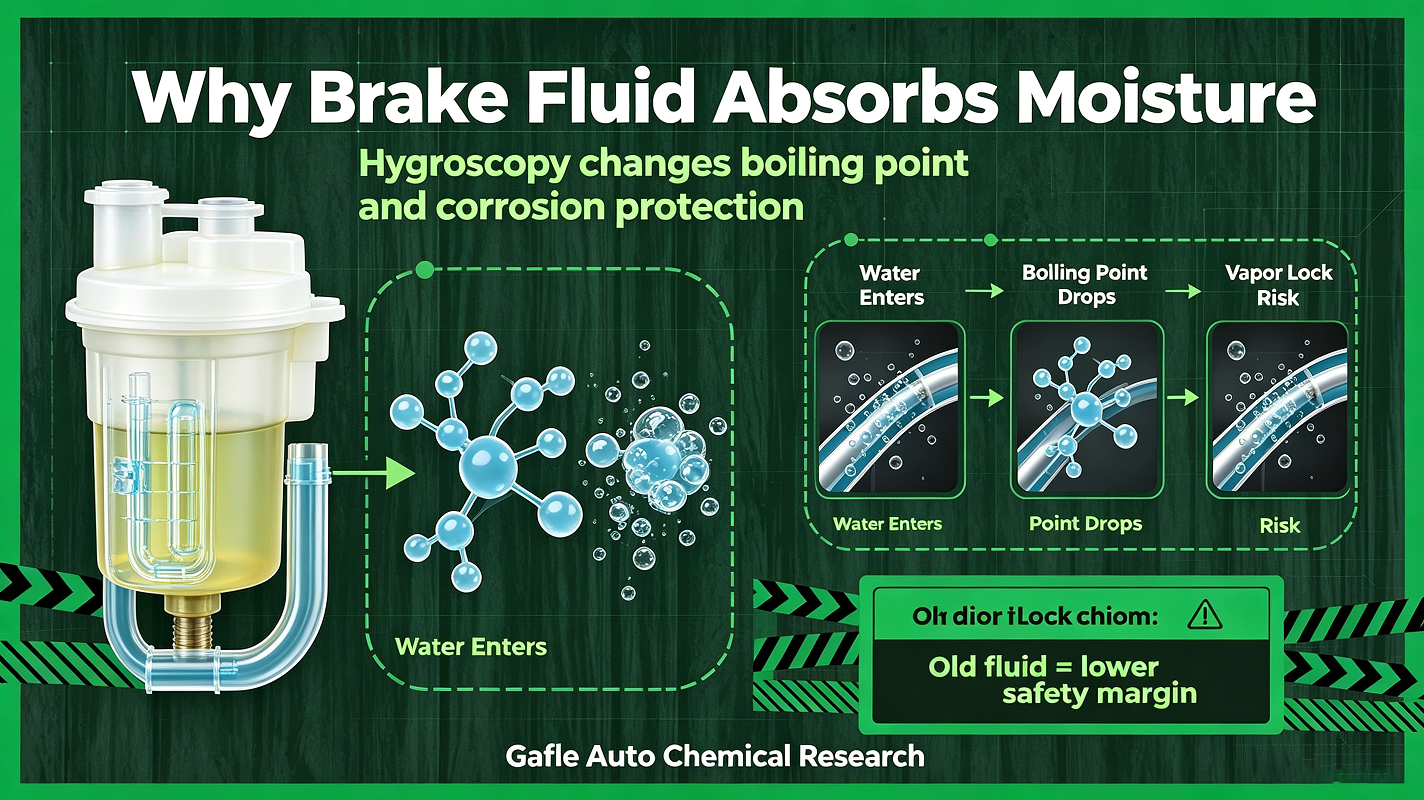
2. How Water Creates Vapor Lock Under High-Speed Braking
Glycol brake fluid continuously absorbs atmospheric moisture over time. When you apply brakes repeatedly on highways or downhill mountain passes, brake caliper temperatures surge above 120°C. Water trapped inside the fluid boils at just 100°C, forming compressible vapor bubbles within rigid steel brake lines.
Liquid brake fluid reliably transfers hydraulic pressure, but vapor bubbles collapse under pedal force, cutting power transmission to your wheels. The result is a soft, unresponsive brake pedal that extends stopping distance by dozens of meters at highway speeds.
3. Two High-Risk Scenarios That Amplify This Hazard
3.1 Long-Distance Highway Travel In Hot Summer Weather
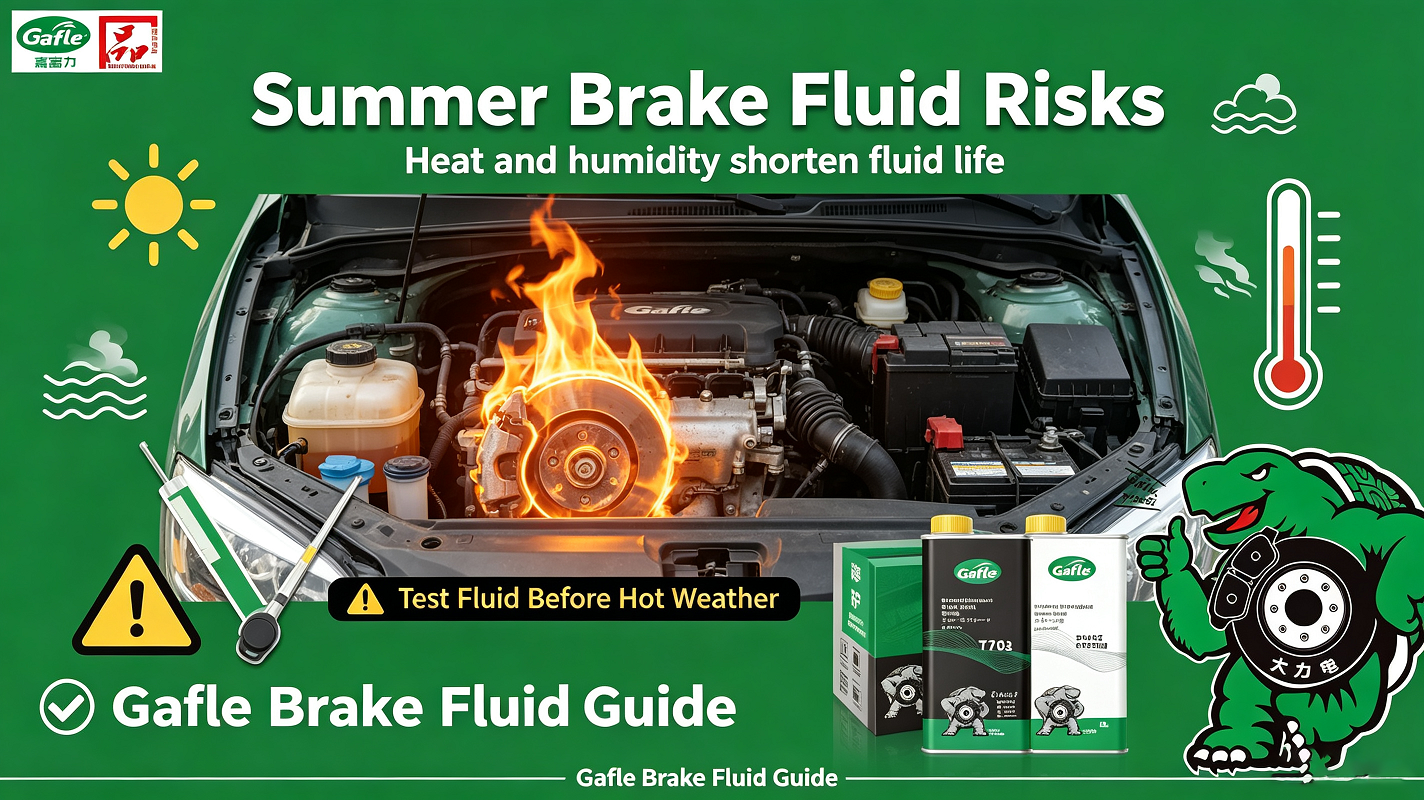
Ambient temperatures above 35°C already raise baseline brake system heat. Frequent acceleration and deceleration in highway traffic adds continuous thermal load to calipers, pushing fluid temperatures far past safe boiling thresholds. Vehicles parked outdoors in tropical regions absorb extra humidity year-round, accelerating moisture contamination inside brake reservoirs.
3.2 Continuous Downhill Mountain Road Driving
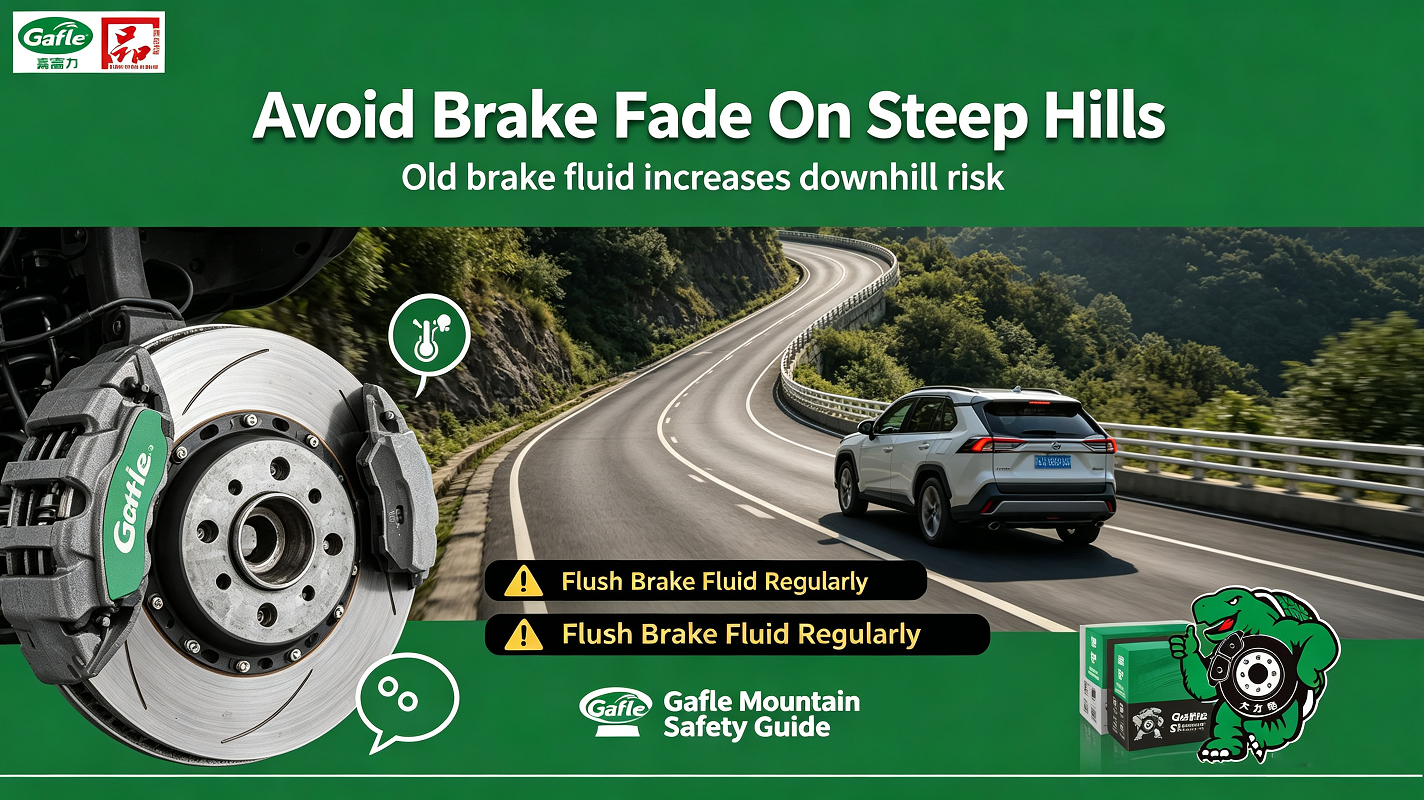
Truck, SUV and passenger vehicle drivers tackling steep mountain descents rely on sustained braking to control speed. Constant brake friction generates extreme heat in calipers, turning even moderately contaminated brake fluid into vapor within minutes. Many mountain road rear-end collisions trace their root cause to neglected brake fluid replacement.
4. Why Pad Replacement Cannot Fix Vapor Lock Brake Fade
Repair shops often default to replacing brake pads when drivers report soft brakes, but this solution only addresses surface friction issues. Moisture trapped deep within brake lines, ABS valves and wheel calipers remains untouched during a simple pad swap.
A full brake fluid flush and bleed is the only service that eliminates water contamination, restores the fluid’s factory boiling point, and eliminates vapor lock risk entirely. Top-tier DOT4 brake fluid from certified manufacturers maintains a high wet boiling point to resist bubble formation even under extreme thermal stress.
5. Lifesaving Maintenance Tips For High-Speed & Mountain Drivers
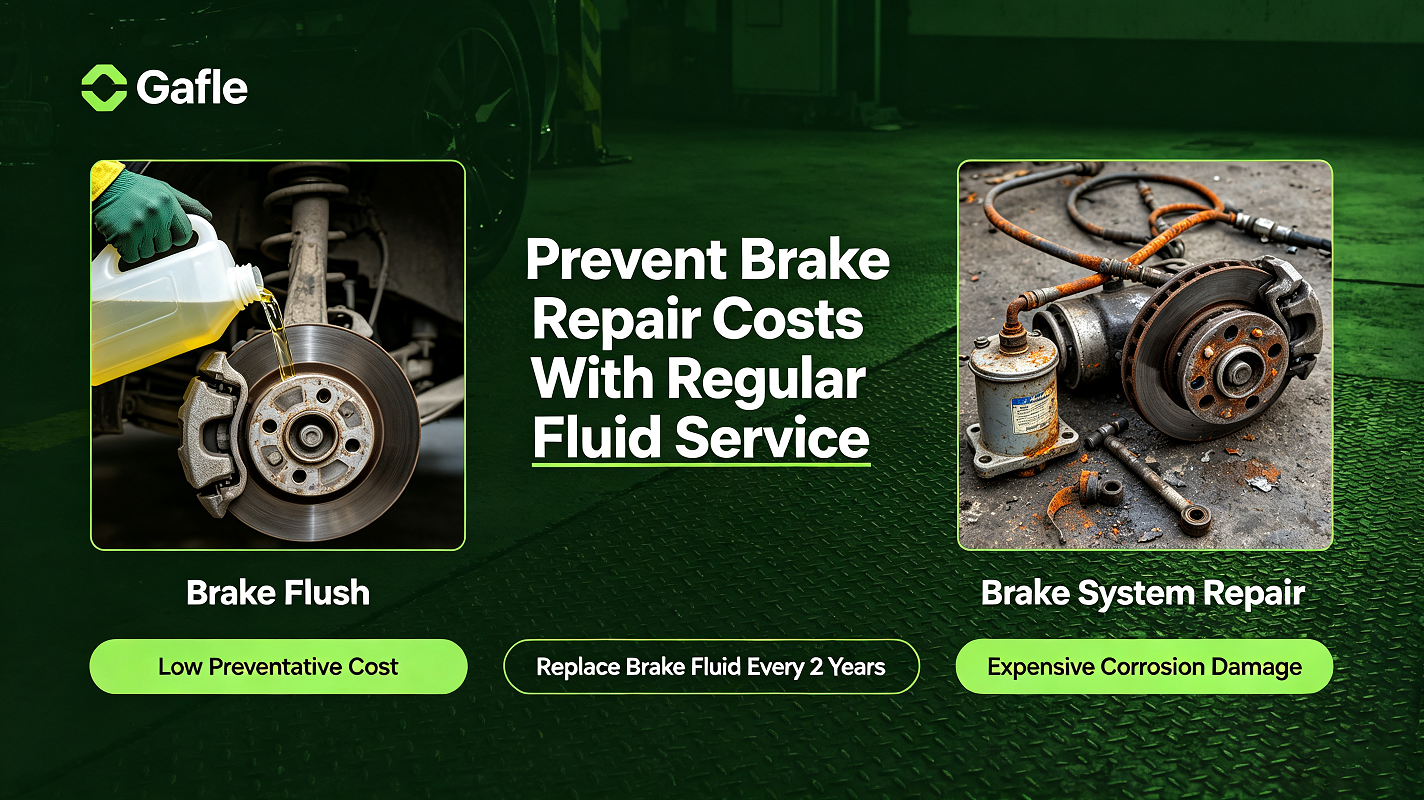
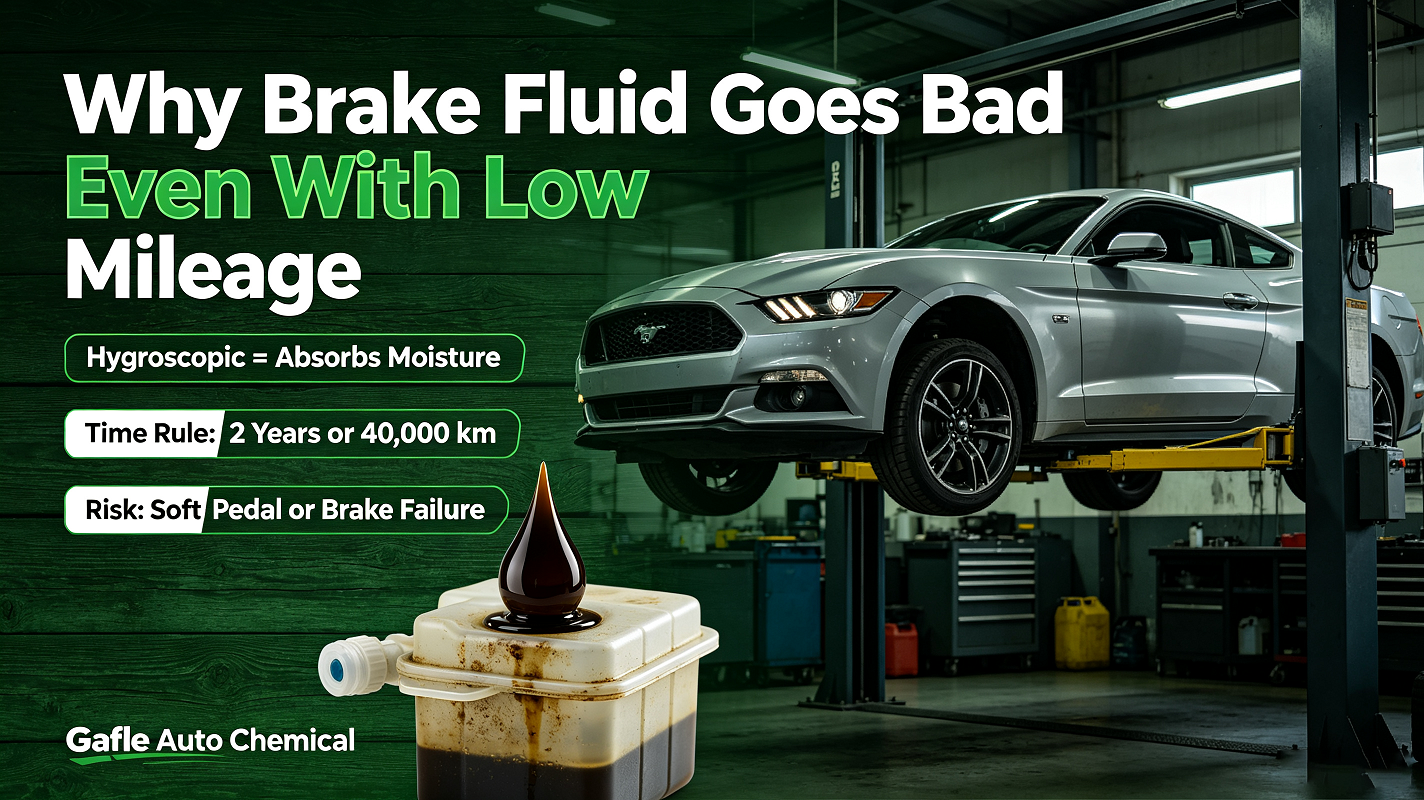
- Schedule full brake fluid flushing every 2 years, regardless of total mileage; humidity seeps into brake systems nonstop whether you drive daily or rarely.
- Test brake pedal firmness before long highway or mountain trips—any softness signals immediate fluid replacement is required.
- Avoid riding brakes on downhill stretches; use engine braking to reduce caliper heat buildup and delay fluid boiling.
- Choose fully certified DOT brake fluid with documented high boiling point performance for summer and mountain driving conditions.
Closing Summary
Spongy brake pedals at highway speeds are not a minor mechanical annoyance—they signal a life-threatening vapor lock risk from moisture-contaminated brake fluid. Brake pad changes cannot resolve this hidden hazard; only regular full-system brake fluid replacement protects you during emergency high-speed stops and steep mountain descents. Prioritize scheduled brake fluid maintenance to guarantee reliable, firm braking power in every driving scenario.
Welcome to contact GAFLE for more information & cooperation!
peter
ZHEJIANG GAFLE AUTO CHEMICL CO.,LTD
Tel:86-579-8222 1665
Fax:86-579-8246 4690
Cel/Wechart:86-13335993986
E-mail:peter@gafle.net
Web:www.gafle.net
peter
ZHEJIANG GAFLE AUTO CHEMICL CO.,LTD
Tel:86-579-8222 1665
Fax:86-579-8246 4690
Cel/Wechart:86-13335993986
E-mail:peter@gafle.net
Web:www.gafle.net