 Brake Fluid Color: what it tells engineers, buyers, and maintenance teams
What Color Should Brake Fluid Be?
Brake fluid is one of the most important fluids in a vehicle, yet many drivers rarely pay attention to its condition until a problem occurs. One of the first things people notice when checking brake fluid is its color. But does color really indicate quality? And what color should brake fluid be when it is in good condition?
The answer is that Brake Fluid Color can provide useful clues about the condition of the fluid, but color alone should never be the only factor when deciding whether it needs replacement.
As a professional Brake Fluid Manufacturer, Gafle has more than 20 years of dedicated manufacturing experience, supplying premium brake fluid products and OEM solutions to customers worldwide. In this guide, we'll explain what brake fluid color means, why it changes over time, and how to determine whether your brake fluid still provides reliable braking performance.
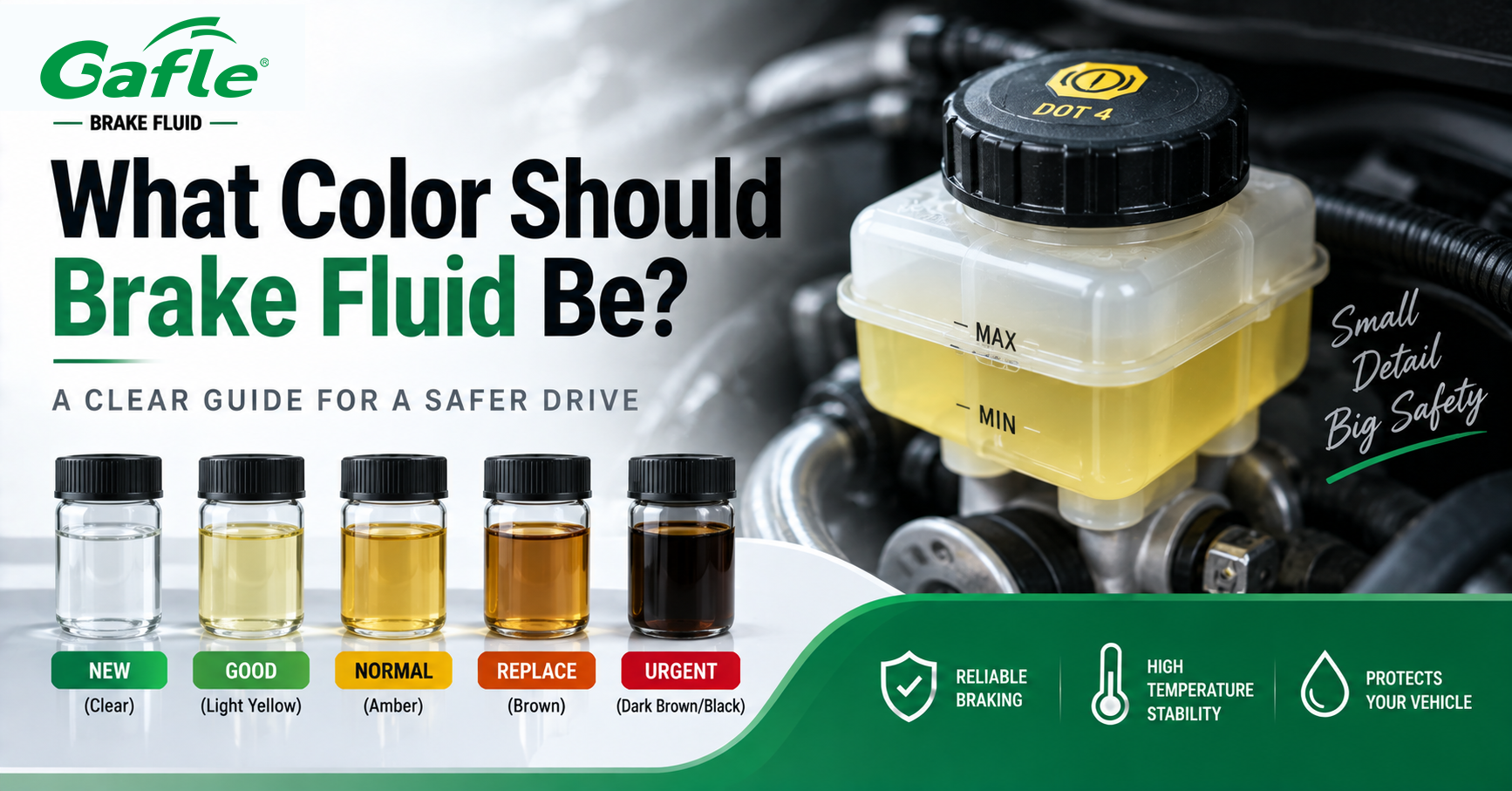
What Color Should Fresh Brake Fluid Be?
Fresh brake fluid is typically:
- Clear
- Light yellow
- Light amber (golden)
Depending on the formulation and manufacturer, slight color differences are completely normal.
High-quality brake fluid should always appear:
- Transparent
- Clean
- Free from visible particles
- Free from cloudiness
A clear appearance generally indicates that the fluid is new and uncontaminated.
Why Does Brake Fluid Change Color?
Over time, Brake Fluid Change Color is a natural process.
Several factors contribute to this change.
1. Moisture Absorption
Brake fluid is hygroscopic, meaning it naturally absorbs moisture from the surrounding air.
As moisture content increases:
- The fluid gradually darkens.
- The wet boiling point decreases.
- High-temperature performance may decline.
This is one of the primary reasons manufacturers recommend periodic brake fluid replacement.
2. Heat Exposure
During braking, friction between the brake pads and brake discs generates significant heat.
Repeated exposure to high temperatures accelerates fluid aging and may gradually darken the brake fluid.
Vehicles frequently driven in:
- Mountain roads
- Heavy traffic
- High-performance driving
- Commercial transportation
often experience faster brake fluid degradation.
3. Oxidation
Like many automotive fluids, brake fluid slowly oxidizes over time.
Oxidation changes the chemical properties of the fluid and may cause it to become darker during extended service.
4. Contaminants
Tiny particles from internal brake system components may gradually enter the brake fluid.
Although these particles are often microscopic, they can influence the appearance of the fluid.
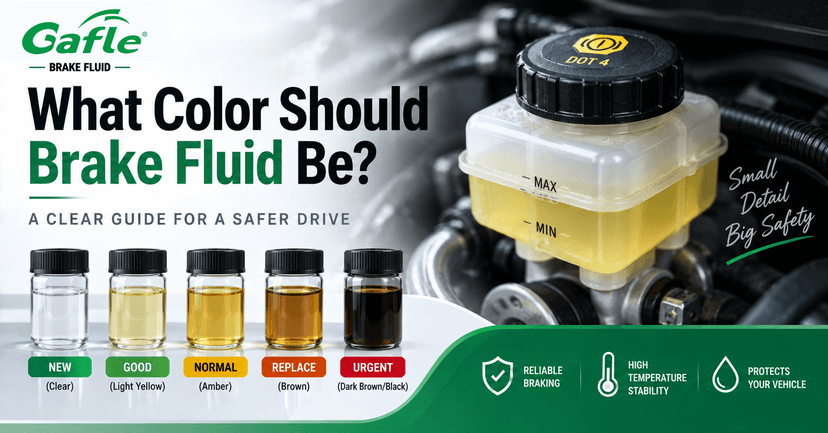
What Does Different Brake Fluid Colors Mean?
While color alone cannot determine brake fluid quality, it can provide a useful visual reference.
Clear to Light Amber
- New brake fluid
- Normal condition
- Suitable for use
Dark Yellow to Light Brown
- Normal aging
- Moisture absorption has begun
- Brake system inspection is recommended
Dark Brown
- Significant aging
- Higher moisture content may be present
- Brake fluid should be professionally evaluated
Very Dark Brown or Black
- Heavy contamination
- Severe oxidation
- Possible internal brake system wear
- Immediate inspection is recommended
It is important to remember that color should always be evaluated together with maintenance history and professional testing.
Can Brake Fluid Color Alone Determine Quality?
The simple answer is no.
Although Brake Fluid Color provides useful information, it does not directly measure brake fluid performance.
Professional evaluation should also consider:
- Dry boiling point
- Wet boiling point
- Water content
- Viscosity
- Corrosion protection
- Laboratory testing results
A slightly darker brake fluid may still perform within specification, while fluid that appears relatively clean could still have excessive moisture content.
For this reason, professional testing is the most reliable method of evaluating brake fluid condition.
How to Check Brake Fluid Condition
Regular inspection helps maintain braking safety.
Check the Reservoir
Most vehicles have a transparent brake fluid reservoir that allows visual inspection without opening the system.
Look for:
- Fluid level
- Fluid color
- Cloudiness
- Visible contamination
Follow the Maintenance Schedule
Most vehicle manufacturers recommend replacing brake fluid approximately every 2 years or 40,000 km (25,000 miles), depending on vehicle type and operating conditions.
Always follow the maintenance schedule provided by the vehicle manufacturer.
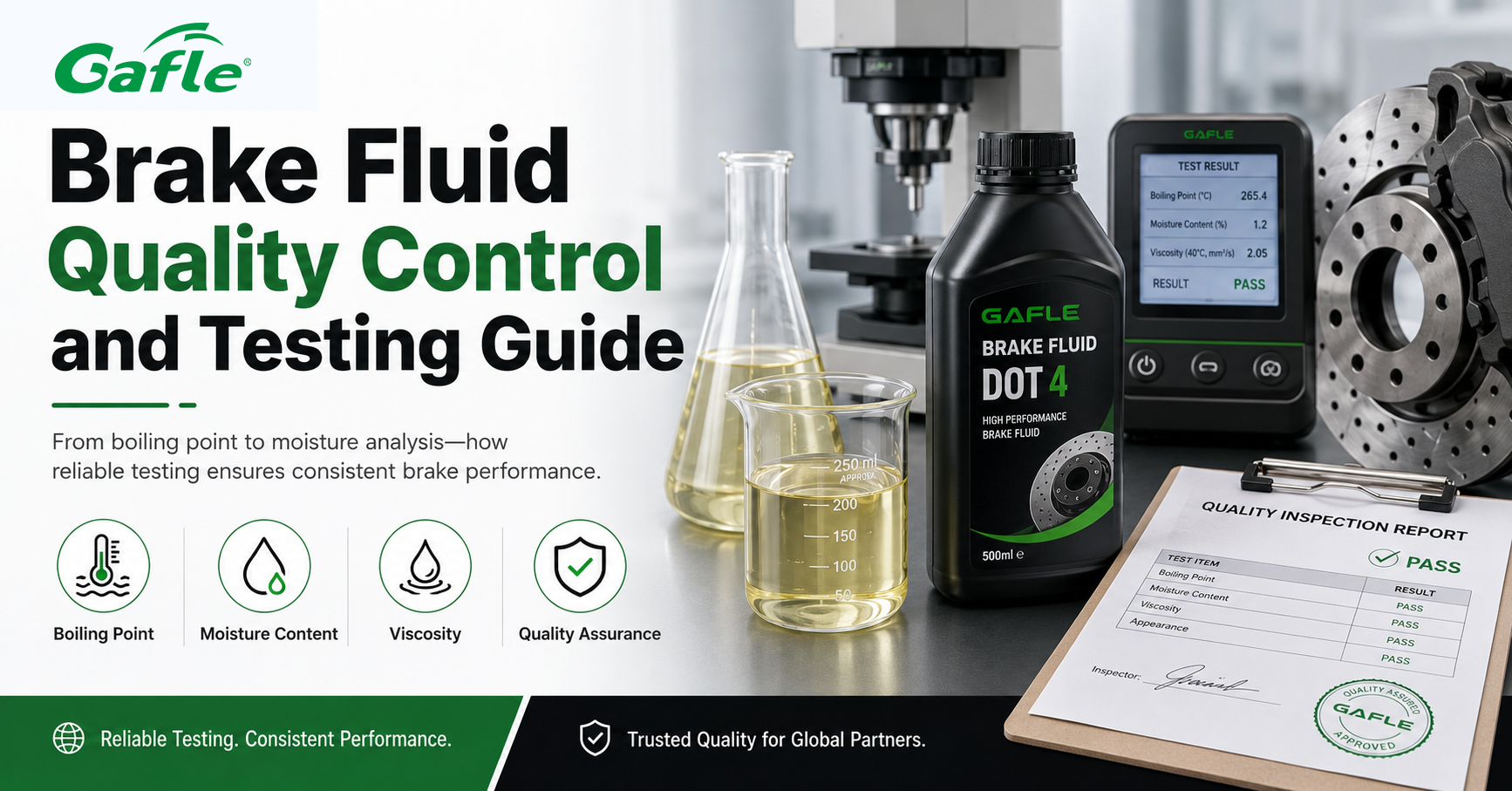
Use Professional Brake Fluid Testers
Modern brake fluid testers can measure moisture content and help evaluate brake fluid condition more accurately than visual inspection alone.
Why Brake Fluid Quality Matters
Choosing high-quality brake fluid provides benefits beyond appearance.
Premium Brake Fluid Quality helps deliver:
Higher Boiling Point
Supports stable braking performance during demanding driving conditions.
Better Corrosion Protection
Helps protect master cylinders, brake lines, calipers, and other hydraulic components.
Excellent Oxidation Resistance
Maintains product stability throughout the service life.
Reliable Hydraulic Performance
Consistent hydraulic pressure transmission contributes to predictable braking response.
Why Manufacturing Quality Matters
The performance of brake fluid depends not only on formulation but also on manufacturing quality.
A professional Brake Fluid Manufacturer should provide:
- Modern manufacturing facilities
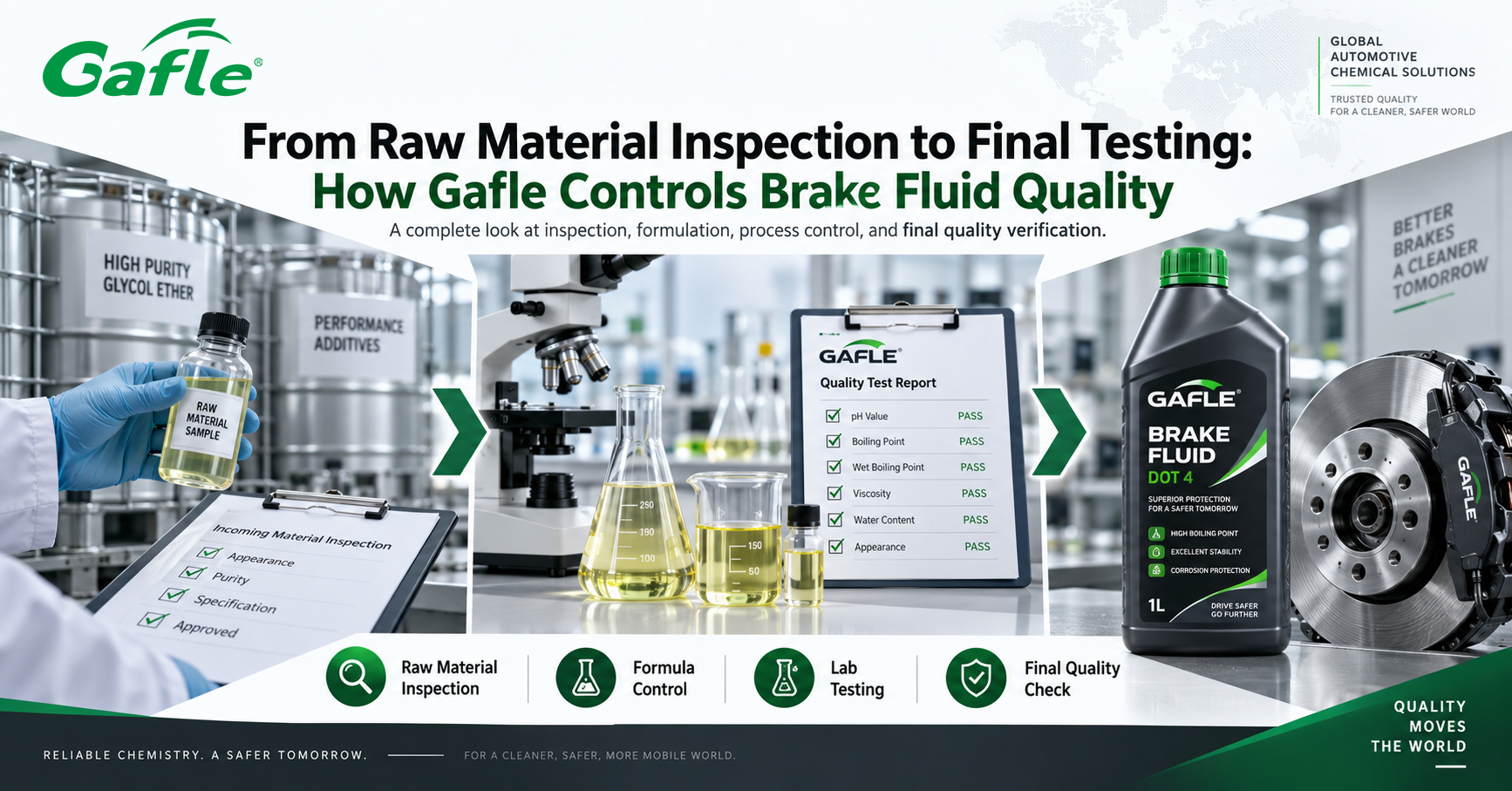
- Professional laboratory testing
- Strict quality management
- Clean production environment
- Stable production processes
- Batch consistency
- Comprehensive product inspection
Reliable manufacturing helps ensure every bottle performs consistently.
How to Choose the Best Brake Fluid Manufacturer in China
Many international buyers searching for the Best Brake Fluid Manufacturer in China understand that manufacturing quality is just as important as product pricing.
When selecting a supplier, consider:
- Manufacturing experience
- Professional laboratory testing
- Brake Fluid Quality Control
- Modern production facilities
- OEM manufacturing capability
- Private label solutions
- Stable production capacity
- Export experience
- Technical support
- Long-term partnership value
Choosing a manufacturer with these strengths helps improve product quality while reducing sourcing risks.
Why Global Customers Choose Gafle
As a trusted Brake Fluid Manufacturer, Gafle provides reliable brake fluid manufacturing solutions for customers around the world.
Our strengths include:
- 20+ Years of Dedicated Brake Fluid Manufacturing Experience
- DOT 3, DOT 4, and DOT 5.1 Brake Fluid Production
- Modern Manufacturing Facilities
- Professional Laboratory Testing
- Strict Quality Management
- IATF 16949 Quality Management System
- OEM Brake Fluid Manufacturing
- Private Label Solutions
- Customized Bottles, Labels, and Cartons
- Stable Large-Scale Production
- Global Export Experience
- Participation in Drafting China's National Brake Fluid Standards
These capabilities allow us to consistently deliver premium brake fluid products that meet the expectations of customers worldwide.
Frequently Asked Questions
What color should brake fluid be?
Fresh brake fluid is typically clear, light yellow, or light amber. Slight color differences between manufacturers are normal.
Why does brake fluid turn brown or black?
Brake fluid naturally darkens over time due to moisture absorption, heat exposure, oxidation, and contaminants from the braking system. Very dark fluid should be inspected by a professional.
Can brake fluid color indicate quality?
Color can provide a useful visual indication of fluid condition, but it cannot accurately determine performance. Professional testing of moisture content and boiling point is recommended.
How often should brake fluid be replaced?
Most manufacturers recommend replacing brake fluid every 2 years or 40,000 km (25,000 miles), although the exact interval depends on the vehicle and driving conditions.
How should buyers choose the Best Brake Fluid Manufacturer in China?
Buyers should evaluate manufacturing experience, laboratory testing capabilities, quality management systems, OEM services, production consistency, export experience, and long-term technical support rather than relying solely on price.
Conclusion
Understanding What Color Should Brake Fluid Be helps drivers recognize one of the earliest visual signs of brake fluid aging. Fresh brake fluid is typically clear to light amber, while darker colors may indicate moisture absorption, oxidation, or contamination. However, Brake Fluid Color should always be considered alongside professional testing and routine maintenance rather than used as the sole indicator of fluid condition.
For distributors, importers, and automotive brands searching for the Best Brake Fluid Manufacturer in China, partnering with a manufacturer that combines advanced production facilities, professional laboratory testing, strict quality management, and consistent manufacturing standards is the key to long-term success.
With more than 20 years of dedicated manufacturing experience, Gafle continues to provide premium brake fluid products, reliable OEM solutions, and comprehensive technical support to customers around the world.
At Gafle, we believe that while brake fluid color tells part of the story, true quality is proven through advanced manufacturing, rigorous testing, and an unwavering commitment to safety and consistency.